← Home

MSC AI & DATA SCIENCE / MODULE 09

AI Capstone Project

Smart procurement intelligence: a bounded machine learning demonstrator grounded in a real process question.

THE PRACTICE BEHIND THE MODULE

What I take into the work

The capstone joins problem discovery, synthetic data design, model selection, explanation, governance and a path to human-led validation.

Smart procurement intelligence: a bounded machine learning demonstrator grounded in a real process question.

FROM THE SOURCE REFLECTION

Capstone synthesis

My account of the learning and its application, distilled from the capstone project report. The original document is held privately.

  1. A real procurement process question shaped the research: where do requests stall, which exceptions merit review, and how could sustainability be made visible earlier?
  2. I built a notebook demonstrator around curated synthetic purchase orders and four investigations: purchase-order delay, approval-stage delay, unusual patterns and estimated carbon impact.
  3. The carbon proxy charts and other model visuals show how the synthetic investigation was communicated. The project compared simpler alternatives, explanation and error trade-offs. Its synthetic results show feasibility within a constructed dataset; approved real-data validation and human-led testing would be needed before operational use.

About the code: Python code and notebooks for the coded studies are privately stored and maintained by me. I’m happy to answer questions about the methods and their limits; any sharing of an artefact would depend on the permissions and data involved.

MILESTONES IN PRACTICE

From method to judgment

Three steps show how the learning moved into an artefact or decision, and where the evidence stops.

01

Discover

Ground four procurement questions in real process needs, without taking live transactions into modelling.

02

Demonstrate

Prepare 5,000 synthetic purchase-order records and examine delay, approval, anomaly and carbon models.

03

Gate adoption

Document explanations, errors and the real-data validation needed before any operational trial.

SELECTED PORTFOLIO EVIDENCE

Applied studies

Original summaries of my work. Each distinguishes the source, the work's stage and what it can support.

APPLIED STUDY

The decision problem

Data basis
Real process discovery; no live transaction dataset
Stage
Completed capstone research and design

I investigated where purchase order requests lose visibility, how approval stages might be anticipated and whether a decision-support signal could help staff review exceptions earlier. The work narrowed a wider set of ideas to four linked questions.

Reading the evidence
The workplace setting informed the question and constraints; the published account does not identify people, suppliers or transactions.

APPLIED STUDY

Four model investigations

Data basis
Curated synthetic purchase order records
Stage
Notebook-based proof of concept; not deployed

The demonstrator explored purchase order delay, approval-stage delay, unusual transaction patterns and estimated carbon impact. It prepared synthetic fields for timing, spend, workflow and emissions, then compared model outputs and explanations.

Reading the evidence
Synthetic scores are internal demonstration results, not evidence of live prediction accuracy, fraud detection, carbon accounting or cost savings.

APPLIED STUDY

Adoption and assurance

Data basis
Design synthesis; no live pilot data
Stage
Proposed validation path

The report evaluated simpler process and rule-based alternatives, error trade-offs, explainability, model documentation and human review. It set out the need for approved data access, quality checks, a meaningful baseline and monitored testing before any operational use.

Reading the evidence
No production integration or live user outcome is claimed.

EVIDENCE & PRIVACY

These summaries do not reproduce academic submissions, restricted datasets, individual records, internal systems detail or private course materials. A design, prototype and deployed service are different stages; each study is labelled accordingly.

A CLOSER LOOK

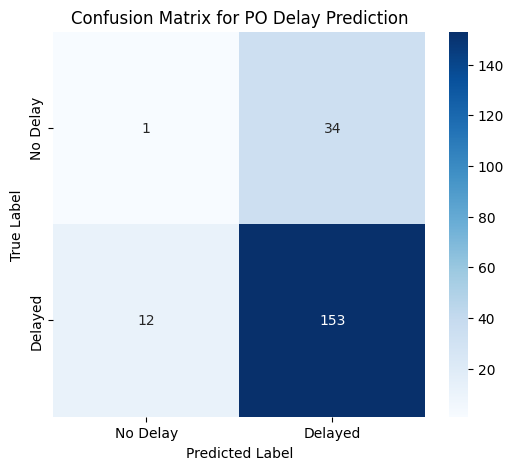
Inspect the errors

Inspect the errors. Original capstone notebook output using synthetic records. False alarms and missed cases must be examined before any real-data trial.
Original capstone notebook output using synthetic records. False alarms and missed cases must be examined before any real-data trial.

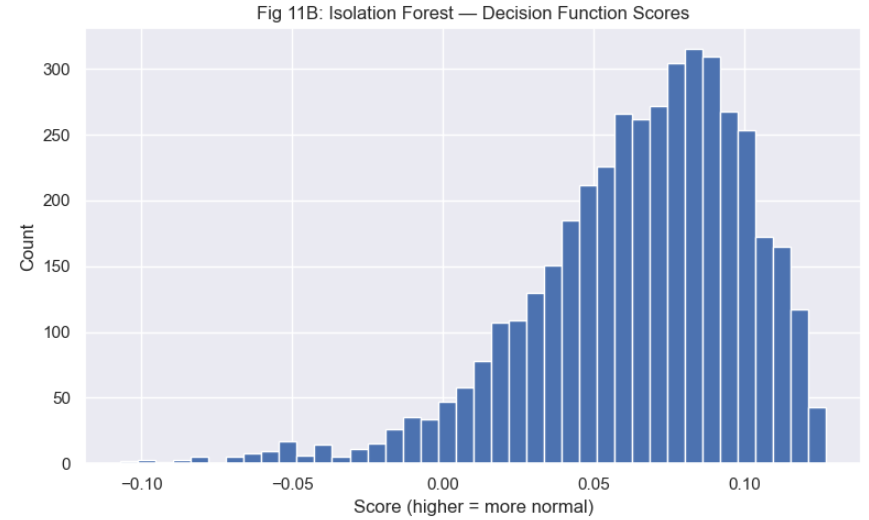
An unusual score is a question

An unusual score is a question. Original synthetic procurement notebook output. An anomaly score does not establish fraud, misconduct or a faulty transaction.
Original synthetic procurement notebook output. An anomaly score does not establish fraud, misconduct or a faulty transaction.

Try the Smart Procurement Lab.

Four explainable prototypes: PO delay · Approval bottlenecks · Anomaly review · Carbon impact. Change fictional inputs, compare scenarios and inspect measured synthetic-test results.

EXPLAINABLE AI & DATA / READ THE METHOD

Connect the learning to the evidence.

Use the categories to distinguish a capability, an algorithm, a Python package and a delivery step. A mention in a module or case study does not mean that capability is running on this page.

Follow the reasoning.

  1. QuestionChoose the decision to support
  2. MethodMatch the task to a suitable approach
  3. TestCompare with appropriate evidence
  4. ExplainState limits and human responsibility

Explore the building blocks.

AI Capability4
AI/Data Concepts1
Data Science Pipeline1
Evaluation & XAI2
Python Package3
Responsible AI1

Number of concepts in this guide, not performance or usage measures.

Explore the explanation matrix · 12 concepts

12 concepts shown

On small screens, scroll the table sideways. “Learning context” explains a related idea; it does not mean that method runs on this page. Deep learning is the standard term for “deep ML”.

Technical termTechnical description / definitionIn plain EnglishHow this page uses it
Machine learning (ML)AI CapabilityMethods that estimate patterns or parameters from examples to support inference on other inputs.Primary reference ↗Learn a pattern from examples, then check whether it helps with new ones.Learning context
ML learns from examples. Read the page-specific methods below to see whether any model runs here.
Deep learningAI CapabilityMachine learning using neural networks with multiple representation-learning layers.Primary reference ↗A layered model learns useful representations; more layers do not guarantee a better answer.Learning context
Deep learning is an AI capability, not a label for every chart. No deep model is implied by this explanation panel.
Natural language processing (NLP)AI CapabilityComputational methods for representing, analysing or generating human language.Primary reference ↗Help a computer work with words, while remembering that context matters.Learning context
Text search, translation, thematic classification and generation are different language tasks; their implementation is identified separately.
Sentiment analysisAI CapabilityA language-analysis task that estimates an expressed attitude, often as polarity or sentiment categories.Primary reference ↗Estimate the tone of words—not the private feelings or personality of their author.Learning context
Sentiment estimates expressed tone. It must not be confused with topic classification or a diagnosis of a person.
Data science pipelineData Science PipelineAn ordered, reproducible sequence for acquiring, validating, preparing, analysing and evaluating data.Primary reference ↗A chain from a question and source to an answer someone can check.Method guide
The learning-to-practice path connects framing, preparation, modelling, evaluation and communication.
Features and labelsAI/Data ConceptsFeatures are model inputs; labels are target values or categories used in supervised learning.Primary reference ↗What the model sees, and the answer it is learning to estimate.Learning context
Projects define relevant input features and any target labels before choosing an estimator.
Held-out evaluationEvaluation & XAIAssessment on examples excluded from fitting and model selection, according to the declared split.Primary reference ↗Keep some answers out of practice so the test means something.Learning context
Unseen and appropriately separated cases help assess whether a learned pattern generalises.
Explanation versus causal proofEvaluation & XAIA model explanation describes selected behaviour or contributions; it does not establish causal effects or full reliability.Primary reference ↗A reason for this output is useful, but it is not proof that the model is right.Responsible use
Explain what was actually done and what the available evidence supports.
NumPyPython PackageA Python library for multidimensional arrays and numerical operations.Primary reference ↗The numerical toolbox behind many Python calculations.Learning context
A numerical Python library; it is not an AI capability or an algorithm by itself.
pandasPython PackageA Python library for labelled tabular data manipulation and analysis.Primary reference ↗A programmable workbench for cleaning and comparing tables.Learning context
A tabular Python library; a useful preparation tool, not a prediction model.
scikit-learnPython PackageA Python library providing estimators, preprocessing tools and model-evaluation utilities.Primary reference ↗A toolkit of models and fairer ways to test them.Learning context
A Python library of algorithms and evaluation tools, distinct from each fitted model.
Human oversight and consentResponsible AIPeople retain appropriate review authority, permission controls and correction routes for data use and outputs.Primary reference ↗Keep someone able to question, correct or stop the result.Responsible use
Decision ownership, permission and correction belong throughout the workflow.
OSL · Olukotun Studios Ltd

Olukotun Studios Ltd · Registered in England and Wales · No. 17537910

LinkedIn ↗