Ifá: patterns and poetry
Explore combinatorics, philosophical narratives and the principal Odù through one illustrated guide and pattern explorer.
Context-aware translation drafts. Original English remains available.
Russian celebrates Daria and Adémidé’s family heritage; Igbo celebrates Lékan’s maternal roots.
Translation notes & sourcesSuggest a correction ↗Ọ̀LÀJÚ ỌMỌLÚÀBÍ STUDIO / OLÚKÒTUN STUDIOS
A cinematic docudrama series rooted in Yorùbá memory and language, with a provisional visual identity of Mature Cinematic Stylised Realism. Its stories connect Yorùbáland and the diaspora with questions for the future.
Words in context: Ọ̀làjú — civilization or cultural flourishingỌmọlúàbí — a person of good character More Yorùbá terms ↗
WHY I SHARE THESE STORIES
I share Yorùbá history and living culture to make their richness tangible: family memory spoken through oríkì, thought carried in language, knowledge expressed through art, Ifá, institutions and everyday life. These pages bring that depth into view through names, stories, objects and the people who carry them.
My hope is that today’s and future generations find belonging, confidence and responsibility in this inheritance—and feel empowered to learn, create and shape what comes next. Knowing where we come from can help us decide what we carry forward.
Ask an elder. Learn a name or verse. Explore its meaning. Pass it on.
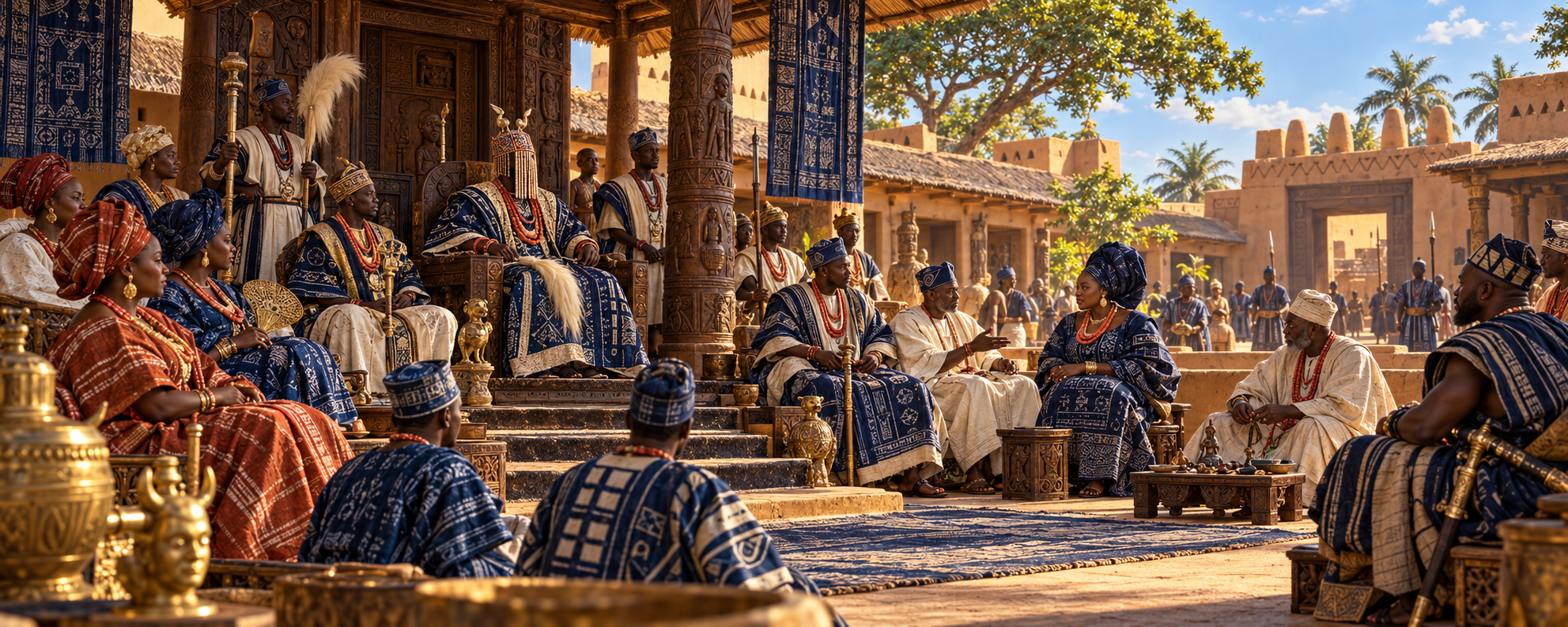
Imagining Ọ̀yọ́ at a moment of royal and artistic flourishing, with historical accounts and academic scholarship providing context for this artistic interpretation.
Beneath a deep palace veranda, an enthroned king becomes the still centre of a richly coloured gathering. A fringed beaded crown partly conceals his face; layered beads and an expansive indigo-and-ivory robe catch the light. Around him, rust-red cloth, patterned wrappers, sculptural headties and finely woven robes give every figure a presence of their own.
The imagined assembly brings together the king’s wives, princes and senior nobles. Figures representing the Ọ̀tún and Òsì sit within the circle of counsel; an Ìyálọ́jà gives the world of the market a place in the conversation. A senior Ifá priest sits beside a carved divination tray, while a Balógun evokes the responsibilities of defence. Their arrangement is a storytelling choice: a court understood through the different kinds of knowledge, authority and experience gathered within it.
Carved timber posts and relief-covered doors frame the throne. Warm earthen walls lead towards another courtyard, while bronze-toned cast-metal vessels and sculptural details bring the makers’ skill into the foreground. Beyond the shade, sunlight spreads across the ground; a broad tree, palms and open blue sky let the palace breathe. The grandeur lives in colour, craftsmanship, proportion and the people who inhabit the space.
For Tapestries, this is a world to enter: a place where ceremony meets conversation, and where a beautiful setting can open questions about leadership, belonging and responsibility.
This composition combines visual references from different Yorùbá places and periods. The selected court roles and their seating are fictional, rather than a verified Ọ̀yọ́ court hierarchy. The references below inform the wider visual vocabulary; they do not authenticate the generated costumes, buildings or objects.
The Met · Yorùbá beaded crown ↗ · The Met · carved palace veranda post ↗ · British Museum · cast brass head from Ifẹ̀ ↗
Wider historical reading: S. Adebanji Akintoye, A History of the Yoruba People (2010) ↗ and Akinwumi Ogundiran, The Yorùbá: A New History (2020) ↗.
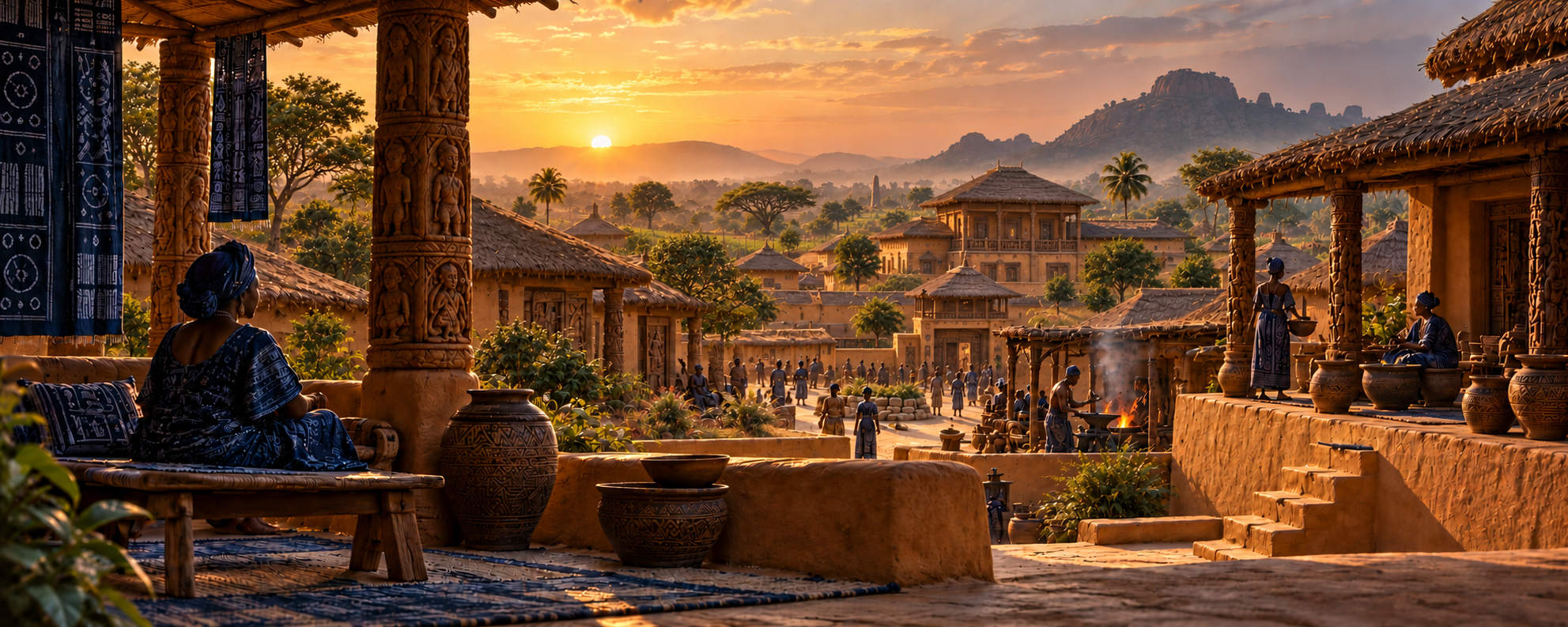
A courtyard, a gathering, the beginning of a story.
AI-generated concept art exploring the series’ visual direction; an imagined setting, not a reconstruction of a particular town or palace.THE PURPOSE
Through Ọ̀làjú Ọmọlúàbí Studio and Olúkòtun Studios, this long-term series begins in Oró and grows toward a chronicle of the Yorùbá people and civilization. The research horizon reaches back to the wider Yorùbá–Èdó region around 500 BCE, as examined in Akinwumi Ogundiran’s archaeological study ↗. That early regional record is a research starting point, while particular Yorùbá kingdoms and institutions have their own later chronologies. S. Adebanji Akintoye’s A History of the Yoruba People ↗ (2010) also informs the series’ wider historical framing of Yorùbá societies, kingdoms and cultural change. The series follows language, memory and identity into a wider world. Yorùbá lives across borders and generations, including communities in the Americas whose traditions have endured and changed in their own settings.
Each chapter asks how the past can inform the choices people make now: whose account is heard, what language and knowledge are carried forward, and how communities shape their shared future. The aim is understanding and critical reflection, with room for multiple voices. Historical research, family records, community testimony and dramatic invention are identified and handled with care. The names and meanings guide offers another way to learn from people in these stories.
ỌMỌLÚÀBÍ / THE CHARACTER BEHIND THE STORIES
Ọmọlúàbí—the ideal of a person of good character—is a guiding commitment of Tapestries. Truthfulness, respect, humility, courage and care for the community shape both the questions our stories ask and the way we research and make them.
As we tell the story of Yorùbá civilization, we will explore character through choices and consequences: how people use power, honour an agreement, listen to others and repair a wrong. Read more: the philosophy, its virtues in Yorùbá and English, and its place in the project ↗
THE MAP BEHIND THE STORY
When I write Oró, Ilé-Ifẹ̀, Ọ̀yọ́ or Kétu, I begin with the names, relationships and cultural worlds that give those places meaning. Present-day country borders remain useful for locating them. They are a much later layer of the map, not the beginning of our history.
Research into the wider Yorùbá–Èdó region reaches toward about 500 BCE ↗; the material record at Ilé-Ifẹ̀ becomes especially clear around 1000–1400 CE ↗. That is a deep cultural past. It would be too simple to say the collective name Yorùbá had the same reach or meaning for all of those 2,500 years: scholarship traces the wider shared label’s use through later history. The 1914 colonial amalgamation ↗ is an administrative date, not a birth certificate for the language, towns or institutions that preceded it.
That perspective gives the series its quiet insistence: learn the older geography, keep the language audible, examine the evidence and let a new generation decide how to carry its inheritance. Read the maps and their limits ↗
A STORY WITH GLOBAL REACH
Oró, Ọ̀yọ́ and neighbouring histories give the series its opening ground. My family’s Ọ̀yọ́ royal strand through the Bàálè house sits beside its Ọ̀bà-Ilé and Èdídí connections. Family and community accounts are examined alongside scholarship, with differing interpretations kept visible.
The wider tapestry includes Yorùbá-descended lives across the Atlantic. The interview with Discover Yoruba reflects on a visit to Cuba and the cultural connections encountered there.
Young audiences can inherit more than a distant past: language, creativity and a clearer sense of belonging can help them ask what kind of future they want to build.
LANGUAGE / MEMORY / MAKING
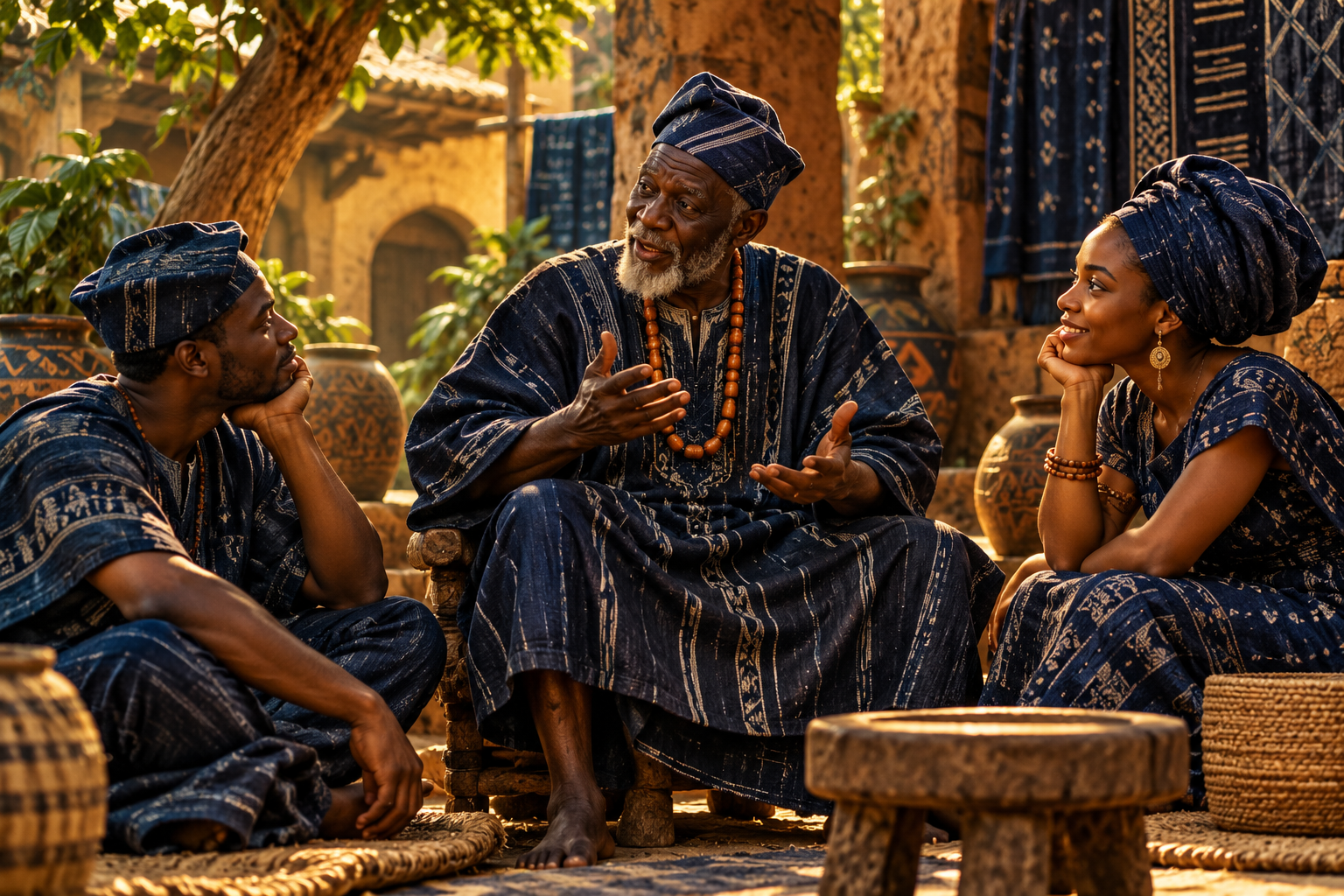
Names, language and remembered experiences give the series its human centre.
AI-generated concept art. Imagined people and setting.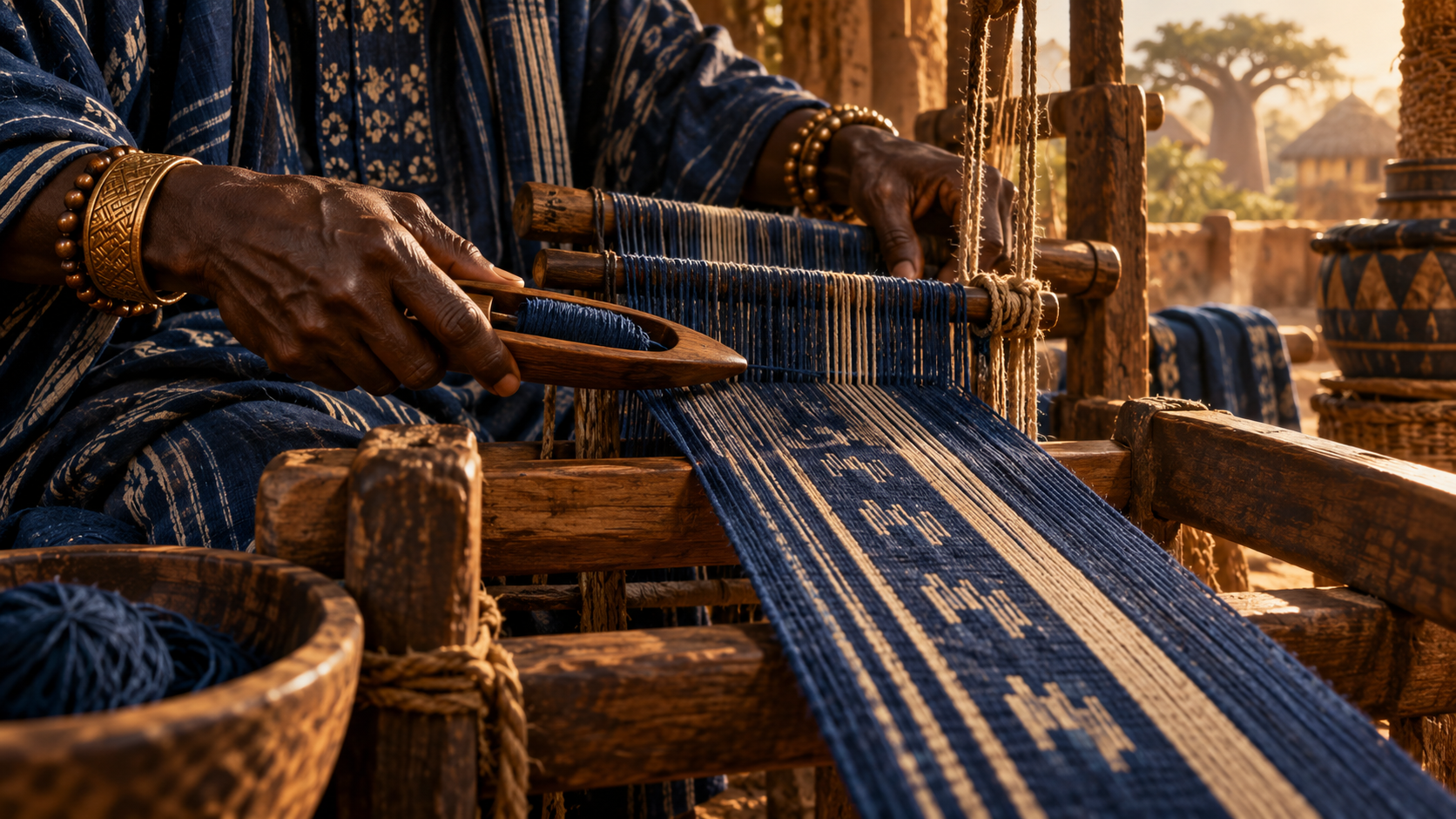
Weaving offers a visual metaphor for the voices and sources brought together in each chapter.
AI-generated concept art; a creative motif, not a documentary record of weaving technique.PLACES & TIME
Dates below belong to different kinds of evidence. An ancestor’s event, a later palace account and the date a film was made each need their own place on the timeline. Where entries differ, the questions guide the next search through records, places and testimony.
Terracotta and metal sculpture illuminate a major artistic centre. Odùduwà and the Oòni belong to living origin and kingship traditions; the artworks can be dated more securely than any single foundation narrative.
Explore Ifẹ̀ and the evidence ↗Family and community accounts remember Òbẹ̀nbẹ̀ Ìmìnjá from Ọ̀bà-Ilé in Ìsìn, Ìmògùn the blacksmith from Ìrẹ̀, and Prince Òlákànmí's party from Ọ̀yọ́. A palace genealogy estimates Ọmọọba Òlákànmí’s migration to Oró in the 1460s CE and traces the Bàálè lines to him. The other journeys and the sequence of alliances remain research questions.
Trace the places and sources ↗A family report recalls Olúkòtún Oyatayo's 1950s visit to Ọ̀bà-Ilé. Later materials cite a 2022 community keynote and visits by Chief Babatunde Sanni (Takiti II) in 2023 and 2024.
See the living connection ↗An early Òbẹ̀nbẹ̀ chapter took shape around 2024; an Òlákànmí trailer followed in January 2026. The February 2026 Discover Yoruba interview and September 2026 Greenwich visit document the wider conversation. Full production is planned to resume in March 2027.
Read the public conversation ↗The first range reflects museum art history; the undated journeys are family and community traditions; the recent dates describe documented project and family activity. Read The Met's account of Ifẹ̀ terracottas ↗
THE PERSONAL ROOT
My family's remembered ties to Oró are a starting point for the series, not a claim to speak for a whole people. The oríkì carries names, work, place and aspiration across generations; the map locates that story within a much wider Yorùbá world.
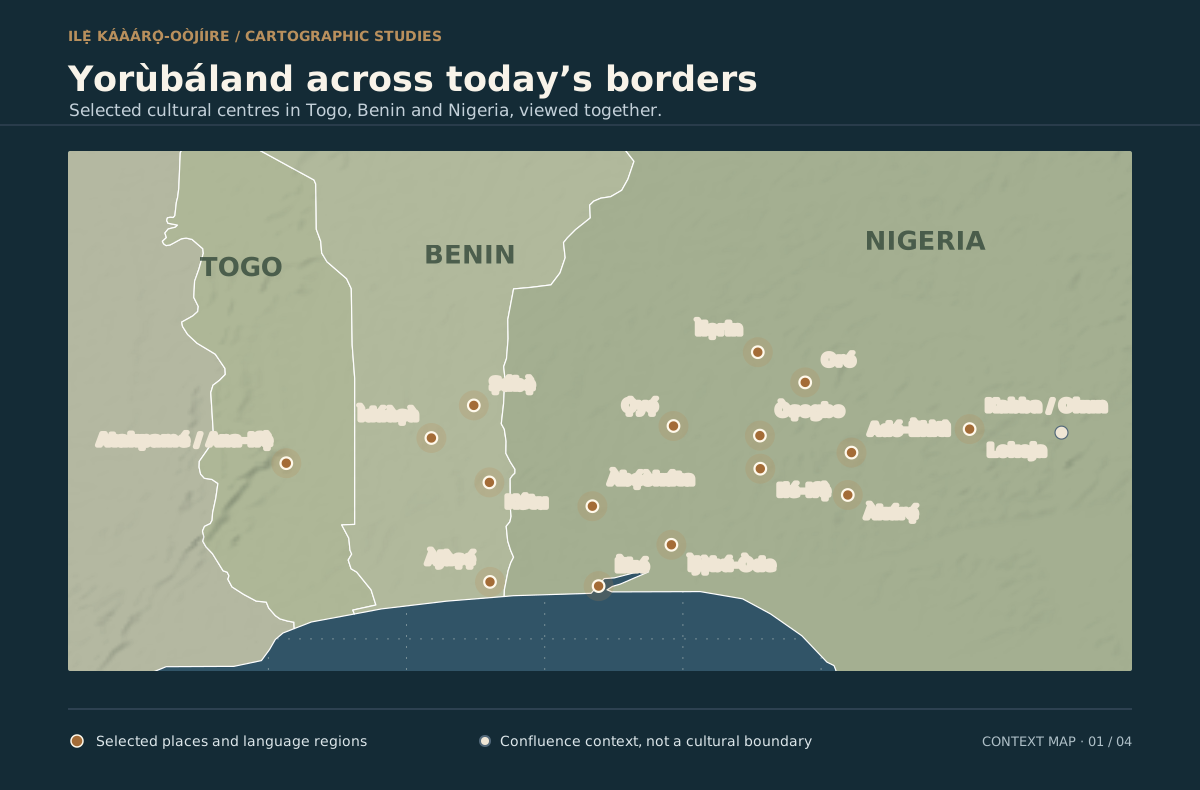 YORÙBÁLAND / ACROSS TODAY’S BORDERS Explore the maps ↗
THE SERIES
From an early migration story to the political foundation of Oró.
An early film chapter centred on Òbẹ̀nbẹ̀ Ìmìnjá and the remembered route from Ọ̀bà-Ilé in Ìsìn toward Oró. The date describes the creative work, not the migration.
Explore Episode 1 ↗EPISODE 02 / TRAILER JANUARY 2026A prince's departure from Ọ̀yọ́, divination and alliances with Ìmògùn Ìrẹ̀ and Ìmìnjá-Ọ̀bà frame Oró's political story. The setting's precise historical date remains open.
Explore Episode 2 ↗THE EDITORIAL COMPASS
Use language, names and tonal marks carefully, with English translation to welcome wider audiences.
Distinguish historical research, family sources and community testimony from dramatized scenes.
Represent differing claims around institutions and legitimacy without turning the series into a verdict.
Connect each historical thread to a present question and invite thought rather than a single answer.
MAKING THE SERIES
A deliberately focused three-stage production method. The ambition is cinematic; the preparation involves a good many notes.
Structure the story, track questions and sources, draft scripts and tone-marked Yorùbá dialogue for human review.
Develop boards, concept art and reusable character elements so scenes share a coherent visual identity.
Develop camera-level sequences, continuity and voice approaches. The provisional visual identity is Mature Cinematic Stylised Realism.
Mature Cinematic Stylised Realism combines historically grounded settings and costume, expressive characters and a restrained painterly African visual-art sensibility. It is an authored creative direction, not a vendor preset. Tools support the work; historical judgment, language review and final editorial choices remain human responsibilities. Full production is planned to resume in March 2027.
EXPLORE THE KNOWLEDGE BEHIND THE STORIES
Explore combinatorics, philosophical narratives and the principal Odù through one illustrated guide and pattern explorer.
Follow architecture, oral education, festival performance and language history through the research.
FOLLOW THE WORK
Olúkòtun Studios shares released work on its YouTube channel.
Core reading for the Yorùbá historical and cultural context discussed on this page. Follow the specific sources alongside individual claims, interpretations and language examples.
A NEW HISTORICAL CHAPTER
Origins, Aláàfins, cavalry, imperial power and the Oró connection—with maps, family photographs and a vision for Ọ̀yọ́-Ilé as a great heritage destination.
Explore the Ọ̀yọ́ Empire ↗BIRKBECK / THE CRITICAL FOUNDATION
After my Birkbeck master’s, I began to decolonize my thinking and question inherited accounts of history, power and identity. Tapestries carries that inquiry into research and storytelling, with evidence and interpretation kept visible.
SACRED STORIES / LIVING TRADITIONS
A sourced directory, family reading paths and extended readings on Ọ̀rúnmìlà, Ọbàtálá and Ṣàngó. Explore art, ideas and careful comparisons with Greek and Roman traditions.
YORÙBÁLAND / DEVELOPMENT
Explore Yorùbáland’s land, resources and human capabilities through two new maps, actual photographs, evidence catalogues and industrial-development pathways.
Explore the development hub → · Open both interactive maps → · Sources and review · A civilization’s next chapter. →
Craft, learning, performance and imagination, seen through a cinematic lens.

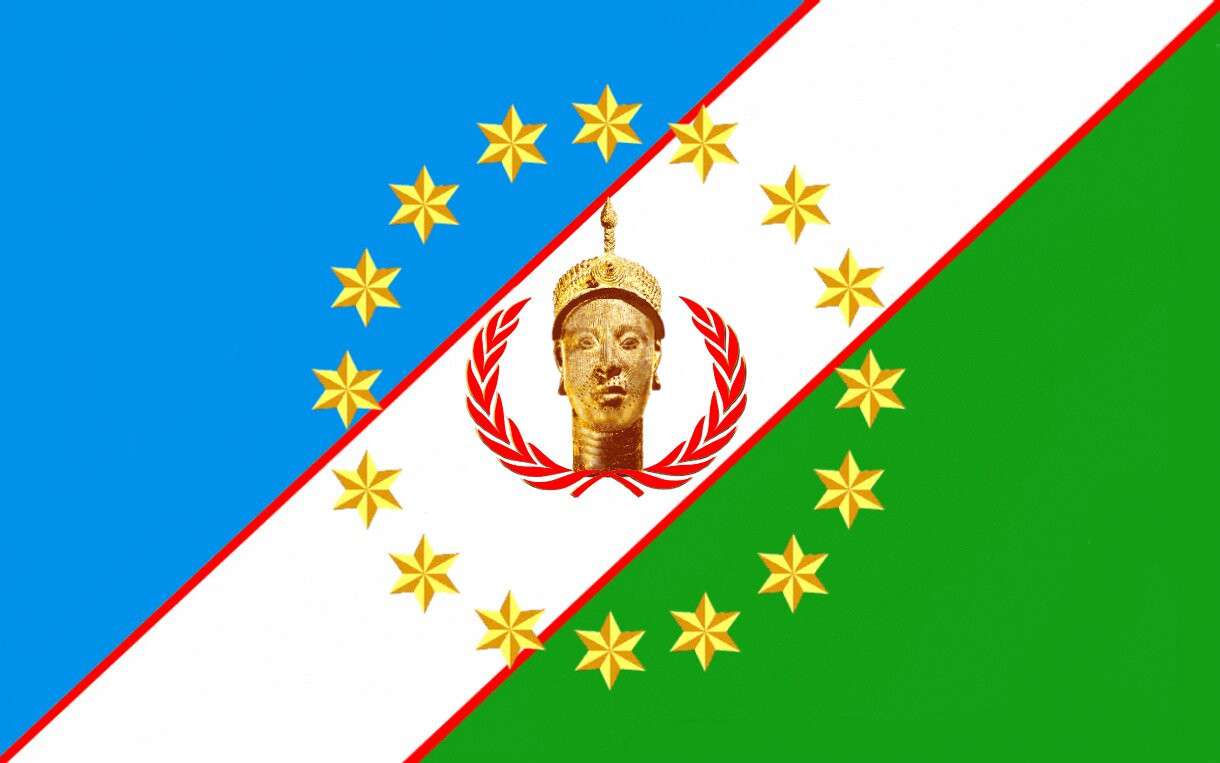
SHARED SYMBOLS
The Odùduwà flag carries a contemporary expression of Yorùbá identity across borders. Explore its colours, sixteen stars and central head, then listen to the Yorùbá nation anthem and the Ilé-Ifẹ̀ anthem.
Flag symbolism and Yorùbá nation anthem → · Ilé-Ifẹ̀ anthem and published lyrics →
These learning tools expose selected representations and comparisons. They cannot authenticate a tradition, infer ancestry or replace language speakers and cultural custodians.
Number of concepts in this guide, not performance or usage measures.
9 concepts shown
On small screens, scroll the table sideways. “Learning context” explains a related idea; it does not mean that method runs on this page. Deep learning is the standard term for “deep ML”.
| Technical term | Technical description / definition | In plain English | How this page uses it |
|---|---|---|---|
| Unicode normalisationAlgorithm | Transforming equivalent character sequences into a consistent Unicode representation.Primary reference ↗ | Help differently encoded letters match without throwing away meaningful accents. | Method guide Tone and underdot preservation matter when representing Yorùbá text; spelling differences may carry meaning. |
| Natural language processing (NLP)AI Capability | Computational methods for representing, analysing or generating human language.Primary reference ↗ | Help a computer work with words, while remembering that context matters. | Learning context Language technology needs context and evaluation by speakers, especially for underrepresented varieties. |
| Word error rate (WER)Evaluation & XAI | Substitutions, deletions and insertions divided by the reference word count.Primary reference ↗ | Compare a transcript against a checked reference; the number alone cannot judge cultural meaning. | Learning context Where transcription comparisons appear, word-level errors are only one quality signal; tone and meaning need review. |
| Rule-based logicAlgorithm | Explicit authored conditions map inputs to outputs without fitting parameters from training examples.Primary reference ↗ | A transparent set of if-this-then-that instructions. | Running here The retained learning activities use authored examples and deterministic choices, not divination, identity prediction or generated historical evidence. |
| Visual encodingVisualisation | Mapping values or categories to marks, position, length, colour and labels.Primary reference ↗ | Make the comparison visible, with a scale and a clear label. | Published analysis Diagrams encode the stated categories or relationships; visual resemblance does not establish historical or scientific equivalence. |
| Coverage, bias and representationResponsible AI | Assess how sampling, labels, missing groups and design choices affect error and applicability.Primary reference ↗ | Ask whose experience the data includes—and whose it misses. | Responsible use Missing language varieties and permissions can make a seemingly polished dataset unrepresentative. |
| Data minimisationResponsible AI | Limit collected, disclosed and retained information to what is needed for the stated purpose.Primary reference ↗ | Use the smallest appropriate amount of information. | Responsible use Cultural access, family privacy and agreed uses matter alongside technical quality. |
| Human oversight and consentResponsible AI | People retain appropriate review authority, permission controls and correction routes for data use and outputs.Primary reference ↗ | Keep someone able to question, correct or stop the result. | Responsible use Sources and knowledgeable people retain interpretive authority; corrections are welcome. |
| Deep learningAI Capability | Machine learning using neural networks with multiple representation-learning layers.Primary reference ↗ | A layered model learns useful representations; more layers do not guarantee a better answer. | Learning context A proposed image or language capability is distinct from an implemented, evaluated model on this page. |
No matching concepts. Choose another category or clear the search.
Olukotun Studios Ltd · Registered in England and Wales · No. 17537910
Registered office: 5 Brayford Square, London, E1 0SG, England.
