Two horses
The family account recalls Òbẹ̀nbẹ̀ Ìmìnjá-Òbà travelling on horseback to a forest settlement. The account also mentions enslaved people in that journey; their presence deserves honest and humane remembrance.
Context-aware translation drafts. Original English remains available.
Russian celebrates Daria and Adémidé’s family heritage; Igbo celebrates Lékan’s maternal roots.
Translation notes & sourcesSuggest a correction ↗TAPESTRIES / ROOTS & IDENTITY
A family story begins with place and the voices that remember it. These words are an invitation to listen, learn and ask where we come from.
Words in context: Ìdílé — family or lineageoríkì — praise poetry and praise names More Yorùbá terms ↗
I come to Yorùbá history through Ilé Olúkòtún and a second family strand associated with Ilé Bàálè Oró. Oró in the Ìgbómìnà area is the place from which this inquiry opens. The Orísun account traces one remembered family connection back to Ọ̀bà-Ilé in Ìsìn, renewed in a 2024 exchange with the Ọ̀bà Development Association. Why I now carry Olúkọtún as my surname is another part of that journey. The palace genealogy traces all Bàálè lines to Ọmọọba Òlákànmí of Ọ̀yọ́, with an estimated migration to Oró in the 1460s CE. Through my grandmother Ọmọọba Moróláké Agnes, this is my Ọ̀yọ́ royal ancestry; through my grandfather Kánímọ́lé’s mother, Ọmọọba Maria Salome Oníkòyí, we connect to the royal house of Èdídí. Olótá’s marriage journeys help explain how these strands met. Family research speaks of movement, settlement, kinship and the duties of remembering. It belongs to a wider community history and should be considered alongside other families' accounts and independent scholarship.
This page follows my paternal Yorùbá strands. My mother Betty Nnenna’s Igbo family from Akokwa and Osina has a page of its own, centred on her and on the name Gilbert that I carry from her father.
PLACE / LANGUAGE / BELONGING
The family story sits within a wider network of towns and relationships. Explore the landscape, histories and communities of Yorùbáland in the dedicated atlas.
Open Yorùbáland across borders → · Places and people · Population and diaspora
FAMILY ARCHIVE / FACES & OCCASIONS
Family identifications accompany these portraits. Select a picture to see the restored image; originals are available beneath each caption. Read the Ọ̀yọ́-Ilé and Èjì story ↗
These portraits put faces to Ọmọọba Moróláké Agnes’s line and to Ìbíwoyè Jacob Kánímọ́lé, my paternal grandfather. The dates of the individual portraits are not recorded in the material supplied for this page.
In this Oró palace account, Baálẹ̀ means king or traditional monarch: Abioye, Atóyèbí and Afolayan are remembered as royal titleholders within the family’s dynastic tradition. The older title carries a history of lineage, stewardship and duty. Read about the title and the Ìbàdàn comparison ↗
Birth dates are approximate, following the family’s record. Where an entry supplies a day and month, these are retained below without implying independent verification. Life dates do not date the photographs, reigns, journeys or marriage arrangements.
| Person | Birth · approximate | Death · family record | Source |
|---|---|---|---|
| Ọmọọba Moróláké Agnes Abiké-Èjì Atóyèbí | c. 1903; family entry gives 24 August, Oró | 1968 | Family-tree entry ↗ |
| Bàálè Atóyèbí Joseph, Akandè-Èjì | c. 1861 | 1959 | Family-tree entry ↗ |
| Bàálè Afolayan Raphael Atóyèbí | Awaiting research | Not supplied | Family clarification |
| Bàálè Abíòyè of Oró | Awaiting research | Oró; year not supplied | Family-tree entry ↗ |
| Sisebola Itiolaye Olótá | c. 1780 | Not supplied | Family-tree entry ↗ |
| Ìbíwoyè Jacob Kánímọ́lé, Popoola, Ajide Oyèlúhúnnú | c. 1887; family entry gives 3 October, Oró | 1 October 1977, Èkó (Lagos) | Family-tree entry ↗ |
| Òyelóhúnnú Ọlóta | c. 1830 | Not supplied | Family-tree entry ↗ |
Names follow the supplied family entries; spellings also vary in the older accounts. Linked Ancestry entries may require sign-in. Abíòyè’s entry is kept distinct from the separately named Aboyeji in the succession account.
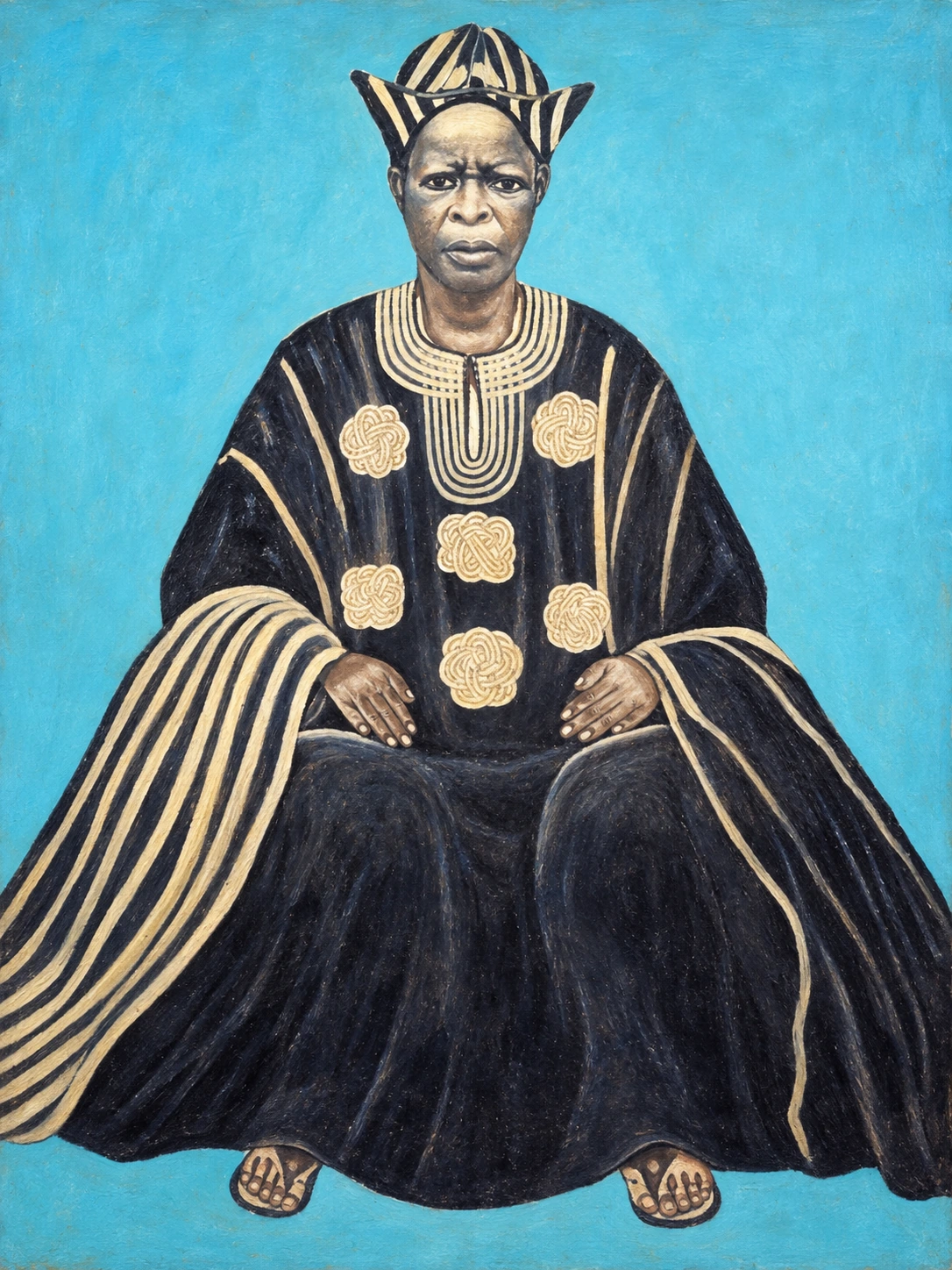
My paternal great-grandfather, Baálẹ̀ Atóyèbí, remembered in our family archive as a king of Oró. Portrait date unrecorded.
AI-assisted restoration for viewing; fine detail may be reconstructed. The untouched photograph remains the historical reference.
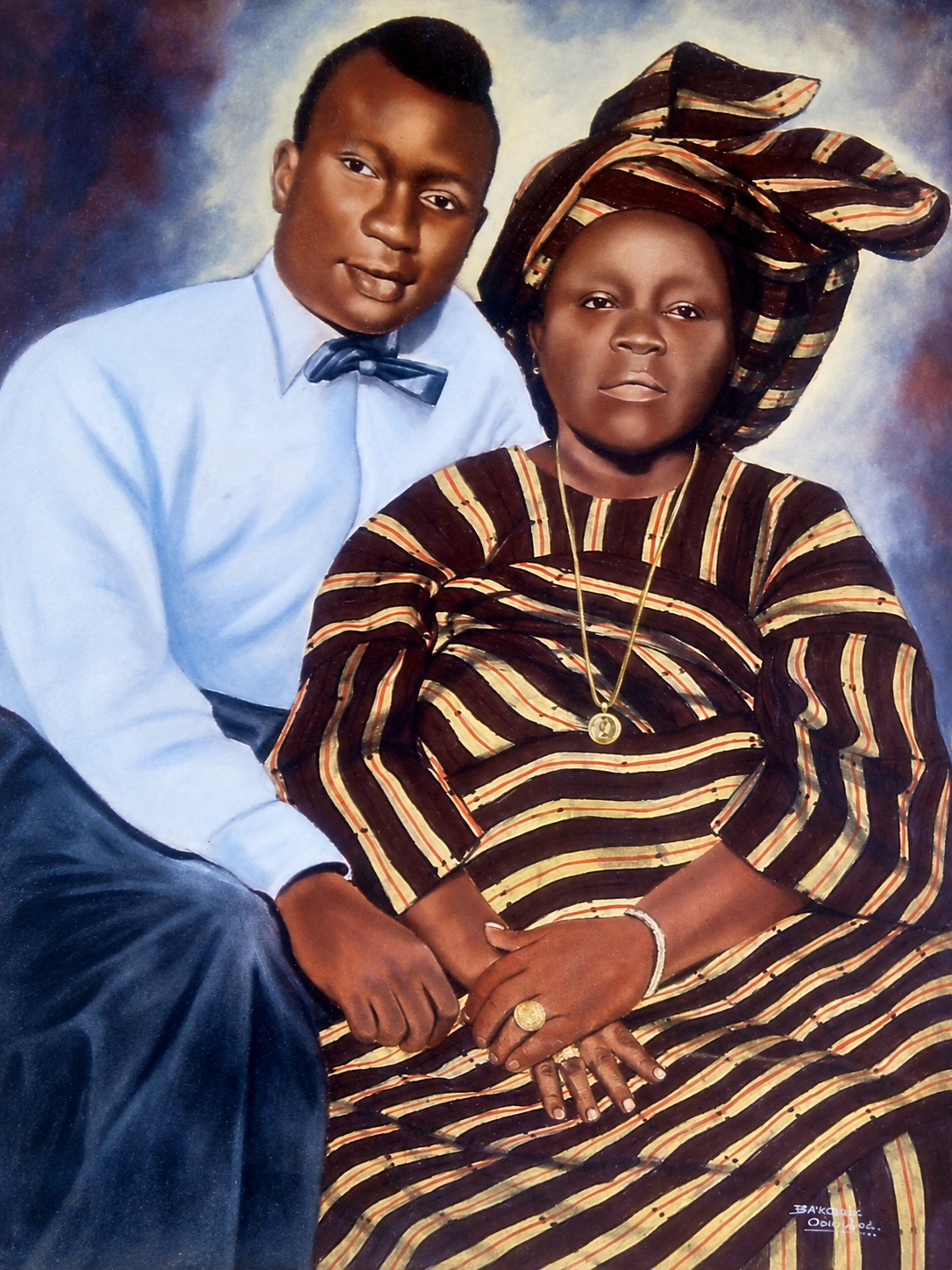
My paternal grandmother, the daughter of Bàálè Atóyèbí and mother of Chief Olatunji Raphael Ibiwoye. She appears at right in this family portrait; date unrecorded.
The family entry records her birth at Oró on 24 August 1903; the birth date is treated as approximate.
AI-assisted restoration for viewing; fine detail may be reconstructed. The untouched photograph remains the historical reference.
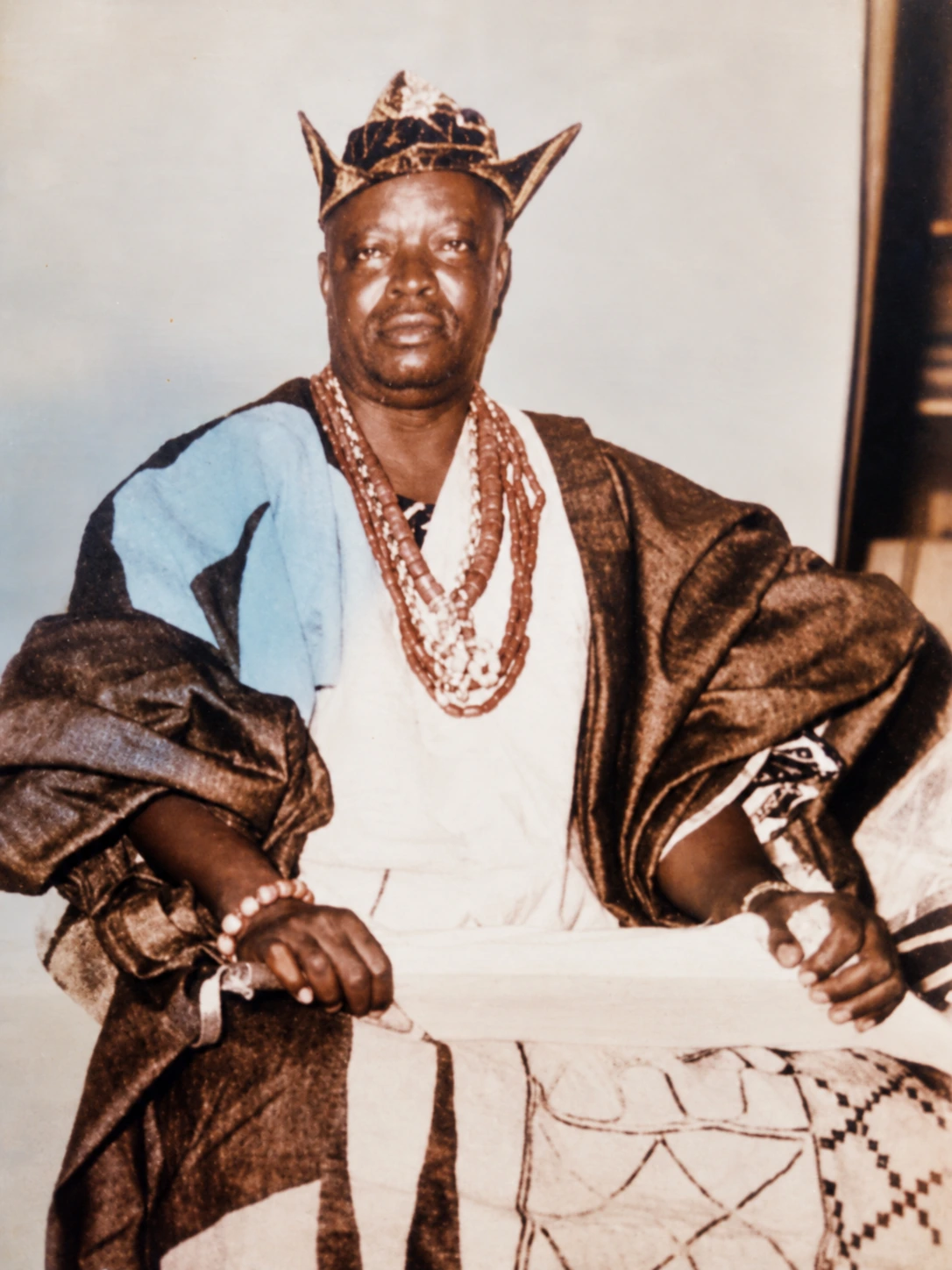
Baálẹ̀ Afolayan, identified by the family as a son of Atóyèbí and a royal titleholder in the Oró Baálẹ̀ line. Portrait date unrecorded.
Bàálè Afolayan Raphael Atóyèbí, I am told, often held me in his arms and was fond of my mother, too. My family recalls that an Ifá consultation associated with him revealed she was expecting a boy—before either parent knew. Apparently, my arrival had been announced before my parents received the memo.
I was too young to remember his affection, but hearing of it has given me a lasting fondness for him. This is Ifá as lived family experience: a story of knowledge, mystery and welcome. Before I could know him, he had already made room for me.
AI-assisted restoration for viewing; fine detail may be reconstructed. The untouched photograph remains the historical reference.
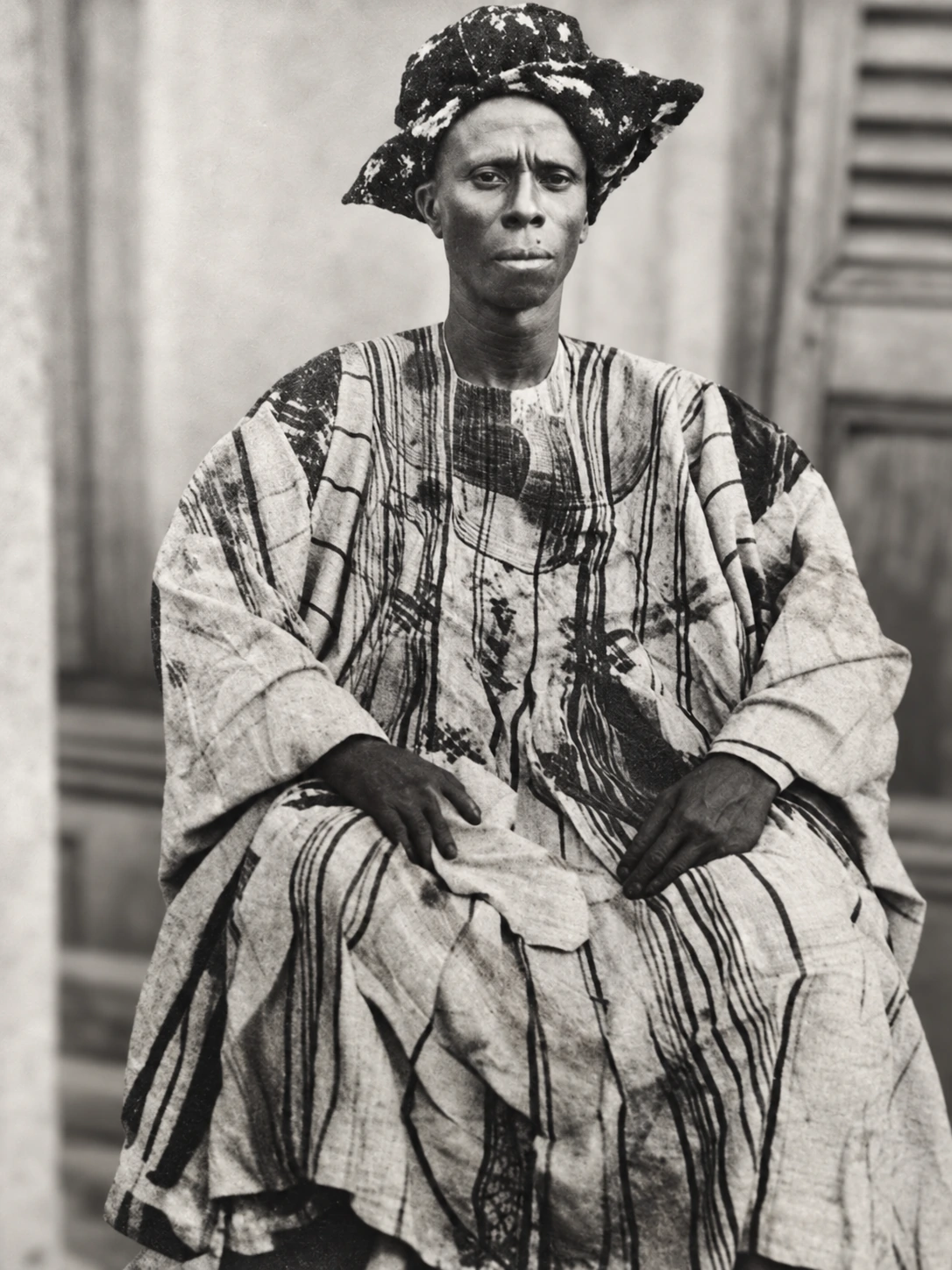
My paternal grandfather in an earlier family portrait; exact year unrecorded.
The family entry records birth at Oró on 3 October 1887 (approximate) and death in Èkó (Lagos) on 1 October 1977.
AI-assisted restoration for viewing; fine detail may be reconstructed. The untouched photograph remains the historical reference.
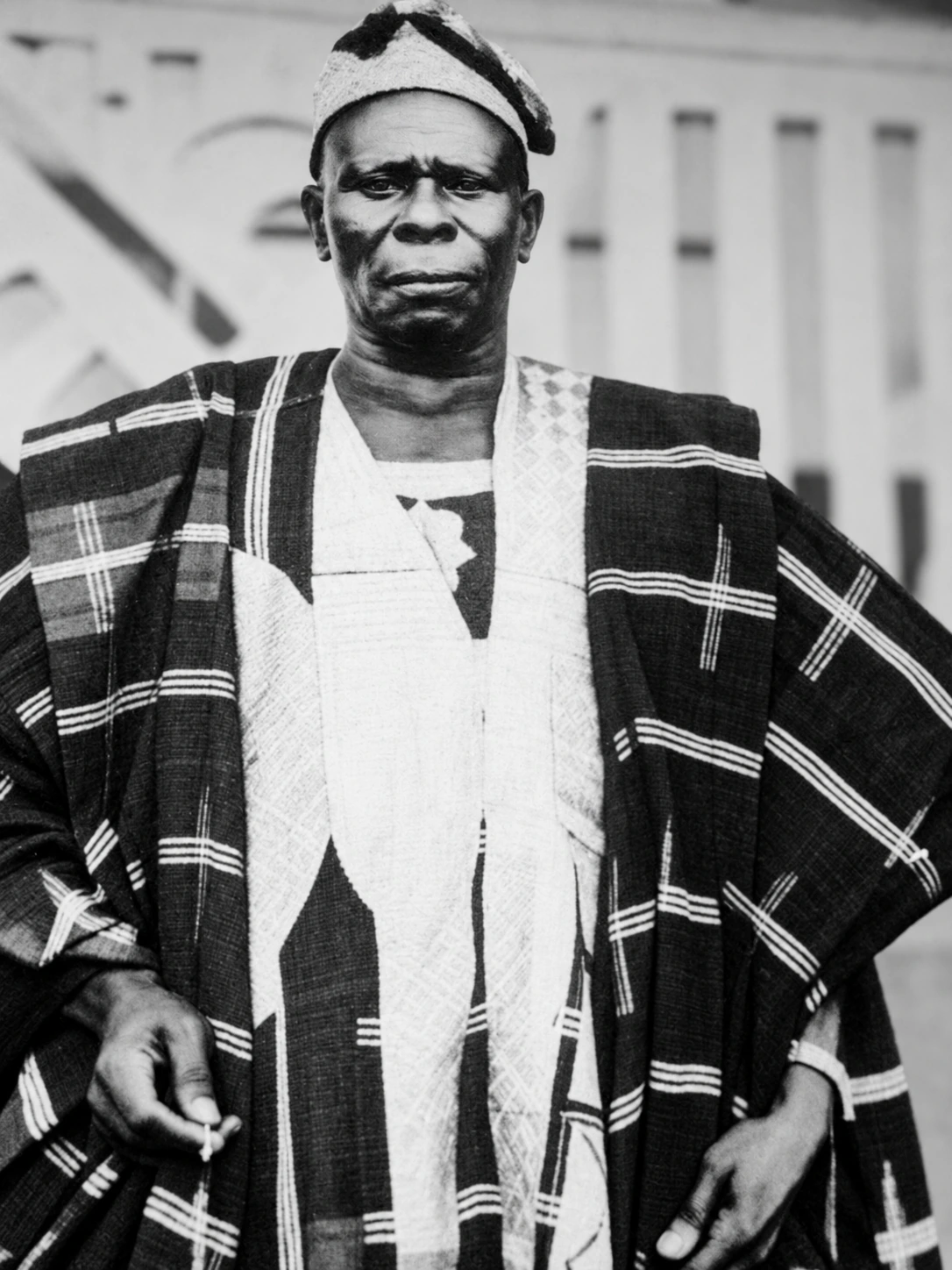
A later portrait of my paternal grandfather; exact year unrecorded.
The family entry records birth at Oró on 3 October 1887 (approximate) and death in Èkó (Lagos) on 1 October 1977.
AI-assisted restoration for viewing; fine detail may be reconstructed. The untouched photograph remains the historical reference.
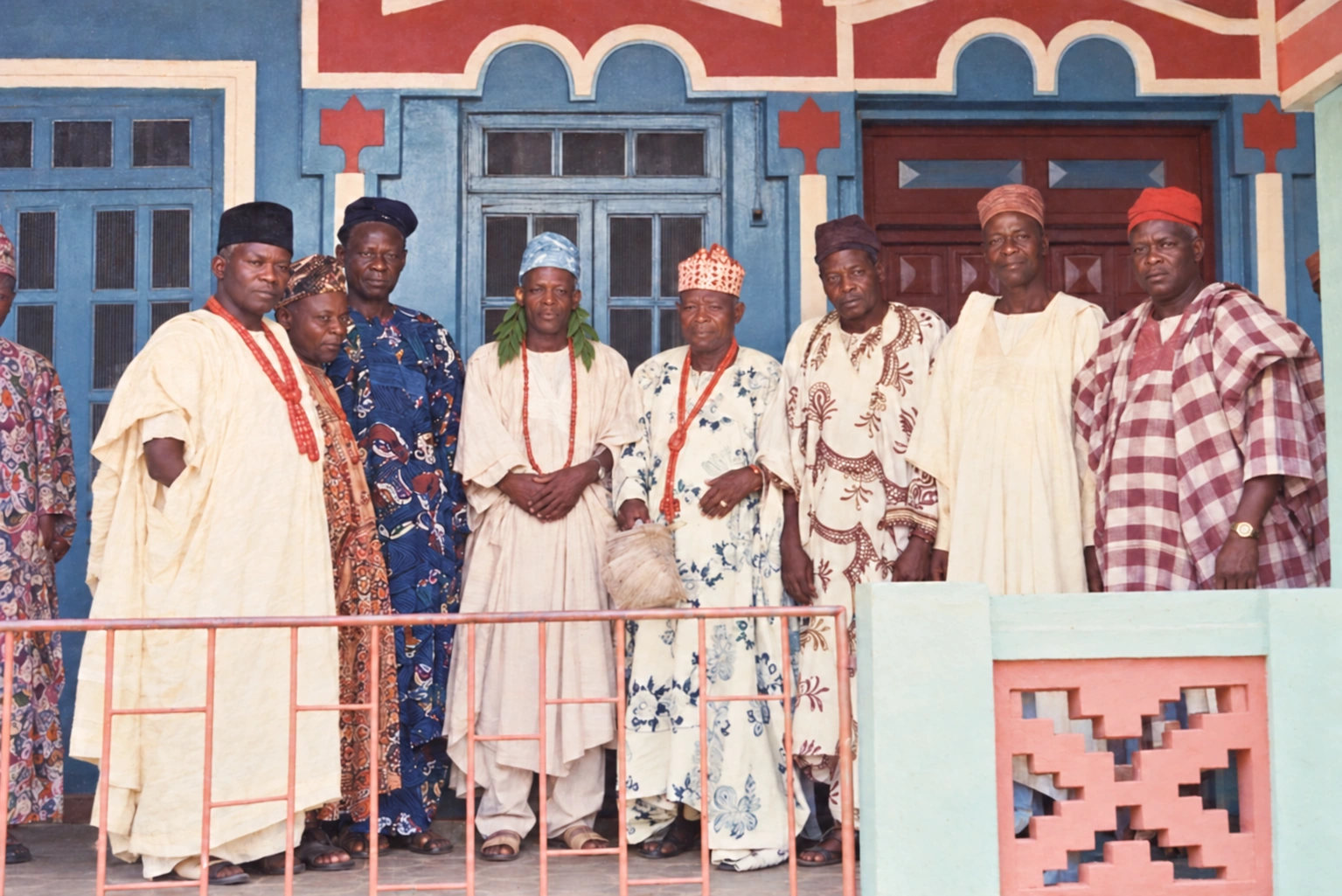
ORÓ / A ROYAL FAMILY MEMORY
Our family identifies the man just left of centre, wearing a pale-blue cap and cream robe with his hands clasped, as Téjúmòlá Martin, a younger son of Bàálè Atóyèbí and brother of Bàálè Afolayan and Ọmọọba Moróláké Agnes. Green ewé Akoko leaves (Newbouldia laevis) hang beside both ears, as our family recalls the adornment of his installation. The photograph’s date is unrecorded.
The man immediately to the viewer’s right, in a red-and-cream cap and patterned robe, holds a ceremonial horse tail. He may be the then Olóró of Oró; that identification remains unconfirmed.
The succession remembered by the familyAtóyèbí → his younger brother Aboyeji → Afolayan → Téjúmòlá.
Téjúmòlá was therefore the third successor after Atóyèbí, and the fourth ruler in this sequence. Identification, kinship and this order follow our family account. His English name, Martin, is recorded in our family-tree entry ↗.
A living leaf can carry a public responsibility. The IITA Forest Center identifies Akoko as Newbouldia laevis, a tree of the Bignoniaceae family that can grow from cuttings.
Installation and authority. Borokini’s 2016 study of sacred natural sites records its leaves in the inauguration of Yorùbá kings and chiefs. Their ceremonial use expresses recognition of office and its spiritual responsibilities; particular practices vary between communities.
Peace, longevity and good governance. Kadiri and colleagues’ 2014 ethnobotanical survey associates Akoko leaves at coronations with peaceful governance and long life. Prosperity also appears in a contemporary community interpretation. These are symbolic hopes and obligations, rather than guarantees conferred by the plant.
Sacred space at Ilé-Ifẹ̀. An extract from Suzanne Preston Blier’s research, published in The Guardian in 2015, describes two Akoko trees beside an enthronement structure and relates their capacity to regrow to long life. In that account, the wider rites establish the Ọ̀ọ̀ni’s sacred status, understood through the language of òrìṣà. This describes a particular Ilé-Ifẹ̀ tradition; it does not establish the rites performed for Téjúmòlá at Oró.
Explore Òrìṣà and living traditions → · Names and meanings →
AI-assisted restoration improves visibility and removes the photographed tabletop, glare and print damage. The severely damaged lower-left area, some facial detail and faded colours are reconstructed interpretations, not recovered historical evidence. The green leaves beside Téjúmòlá’s ears have been reconstructed following the family’s clarification of his identity and installation adornment; their exact shape and arrangement are interpretive.
A LIFE IN CONVERSATION
My father recalls that he and the late Aláàfin Lamidi Adeyemi III (reigned 1970–2022) were schoolmates at St Gregory’s College. Their friendship carried into adult life. Our family photographs place the Aláàfin at the opening of our Oró home in 1987, and my father at his old friend’s Ọ̀yọ́ palace in 2020. They also record a meeting with Oba Babatunde Akran of Badagry and Prince Ayilara of Ójó, and my father’s own Ajiroba chieftaincy ceremony. I share these moments for the relationships and cultural learning they hold, alongside the stories my father tells of growing up at Bàálè Atóyèbí’s court. His presentation of the Oró palace account carries the wider connections among Oró, Èdídí, Ìlótá and Ìlọrin, including our Ọ̀yọ́ royal strand. Olótá’s story shows how marriage joined those houses.
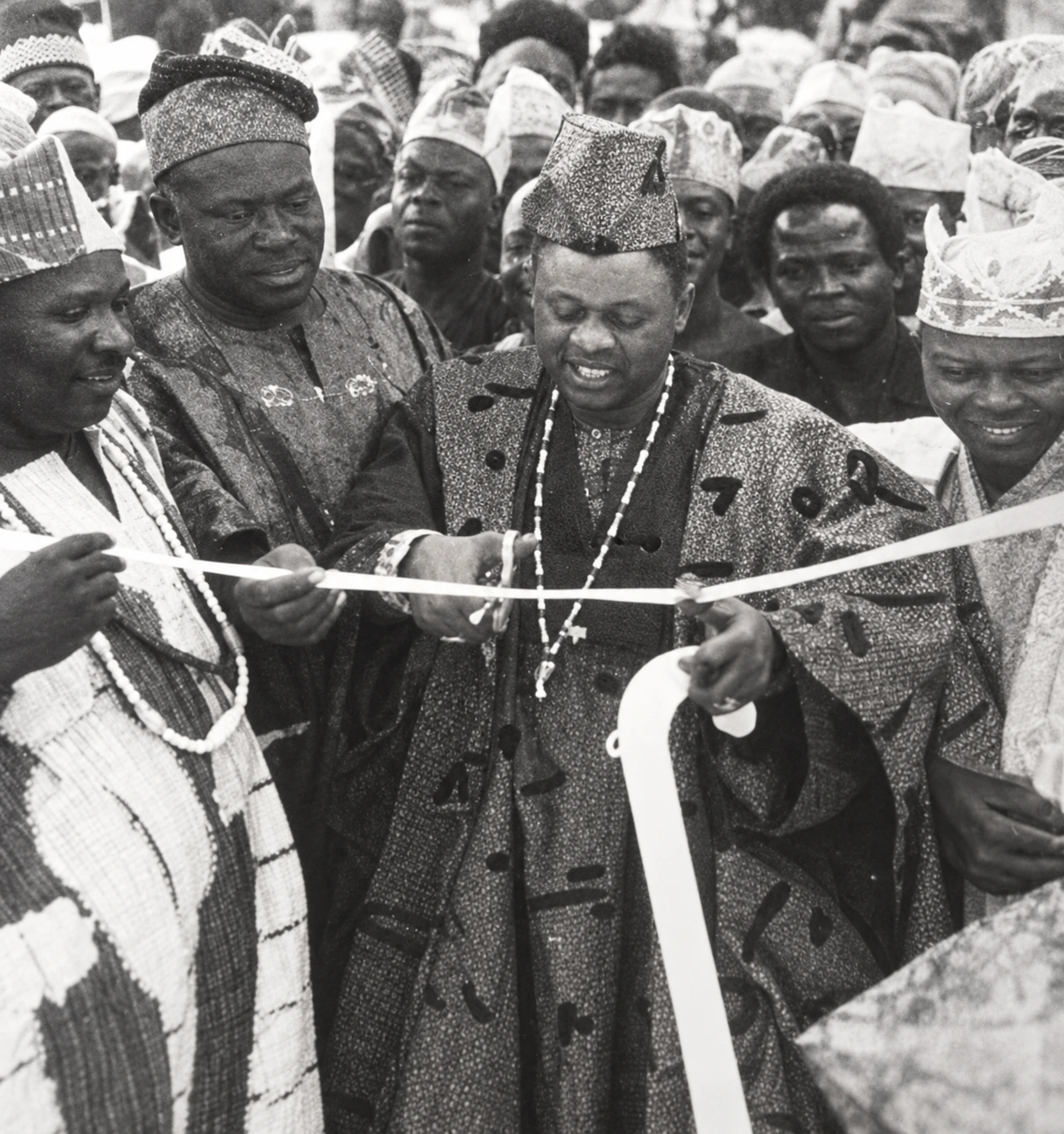
The family identifies the late Aláàfin Lamidi Adeyemi III (reigned 1970–2022), my father and guests in this sequence. This is an AI-assisted visual restoration of the supplied ribbon-cutting photograph for clarity; it is not a source for details absent from the original. View the unaltered source photograph ↗
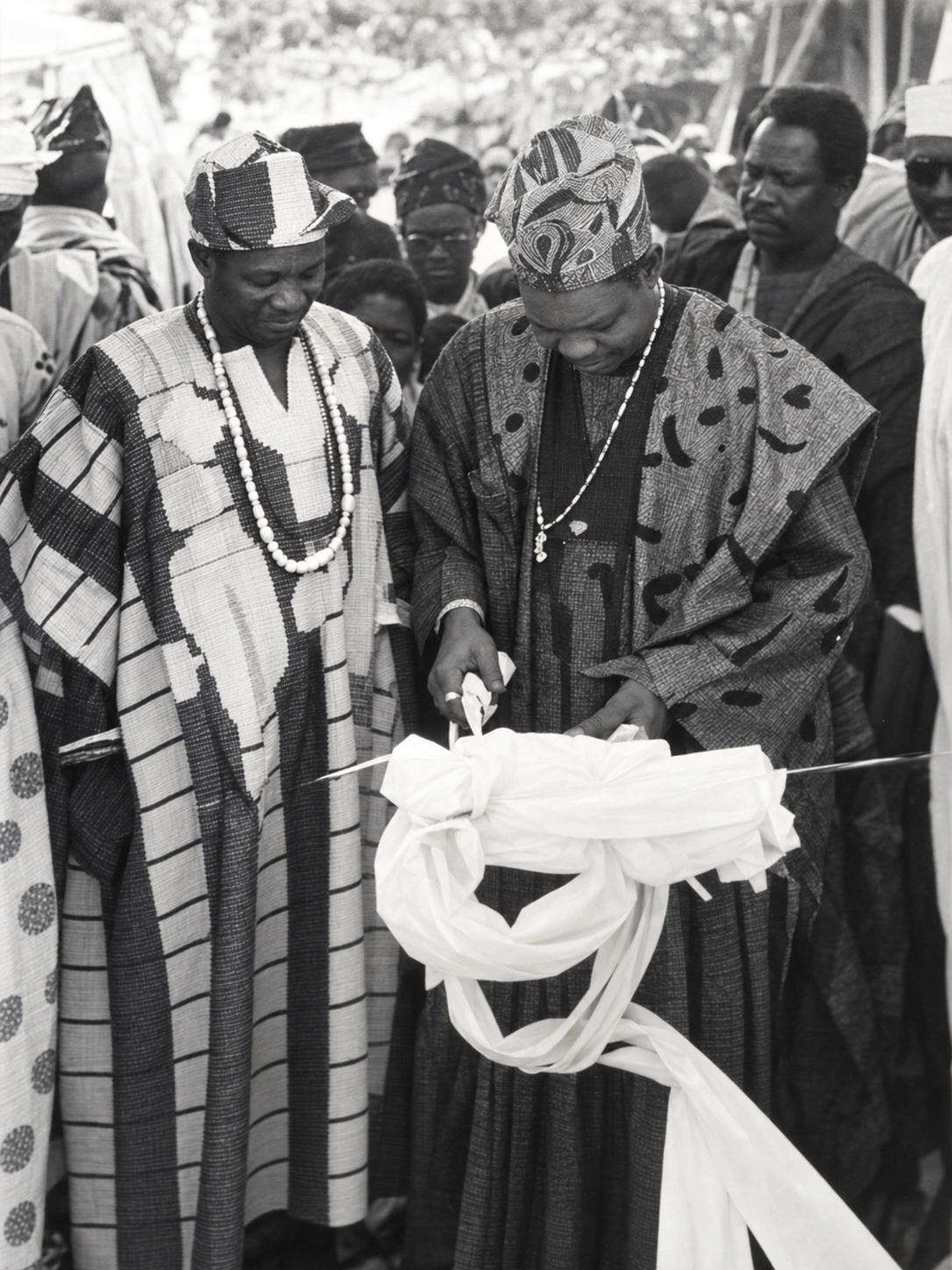
A second view of the opening of our family house in Oró, showing the ribbon-cutting.
AI-assisted restoration for viewing; fine detail may be reconstructed. The untouched photograph remains the historical reference.
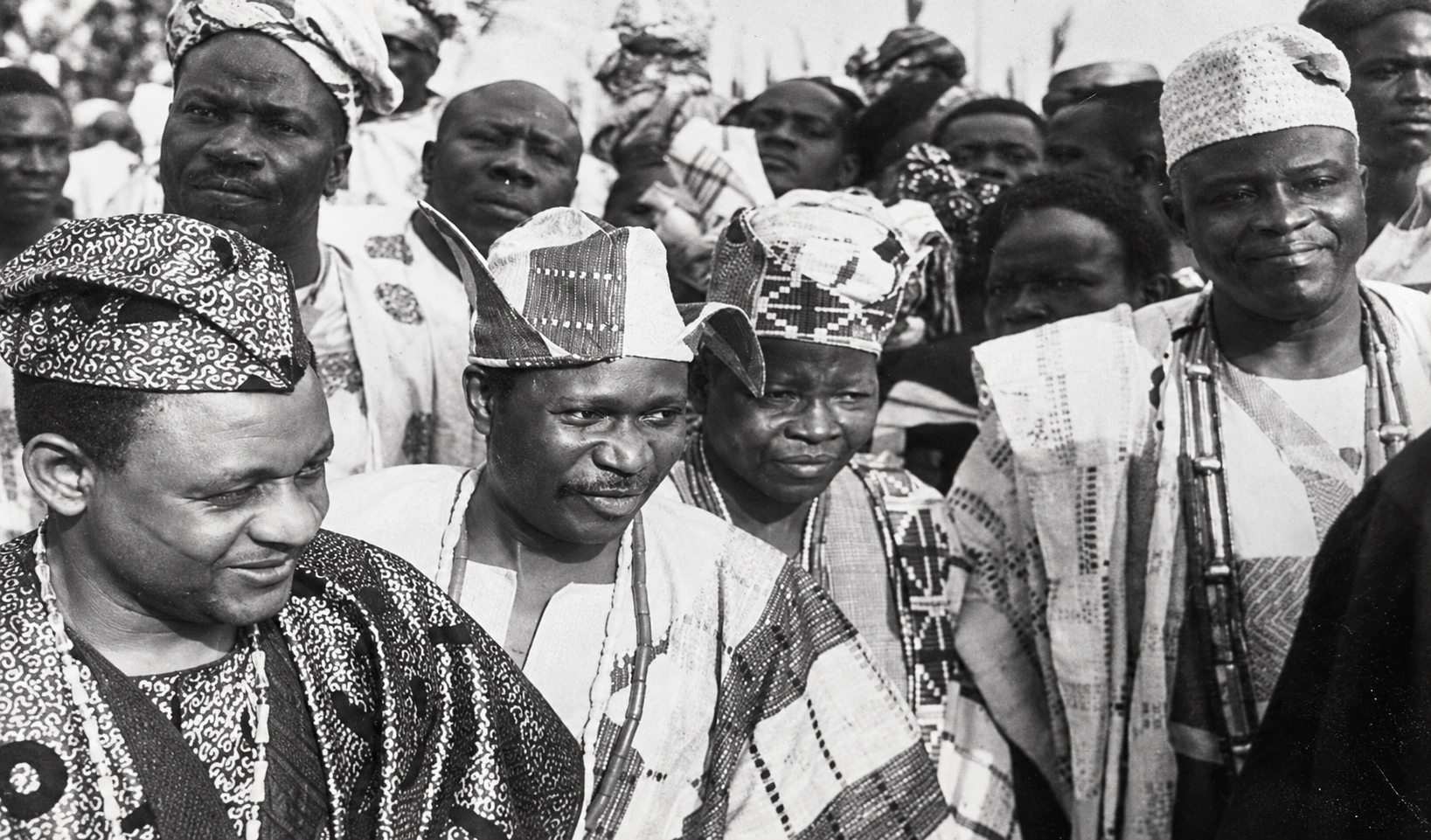
Family and guests gathered for the opening. Names of everyone pictured are not supplied.
AI-assisted restoration for viewing; fine detail may be reconstructed. The untouched photograph remains the historical reference.
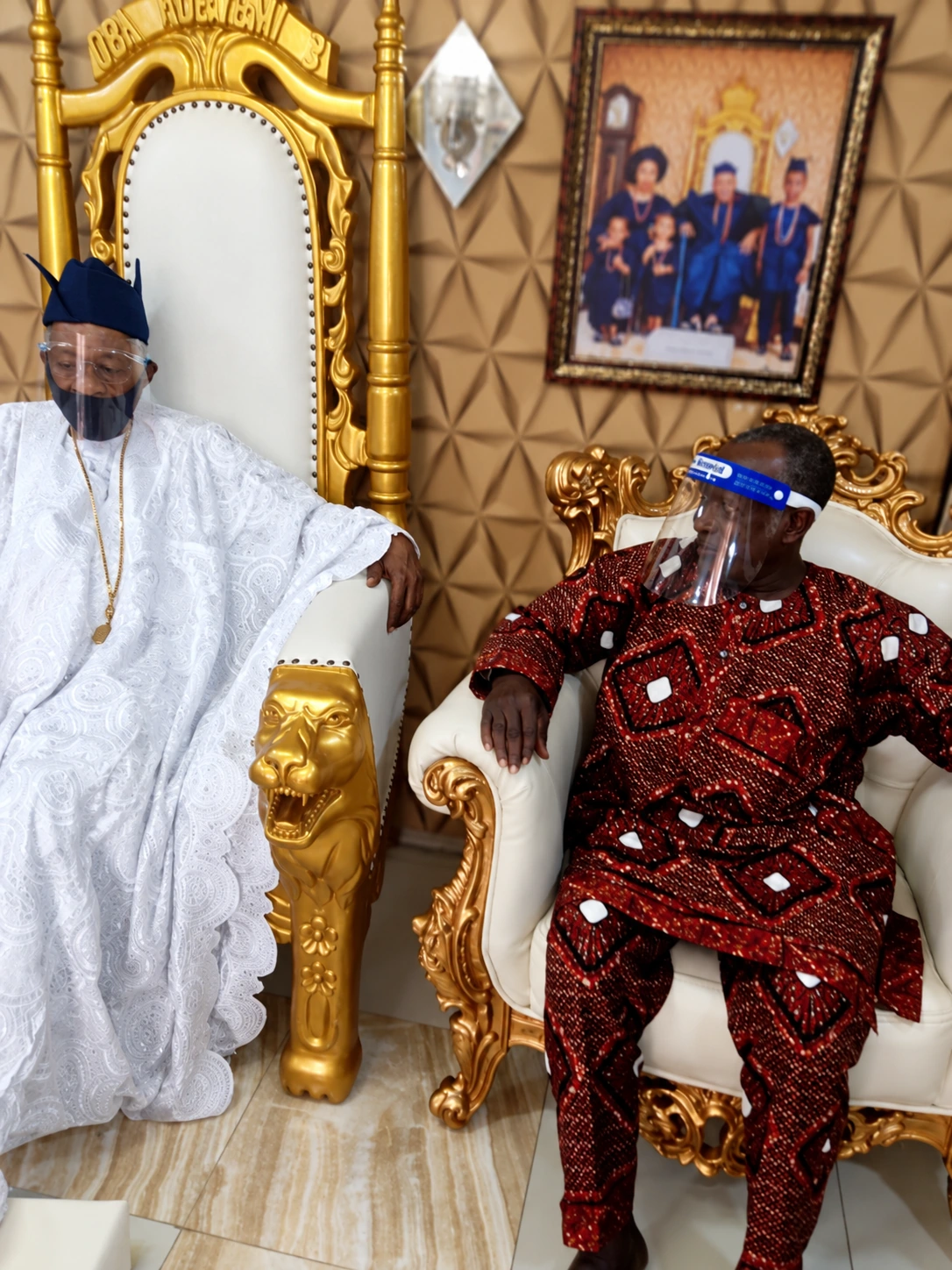
My father visiting the late Aláàfin Lamidi Adeyemi III (reigned 1970–2022) at his palace. Masks and a face shield mark the pandemic period.
AI-assisted restoration for viewing; fine detail may be reconstructed. The untouched photograph remains the historical reference.
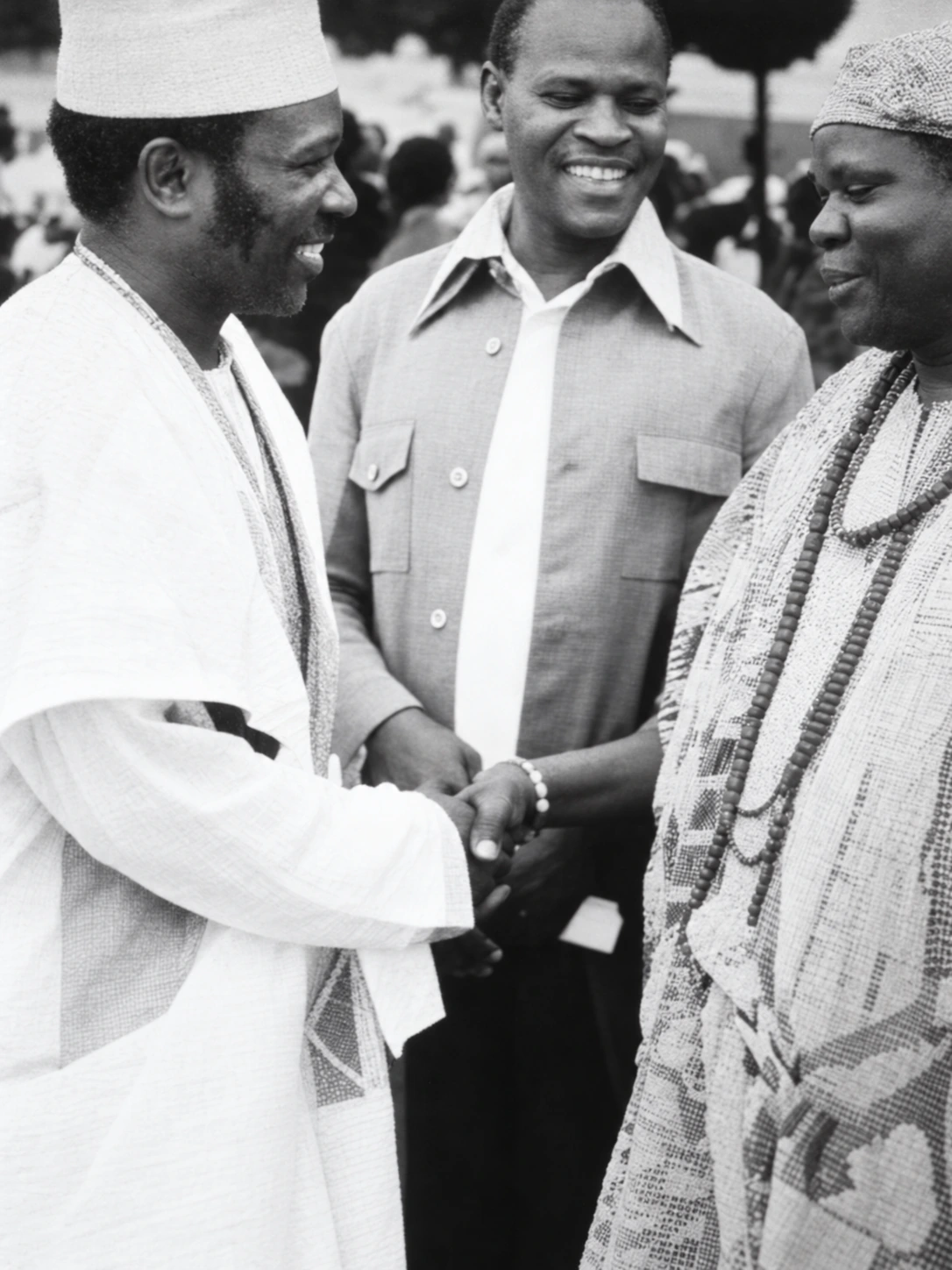
In a note dated 21 April 2023, my father identified this 1987 photograph as showing him with Oba Babatunde Akran of Badagry and the late Prince Ayilara of Ójó.
AI-assisted restoration for viewing; fine detail may be reconstructed. The untouched photograph remains the historical reference.
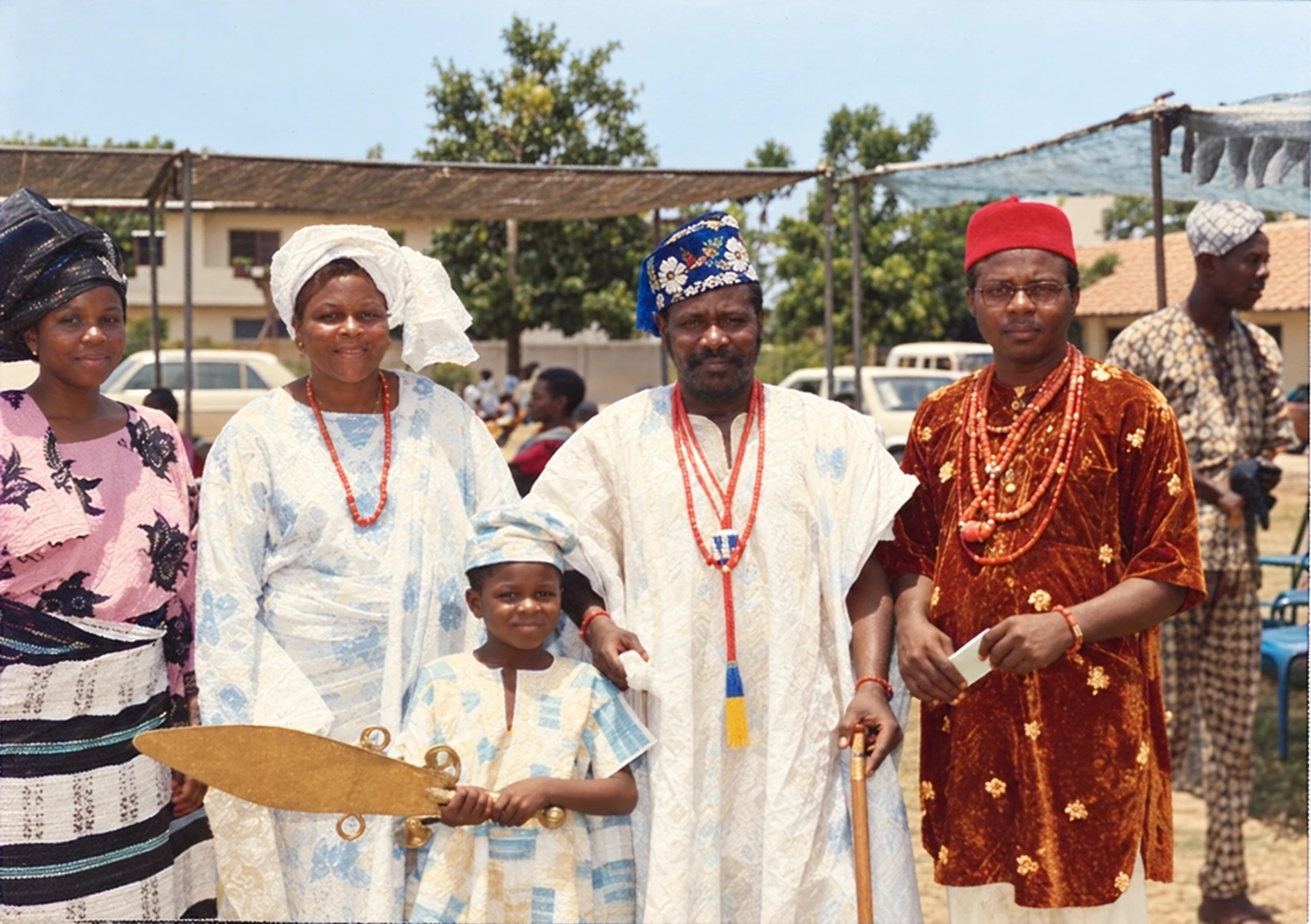
That’s me with my mum and her siblings, Uncle Cyril and Aunty Geraldine, at my father’s Ajiroba installation in Ójó, around 1987. My job was to hold his gold-plated ceremonial sword—a rather grand assignment for a small pair of hands. I remember the bright sunshine, the weight of the sword, and being very pleased to have a part to play.
AI-assisted restoration for viewing; fine detail may be reconstructed. The untouched photograph remains the historical reference.
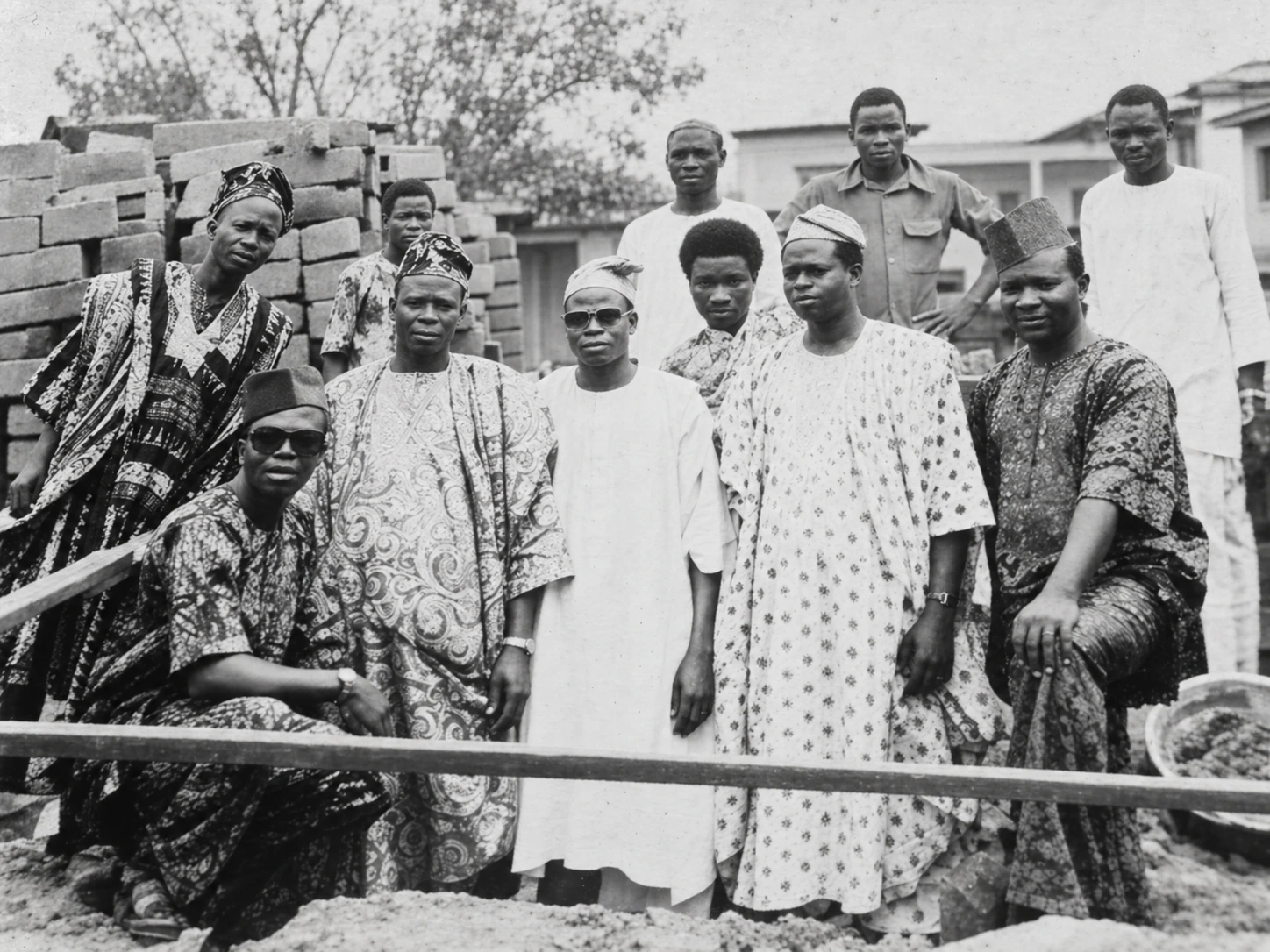
An additional group photograph from the supplied archive; names and occasion have not yet been confirmed.
AI-assisted restoration for viewing; fine detail may be reconstructed. The untouched photograph remains the historical reference.
WORDS THAT CARRY A HOUSE
The Yorùbá verses and complete English renderings below follow the framed versions supplied for this site in 2026 for Ilé Olúkòtún–Mìnjá-Ọbà and Ilé Bàálè Oró. Earlier family notebook transcriptions dated 9 November 2018, and an undated combined sheet, preserve related readings. Their earliest composition dates are unknown. Their accompanying research notes inform the context, while detailed genealogical assertions remain in my private archive until each can be presented with clear, shareable references. Praise poetry uses metaphor and inherited titles; it is read here for identity and education, not as a legal or political claim.
In the opening praise line, ORÓ denotes wealth, not the town of Oró. Family names, work and provision appear in expansive praise imagery. This living family rendering follows the 2026 frame and honours the Ilé Bàálẹ̀ connection through Moróláké; the individual ancestor lines have no verified calendar dates.
(OLÁLÉKAN) ÀKÀNBÍ-ÈJÌ,
ỌMỌ ORÓ L’ÓBÁ, ỌMỌ ÁJÍBÓWÓ
ỌMỌ LÁGBÁÍYÉ KÀNKÀNKÀNKÀN
ỌMỌ ONIBI LEGBE YE
ỌMỌ ÒDÒFÁ, ỌMỌ AROGBO
ỌMỌ ÒDÒFÁ KÒSÍ N’ ÍLÉ
ÁRÁ ORÓ KÒ RÍ ÓWÓ YÁ
ỌMỌ BÍ Á SÍSÉ, Á Ó NÍ ÓWÓ
BI Á KÒ SÍSÉ, Á Ó NÍ ÓWÓ,
KÍ N’ LÓDÉ TÍ Á KÒ SÍSÉ, KÍ ÓWÓ NÁ LÈ PÒ SÍ
ỌMỌ ÓWÓ Y’ ÓWÓ, ỌMỌ Á SÍLÉ ÓWÓ YINNI
ỌMỌ ÓWÓ DANHIN DANHIN
ỌMỌ ÓWÓ JÉ KÍ N’ SÍMÍ
ỌMỌ ÉLÉDÍDÍ AGBE ÉLÉDÍDÍ OGBO’MÓKÍN
ỌMỌ MARIA SALOME ONÍKỌYÍ
ỌMỌ ILÉ BÀÁLẸ̀ ÒRÒ
ỌMỌ MORÓLÁKÉ AGNES ATÓYÈBÍ, ABIKÉ-ÈJÌ
ỌMỌ ÓLÓWÓ ÍSÉ N’BÁYÉ,
KÍ ÓWÓ SÍLÉ TÓ GBODE
ỌMỌ EWEDU N’BÉ L’ÓBÁ, Á I TÌ NÁ,
ÓWÓ ÒGÚNMÓLÁ N’BÉ L’ÓBÁ, Á I TÌ NÁ
AROGBO DÉ Ó, ÒDÒFÁ N’BÒ N’LÉ
(OLÁLÉKAN) ÀKÀNBÍ-ÈJÌ,
Heir of boundless wealth, in the realm of ỌBÀLAND (ÌGBOMÌNÀ), northern YORÙBÁLAND.
Scion of those who awaken to discover the treasures they possess.
Descendant of ÒDÒFÁ, who once strode the world like a colossal titan.
A legacy of noble ancestors, born to prosper and grace this world with their presence.
Scion of ÒDÒFÁ, renowned forefather, and the lineage of AROGBO, the patriarch.
In ÒDÒFÁ's absence, the people of ORÓ find no access to abundance and riches.
With or without formal employment, wealth flows abundantly — so trade and amass even more!
Descendant of illustrious forebears, their wealth carried in sacks.
Scion of remarkable ancestors, who opened doors to dazzling opulence-filled abodes.
Heir to those who possessed currencies as numerous as grains of sand.
Descendant of boundless riches (“owo gidi”), grant us respite from our toil!
Descendant of the King of ÉDÍDÍ (ÉLÉDÍDÍ OGBOMÓKÍN).
Heir to the lineage of MARIA SALOME ÓNÍKÒYÍ, daughter of the King of ÉDÍDÍ.
Descendant of Ilé Bàálẹ̀ of Òrò, through Moróláké’s royal line.
Heir to the lineage of Moróláké Agnes Atóyèbí, Abiké-Èjì.
Descendant of those who traded in ancient currencies long before the Shilling's reign.
Prosperity flows abundantly from Ewedu and Ogunmola in ỌBÀLAND.
AROGBO reclaims the spotlight, and ÒDÒFÁ, the son of AROGBO, returns home!
This poetic rendering brings the family frame together with the Ilé Bàálẹ̀ connection through Moróláké. It is not a literal line-by-line edition. Its wealth and status language belongs to praise poetry; the verse alone does not verify dates, titles or genealogical links.
People, place, stewardship and the brass mortar motif appear in the latest supplied frame. Its English gives a family interpretation of the praise language. The 2026 framed version does not date the ancestors named in it.
(OLÁLÉKAN) ÀKÀNBÍ-ÈJÌ,
ỌMỌ NMOJO ORÓ
ỌMỌ NMÓKÍN ORÓ
ỌMỌ BÀÁLÈ YÍÒ MÓ ORÓ KÉ
ỌMỌ ONÍLÈ
ỌMỌ ÓLÓRÓ ÓKÈRÍMÌ
ỌMỌ ONÍLÚ KÒ NÍ JÉ Ó TÚ
ỌMỌ OKÒMBÒ
ỌMỌ ÒGÒJÍ
ỌMỌ ÁMÁGBÒNÍYÍ
ỌMỌ ÓLÚBÍMPÉ
ỌMỌ ÓYÈBÍMPÉ
ỌMỌ ỌLỌFÍNHÀ ÁJÓBÒ
ỌMỌ ÁRÍSÉ L’ÓLÁ
ỌMỌ ÓLÓDÓ ÍDÉ
OLÁLÉKAN ÀKÀNBÍ-ÈJÌ,
Descendant of NMOJO. Descendant of NMÓKÍN ORÓ.
Heir to the legacy of the monarchs of ORÓ, skilled in uniting the people of ORÓ.
Scion of the landowners (Omo ONÍLÈ), entrusted with their ancestral heritage.
Heir to the OLORO, the rightful LORD of ÓKÉRÍMÍ (domain of the OLÓRÓ of ORÓ).
Guardian of the kingdom (Omo ONÍLÚ), ensuring its perpetual existence.
Scion of OKÒMBÒ and ÒGÒJÍ, embodiments of royal dignity and grandeur.
Descendant of ÁMÁGBÒNÍYÍ, the bringer of boundless joy and celebration.
Scion of ÓLÚBÍMPÉ, the perfectly created forebear of honour.
Scion of ÓYÈBÍMPÉ, the creator of exceptional nobility and excellence.
Descendant of ÓLÓFÍNHÁ, linking the ILÉ BÀÁLÈ Oríkì to the ÒYÒ ÁLÁÀFÍN royal lineage.
Descendant of those who majestically embody royal splendour.
Guardian of the brass mortar (ÓDÓ ÍDÉ), a symbol of royal heritage.
The translation's royal language reflects the framed family interpretation and should not be read as an independently adjudicated history of succession. Academic and archival inquiry has informed the wider research; detailed assertions in the frame's annotations require their underlying sources to be shown before they are presented as established fact. The brass mortar's provenance is not independently verified on this page.
The older Bàálè leaves repeat the calls to Nmójó, Mọ́kìn Oró and the Bàálè house; the Mìnjá Ọ̀bà leaves carry Òdòfá, Àrògbò, work and provision. The combined sheet places the two family strands side by side and includes related Òdòfá and Oró lines. These are witnesses to how relatives wrote and transmitted the praise names, rather than evidence that every spelling or line has stayed fixed.
The dated leaves were supplied with a courtesy credit to a named family custodian; the undated combined page does not establish its writer or year. The full verses above remain the later family edition; uncertain readings in the older photographs are kept in the research archive until they can be checked with custodians and Yorùbá language specialists.
A date on a notebook page tells us when that copy was recorded, not when the verse first arose. That distinction matters for a history that crosses generations. Ọ̀bà-Ilé and the Bàálè line each have a place in the larger story.
THE FAMILY CREST
Our family identifies this as the official emblem of Ilé Olúkòtún Oró. It brings together the founding journey, the Kàá of the compound, livelihoods, defence and the spiritual paths of different generations. Each symbol is part of how the family explains its history and values.
The meanings below follow a family statement from Chief Babatunde Sanni (Takiti II), Oloye Olúkòtún of Oró, and his spokesperson Gboyega Adekanye. The family credits Aliu Moyosore Akoshile with creating the emblem. I share that attribution with gratitude. The supplied statement does not give the emblem’s creation year; its symbols refer to different periods and should not be read as one dated scene.
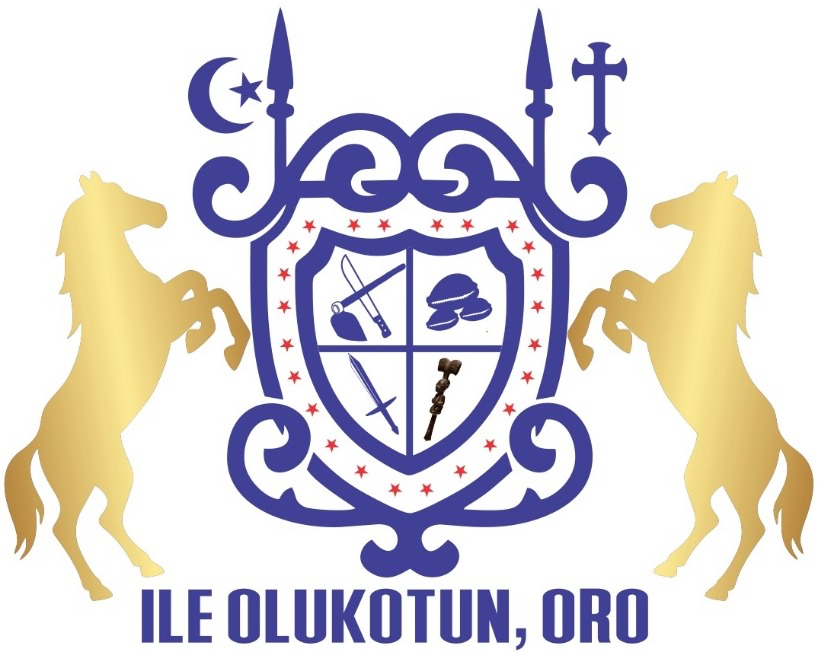
The family account recalls Òbẹ̀nbẹ̀ Ìmìnjá-Òbà travelling on horseback to a forest settlement. The account also mentions enslaved people in that journey; their presence deserves honest and humane remembrance.
These stand for the 24 Kàá, or household sections, remembered in the family account of the 1962/63 national census. The compound has grown beyond that number. The underlying census record is not reproduced here.
They recall farming and the metalwork associated in family history with Ìmògùn, who made agricultural tools for the settlement. Work, skill and provision sit at the centre of this part of the crest.
Once used as currency, cowries express enterprise and prosperity in the family's telling. They echo the Òdòfá praise lines about access to resources; the language is a cultural memory and aspiration, not a claim of present wealth.
The double-headed emblem of Ṣàngó honours a spiritual practice remembered among earlier, undated generations of the family. The crest retains that inheritance while acknowledging that the family's religious life changed over time.
The sword recalls defence of the settlement and the family's account of a Balógun role within Ilé Olúkòtún. Its place here is remembrance of responsibility and protection.
The crescent marks the Islamic faith adopted by some forebears, at dates not fixed by this account, and practised within the family. It stands alongside the other symbols as part of a layered history.
The cross recognises Christian faith among other family branches; the crest does not date individual conversions. Together, these signs make room for different convictions within one ìdílé.
About the account: This is the family's explanation of its emblem, including its association of the stars with the 1962/63 census. The page preserves that interpretation while leaving precise dates and historical details open to documentary corroboration. The creator is credited by name; private family contacts and internal records are not published.
THE RESPONSIBILITY
Oríkì and the emblem do not ask us to stand above others. They invite us to compare accounts, learn the language well, attend to the people whose work shaped the settlement and carry the questions forward with care. A family's story can help others begin their own search.
Explore the learning journey ↗Knowing our roots also asks how we choose to live. Explore Ọmọlúàbí: character, responsibility and belonging.
YORÙBÁLAND / DEVELOPMENT
Land, language and relationships can inform a practical inquiry into skills, infrastructure and shared prosperity. Explore the new sourced development hub across Nigeria, Benin and Togo.
Explore the development hub → · Open both interactive maps → · Sources and review
SHARED SYMBOLS
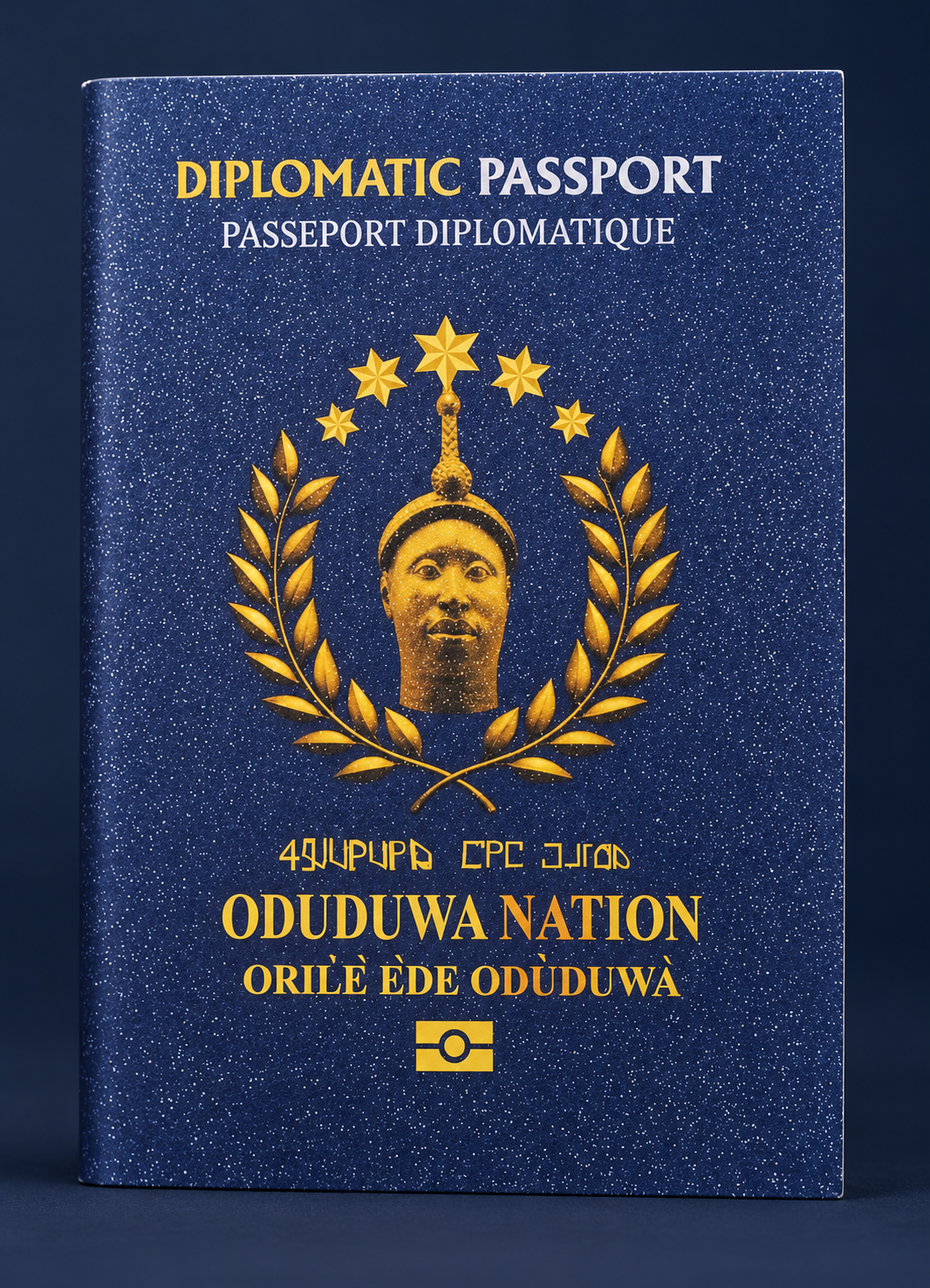
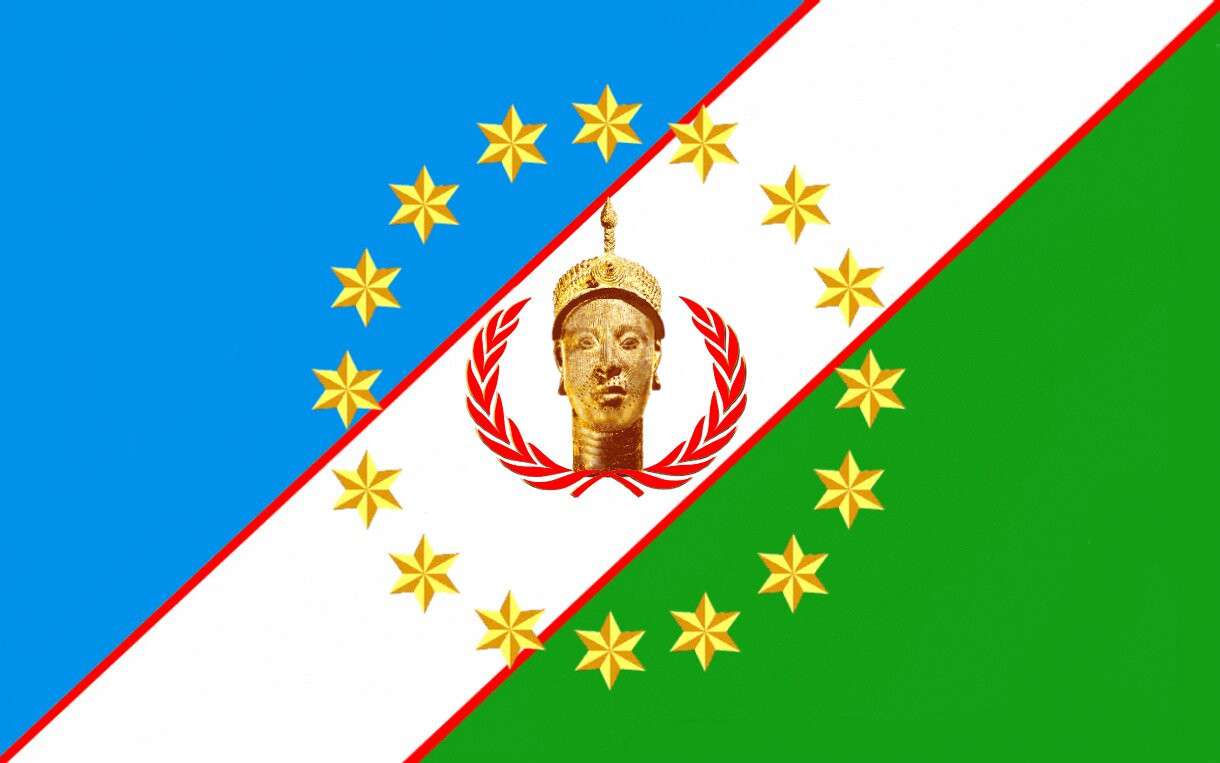
The Odùduwà flag carries a contemporary expression of Yorùbá identity across borders. Explore its colours, sixteen stars and central head, then listen to the Yorùbá nation anthem and the Ilé-Ifẹ̀ anthem.
Flag symbolism and Yorùbá nation anthem → · Ilé-Ifẹ̀ anthem and published lyrics →
Olukotun Studios Ltd · Registered in England and Wales · No. 17537910
Registered office: 5 Brayford Square, London, E1 0SG, England.
