YORÙBÁLAND / RESOURCES & DEVELOPMENT
A civilization’s next chapter.
Land, skill and imagination. Explore how Yorùbá communities across borders could turn inherited knowledge and productive resources into shared prosperity.
Research review · 20 October 2026 · Each statistic keeps its own reference period.
THE NEXT CHAPTER OF A LIVING CIVILIZATION
Build capability. Keep value close to home.
Yorùbá identity lives in language, places, institutions, craft and the people who carry them forward. The industrial ambition here is broad: reliable services, skilled work, competitive enterprises and a larger share of value created locally.
The question is not simply what lies beneath the ground. It is what people can learn, make, maintain and exchange—and whether those gains improve everyday life.
These pages connect Nigeria, Benin, Togo and the diaspora without treating cultural belonging as an exclusive land title or a settled sovereign border. Development must serve everyone who lives and works in a place.
Explore the development maps →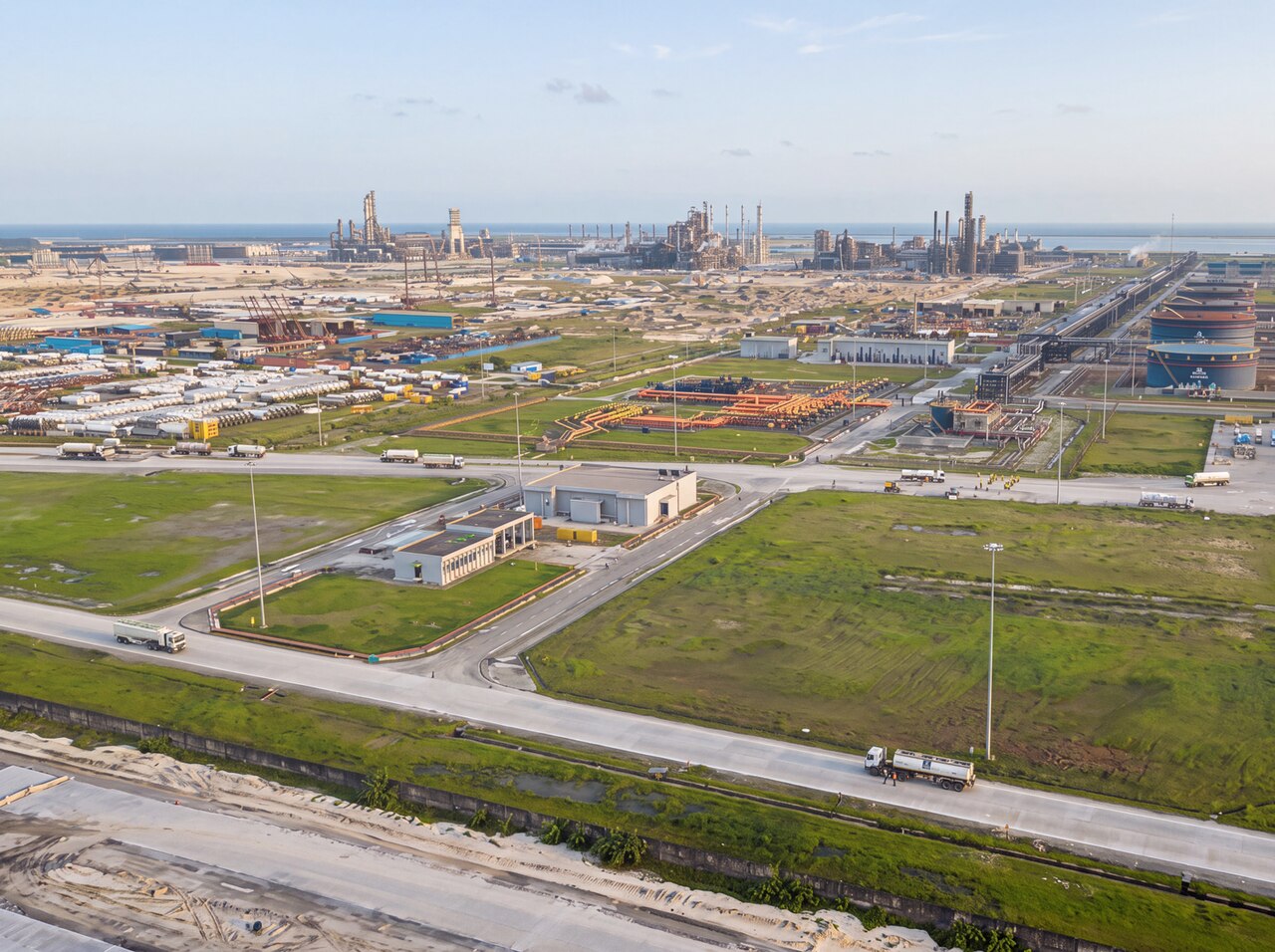

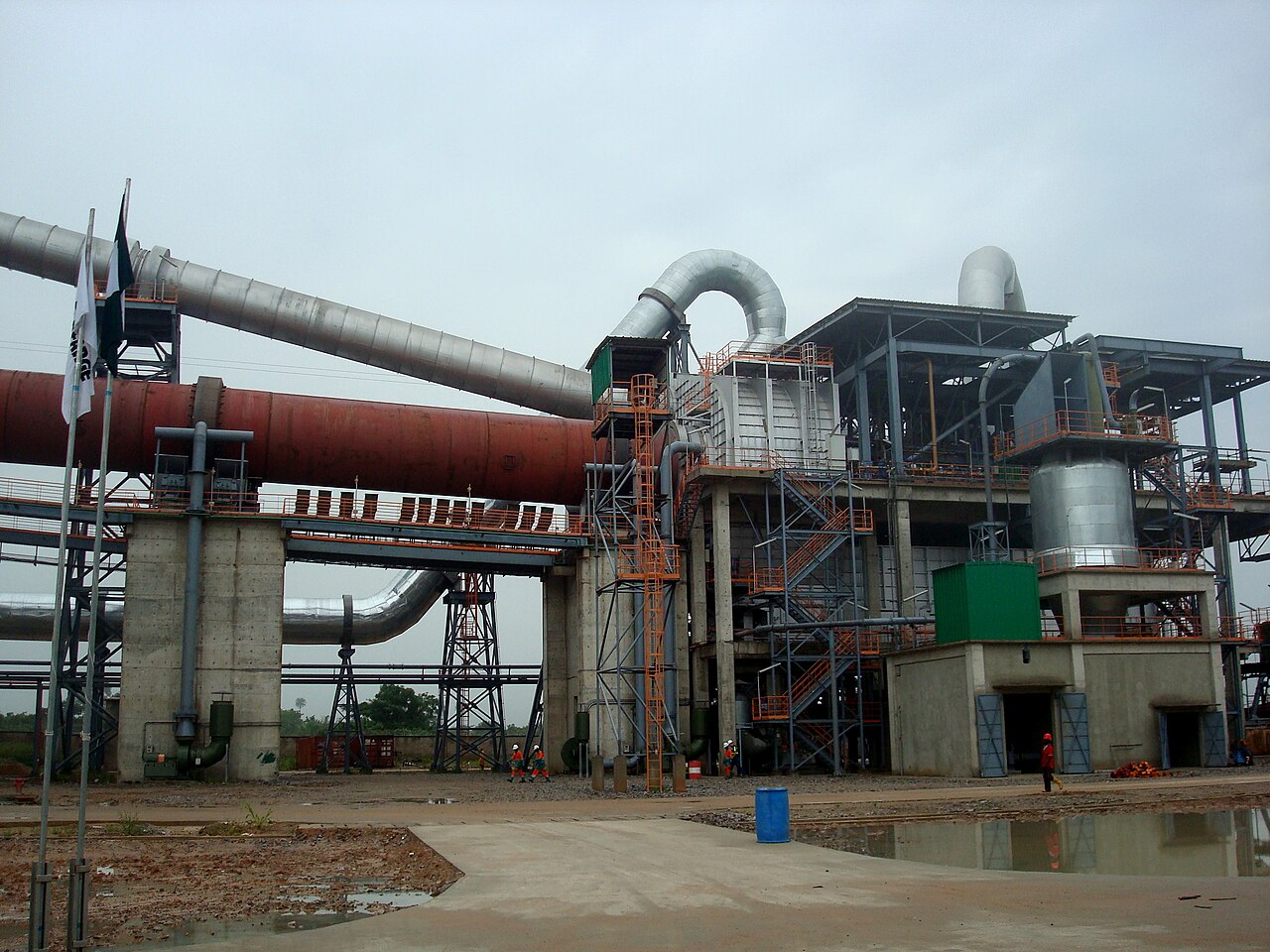
Processing, manufacturing and maritime trade: real photographs of industrial infrastructure in Lagos and Ogun states. Select a tile to see the full photograph.
Photograph credits & dates
- Process engineering · Lekki · FrankvEck · 2026. Original & description ↗ · CC BY-SA 4.0.
- Maritime trade · Lekki · FrankvEck · 2026. Original & description ↗ · CC BY-SA 4.0.
- Manufacturing · Ogun · Fachab · 2011-07-10. Original & description ↗ · CC BY-SA 4.0.
Separate places and dates, arranged as a visual collection. Images are cropped to fit the tiles; these display crops retain each photograph’s stated licence. No AI-generated imagery or generative edits. Photographs do not establish current output or performance.
Choose a useful starting point.
See the connections
Two spatial views: landscape and resource evidence; production, research and skills.
Explore →02Know the land
Rivers, hills, forests, coastlines and cross-border places—with sources and evidence status.
Explore →03Follow the material
Browse materials by region and town, then explore industrial uses, value chains and feasibility questions.
Explore →04Develop the people
Yorùbá education, historical skills, Ifá stewardship, research, AI and biotechnology.
Explore →05Examine power and choices
Current corporations, trade, investment, debt, public ownership and lessons from China.
Explore →06Inspect the sources
Dated findings, sources, further reading and photograph credits.
Explore →WEAVING / DRESS / DESIGN / ENTERPRISE
Yorùbá textiles · cloth, craft & ceremony.
The lustre of aṣọ òkè. The architecture of a gèlè. The assured finish of a fìlà. Yorùbá dress brings weaving, dyeing, embroidery and tailoring into a shared language of occasion, belonging and personal style.
Explore the cloth and the complete ensemble: sumptuous woven strips, lace and embroidered surfaces, flowing agbádá and contemporary adìrẹ. Select any image to see it in full.

Royal blue · lace & ceremony
Gold embroidery, embellished blue dress and a sculptural gèlè create a richly coordinated occasion look.
Image & credit
No open reuse licence verified. Supply a creator credit or request a correction →
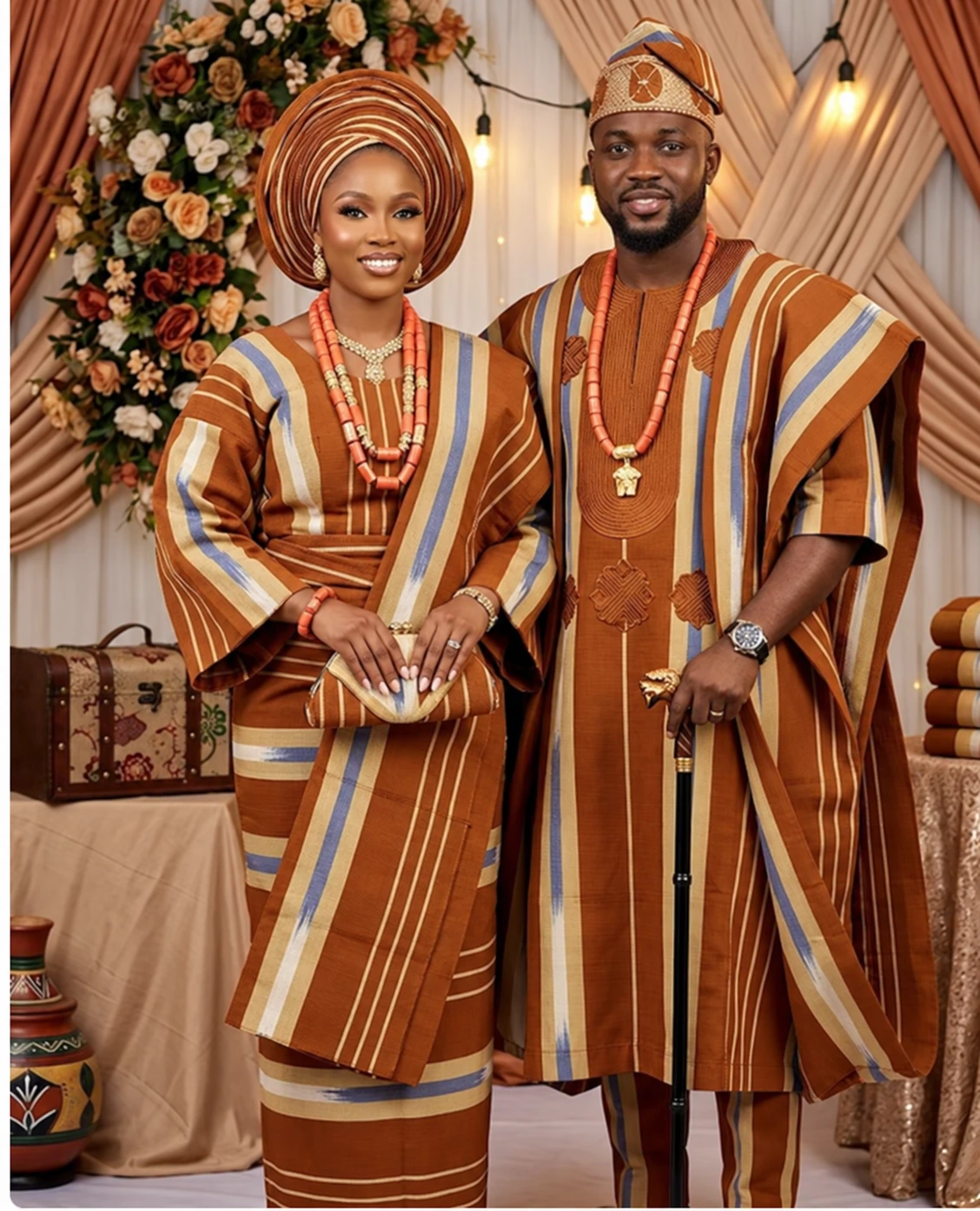
Aṣọ òkè style · colour in conversation
Copper, cream and blue stripes connect two outfits through colour, proportion and carefully coordinated headwear.
Image & credit
No open reuse licence verified. Supply a creator credit or request a correction →
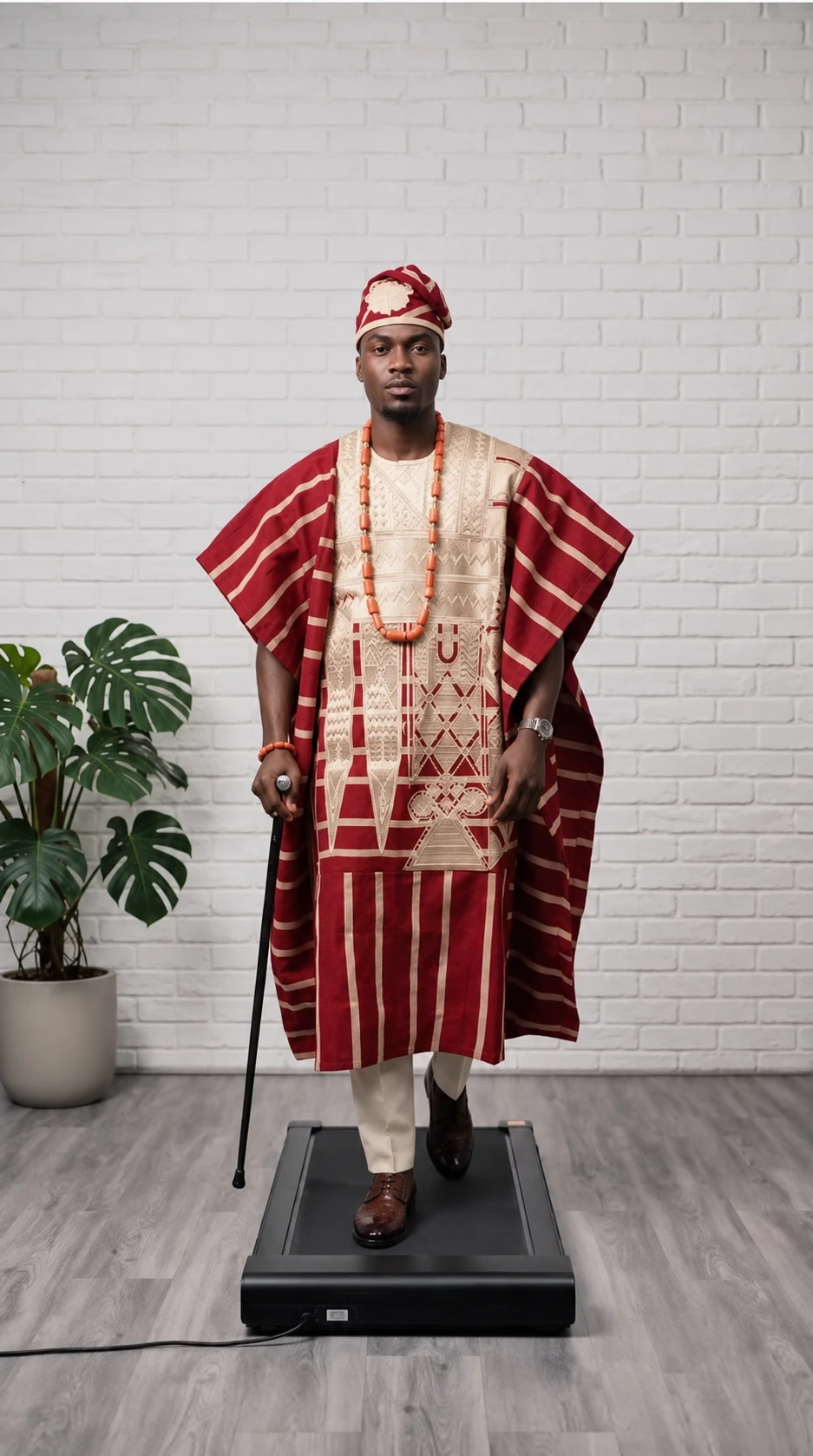
Agbádá · presence & proportion
Burgundy and cream stripes frame an embroidered centre panel, with a coordinating fìlà and a flowing silhouette.
Image & credit
No open reuse licence verified. Supply a creator credit or request a correction →
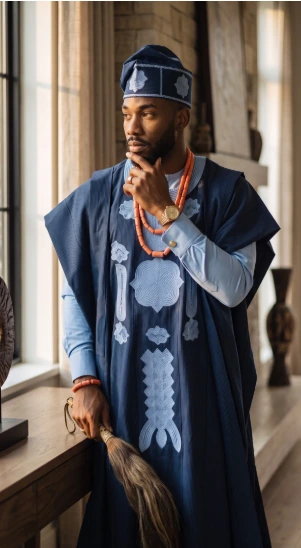
Deep blue · embroidery & finish
A deep-blue agbádá brings the embroidered neckline and coordinating cap into focus.
Image & credit
No open reuse licence verified. Supply a creator credit or request a correction →
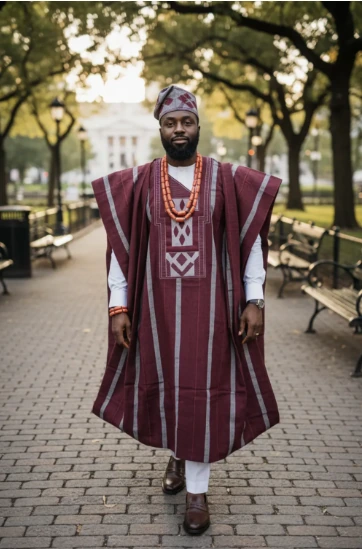
Stripes · cloth in motion
A full-length view gives the robe’s drape, vertical lines and contrasting panels room to speak.
Image & credit
No open reuse licence verified. Supply a creator credit or request a correction →
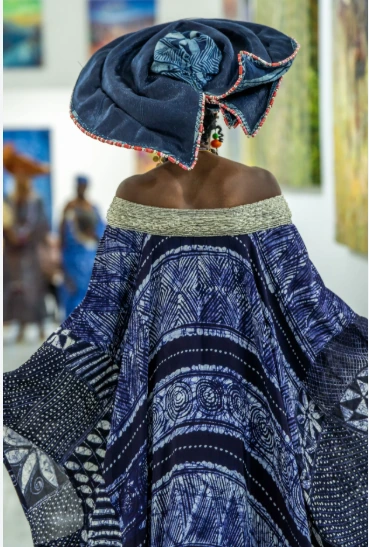
Gèlè · a sculptural silhouette
An expansive indigo headwrap and flowing patterned dress show how cloth can build shape as well as colour.
Image & credit
No open reuse licence verified. Supply a creator credit or request a correction →
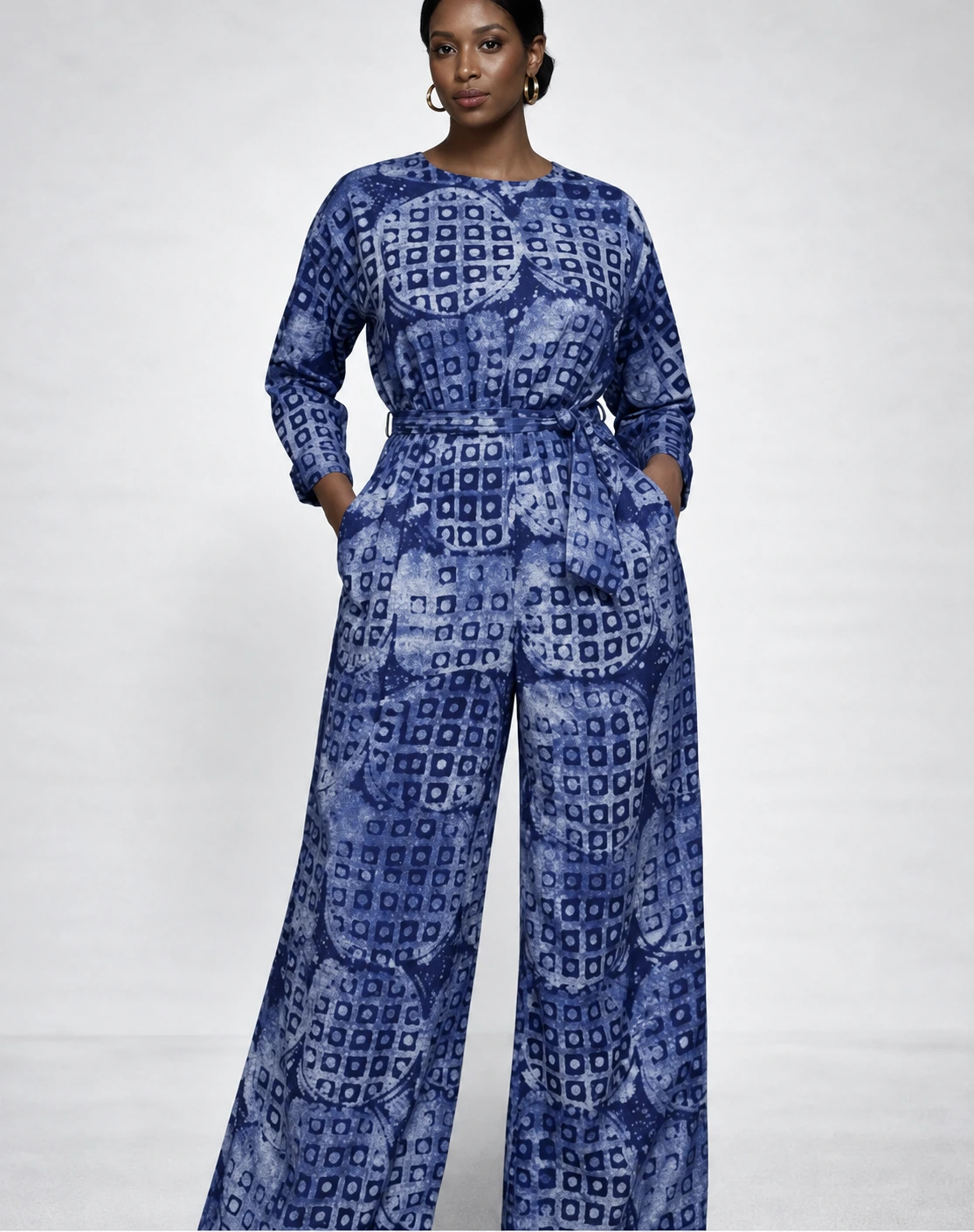
Adìrẹ style · a contemporary cut
An indigo-patterned jumpsuit explores a tailored, contemporary silhouette. The source presents this as styling inspiration for fabric, rather than a finished garment for sale.
Image & credit
No open reuse licence verified. Supply a creator credit or request a correction →
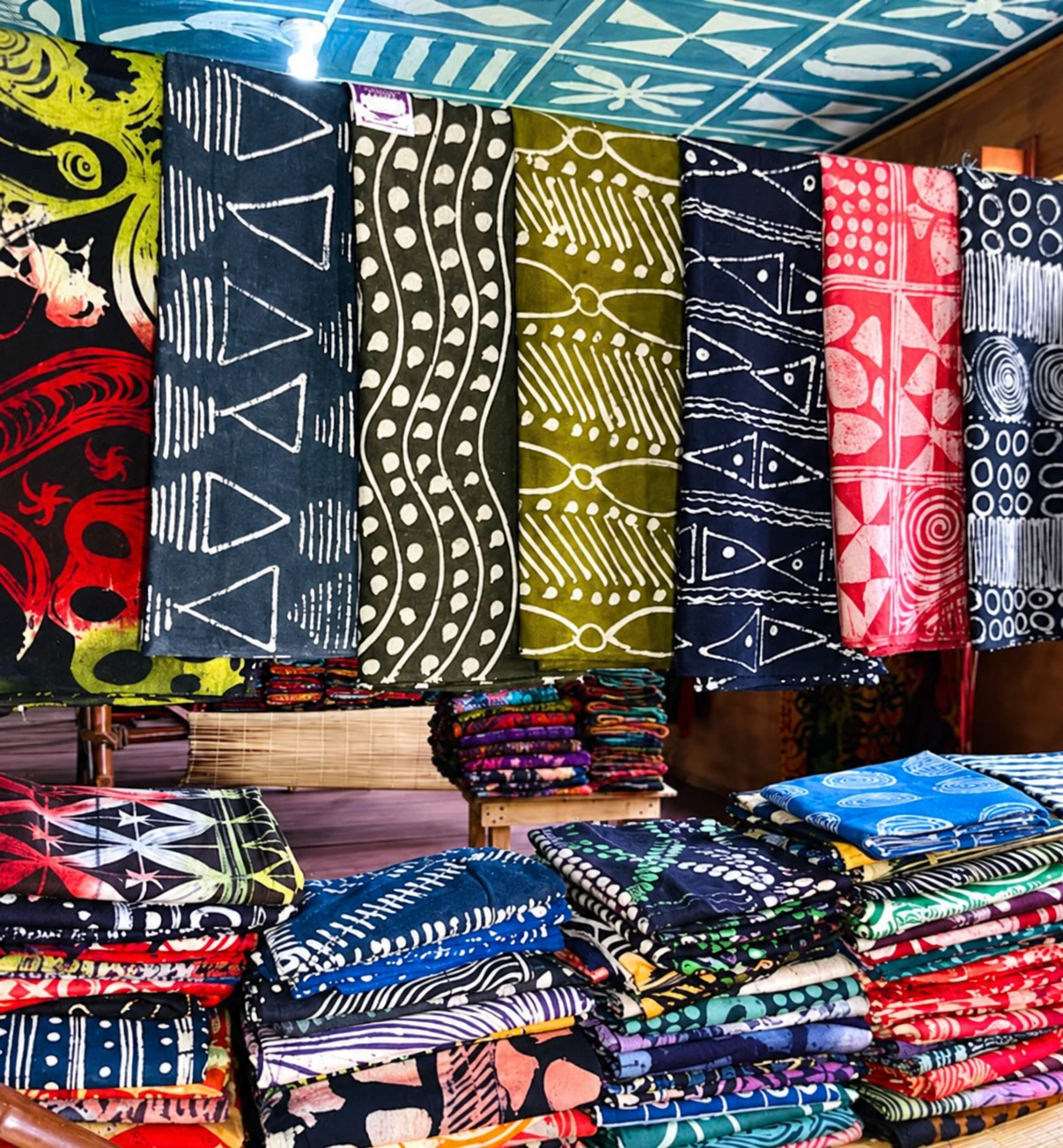
Adìrẹ · a language of colour
Hanging lengths and folded cloth bring bold colour, repeated motifs and contrasting patterns into view.
Image & credit
No open reuse licence verified. Supply a creator credit or request a correction →
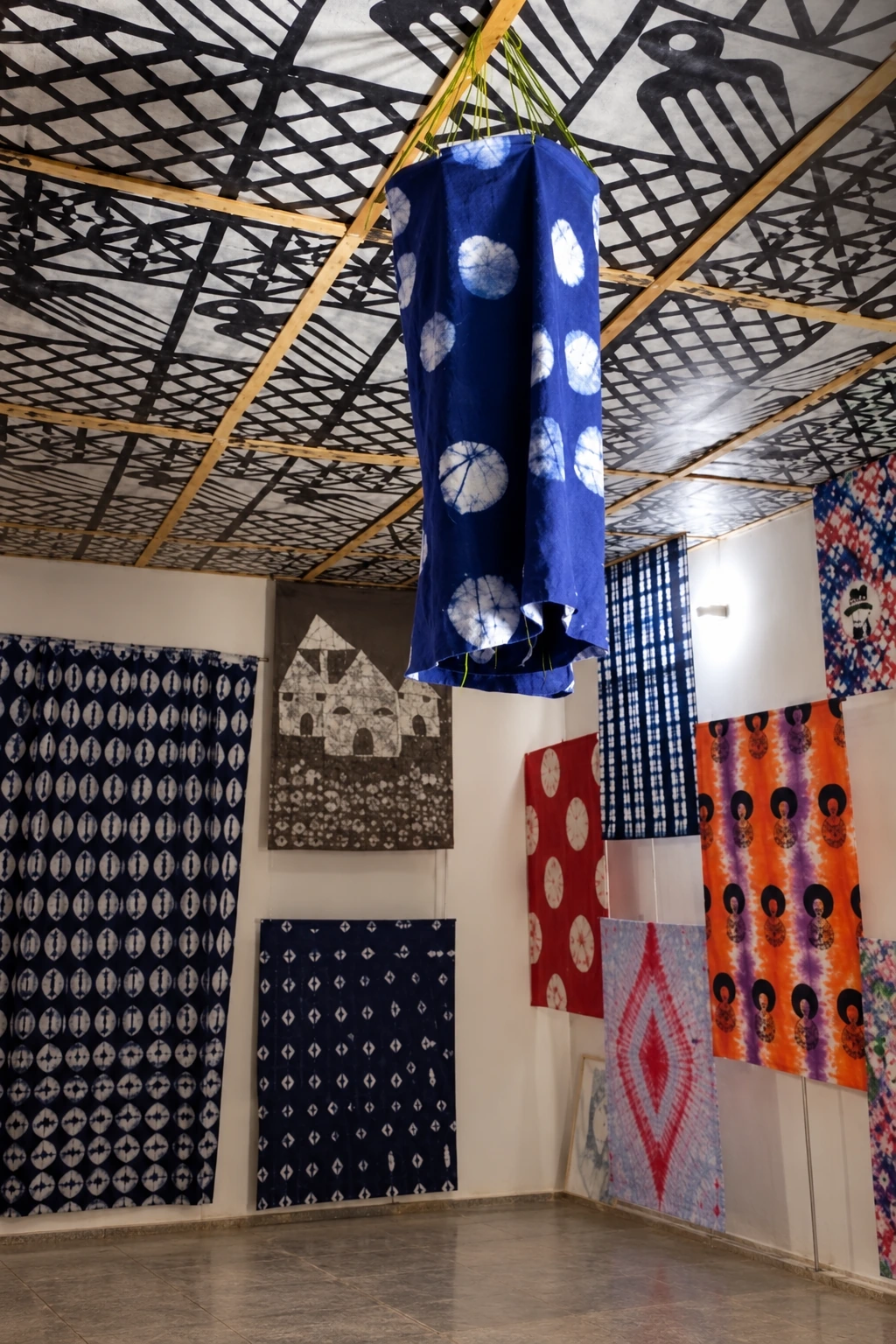
Adìrẹ · a room of possibilities
Suspended panels and a patterned ceiling make cloth part of the space itself at Adire Oodua Gallery.
Image & credit
No open reuse licence verified. Supply a creator credit or request a correction →

Fìlà · the finishing touch
Seven caps explore striped colour combinations, folded profiles and the quiet confidence of a well-chosen finishing detail.
Image & credit
No open reuse licence verified. Supply a creator credit or request a correction →
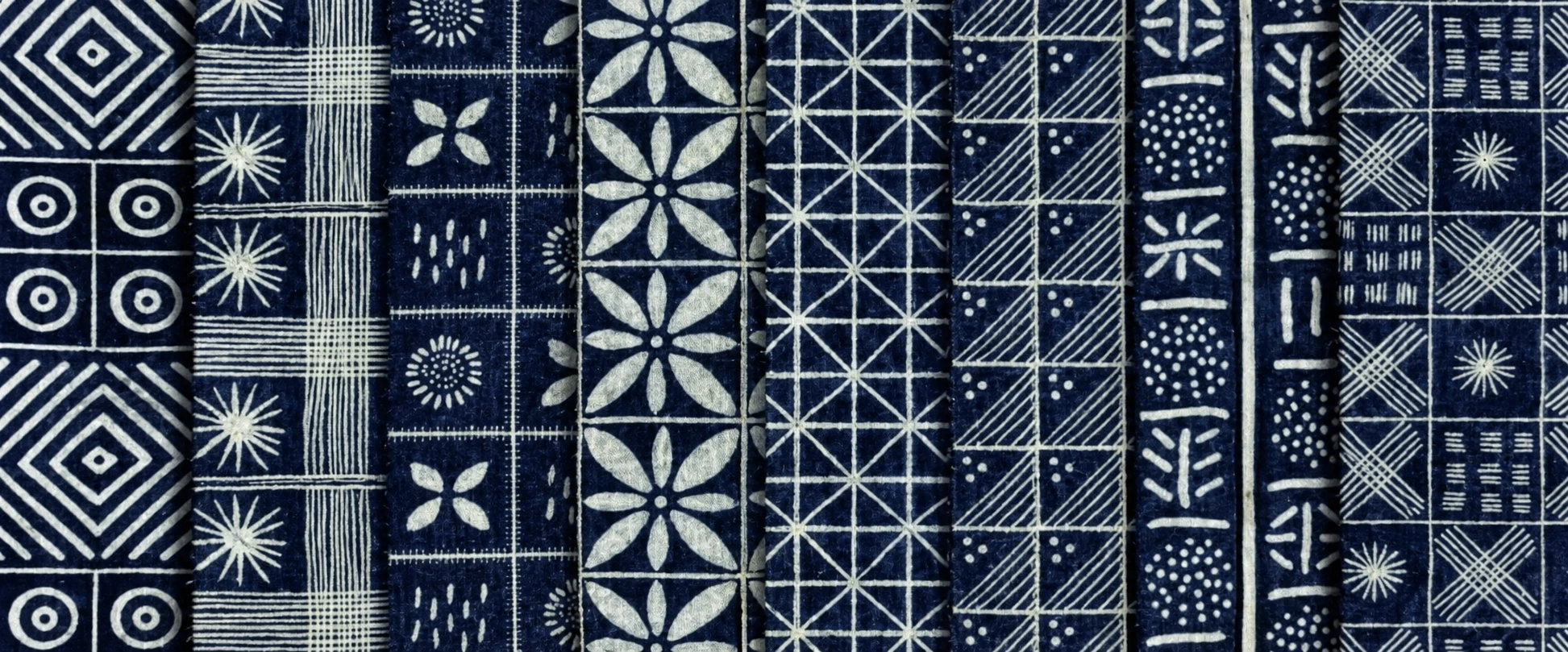
Indigo · rhythm & detail
Circles, diamonds and fine repeated lines reveal the visual richness of a patterned cloth.
Image & credit
No open reuse licence verified. Supply a creator credit or request a correction →
Know the cloth · fabrics, forms & shared dress
Aṣọ òkè: narrow handwoven strips joined into larger cloths. Its established varieties include the beige of sányán, the deep red or magenta of àlàárì, and the dark blue-and-white tradition of etù. Contemporary makers also explore new fibres, colours and ornament. These names describe traditions; the selected images do not establish fibre composition or weaving technique.
Lace and embroidered fabrics: an important part of Nigerian occasion wear, shaped through trade, tailoring and local taste. Such fabrics can enter Yorùbá dress without being indigenous inventions or locally manufactured.
Velvet, damask, silk and Ankara: a wider material vocabulary also appears in Yorùbá textile arts. Bolaji Campbell’s RISD Museum essay documents their use alongside handwoven cloth in Egúngún ensembles. That sacred context has its own meanings and custodianship; it is distinct from everyday or wedding fashion.
Fìlà, gèlè, agbádá, ìró and bùbá: these name a cap, headwrap, flowing robe, wrapper and blouse, rather than five different fabrics. Cloth, cut, embroidery and styling work together to create the finished dress.
Aṣọ ẹbí: coordinated dress that expresses connection among family and friends at an occasion, rather than a single material. Woven cloth, lace or prints may all contribute to that shared visual identity.
V&A · cloth, weaving and contemporary fashion ↗ · V&A · aṣọ ẹbí and family dress ↗ · RISD Museum · cloth and meaning in Egúngún ↗
From craft to enterprise · keeping value with makers
One finished ensemble connects spinners and yarn suppliers, weavers, dyers, embroiderers, tailors, headwrap stylists, photographers and retailers. A useful development question is how more of its value can stay with the people who create it.
Priorities to explore include paid apprenticeships, dependable yarn and equipment, safe dyeing, consistent finishing, clear fibre and origin labels, repair and reuse, fair commissions and reliable access to buyers. Digital catalogues and made-to-order services can support that work when makers retain control of their designs and terms.
These are proposals for evaluation. The selected images illustrate visual possibilities; they do not establish industrial capacity, maker income or commercial endorsement.
Follow textiles through the value chain → · Connect inherited skills with future work →
Further reading & image notes
For wider historical context: S. Adebanji Akintoye, A History of the Yoruba People (2010) ↗ and Akinwumi Ogundiran, The Yorùbá: A New History (2020) ↗. These are broader reading, not provenance records for the pictured garments.
A selection of fashion and styling imagery. No general reuse licence is offered.
A resource becomes useful through a chain of capabilities.
- EvidenceKnow the material, people, rights and demand.
- SkillsLearn, test, design and maintain.
- InfrastructureReliable power, water, transport and data.
- ProductionMake consistently good products at viable cost.
- Public valueDecent work, local suppliers and shared wellbeing.
A missing link can stop the chain. A quartz occurrence is not a semiconductor industry; a port is not an export strategy; a certificate is not yet a skilled workforce.
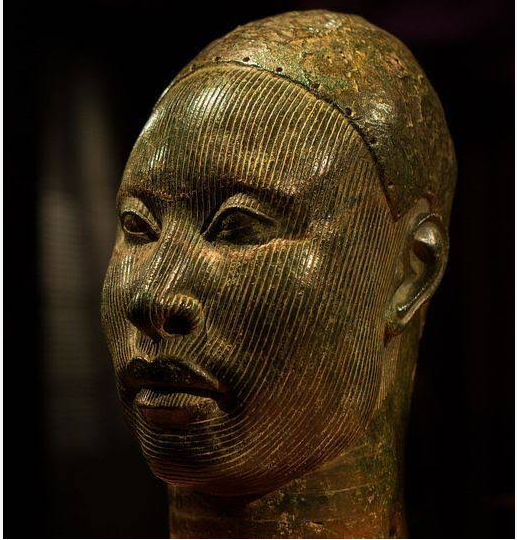
Fine facial lines turn across cheeks and brow, while the surviving surface records age and damage. The image corresponds to the striated head illustrated in Blier’s study. We can admire the maker’s precision without claiming to know the subject’s thoughts.
Object record & photograph credit
National Museums, Ifẹ̀ · head no. 6 in Blier, figure 20
Catalogue reference: Blier (2012), figure 20.
Source & context ↗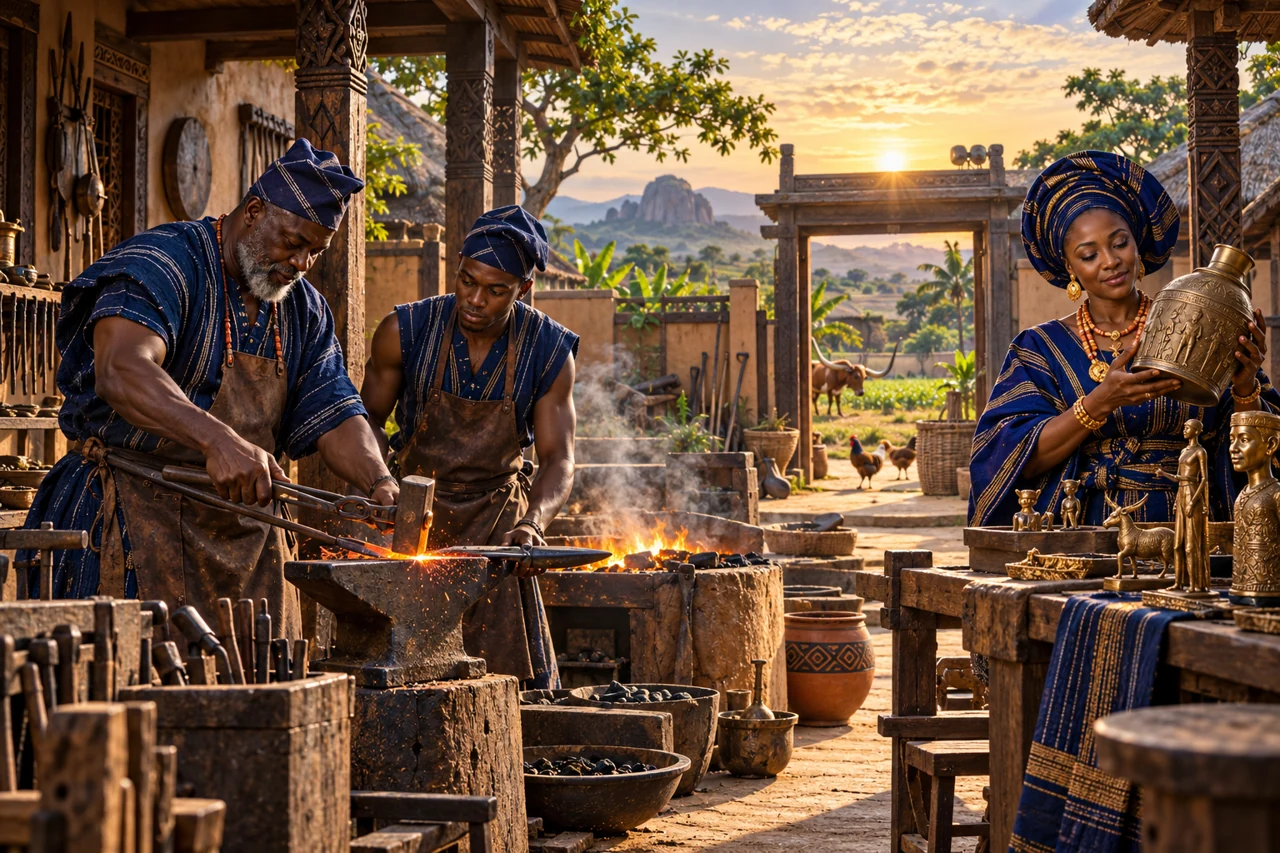
Study China’s transformation. Design for these places.
Manufacturing’s share of each national economy
2024 — latest common observation year · % of GDP
Country context, not a Yorubaland aggregate
Linear scale · 0 to 30 % of GDP
World Bank WDI indicatorNV.IND.MANF.ZS, downloaded 20 October 2026, datasetupdated 8 October 2026.2025 values available China 24.7344, Nigeria 8.2575, Benin 10.1526;Togo missing. Share is not output volume, productivity, global market share or readiness score. Do not sum national economies to estimate Yorubaland.
Manufacturing, value added (% of GDP), NV.IND.MANF.ZS ↗Broad industrial capability is an ambition, not a promise of total self-sufficiency. The comparison asks about coordinated investment, skills, competition, learning and public services—not whether a different society can reproduce China on command.
Read the mechanisms, trade-offs and evidence →The work is already more than an idea.
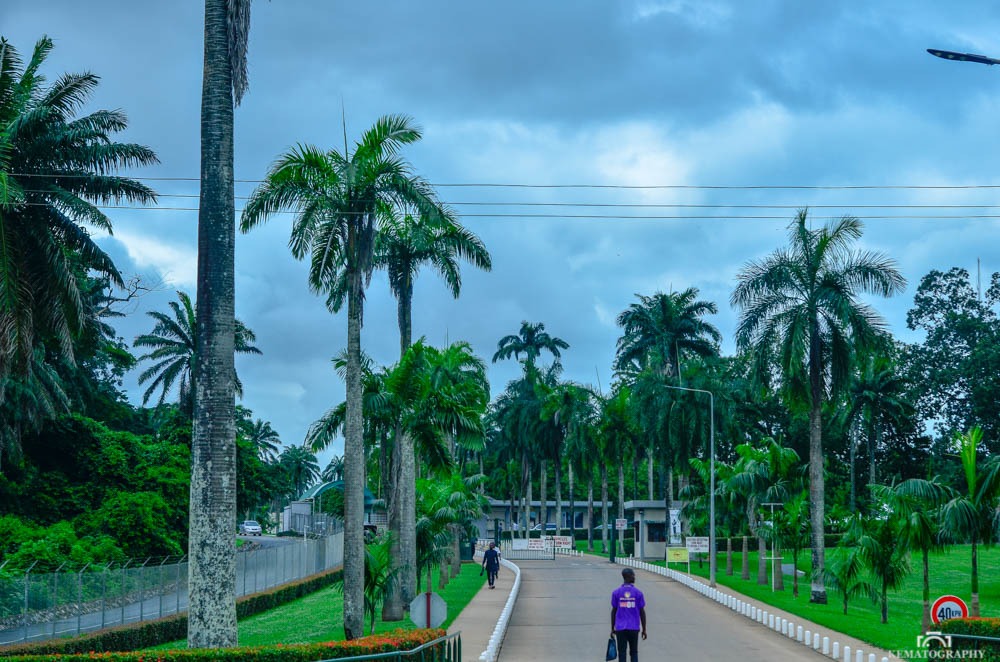
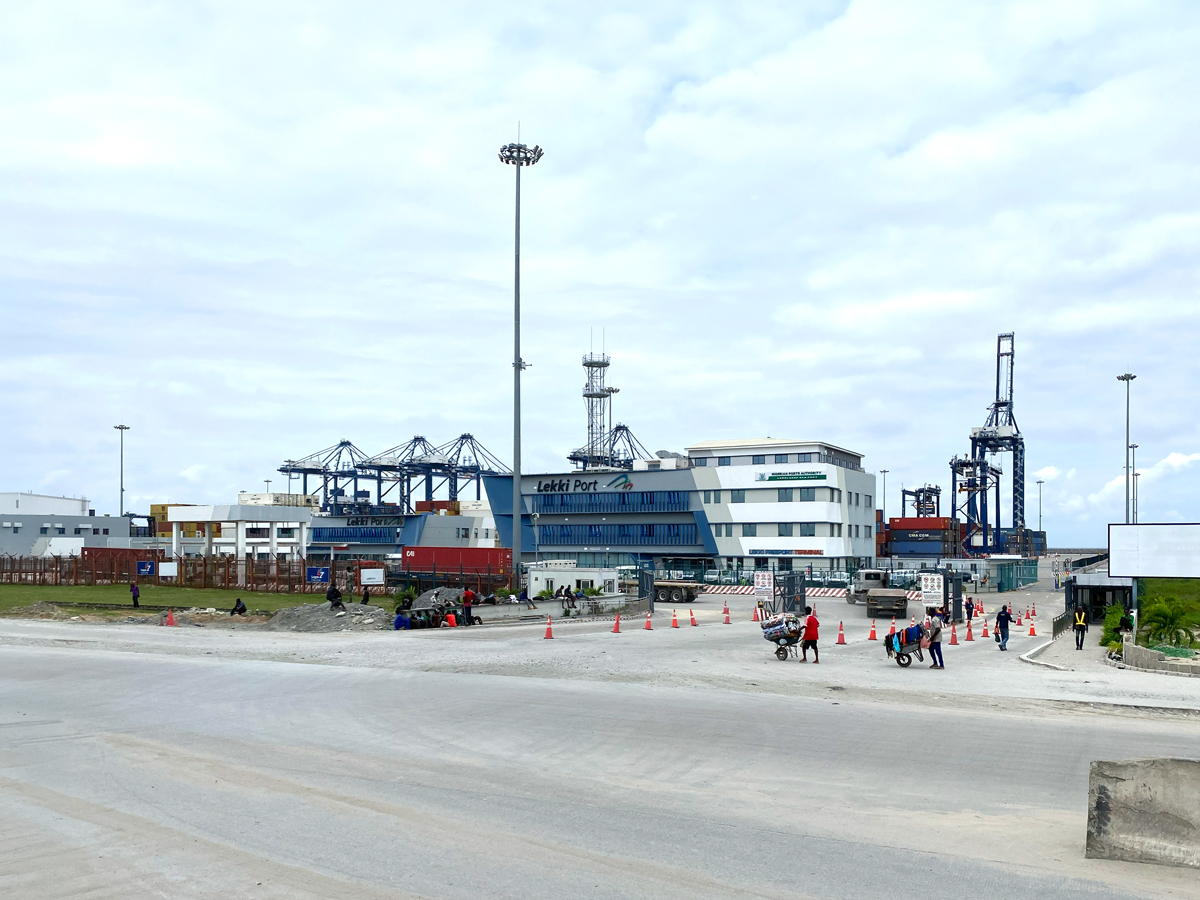
Existing agriculture, research, craft and logistics provide starting points. Photographs document places and activities at their stated dates; they are not evidence of current capacity, ownership or performance.
Scope, rights & responsible use
Independent educational research and policy commentary. Findings are limited to their cited sources and dates; interpretations and proposals are not guarantees or official decisions. This is not legal, investment, engineering or professional advice.
Cultural geography does not determine borders, ancestry, land rights, mineral ownership or extraction permission. References to organisations, places and photographs imply no endorsement or finding of wrongdoing. Political scenarios concern lawful, peaceful processes and the rights of all residents.
Read the evidence and rights principles → · Raise a factual correction or rights concern →
Follow the connection.
The full cultural atlas · Yorùbá textiles · cloth, craft & ceremony · From inheritance to capability · People and population · AI meeting culture
Explore sources and evidence · Suggest a correction or contribute evidence
REGIONAL DATA / PEOPLE / ECONOMIES
Explore the states behind the map.
Population history, economic output, revenue trends, fertility, migration and legislatures: nine Nigerian states, with separate context for Benin and Togo.
SHARED SYMBOLS
A flag. A voice. A sense of belonging.
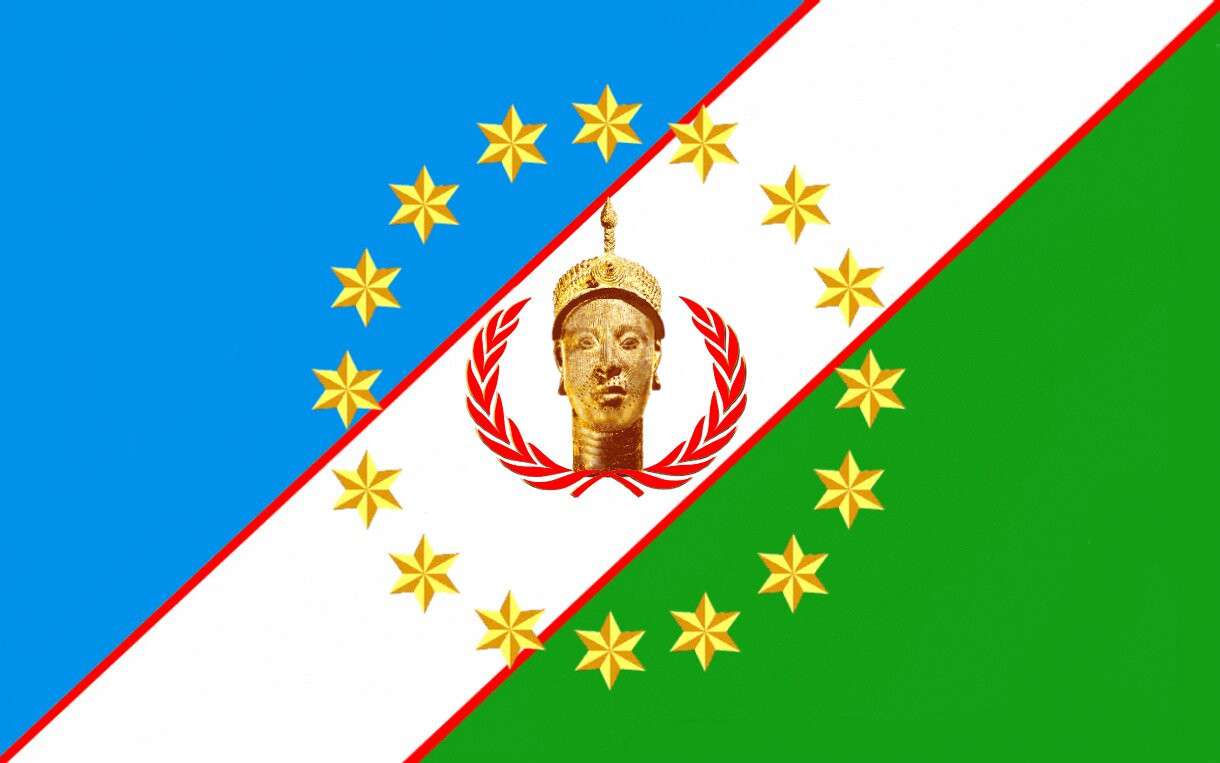
The Odùduwà flag carries a contemporary expression of Yorùbá identity across borders. Explore its colours, sixteen stars and central head, then listen to the Yorùbá nation anthem and the Ilé-Ifẹ̀ anthem.
Flag symbolism and Yorùbá nation anthem → · Ilé-Ifẹ̀ anthem and published lyrics →