← Yorùbáland across borders

YORÙBÁLAND / RESOURCES & DEVELOPMENT

Teach, make, test—and pass it on.

Yorùbá education, historical capabilities, Ifá stewardship and emerging technologies as foundations for inclusive industrial development.

Research review · 20 October 2026 · Each statistic keeps its own reference period.

People are the productive foundation.

Industrial development needs technicians, farmers, teachers, researchers, artists, entrepreneurs, carers and capable public institutions. Health, nutrition, water, literacy and safe work belong inside the industrial strategy.

The proposals here connect heritage with modern science. They are a programme for discussion and testing—not an assertion that the named institutions have agreed to deliver them.

Locate productive and learning connections →

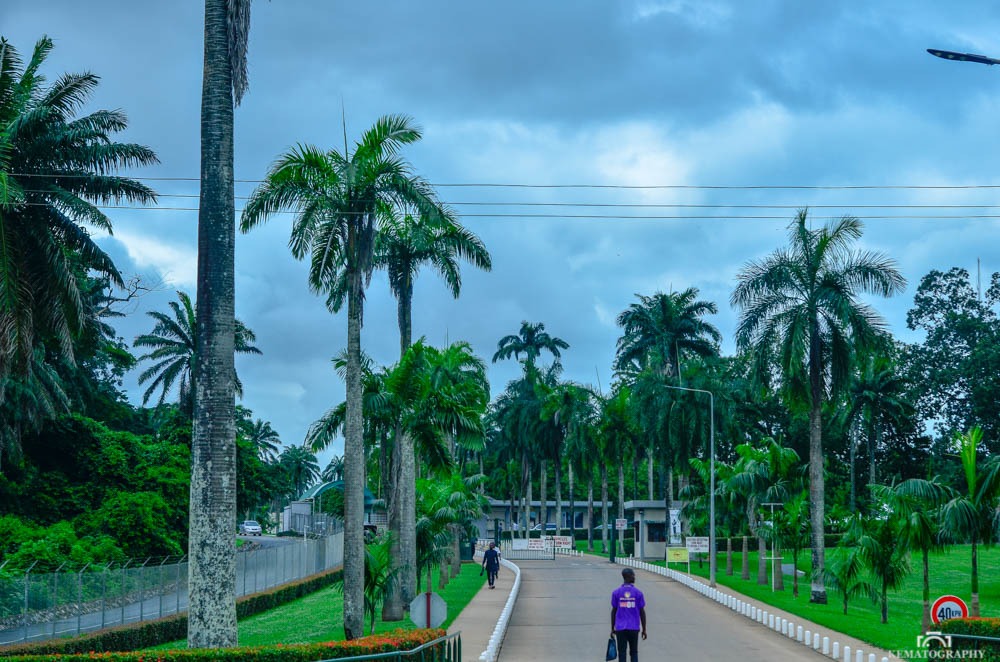
A palm-lined entrance road at the International Institute of Tropical Agriculture in Ibadan.
Agricultural research in Ìbàdàn. The entrance to IITA in Ìbàdàn, photographed in 2022. Photograph: Kematography · 2022-10-16. Original & description ↗ · CC BY-SA 4.0. None; original downloaded without creative edits

Recover skill without inventing a golden age.

Historical capabilities and proposed modern applications
Historical threadWhat the evidence allowsA modern pathwayWhat to examine
Governance and administrationỌ̀bà / Ìgbómìnà traditions, Ilé-Ifẹ̀ kingship and Ọ̀yọ́ institutions offer different historical questions. A general history does not establish that all city-states followed a uniform welfare model.Train public administrators; publish budgets, decision rights and service standards. Study inherited institutions alongside constitutional equality and contemporary accountability.Compare oral accounts, archaeology and scholarship; no automatic transfer of hereditary authority to modern public office.
Trade and commerceMarkets and exchange networks connect towns, craft production and wider regions. Claims about a specific town’s direct trans-Saharan trade need place-specific evidence.Market infrastructure, transparent weights, warehousing, producer cooperatives, trade fairs, logistics and multilingual business education.Measure freight cost, payment delays, producer margins and access for women traders; acknowledge coercion and slavery in historical trade.
Art, glass and craftsmanshipIlé-Ifẹ̀ terracotta and copper-alloy sculpture and archaeological glass-working evidence demonstrate specialised technical skill. Copper, brass and bronze are not interchangeable material labels.Paid apprenticeships, conservation, design schools, artisan cooperatives, testing laboratories, beadwork, carving, textiles and creative exports.Attribute designs and makers; protect cultural permissions; assess demand and income rather than assuming heritage guarantees sales.
Metallurgy and engineeringMetalworking and casting belong to historical productive life; particular dates and technologies need archaeological evidence.Connect craft skills with foundries, toolmaking, metrology, repair, welding, material testing and modern engineering training.Workplace safety, emissions, quality standards and viable orders determine whether a workshop can scale.
Agriculture and food systemsFarming supported settlement and exchange. Modern evidence includes IITA’s Ibadan research and cassava-processing work; it does not validate every historical productivity claim.Extension, soil testing, seeds, irrigation maintenance, storage, cold chains, food safety, processing and farmer-owned services.Track net farm income and food losses alongside yield; protect land users and biodiversity.
Urbanism and architecturePalaces, courtyards, markets, earthworks and urban archaeology offer evidence of settlement organisation; a uniformly planned city cannot be assumed from a grand description.Climate-responsive buildings, drainage, walkable markets, affordable housing and conservation-led reuse with local builders.Access, flood exposure, maintenance, displacement and archaeological protection shape design decisions.
Language, oral literature and philosophyOríkì, Ifá and other oral traditions carry artistry and knowledge through living people. Traditions vary and require contextual interpretation.Publishing, libraries, film, games, teacher development, translation, recorded performance and community-owned archives.Consent, attribution, dialect inclusion and paid review; distinguish a documented tradition from an empirically tested claim.
Rehren, Babalola, Dussubieux & McIntosh · Ilé-Ifẹ̀ glass research ↗ · The Met · Ife Terracottas (1000–1400 A.D.) ↗ · IITA · research and delivery in Nigeria ↗

The Ọ̀bà / Ìgbómìnà account needs community-specific research. Wider reading by Akintoye and Ogundiran informs the historical questions; neither book is used here as blanket proof of every local claim.

S. Adebanji Akintoye · A History of the Yoruba People ↗ · Akinwumi Ogundiran · The Yorùbá: A New History ↗

Make Yorùbá a language in which work gets done.

Build on existing work such as Science in Yorùbá, which publishes subject resources and technical terminology. Collaborate with teachers, linguists, scientists, artisans and learners rather than assuming an AI translation is ready for a classroom.

  1. AuditFind existing curricula, glossaries and licensed materials.
  2. Co-authorWrite precise definitions, examples, pronunciation and variants.
  3. TeachTrain teachers and test practical lessons in willing settings.
  4. EvaluateMeasure understanding, retention, inclusion and cost.
  5. RevisePublish corrections, versions and reusable materials.

Use bilingual bridges and English/French equivalents where useful, while building the ability to reason and produce knowledge in Yorùbá. Offline resources, radio, accessible audio, simulations and practical workshops can widen participation.

Science in Yorùbá · subject resources and terminology ↗ · UNESCO · Languages matter: global guidance on multilingual education ↗ · YORULECT · research on four regional Yorùbá varieties ↗

For the first year: organise contributors and baseline lessons; develop a small reviewed glossary; pilot with teachers and learners; publish what worked and what changed. The longer phases below are proposed horizons, not guaranteed dates.

A complete education reaches beyond STEM.

Ten wider subject families
Subject familyContent to develop in Yorùbá
History & civic studiesLocal, African, diaspora and global histories; governance, rights and civic responsibility.
Language & literatureGrammar, tone marks, composition, oral and written literature; English, French and neighbouring languages as bridges.
Agriculture & environmentFarming, agribusiness, ecology, conservation and resource stewardship.
Health & physical educationNutrition, hygiene, disease prevention, reproductive health, movement and mental wellbeing, reviewed by qualified educators.
Economics & financial literacyHousehold finance, enterprise accounts, markets, contracts, management and consumer protection.
Digital literacy & technologySafe internet use, coding, data literacy, practical repair and responsible innovation.
Arts & cultural practiceVisual arts, music, theatre, dance, design and the business of creative work.
Ethics & comparative religionỌmọlúàbí, integrity, care and respectful comparative study; freedom of belief and no compelled religious practice.
Politics, law & international relationsInstitutions, justice, rights, diplomacy and evidence-based public reasoning.
Geography & earth sciencesLandforms, climate, human geography, GIS, remote sensing and spatial evidence.

The sequence is a discussion list, not an evidence-based universal ranking. Local age, need, curriculum requirements and teacher capacity should determine priorities.

A 20-year horizon, with decisions much sooner.

Years 1–2

Organise and test

Audit existing resources; assemble subject specialists, linguists and teachers; agree terminology and open licences; commission textbooks, practical lessons, audio and offline materials; fund teacher practice and small trials.

Evidence to publish: Public glossary with definitions, pronunciation, context, variants and version history; baseline learning assessment; costed pilot and named owners.

Years 3–5

Pilot and improve

Use willing urban and rural schools; train and support teachers; link classroom experiments with community problems, workshops and local industries; evaluate before expansion.

Evidence to publish: Comprehension and retention compared with baseline; practical work quality; teacher workload; inclusion and cost per learner.

Years 6–10

Expand working models

Scale successful teaching and vocational pathways; strengthen existing universities and research centres; add laboratories where maintenance and staffing are funded; build accessible online and offline publishing.

Evidence to publish: Employment and apprenticeship retention, reusable course materials, research outputs, equipment uptime and rural access.

Years 11–20

Sustain and deepen

Review the curriculum, update scientific terminology, secure recurrent funding and endowments, deepen specialisation and replace programmes that underperform.

Evidence to publish: Learning, real earnings, research quality, enterprise survival and equitable access across communities and generations.

Funding, policy, community involvement, research partnerships, teacher support and monitoring run through every phase. Independent reviews should stop weak programmes as readily as they scale useful ones.

Ifá: safeguard a living corpus, support its custodians.

Education, research and creative livelihoods can grow around Ifá with the participation of practitioners and communities. A literary, philosophical or mathematical comparison does not turn divination into a validated scientific or clinical method.

All seven Ifá programme areas retained
ProgrammeWhat responsible implementation could include
EducationAge-appropriate literature, history, philosophy and comparative religion; practitioner-led advanced study. Develop books, translations, audio, video and workbooks. Teacher training is not priestly initiation.
CommunityPaid workshops with practitioners and scholars, voluntary festivals and recitation, youth participation and community feedback. Ask custodians what can be taught or recorded publicly.
Research & archivesDocument variants, performances and context; commission field research and critical editions; retain restricted-access material where required. Build on existing institutions before founding new ones.
LivelihoodsConservation, guided visits, art, craft, publishing and film can support livelihoods when communities set terms. Sacred rites are not automatically tourism products or merchandise.
Digital accessLearning platforms, annotated collections, audio and optional virtual or augmented reality. Label reconstruction; never present generated verses as inherited authority.
Policy & international exchangeUNESCO recognition already exists: proclamation in 2005, inscription in 2008. Prioritise safeguarding, cultural rights, grants and scholarly exchange; intangible listing differs from World Heritage site status.
EvaluationTrack learner understanding, practitioner remuneration, archive permissions, conservation and local benefit—not simply visitor totals or a count of files digitised.
UNESCO · Ifa divination system ↗

Explore the existing Ifá learning page → · Read Ọmọlúàbí in action →

AI and biotechnology: eighteen fields, different levels of readiness.

These are assessed opportunity areas for further investigation. Software, conventional biotechnology, gene editing and synthetic biology are not interchangeable. A plausible application still needs data, expertise, infrastructure, funding and validation.

Technology opportunities and limits
FieldAI and digital pathwayBiotechnology / materials pathwayConditions before expansion
1 · Heritage, language & resourcesConsented archives, translation, transcription, tutoring and resource mapping; evaluate by dialect, meaning and actual user need.Traditional dyes, food and medicinal knowledge may inspire research. Existing cultural practice is not automatically synthetic biology.Named custodians; permission and benefit-sharing; no inferred mineral reserve from an AI map.
2 · Education & researchTeacher support, learning diagnostics and open technical terminology; strengthen laboratories, universities and vocational centres.Bioscience curricula, contained research facilities and appropriately trained staff.Qualified instruction, funded maintenance and assessment before scale.
3 · Enterprise & manufacturingQuality inspection, scheduling, predictive maintenance, incubators and SME access to markets and finance.Fermentation, bioplastics and pharmaceutical manufacturing are different technical and regulatory pathways.A paying customer, reproducible process, product approval and viable cost structure.
4 · Community & cultural integrationLocal-language workshops, participatory design and accessible public communication.Explain benefits, uncertainties and proposed uses before seeking community participation.Informed participation, grievance routes and inclusion of minority voices.
5 · Policy & global collaborationData governance, transparent procurement, international research and carefully designed incentives.Institutional biosafety, risk assessment, containment and applicable approvals.Independently reviewable rules; incentives linked to performance, with expiry and clawback.
6 · Environment & climateWildlife monitoring, flood risk, energy optimisation and environmental enforcement support.Bioremediation, algae and engineered restoration are research-dependent options, not ready-made release plans.Validate local data; ecological assessment and regulatory approval before environmental use.
7 · Heritage & tourismDigital museums, virtual tours, AR interpretation and artisan design assistance.Bio-derived fabrics and pigments can be investigated where quality and lifecycle benefits are demonstrated.Conservation first; accurate provenance; custodians control restricted knowledge.
8 · Healthcare & traditional knowledgeDocument permitted knowledge and investigate service improvement. Clinical AI requires local validation and accountable professionals.Drug discovery, vaccines, tissues and personalised treatments are regulated research and manufacturing programmes.A historical remedy is not proof of safety or efficacy; clinical trials, consent, product regulation and benefit-sharing matter.
9 · Farming & food securityCrop monitoring, irrigation, soil advice, logistics and farmer-centred decision support.Breeding, gene editing, engineered crops, fertilisers and pesticides differ; each needs evidence and appropriate review.Agronomic trials, affordability, seed access and ecological safeguards.
10 · Energy & infrastructureLoad forecasting, renewable integration, urban planning, transport operations and asset maintenance.Biofuels, microbial fuel cells and bio-concrete vary greatly in readiness and economics.Life-cycle impact, reliable services and maintenance budgets; no assumed large-scale readiness.
11 · Art & preservationDigital restoration, annotated exhibits and interactive storytelling with source trails.Living artworks, bio-pigments and bio-inspired materials remain bounded experimental design directions.Mark reconstruction; preserve originals; appropriate containment and maker rights.
12 · Food & beveragesQuality control, traceability, cold-chain planning and waste reduction.Cultured meat, alternative proteins, flavours and nutrient fortification need distinct evidence and approval pathways.Food safety, nutritional claims, consumer choice and cost competitiveness.
13 · Water & sanitationLeak detection, water-quality monitoring, irrigation scheduling and maintenance prioritisation.Biological filtration and bio-assisted desalination require validated performance; conventional treatment remains essential.Safe water standards, monitoring, operating cost and no unapproved organism release.
14 · Transport & mobilityRoute planning, fleet maintenance, public transport scheduling and traffic management.Waste-derived fuels and lightweight biomaterials are possible inputs; benefits depend on the entire supply chain.Start with reliable public mobility; autonomous vehicles require a much higher safety case.
15 · Fashion & textilesDemand planning, sizing, cutting efficiency, traceability and design support for existing artisans.Bio-fabrics, fibres and dyes may complement weaving and adìrẹ when durability and environmental performance are tested.Artisan attribution, fair income, dye effluent control and no promise that every bio-material is sustainable.
16 · Public safety & resilienceDisaster warning, dispatch and first-responder support. Predictive policing and general surveillance remain contested approaches, not recommended defaults.Public-health biosensors and authorised forensic research require specialist governance; this page provides no biological procedures.Necessity, proportionality, bias testing, lawful authority, human review and accessible appeal.
17 · Finance & inclusionFraud detection, accessible services and credit analysis with explainable decisions and routes to challenge errors.DNA-based banking authentication is not a necessary or proportionate industrial-development priority; biometrics are not inherently synthetic biology.Privacy, financial regulation, exclusion testing and non-biometric alternatives.
18 · Efficient buildings & energyBuilding energy management, infrastructure maintenance and renewable-grid coordination.Bio-materials and planted roofs may be studied; ordinary green walls do not require engineered plants.Measure lifetime cost, safety and environmental performance; consolidate with the energy programme rather than double-counting benefits.
UNESCO · Recommendation on the Ethics of AI ↗ · NBMA · containment, risk analysis and gene-editing guidance ↗ · Convention on Biological Diversity · Nagoya Protocol, Article 7 ↗

Across these fields: educate and train; fund focused research; establish accountable partnerships; build and maintain essential infrastructure; involve communities; evaluate results. Do not infer approval, efficacy or commercial readiness from this catalogue.

Knowledge should travel with permission and benefit.

Keep source, speaker, dialect, permission, restriction, reviewer and version information with cultural datasets. Pay knowledgeable contributors; allow correction and withdrawal where agreements provide it. Public examples should be distinguished from private or sacred material.

For genetic resources and associated traditional knowledge, the relevant access and benefit-sharing law matters. For AI, preserve privacy, human oversight, accountability and routes to challenge decisions. Local-language access should increase agency, not make people easier to monitor.

Connect these ideas with Cultural AI → · See how Tapestries separates evidence and interpretation →

Nine parts of an industrial programme.

These are proposed workstreams for further investigation. Their sequence should follow evidence of local demand, public need, institutional capacity and cost. A special economic zone is an instrument to evaluate, not an achievement by itself.

Proposed workstreams and measures—not funded commitments
WorkstreamA practical next stepEvidence of progress
Planning and governanceMap needs, stakeholders, decision rights and viable production clusters; publish a costed plan.Named owners, open procurement, independent review and milestones that can be revised.
InfrastructureImprove reliable power, water, freight, digital connectivity and maintenance before expanding promises.Service uptime, access, delivered cost, repair times and environmental effects.
Education and skillsCombine foundational education, technical apprenticeships and research with real employer and community needs.Learning gains, completion, decent employment, wages and inclusive access.
Investment and financeCompare public investment, domestic capital, diaspora finance, FDI and development finance by terms and risks.Financing cost, fiscal exposure, additional investment and fair allocation of returns.
Industrial policy and regulationTest supplier development, standards, procurement and time-limited support against measurable objectives.Productivity, product quality, competition, local value added and credible exit rules.
Public participationInclude residents, workers, small businesses, traditional custodians and neighbouring communities in decisions.Published feedback, grievance resolution, fair compensation and benefit distribution.
Sustainable developmentAccount for water, energy, land, pollution and restoration over the whole project life.Audited impacts, emissions intensity, health, waste recovery and funded remediation.
Technology and innovationSupport laboratories, extension services, repair capabilities and applied research partnerships.Adoption, useful prototypes, skills transfer, tested quality and commercially or socially valuable results.
Implementation and evaluationPilot, compare results, publish lessons and redirect weak programmes.Independent evaluation, costs per outcome, distribution of benefits and changes made after review.

Six sector families to test against real conditions.

Manufacturing

Textiles, machinery, automotive components and electronics require different supply chains, standards, skills and capital. Start from demonstrated demand and capabilities.

Agribusiness

Connect farmers to storage, processing, packaging, safe food systems and buyers, while testing how much value and bargaining power reach producers.

Construction

Housing and infrastructure can support materials and trades, with quality assurance, affordability, lifecycle maintenance and safe work built in.

Technology

Develop software, data services, repair and applied research around useful problems; assess data access, adoption, markets and rights.

Mining and processing

Move from geological evidence to feasibility and responsible production only where technical, economic, legal and community conditions support it.

Tourism and cultural enterprise

Support conservation, interpretation, hospitality, creative work and safe access through community stewardship and viable visitor services.

These six families offer directions to explore without asserting a ranking or guaranteeing commercial viability. The resource value-chain catalogue and maps show places from which to ask more specific questions.

Follow the material value chains → · Explore production and skills →

Explore the programme themes.

Open a group to explore related areas for learning and development.

Cross-cutting resource value-chain enablers
  • Investment in Infrastructure
  • Technology and Innovation
  • Human Capital Development
  • Sustainable Practices
  • Value Addition

Proposals for discussion; implementation, funding and forecasts require separate evidence.

Nine industrialisation components
  • Strategic Planning and Governance
  • Infrastructure Development
  • Education and Skills Development
  • Investment and Financing
  • Industrial Policy and Regulation
  • Mobilizing the People
  • Sustainable Development
  • Technology and Innovation
  • Policy Implementation and Monitoring

Proposals for discussion; implementation, funding and forecasts require separate evidence.

Six proposed priority sectors
  • Manufacturing: Focus on industries such as textiles, automotive, machinery, and electronics.
  • Agribusiness: Develop agro-processing industries to add value to agricultural products.
  • Construction: Invest in the construction industry to support infrastructure development and housing.
  • Technology: Promote the growth of the tech sector through innovation hubs and startups.
  • Mining and Mineral Processing: Develop the mining sector to harness natural resources and process minerals locally.
  • Tourism: Develop tourism infrastructure to attract international tourists and boost the local economy.

Proposals for discussion; implementation, funding and forecasts require separate evidence.

Eight Yorùbá STEM education themes
  • Translation and Language Development
  • Educational Materials and Curriculum Development
  • Teacher Training and Development
  • Research and Implementation
  • Community and Cultural Integration
  • Educational Institutions and Infrastructure
  • Technology and Digital Platforms
  • Monitoring and Evaluation

Proposals for discussion; implementation, funding and forecasts require separate evidence.

Four initial STEM phases
  • Phase 1: Planning and Development (Years 1-2)
  • Phase 2: Pilot Programs (Years 3-5)
  • Phase 3: Expansion and Scaling (Years 6-10)
  • Phase 4: Consolidation and Sustainability (Years 11-20)

Proposals for discussion; implementation, funding and forecasts require separate evidence.

Four expanded STEM phases
  • Phase 1: Planning and Development (Years 1-2)
  • Phase 2: Pilot Programs (Years 3-5)
  • Phase 3: Expansion and Scaling (Years 6-10)
  • Phase 4: Consolidation and Sustainability (Years 11-20)

Proposals for discussion; implementation, funding and forecasts require separate evidence.

STEM cultural relevance, inclusion and sustainability
  • Cultural Relevance
  • Inclusive Development
  • Sustainability

Proposals for discussion; implementation, funding and forecasts require separate evidence.

STEM monitoring and impact evaluation
  • Performance Metrics
  • Impact Evaluation

Proposals for discussion; implementation, funding and forecasts require separate evidence.

Ten broader education subject areas
  • History and Social Studies
  • Language and Literature
  • Agriculture and Environmental Studies
  • Health and Physical Education
  • Economics and Financial Literacy
  • Technology and Digital Literacy
  • Arts and Culture
  • Ethics and Religious Studies
  • Political Science and Law
  • Geography and Earth Sciences

Proposals for discussion; implementation, funding and forecasts require separate evidence.

Seven broader education delivery mechanisms
  • Translation and Development of Educational Materials
  • Curriculum Integration
  • Teacher Training
  • Community and Cultural Integration
  • Technology Integration
  • Monitoring and Evaluation
  • Policy and Advocacy

Proposals for discussion; implementation, funding and forecasts require separate evidence.

Seven historical capability themes
  • Governance and Administration
  • Trade and Commerce
  • Arts and Crafts
  • Metallurgy and Engineering
  • Agriculture
  • Urban Planning and Architecture
  • Cultural Preservation and Education

Proposals for discussion; implementation, funding and forecasts require separate evidence.

Six cultural-capability implementation areas
  • Educational Reform and Curriculum Development
  • Community Engagement and Participation
  • Government and Policy Support
  • Technology Integration
  • International Collaboration and Exchange
  • Economic Incentives and Support

Proposals for discussion; implementation, funding and forecasts require separate evidence.

Heritage performance and impact evaluation
  • Performance Metrics
  • Impact Evaluation

Proposals for discussion; implementation, funding and forecasts require separate evidence.

Six expanded heritage implementation areas
  • Educational Reform and Curriculum Development
  • Community Engagement and Participation
  • Government and Policy Support
  • Technology Integration
  • International Collaboration and Exchange
  • Economic Incentives and Support

Proposals for discussion; implementation, funding and forecasts require separate evidence.

Expanded heritage evaluation
  • Performance Metrics
  • Impact Evaluation

Proposals for discussion; implementation, funding and forecasts require separate evidence.

Seven Ifá programme areas
  • Educational Integration
  • Community Engagement and Participation
  • Research and Documentation
  • Economic Development through Ifa
  • Technology Integration
  • Policy and Advocacy
  • Monitoring and Evaluation

Proposals for discussion; implementation, funding and forecasts require separate evidence.

Seven expanded Ifá programme areas
  • Educational Integration
  • Community Engagement and Participation
  • Research and Documentation
  • Economic Development through Ifa
  • Technology Integration
  • Policy and Advocacy
  • Monitoring and Evaluation

Proposals for discussion; implementation, funding and forecasts require separate evidence.

AI and synthetic-biology enabling categories 1–5
  • Strategic Integration of AI and Synthetic Biology
  • Education and Workforce Development
  • Economic Development and Entrepreneurship
  • Community Engagement and Cultural Integration
  • Policy and Regulatory Framework

Proposals for discussion; implementation, funding and forecasts require separate evidence.

AI and synthetic-biology application categories 6–10
  • Environmental Conservation and Management
  • Cultural Heritage and Tourism
  • Healthcare and Traditional Medicine
  • Agriculture and Food Security
  • Energy and Infrastructure

Proposals for discussion; implementation, funding and forecasts require separate evidence.

Six AI/biotechnology implementation steps
  • Educational and Workforce Development
  • Research and Development
  • Funding and Investment
  • Policy and Regulation
  • Community Engagement
  • Infrastructure Development

Proposals for discussion; implementation, funding and forecasts require separate evidence.

AI and synthetic-biology application categories 11–18
  • Art and Cultural Preservation
  • Food and Beverage Industry
  • Water Management and Sanitation
  • Transportation and Mobility
  • Fashion and Textiles
  • Public Safety and Security
  • Financial Technology (Fintech)
  • Energy and Infrastructure

Proposals for discussion; implementation, funding and forecasts require separate evidence.

Scope, rights & responsible use

Independent educational research and policy commentary. Findings are limited to their cited sources and dates; interpretations and proposals are not guarantees or official decisions. This is not legal, investment, engineering or professional advice.

Cultural geography does not determine borders, ancestry, land rights, mineral ownership or extraction permission. References to organisations, places and photographs imply no endorsement or finding of wrongdoing. Political scenarios concern lawful, peaceful processes and the rights of all residents.

Read the evidence and rights principles → · Raise a factual correction or rights concern →

Follow the connection.

The full cultural atlas · Yorùbá textiles · cloth, craft & ceremony · From inheritance to capability · People and population · AI meeting culture

Explore sources and evidence · Suggest a correction or contribute evidence

OSL · Olukotun Studios Ltd

Olukotun Studios Ltd · Registered in England and Wales · No. 17537910

LinkedIn ↗