← Family stories
HERITAGE / MATERNAL LINE
The name I carry from my mother.
My mother, Betty Nnenna Nwakaego, is the first daughter of Gilbert Ohakwe Oguguo. I was given his name as my middle name. Following it leads me to my Igbo family, to Akokwa and Osina, and back to the woman I am fortunate to call Mum.
Fewer people know her by her other middle name, Nwakaego — which Mum informs me she actually prefers.
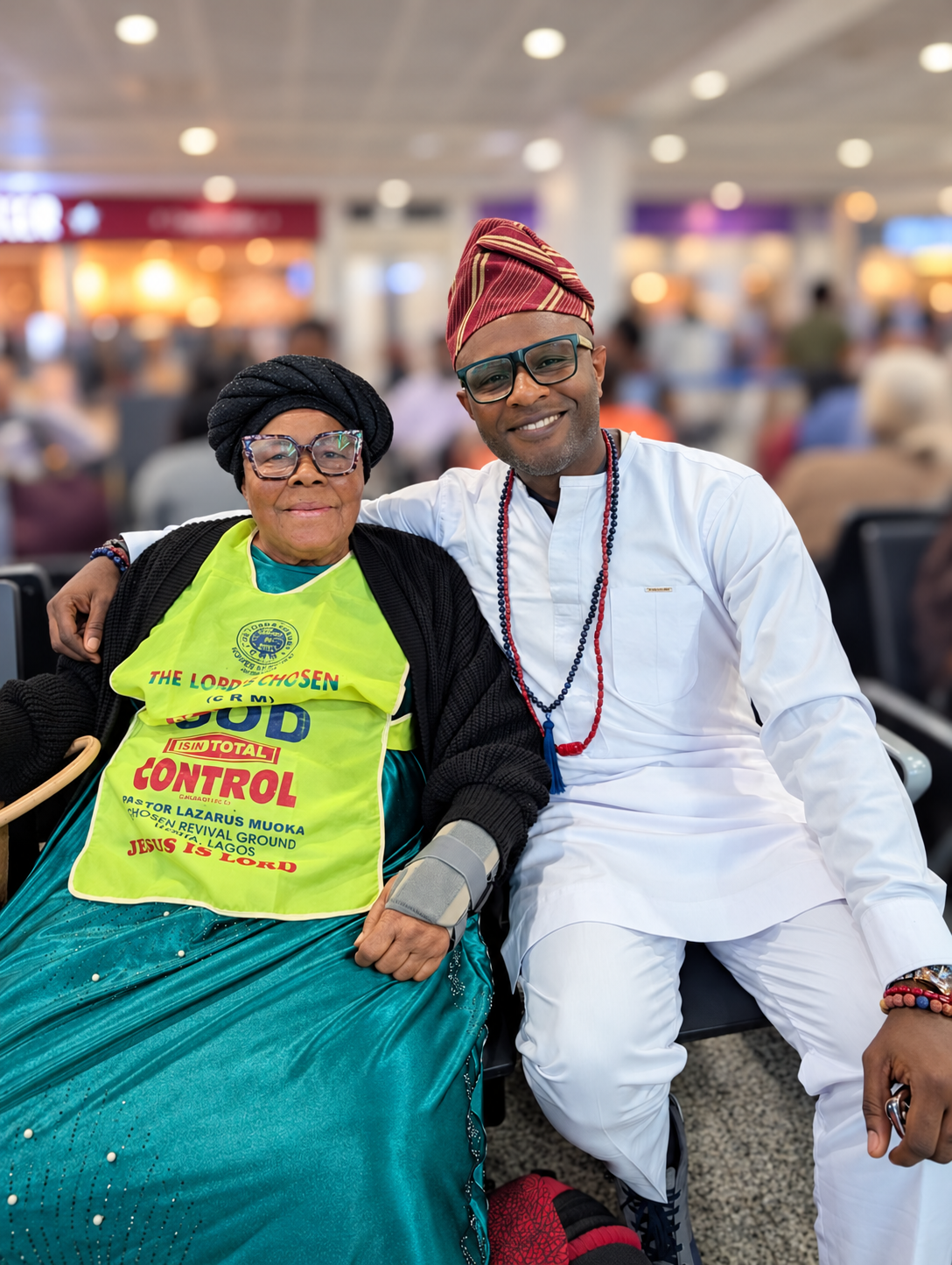
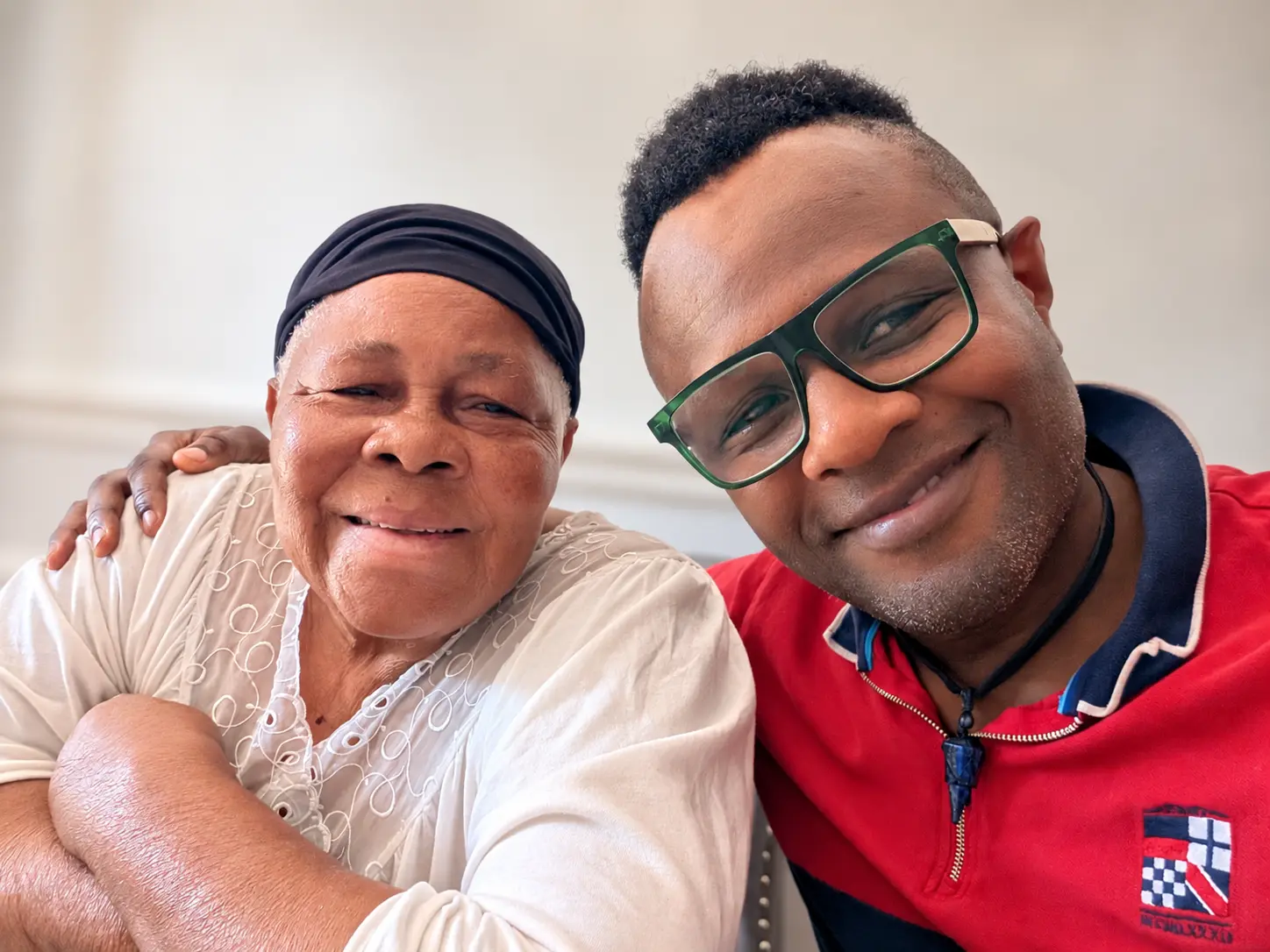
Betty Nnenna Nwakaego and me. The name I carry came through her, as did a living connection to our Igbo family.
At Heathrow, seeing Mum off after her 2026 visit to the UK.
Two places, a family, a name.
My maternal story holds Akokwa and Osina. The family remembers a landowning line through my grandfather Gilbert Ohakwe Oguguo. I share that inheritance as a relationship to place and responsibility, without publishing property details or turning a family account into a claim about present ownership.
Through Mum, two named Igbo family branches meet in me: the Oguguo–Aśika line associated with Akokwa, and the Mbonu–Obiamanno line through my grandmother, who was born in Osina. Gilbert’s family entry identifies the House of Aśika and Umukegwu kindred. These names give my maternal inheritance a more particular shape: people, places and relationships, rather than a label alone.
Two branches, carried forward.
The family tree traces each branch through two earlier generations. Relationships below are described from my position as their descendant.
House of Aśika · Gilbert’s branch
- Ohama AśikaMy great-great-grandfather · recorded birth year 1840
- Oguguo AśikaMy great-grandfather · date unresolved
- Gilbert Ohakwe OguguoMy grandfather · 1914–1965
Mbonu–Obiamanno · Christiana’s branch
- Oguba ObiamannoMy great-great-grandfather · recorded birth year 1838
- Mbonu ObiamannoMy great-grandfather · recorded birth year 1875
- Christiana Mgbafor MbonuMy grandmother · 1917–2012
Both branches lead to my mother, Betty Nnenna Nwakaego, and through her to me. Gilbert lives on in my own middle name; Nwakaego is the name Mum tells me she prefers. That is how this ancestry reaches the present: through the names we carry and the people who tell us what those names mean to them.
Earlier dates and the wider family
The tree records Ohama’s birth year as 1840, Oguba’s as 1838 and Mbonu’s as 1875; death years are not shown for them. Oguguo’s entry displays “–1875”. If that is a death year, it conflicts with Gilbert’s 1914 birth, so I leave that date unresolved rather than silently correcting it.
These are two branches of Mum’s ancestry, not the whole of it. The women represented by the unnamed mother fields are not yet identified in this extract.
The wider family shown includes Anozie Oguguo (born 1916) alongside Gilbert, and Oguba Mbonu, Eriwuaku Mbonu (born 1910) and Evelyn Mbonu (born 1919) alongside Christiana. The tree presents them as siblings within their respective branches; it does not establish here whether they shared the same mother.
Names, relationships and dates follow our family’s Ancestry entries and the supplied tree extract. They are family-record evidence, not independently verified civil records. Ancestry links may require sign-in. The dates of the photographs remain unrecorded.
Gilbert’s family-tree entry ↗ · Christiana’s family-tree entry ↗
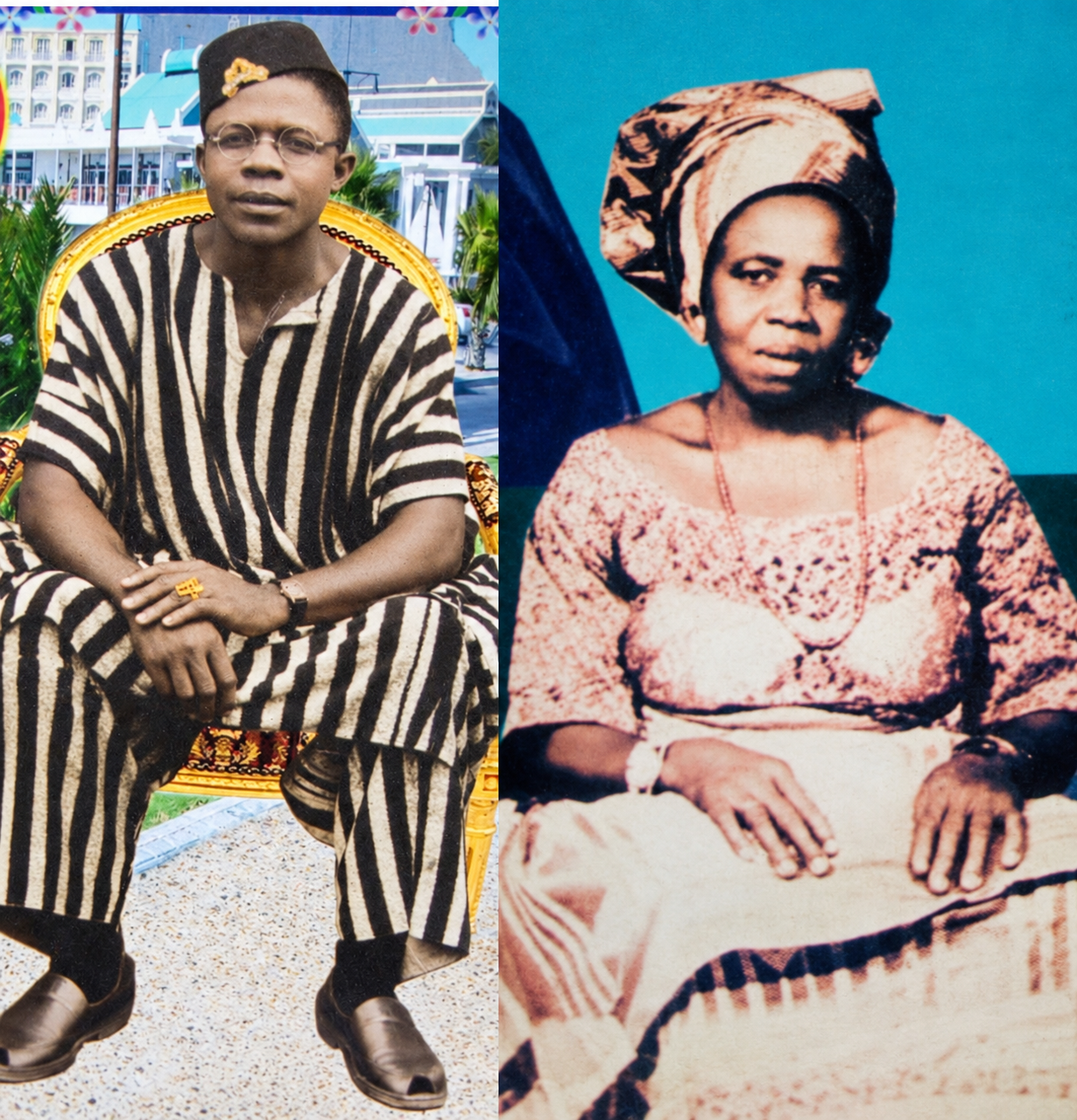
My maternal grandparents, Mum’s parents. Actual family photographs supplied from our archive; dates unrecorded. This displayed version is AI-enhanced for clarity and may reconstruct fine details. View the original photograph.
FOR BETTY NNENNA NWAKAEGO
A living inheritance.
My mother is more than a link in a family tree. Her care, prayers and steady presence are part of how I understand home. The name Gilbert lets me remember the grandfather I was named for; Mum is the person through whom that name, and this part of my identity, came to me.
My paternal Yorùbá history and my maternal Igbo history meet in me. Honouring one does not diminish the other. I want my children and the people who follow us to know that both lines have names, places, voices and dignity.
ABÌYAMỌ TÒÓTỌ́ · A MOTHER IN THE FULLEST SENSE
Betty Nnenna Nwakaego, in many frames.
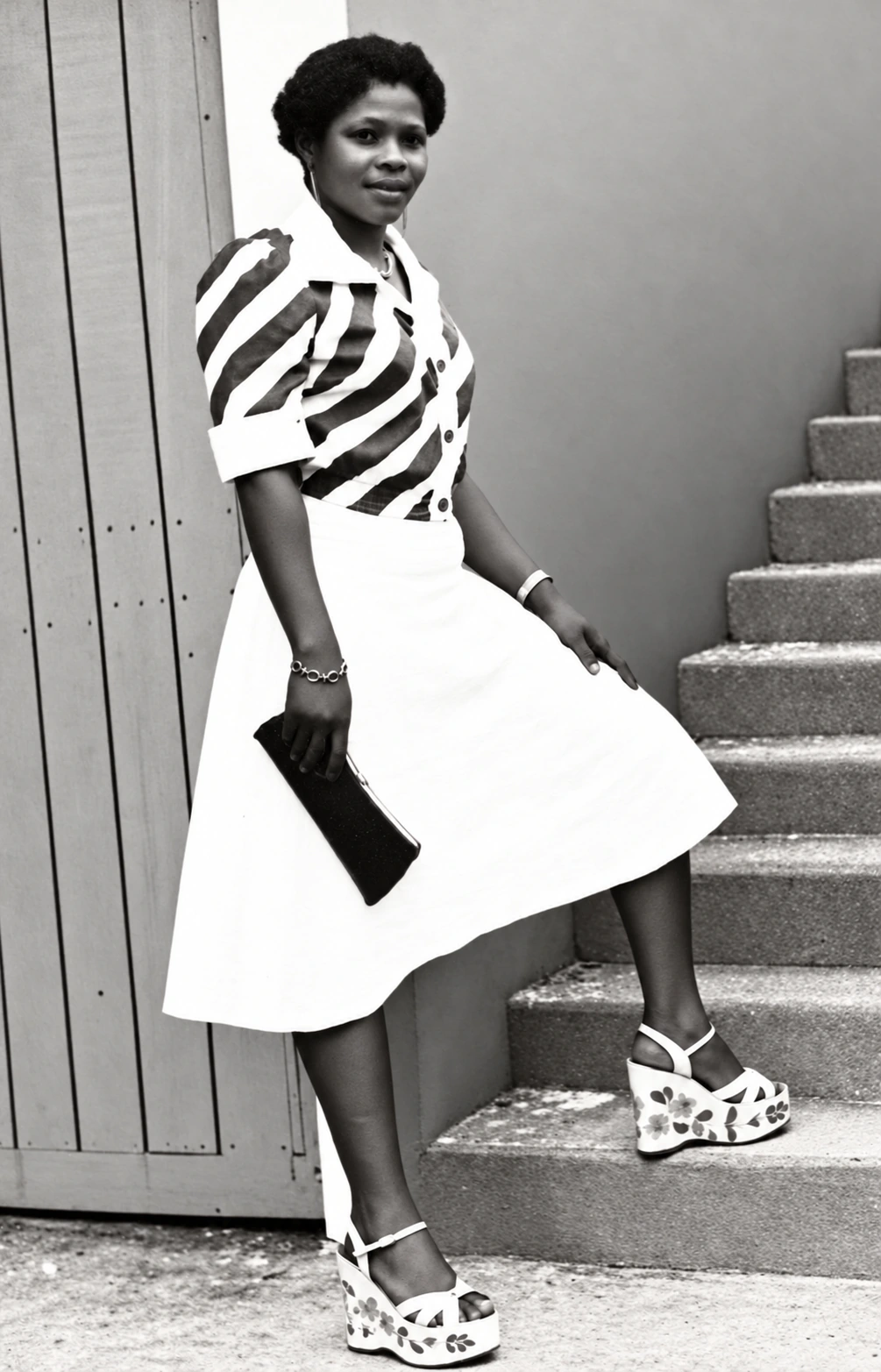
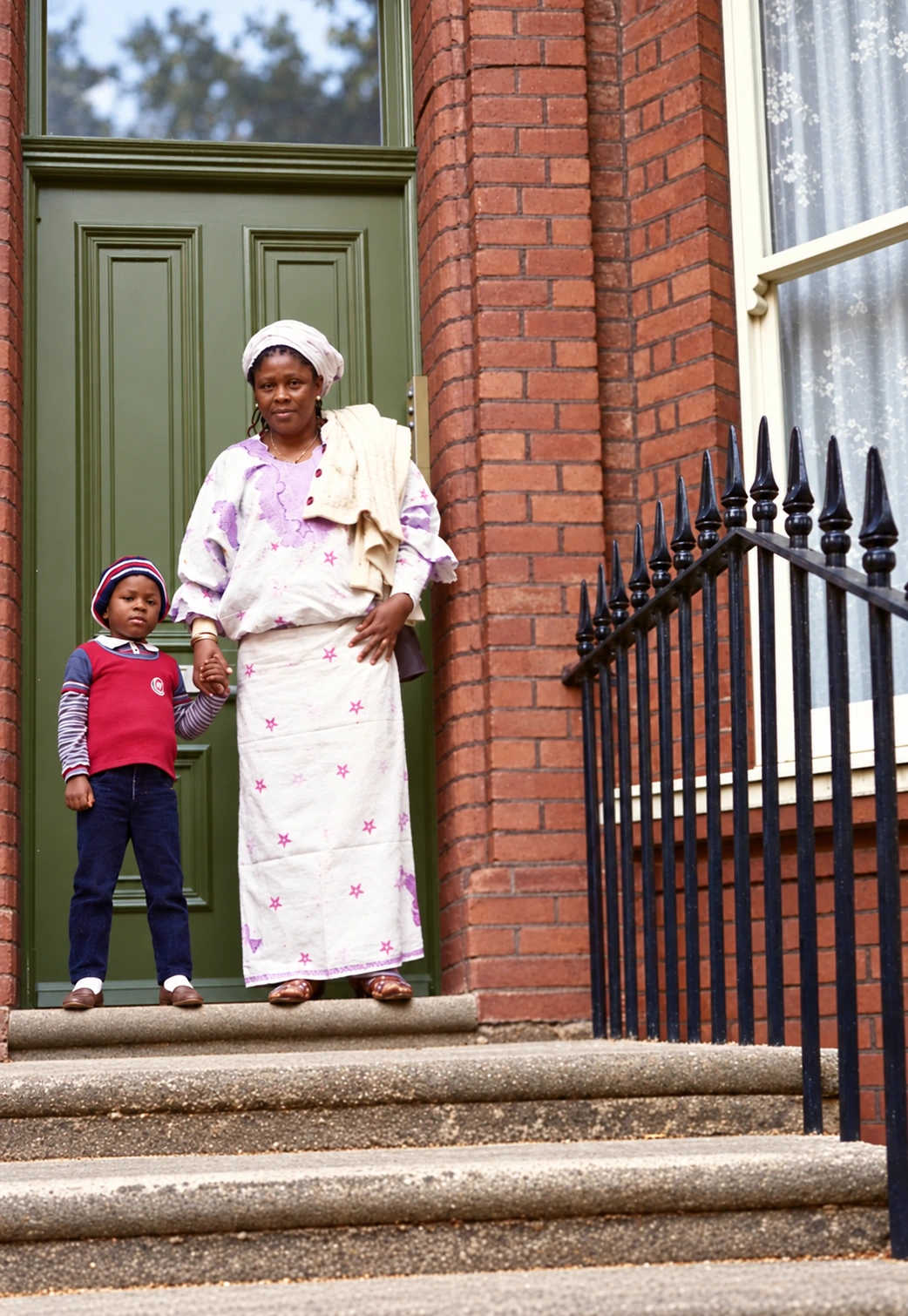
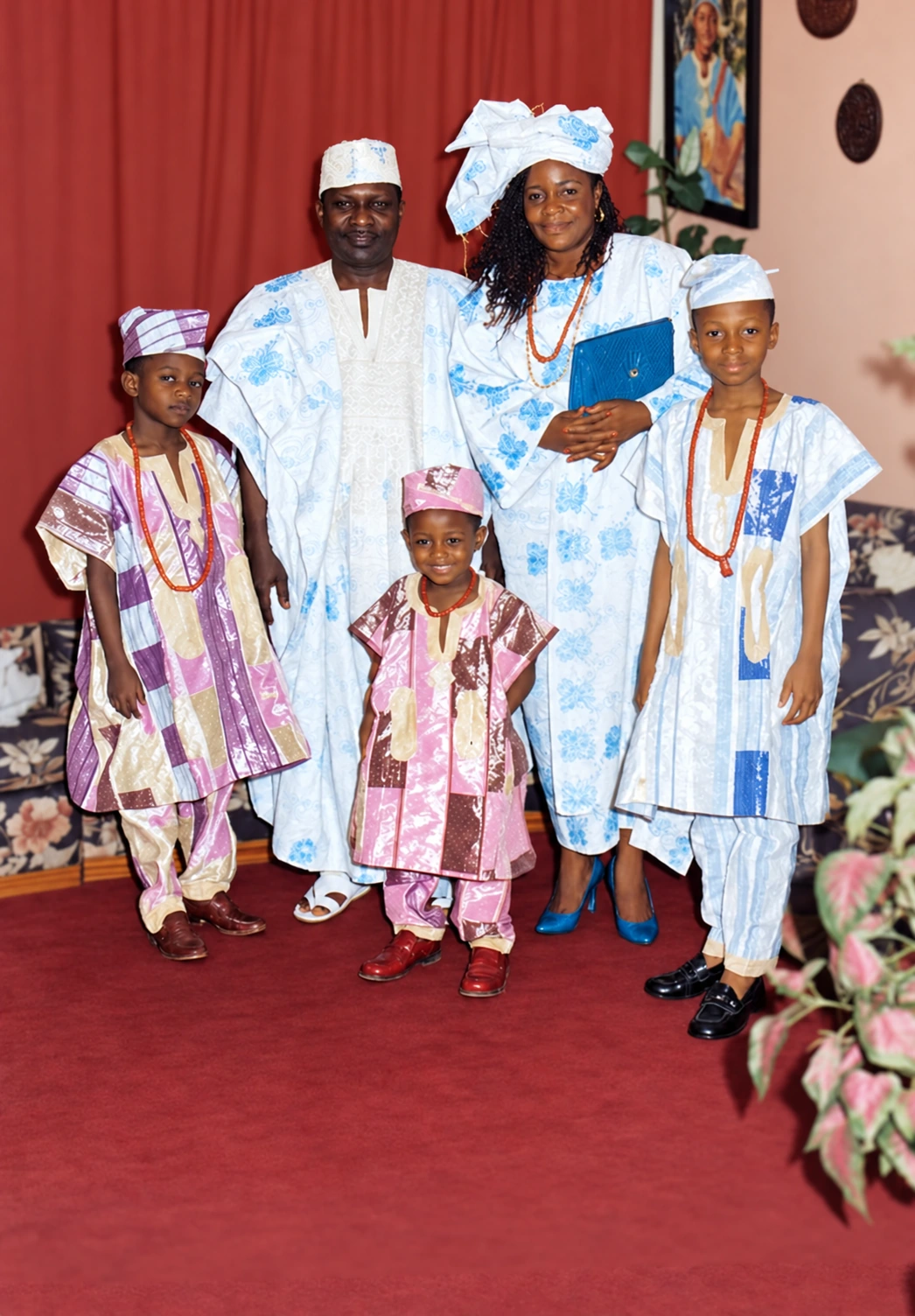
Mum has been a police officer, interior decorator and florist. She earned a master’s degree in theology; in her sporting days she played netball and swam. Across the years, these photographs also catch her style, warmth and the family life around her.
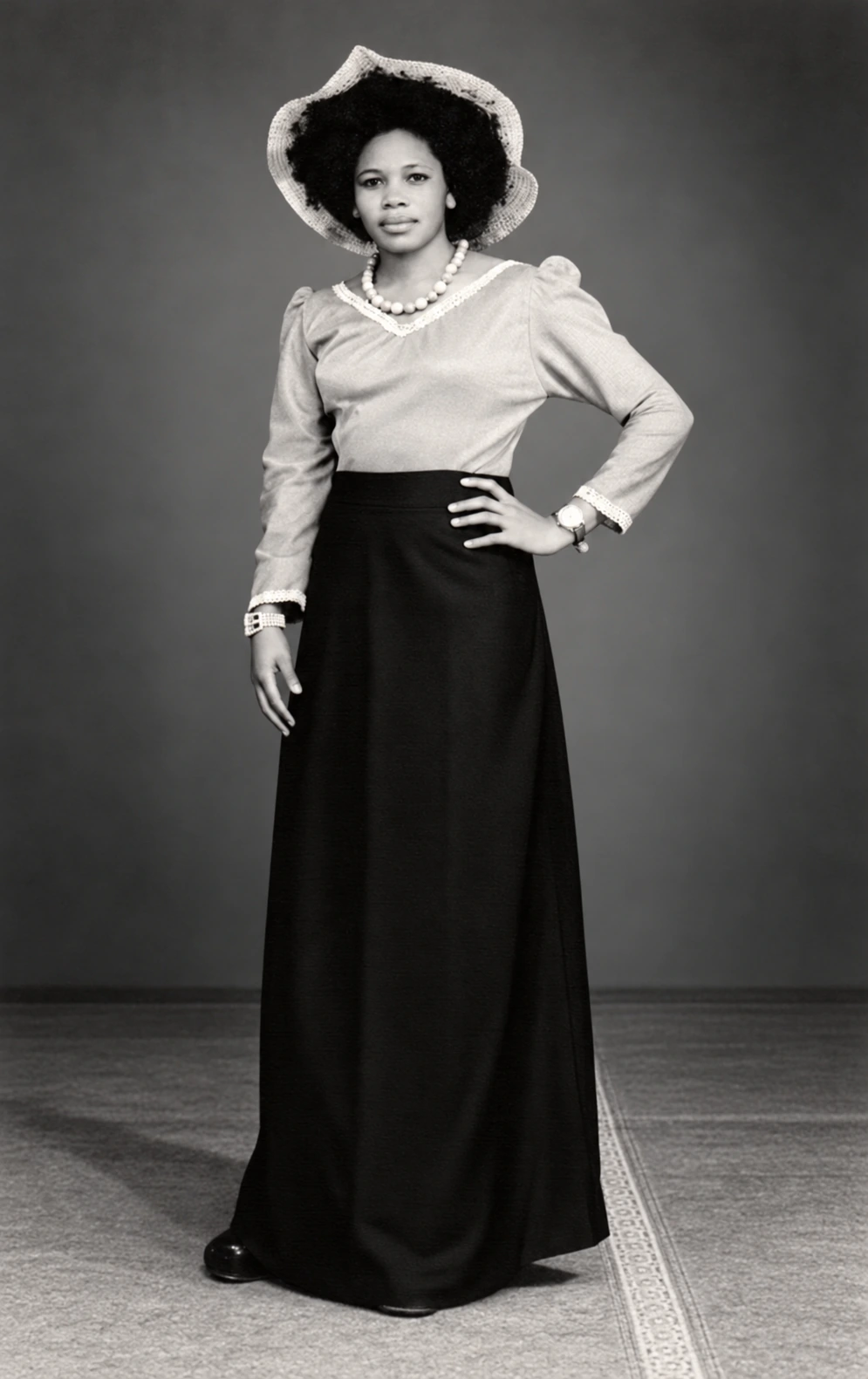
Restoration & original photograph
AI-assisted restoration for viewing; fine detail may be reconstructed. The source image is available for comparison.
Restoration & original photograph
AI-assisted restoration for viewing; fine detail may be reconstructed. The source image is available for comparison.
Restoration & original photograph
AI-assisted restoration for viewing; fine detail may be reconstructed. The source image is available for comparison.
Restoration & original photograph
AI-assisted restoration for viewing; fine detail may be reconstructed. The source image is available for comparison.
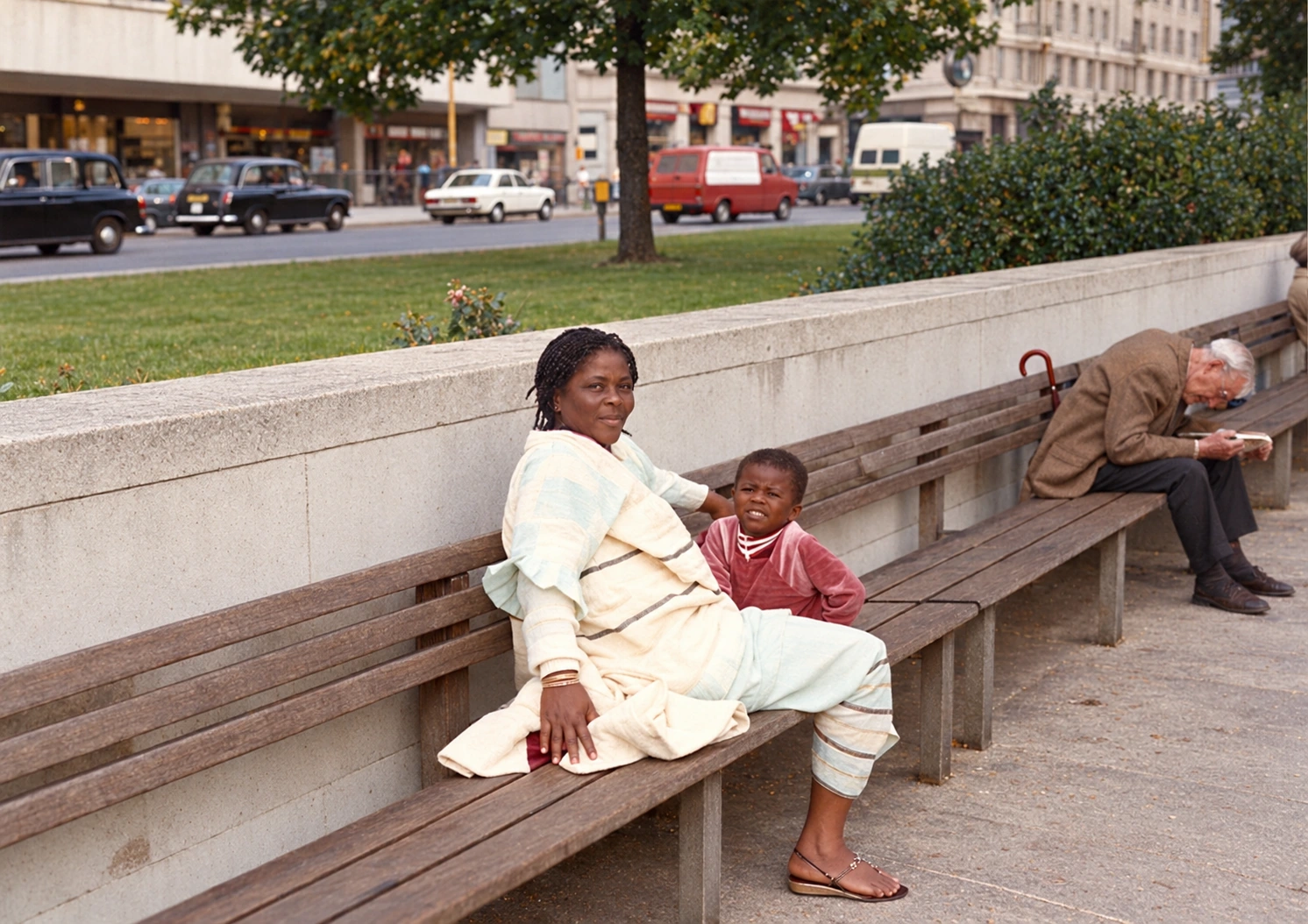
Mum and me, sitting together in a London square during our 1984 visit.
Restoration & original photograph
AI-assisted restoration for viewing; fine detail may be reconstructed. The source image is available for comparison.
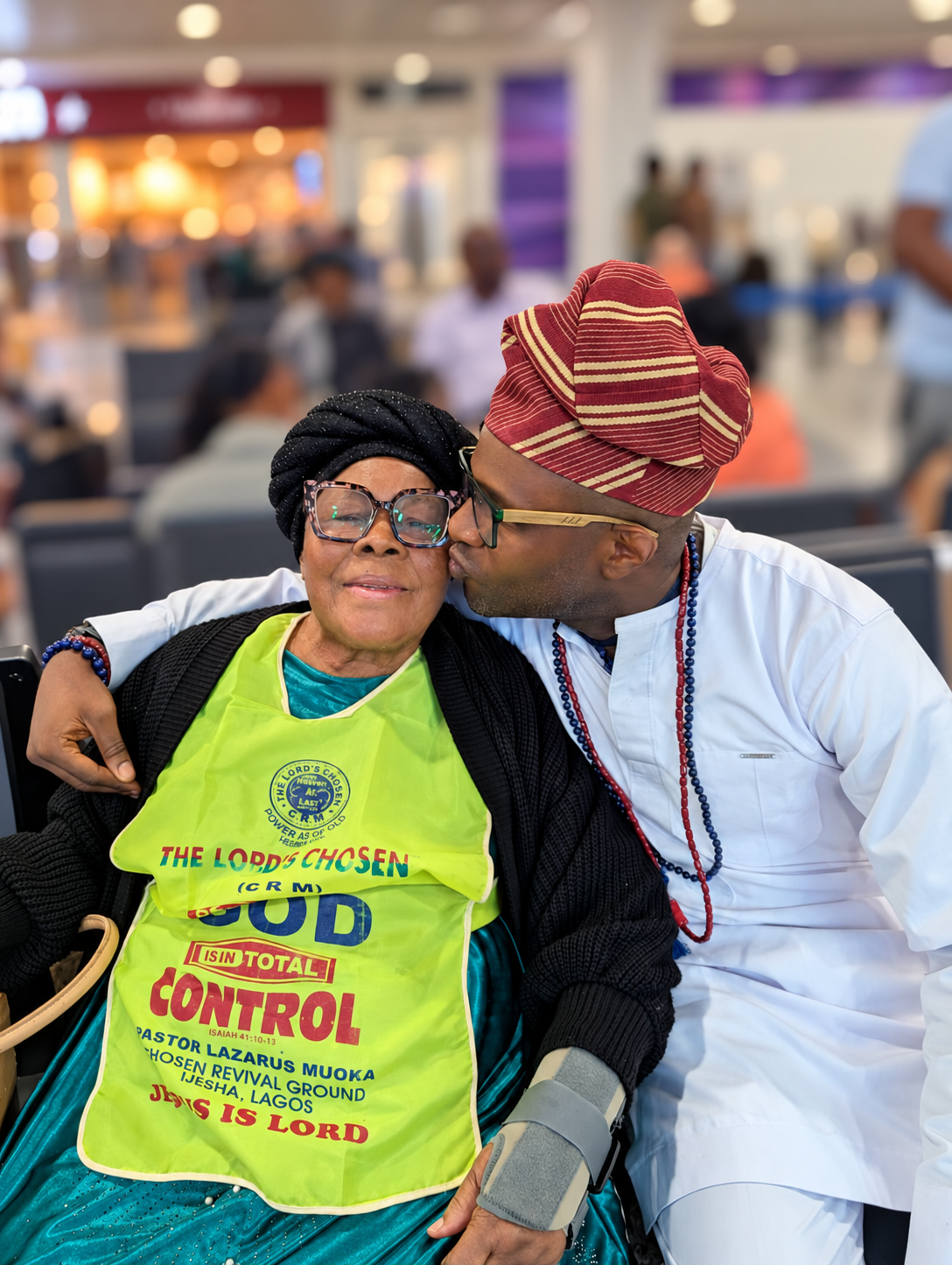
Heathrow photographs: backgrounds softened with AI-assisted editing.
Mum at 70 · Abuja, 2018.
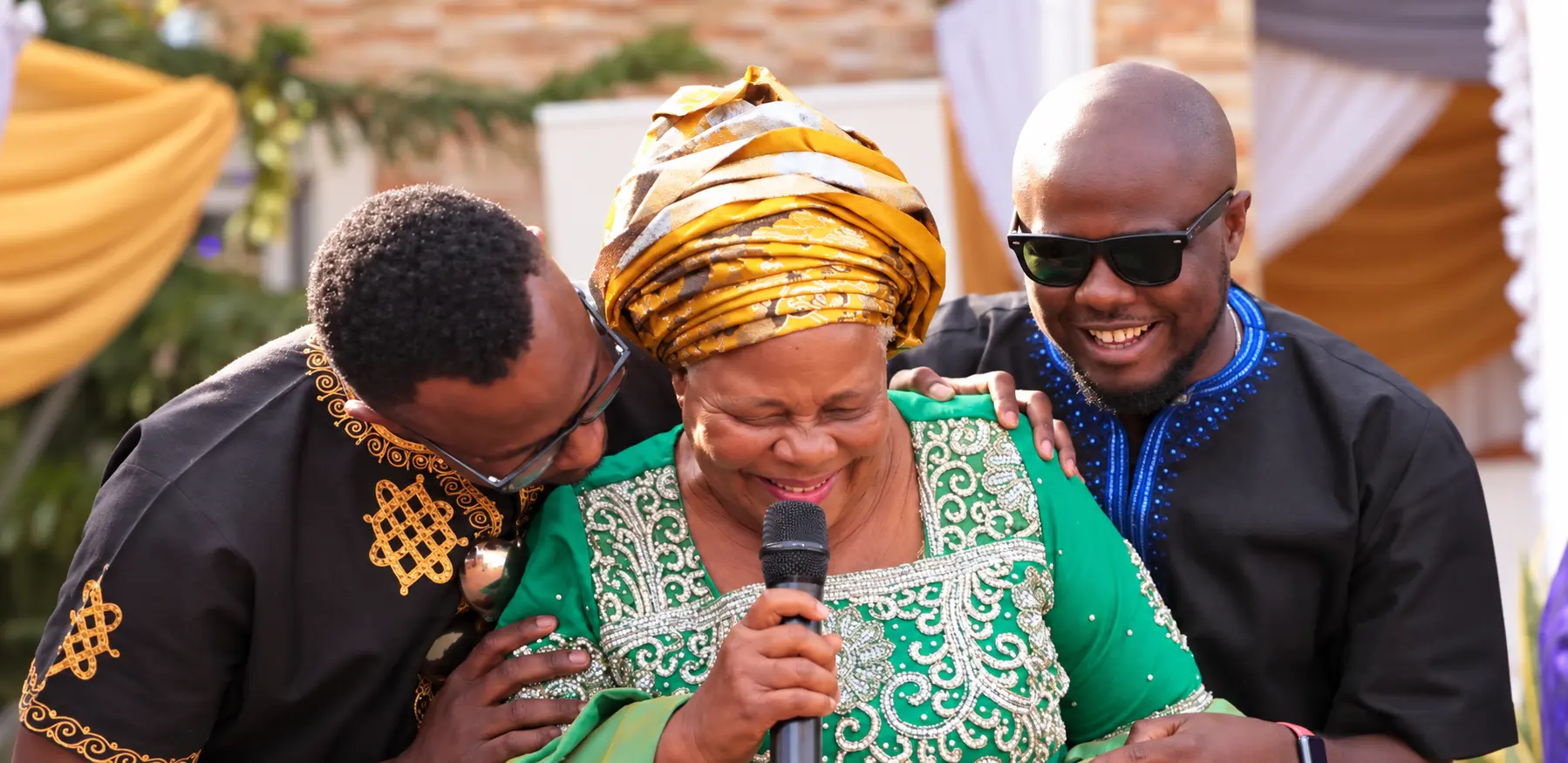
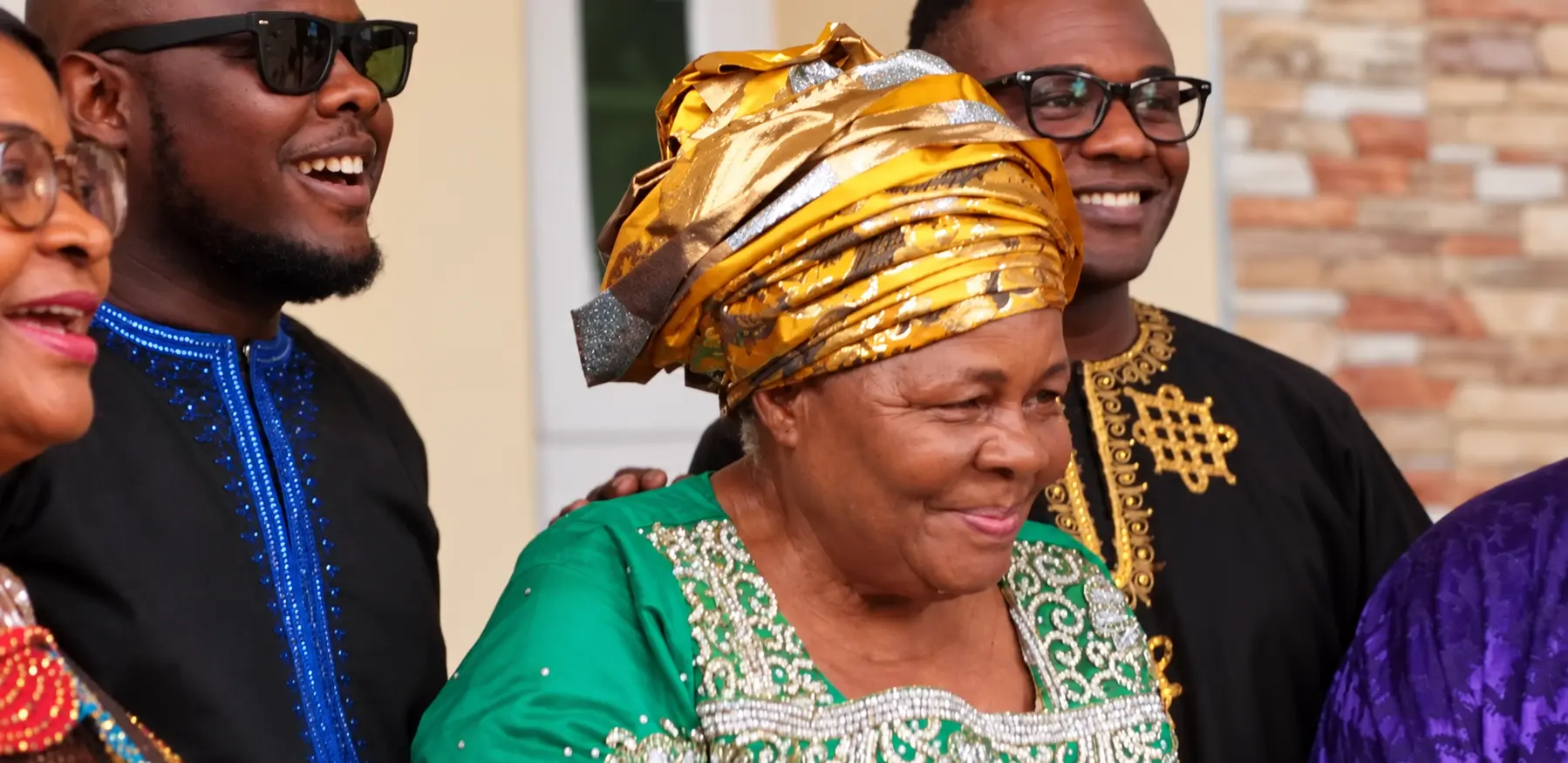
From the supplied family archive. The older images have been gently restored; dates are given where confirmed by the family or recorded in the archive.
BELONGING ACROSS LINEAGES
Whole in every inheritance.
I am proudly my father’s Yorùbá son and my mother’s Igbo son. I have met many Yorùbá men whose families carry more than one heritage, including Igbo, Edo and British connections. My old school friend Dr Tokunbo Tijani—Dr Toks—is one of them: his father is Yorùbá and his mother is of Benin (Edo) heritage. I visited him in Louisiana during my June 2026 trip across North America, and we spent time in New Orleans. We went to St Gregory’s College in Ìkòyí, Èkó (Lagos), and the friendship has travelled well. Dr Toks now lives in Louisiana, where I also enjoyed time with his lovely young family.
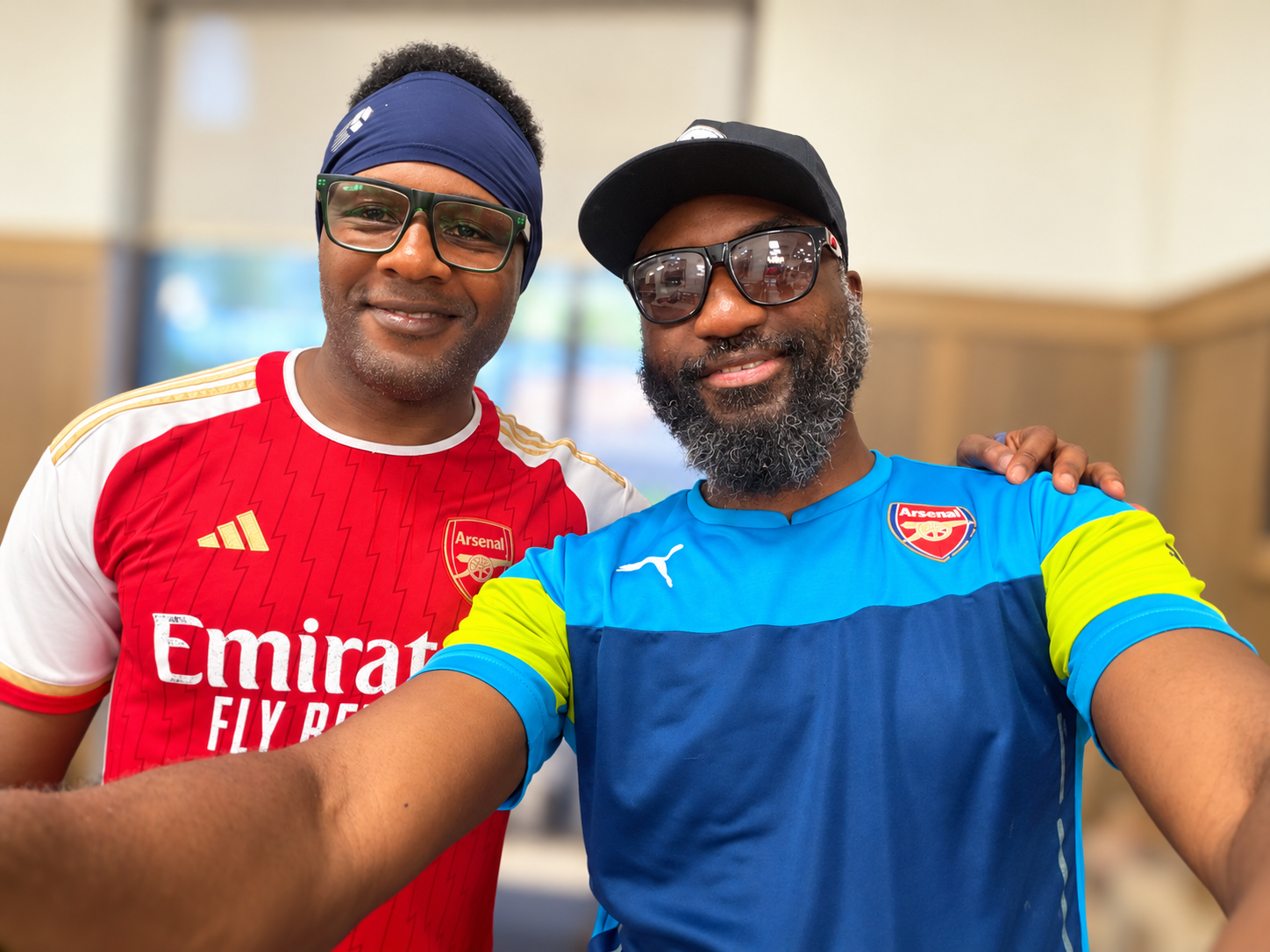
With Dr Toks during my visit. I brought my football kit from London: we both still play each week, and we both support Arsenal. Their 2025–26 Premier League title ↗ made the timing even sweeter.
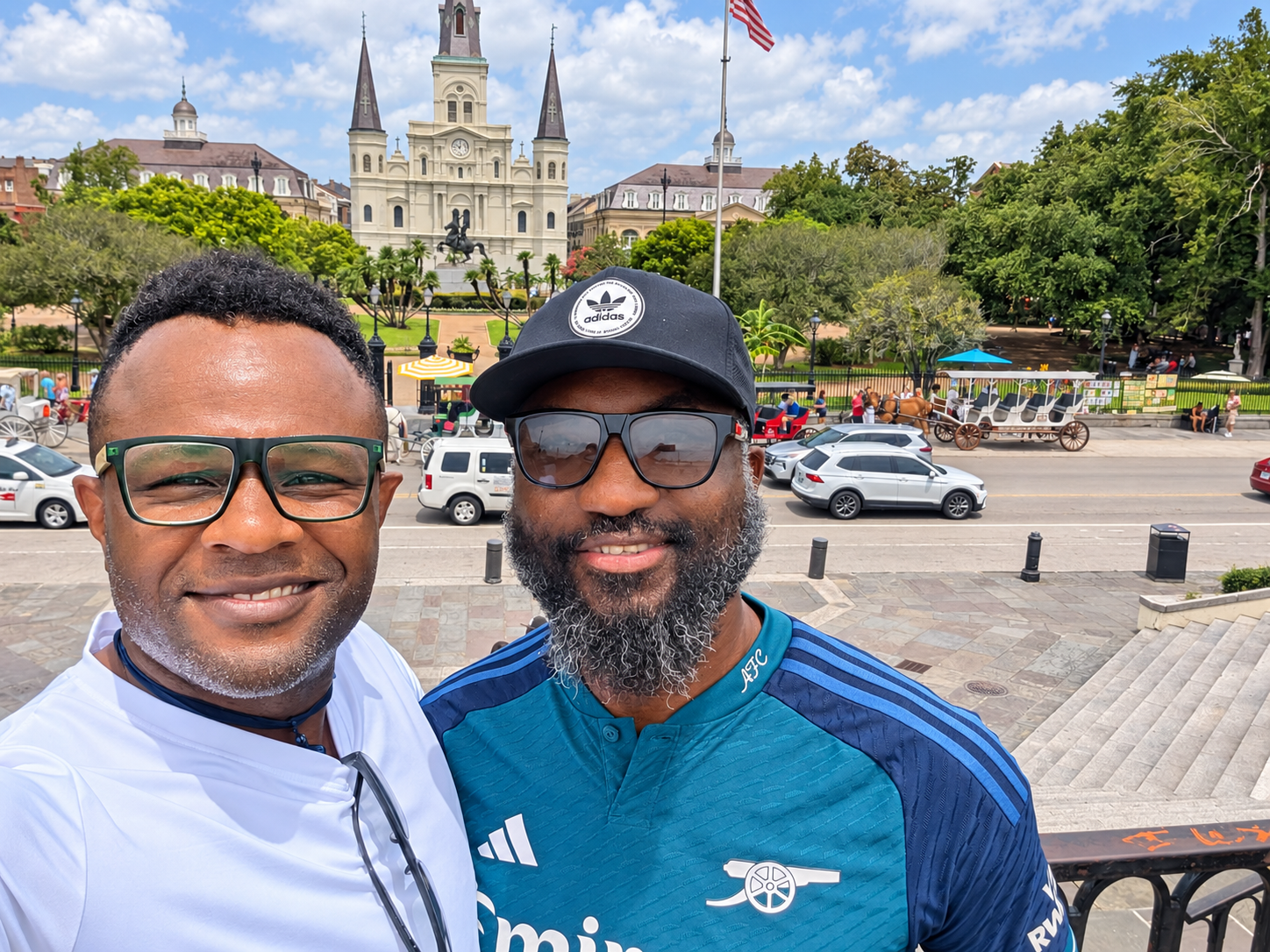
We also explored New Orleans together. Old school friends, a new city, and Arsenal colours somehow still in the picture. This photograph looks toward Jackson Square and St Louis Cathedral.
LOUISIANA CONVERSATIONS / JUNE 2026
Old friends. A shared game. A possible next chapter.
Reconnecting with Tokunbo in Louisiana brought more than football and a visit to New Orleans. Our conversations in and around Baton Rouge ranged across AI, data, Africa, Yorùbá identity and social impact. Out of those discussions came an idea I would like us to explore further: an African Football Intelligence & Development Platform.
The question was how our shared enthusiasm for football might become something useful beyond our own Sunday games. Could straightforward analysis help coaches understand a match, make overlooked grassroots talent more visible and connect sporting opportunity with mentoring, education and community life?
Read less
Using football as a starting point for youth development, talent discovery and community opportunity.
Emerging concept. This is my account of an idea discussed with Tokunbo, not an operating organisation, confirmed partnership, funded programme or deployed scouting service.
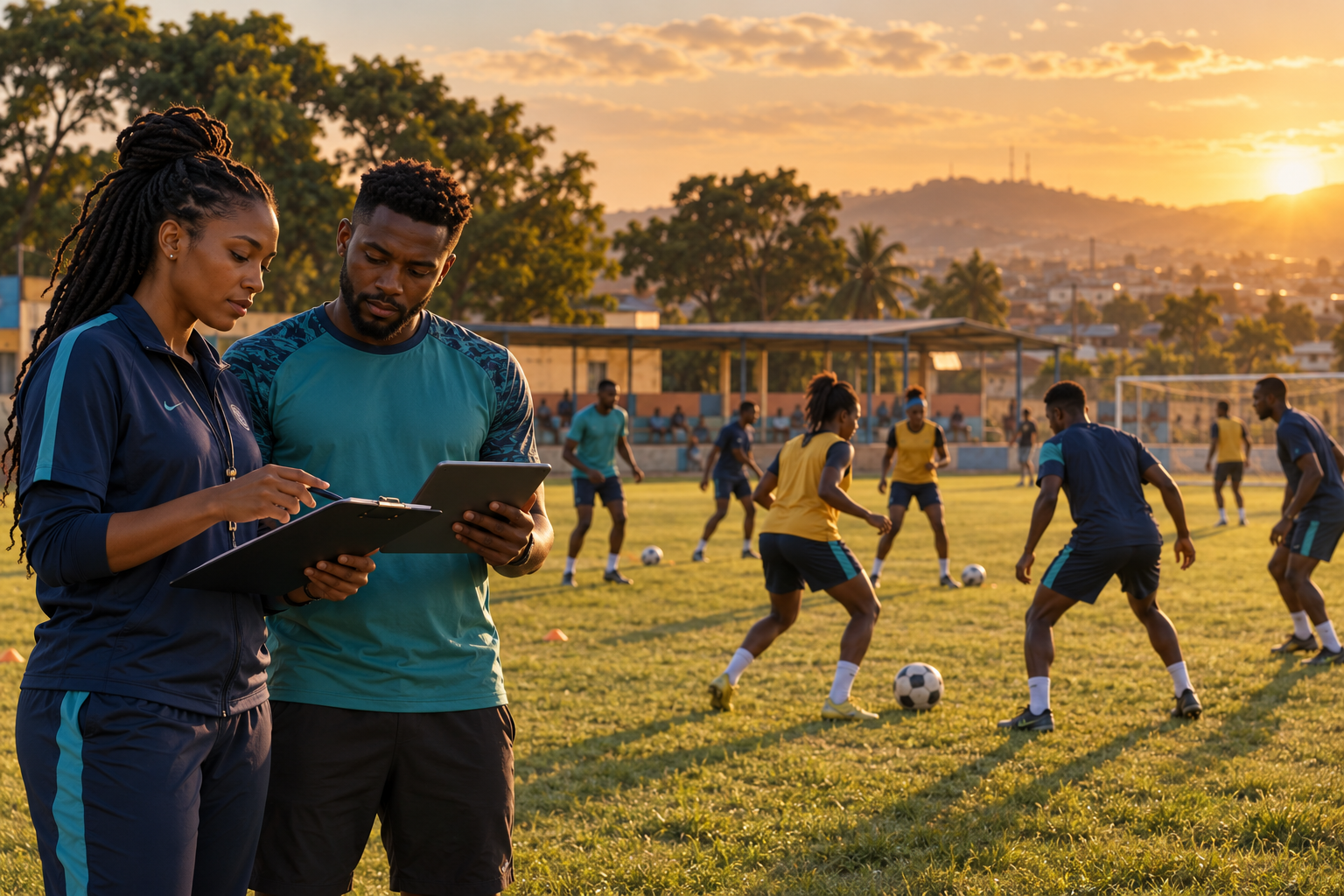
A platform built around the people using it
I imagine simple tools for schools, academies, local clubs and community tournaments. Coaches could review match patterns; organisers could maintain consistent records; players could build a contextual account of their development. Access, usable records and trusted local relationships would matter as much as an algorithm.
01 / UNDERSTAND
Football intelligence
Match statistics, team patterns and tactical questions, presented in dashboards coaches can use.
02 / DEVELOP
Opportunity & support
Grassroots visibility connected with mentoring, education and constructive feedback.
03 / BELONG
Heritage & community
Local sporting histories, African and Yorùbá identity, and the people who sustain the game.
| Who it could help | A possible capability | What would need checking |
|---|---|---|
| Coaches and clubs | Match summaries and team-pattern dashboards | Consistent definitions, coverage and the context behind results |
| Players and academies | A development record and human-reviewed talent discovery | Fair access, appropriate permissions and space for qualities the data misses |
| Schools and organisers | Simple tournament records and links to learning or mentoring | Local ownership, practical workload and an actual route to opportunity |
| Analysts and researchers | Possible AI-assisted video and event annotation | Permitted footage, action-level validation and errors across different recording conditions |
| Communities and storytellers | Local football histories and attributed player stories | Contributor choice, source accuracy and respectful representation |
Video analysis would be a later experiment: whether a model can identify an event reliably is different from whether it can judge a player. I would want coaching expertise to guide the questions, and human review to remain central to any scouting interpretation. Where young people are involved, the design would start with safeguarding, appropriate permissions and control over what is shared, rather than public profiles by default.
Start with a brief and a small demonstration
The practical next step I have in mind is a two-page concept note: the problem, intended users, a narrow first use case, the evidence needed and how Tokunbo and I might contribute. We could then test a small dashboard using a public dataset with suitable reuse terms, or clearly labelled synthetic examples, before considering a pilot with a willing local partner.
- DefineOne user, one decision and a shared concept note.
- DemonstrateA small, transparent dashboard with a clear data source.
- LearnAsk coaches and community partners what is useful, missing or misleading.
Success would first mean that someone can make a better-informed coaching or development decision—not that a model has produced a ranking. Any claims about talent discovery, social mobility or wider impact would need evidence from later work.
A wider horizon: Africa Futures Observatory
We also considered a broader possible umbrella, Africa Futures Observatory, connecting AI, Africa, governance, Yorùbá civilization, diaspora and social change. For now, football feels like the more concrete entry point: a shared passion and a focused way to test whether our ideas can be useful. The wider umbrella remains an aspiration, not a second organisation already taking shape.
Explore my current football analytics experiments ↗Where AI meets culture ↗
Based on my recollection and concept summary of our June 2026 Louisiana conversations. The existing Chelsfield tools are a separate personal project; their presence here does not imply a partnership with Mark Lascelles, his club or any academy.
My children carry African and European family histories too. They can discover the people and places behind each strand in their own time. I want them to feel free to be curious about all of it.
There can be misunderstandings between two proud peoples. In my family and friendships I also recognise affinities: deep cultural memory, learning, enterprise and a determination to make a life with dignity. I celebrate my mixed heritage without apology. It is an invitation to know one another more fully.
AN OLDER STORY OF CONNECTION · Ọ̀YỌ́ TRADITION
Ṣàngó’s mother came from Nupe.
Even the story of Ṣàngó Olúkòso holds a family connection beyond Yorùbáland.
In an Ọ̀yọ́ tradition recorded by Samuel Johnson and discussed in later scholarship, Ọ̀rànmíyàn’s wife Torosi was a Nupe princess and the mother of Ṣàngó. This is a remembered tradition with variant tellings, rather than a securely dated genealogy. It reminds me that connections across peoples have long belonged in Yorùbá storytelling. Read the scholarly discussion ↗
Wider Yorùbá historical reading
Akintoye and Ogundiran provide wider context for the Yorùbá traditions discussed here; the linked discussion above is the source for this particular Ṣàngó account.
- S. Adebanji Akintoye · A History of the Yoruba PeopleAmalion, 2010 · A broad historical account of Yorùbá societies and kingdoms.
- Akinwumi Ogundiran · The Yorùbá: A New HistoryIndiana University Press, 2020 · Archaeology, oral traditions and historical change.
MANY ROOTS / PUBLIC LIVES
More than one heritage. Many ways to belong.
Across the arts, history and public service, these lives offer different expressions of family, identity and belonging.
Yemi Alade
The musician’s Yorùbá father and Igbo mother are noted in a 2023 Afropop interview ↗.
David Oyelowo
The actor described his father as Yorùbá and his mother as Igbo in a 2021 conversation ↗.
David Olusoga
The historian has spoken of pride in his Yorùbá paternal and British maternal heritage in a 2021 interview ↗.
Sade Adu
Born Helen Fọláṣadé Adu in Ìbàdàn to Adebisi Adu and an English mother, Anne Hayes, according to Sade’s official biography ↗.
Helen Grant
The parliamentarian and former minister describes her Nigerian father and English mother in her own reflection on dual heritage. In a 2021 interview, she names her father as Julius Akanji Okuboye and explains that her family speaks Yorùbá. Her public service has included justice, sport and girls’ education.
Read more · Seven more lives, many roots
Across acting, comedy, music and fashion, belonging takes many forms. These short profiles follow the family connections people have described or that reliable biographies record.
Ayo Edebiri
The actor, writer and comedian grew up in Boston with a Nigerian father and Barbadian mother. Her story connects family expectations with finding a creative voice. Vogue interview ↗
Richard Ayoade
The actor, writer and director brings a distinctive comic voice to television and film. His family background includes a Nigerian father and Norwegian mother. BBC America profile ↗
Toks Olagundoye
The actor discusses her Nigerian father, Norwegian mother and international upbringing in an interview about her work in television. In her own words ↗
Adetomiwa Edun
The stage and screen actor has a Nigerian father and a mother with Ghanaian and English heritage. A profile of his Shakespearean work also notes that he speaks Yorùbá. The Independent profile ↗
Banky W
The musician describes a father from Èkó (Lagos) and a mother born in Calabar, Cross River. His account celebrates their determination to pursue education and build opportunities for their children. His 2018 speech ↗
Fola Evans-Akingbola
The actor identifies her father as Nigerian and Yorùbá, and her mother as English. Her interview explores the experiences behind her work on screen. In her own words ↗
Lisa Folawiyo
The fashion designer grew up in Èkó (Lagos) with a Nigerian father and Trinidadian mother. Her conversation about textiles, craft and contemporary design connects family influences with an internationally recognised creative practice. Condé Nast Traveler conversation ↗
The labels describe documented family, cultural or geographical connections; they are not interchangeable categories or a complete account of anyone’s identity. Nigerian nationality alone does not establish a particular ethnic heritage.
For a wider public-service directory, explore heritage in government and global business.
These public examples illuminate a wider experience; they do not speak for every mixed family.
A CONTEMPORARY FAMILY TRIBUTE / 2026
May your story never fade.
Selected lines from the praise for Mum shared for this page. The English is a free poetic rendering of the Yorùbá text.
YORÙBÁ
Ìyá Nnenna, adùn ayé mi,
Ará Oguguo, ọmọ ìdílé tó ní àṣẹ ìbùkún.
Ìyá tó fi àdúrà dá mi lórí ọ̀nà òde.
Mo ké sí Ọlọ́run pé kí ìlera, ìfọkànbalẹ̀ àti ìyè pípẹ̀ bo ọ.
Kí ìtàn rẹ má bàjẹ́, kí orúkọ rẹ má parí.
ENGLISH · POETIC RENDERING
Mother Nnenna, sweetness of my life,
Of the Oguguo family, a line held in blessing.
A mother whose prayers accompanied me into the world.
May health, peace of mind and long life shelter you.
May your story never fade; may your name never end.
These are personal words of love, not an inherited Igbo ritual or a source for historical events. I offer them in Yorùbá and English while honouring the Igbo people and places they address.
Strength without borrowed certainty.
The ancestral prayer remembers endurance and invokes Biafra. The British Museum collection entry places the war in 1967–70. Gilbert died in 1965, before the war began. The tribute therefore cannot establish a wartime role for him. Christiana’s and other relatives’ experiences remain stories to seek from those who knew them.
For now, this page is a beginning: a named maternal line, two places to keep learning about, and a blessing for a mother still here to receive it.