FAMILY & KINSHIP
Ọlálékan
Nobility or prestige has increased by one fold.
- Lexicon form
- Ọlálékan
- Morphology
- ọlá-lé-ọ̀kan
The published form matches the name used on this site.
View the YorubaNames entry ↗Context-aware translation drafts. Original English remains available.
Russian celebrates Daria and Adémidé’s family heritage; Igbo celebrates Lékan’s maternal roots.
Translation notes & sourcesSuggest a correction ↗TAPESTRIES / LANGUAGE / NAMES
Explore 198 names and terms from family stories, Yorùbá history, Ifá, arts, land and learning. Follow a meaning into its context, or use the writing desk to put your own words on the page.
Words in context: Ìdílé — family or lineageoríkì — praise poetry and praise names More Yorùbá terms ↗
HOW TO READ THE NAMES
The readings below come from YorubaNames, a lexicographic project for Yorùbá names. Family spellings and an individual’s actual naming history deserve their own evidence. Where tone or vowel marks differ, the dictionary form is shown separately and described as a comparison. The meaning of a name does not prove rank, lineage or a historical event.
Start with the Olúkòtún etymology in the family chronicle, or explore the other names below.
YorubaNames.com lets you search a much wider collection of names, compare tone-marked forms and follow their meanings and word parts. It is a useful language reference alongside family accounts and other sources.
Explore YorubaNames.com ↗198 names and terms across family, character, Ifá, craft, landscape and learning. Search in English or Yorùbá; tone marks and underdots are optional for searching.
198 entries available. Open a topic to explore.
Write with tone marks ↓ · Practise the melody ↓ · Sources & reading notes ↓
No matching entry. Try a shorter word, an English meaning or another topic.
01 / FAMILY & KINSHIP
These are linguistic readings beside the family’s own account. Moróláké and Atóyèbí are here; more names follow below.
FAMILY & KINSHIP
Nobility or prestige has increased by one fold.
The published form matches the name used on this site.
View the YorubaNames entry ↗FAMILY & KINSHIP
The prominent figure at the ruler’s right hand.
The family spelling on this site follows its own documents; the dictionary gives the marked form shown here.
View the YorubaNames entry ↗FAMILY & KINSHIP
A valued birth enters the sphere of honour or chieftaincy.
The family spelling differs slightly in vowels and tones from this lexicon headword.
View the YorubaNames entry ↗FAMILY & KINSHIP
I have found nobility to cherish.
A related dictionary form; Ọmọọba Moróláké Agnes’s name remains as given in the family record.
View the YorubaNames entry ↗FAMILY & KINSHIP
One sufficiently distinguished to give rise to chieftaincy.
This lexical reading is separate from Baálẹ̀ Atóyèbí’s royal office in the Oró family account. Understand the title ↗
View the YorubaNames entry ↗FAMILY & KINSHIP
One whose birth was intentional or especially chosen.
The name appears within the family oríkì as Àkànbí-Èjì.
View the YorubaNames entry ↗02 / NAMES IN CONTEXT
Lexical meanings, family spellings and historical titles each tell a different part of the story.
NAMES IN CONTEXT
Nobility or prosperity has returned with renewed strength.
The given name in the account of Chief Olatunji Raphael Ibiwoye.
View the YorubaNames entry ↗NAMES IN CONTEXT
Gratitude befits me.
A name reading; it does not identify or describe a particular person.
View the YorubaNames entry ↗NAMES IN CONTEXT
My joy has come.
A general name reading; its meaning does not reveal the circumstances of an individual’s naming.
View the YorubaNames entry ↗NAMES IN CONTEXT
I have found someone to cherish.
A name reading without a biographical claim about any particular bearer.
View the YorubaNames entry ↗NAMES IN CONTEXT
I have enjoyed sweetness, like honey.
The lexicon prints this headword without tone marks, so this guide does not guess them.
View the YorubaNames entry ↗NAMES IN CONTEXT
One born to shine.
A praise name in the family’s Èjì strand; the lexical reading does not determine the meaning of the full family epithet.
View the YorubaNames entry ↗NAMES IN CONTEXT
One especially valued to have.
The dictionary identifies this as a cognomen or praise name.
View the YorubaNames entry ↗NAMES IN CONTEXT
Meaning not securely established.
The family record gives this name to Ìbíwoyè Kánímọ́lé. The spelling and tone marks are confirmed by the family; its lexical derivation still needs research before translation.
Read the family context ↗NAMES IN CONTEXT
A title and family name in the Èdídí strand.
The name lexicon has an entry but no meaning; the family account identifies María Salome Oníkòyí with the Èdídí royal house. A title is not a word-for-word etymology.
View the YorubaNames entry ↗NAMES IN CONTEXT
One who awakes in honour or chieftaincy.
The meaning is lexical; it does not establish an office held by any bearer.
View the YorubaNames entry ↗NAMES IN CONTEXT
Born into honour or chieftaincy.
The Oró palace account remembers Baálẹ̀ Abíóyè as a royal titleholder. The lexical meaning of his name has a wider Yorùbá usage; it does not itself establish rank.
View the YorubaNames entry ↗NAMES IN CONTEXT
My crown has arrived.
A general name reading, without an implied claim about a particular bearer.
View the YorubaNames entry ↗NAMES IN CONTEXT
One who walks with the distinction of prosperity.
A marked lexicon form related to Afolayan in the family photograph archive, where he is remembered as a royal titleholder of the Oró Baálẹ̀ house.
View the YorubaNames entry ↗NAMES IN CONTEXT
Honour or prosperity arrived at last.
A name reading; the translation alone reveals nothing about a bearer’s life.
View the YorubaNames entry ↗NAMES IN CONTEXT
An avenue toward success or prosperity.
Related to Popoola in the family account. The lexicon also records the fuller form Òpópóọlá.
View the YorubaNames entry ↗NAMES IN CONTEXT
May honour or chieftaincy rise higher.
The given name of Gboyega Adekanye in the published family account; the marked form is from the lexicon.
View the YorubaNames entry ↗NAMES IN CONTEXT
A crown approaches a title of honour.
The lexicon’s marked form for Adekanye. Its literal reading does not document a person’s rank.
View the YorubaNames entry ↗NAMES IN CONTEXT
A family epithet whose derivation needs confirmation.
Used with the current Chief Olúkòtún as “Takiti II”. I retain the title as recorded, without supplying an unsupported translation.
Read the family context ↗03 / IN THE SERIES
Story names also deserve attention to vowel and tone.
IN THE SERIES
A father has returned.
A name borne by the current Chief Olúkòtún; the literal meaning does not establish any circumstance of his naming.
View the YorubaNames entry ↗IN THE SERIES
My wealth or nobility has arrived.
The series uses Ọlámídé; the linked dictionary provides this comparable form.
View the YorubaNames entry ↗IN THE SERIES
One cherished on sight.
A related form for Ayaba Aríké in the Òlákànmí chapter.
View the YorubaNames entry ↗IN THE SERIES
Ifá brought goodness.
The script and lexicon have different tone marks; this is a related name reading.
View the YorubaNames entry ↗IN THE SERIES
In the lexicon form, prosperity has reached me; in a broader reading, nobility or prestige has reached me.
The palace and series spelling Òlákànmí is preserved. Its initial vowel and tones differ from the lexicon form, so this is a comparison, not a settled translation of the historical prince’s name.
View the YorubaNames entry ↗04 / WORDS ALONG THE WAY
English glosses for recurring Yorùbá words and titles; local use and history may add nuance.
Dictionary readings to explore alongside the family and story names above. These do not assign a biography, title or religious identity to a name-bearer.
Royalty meets joy; also read as arriving to meet joy.
The dictionary records more than one grammatical reading.
YorubaNames reference ↗Family stories →A crown or pinnacle of nobility.
Adé and ọlá connect royalty with honour or prosperity.
YorubaNames reference ↗Family stories →A child born during festivities.
A name encountered in the Ọ̀yọ́ historical chapter as well as wider naming traditions.
YorubaNames reference ↗Family stories →Joy has reached the home.
The name brings ayọ̀, joy, together with arrival at ilé, home.
YorubaNames reference ↗Family stories →The crown has arrived home.
A general name reading, not evidence of the bearer's royal ancestry.
YorubaNames reference ↗Family stories →Royalty has returned from overseas.
A name connecting the crown with travel and return.
YorubaNames reference ↗Family stories →The crown has found someone or something to cherish.
A name expressing affection through the language of royalty.
YorubaNames reference ↗Family stories →Crowns have joined together; royalty has increased.
The lexicon gives these related readings.
YorubaNames reference ↗Family stories →Joy that endures.
Títí conveys duration; ayọ̀ supplies the idea of joy.
YorubaNames reference ↗Family stories →Make royalty with nobility or wealth.
The lexicon explains a connection between ọlá and adé; Ṣadé is a familiar shortened form.
YorubaNames reference ↗Family stories →A mother has returned.
Often associated with remembrance across generations; each family's naming account remains its own.
YorubaNames reference ↗Family stories →A child is enough for joy.
The marked dictionary headword is retained here.
YorubaNames reference ↗Family stories →The crown suits me; also one whose arrival befits me.
These are lexical readings, separate from the offices of historical bearers.
YorubaNames reference ↗Family stories →Someone who has returned from overseas.
A name associated with overseas birth and return; it does not establish a particular person's journey.
YorubaNames reference ↗Family stories →Born with prosperity, honour or nobility.
Ọlá can carry a wider sense than financial wealth alone.
YorubaNames reference ↗Family stories →I give thanks.
A name built around gratitude.
YorubaNames reference ↗Family stories →What is mine deserves thanksgiving.
The lexicon also expresses this as something worth celebrating.
YorubaNames reference ↗Family stories →The turn for honour or chieftaincy has reached me.
The dictionary describes being next in line; a name alone does not prove succession rights.
YorubaNames reference ↗Family stories →The one who first tastes the world.
Conventionally given to the first-born of twins.
YorubaNames reference ↗Family stories →The one who arrives second.
Conventionally given to the second-born of twins.
YorubaNames reference ↗Family stories →Kinship words for following the people and generations in the archive. Read the connected chapter →
Family; relatives.
Use alongside ìdílé when following maternal and paternal relationships.
Read in context →Mother.
A kinship word also used in respectful forms of address.
Read in context →Father.
May also address an older man respectfully; context matters.
Read in context →Child; offspring.
Also appears in names and expressions of belonging.
Read in context →Older sibling.
Can address an older person respectfully beyond immediate kin.
Read in context →Younger sibling.
Relative age matters more than gender in this term.
Read in context →Elder; older person.
Age and experience feature in intergenerational learning.
Read in context →Child; young person.
Use context to understand the intended age range.
Read in context →Twins.
Connects with naming traditions and commemorative art.
Read in context →Wife; bride.
The occasion determines which English reading fits.
Read in context →Husband.
Tone and context distinguish this from ọkọ̀, a vehicle, and oko, a farm.
Read in context →A child's naming ceremony.
The name and its family circumstances belong together.
Read in context →Words for conduct, relationships and practical judgment. Read the connected chapter →
A person of good character.
An ethical ideal explored through everyday conduct.
Read in context →Character; conduct.
Consider actions and their consequences, not appearances alone.
Read in context →Truth; truthfulness.
A foundation for honest speech and careful use of evidence.
Read in context →Humility.
Making room for correction and another person's experience.
Read in context →Goodwill; kindness.
An expression connecting an inner disposition with care for others.
Read in context →Patience.
Patient judgment can coexist with timely action.
Read in context →Respect; regard.
Useful in thinking about dignity, boundaries and relationships.
Read in context →Courage; bravery.
The quality of facing difficulty or danger.
Read in context →A brave or valiant person.
A person-word; ìgboyà names the quality of courage.
Read in context →Love; affection.
The intended relationship gives the word its context.
Read in context →Peace; well-being.
A familiar word in greetings and wishes for others.
Read in context →Unity.
Working together need not mean erasing differences.
Read in context →Cooperation; collaboration.
A useful word for shared work and community projects.
Read in context →Wisdom; practical intelligence.
Knowledge put to thoughtful use.
Read in context →Understanding; insight.
Distinct from oyè, a title or chieftaincy.
Read in context →Contextual readings from living traditions, not ritual instructions or universal definitions. Read the connected chapter →
A sign and a division of the Ifá corpus.
A sign is connected with a body of verses and interpretation.
Read in context →An Ifá verse.
Verses require attribution and context; they are not fixed one-line predictions.
Read in context →An Ifá priest or diviner.
A role involving training and interpretation within living traditions.
Read in context →A woman initiated in Ifá; a female Ifá practitioner.
Roles and recognition vary between communities and lineages.
Read in context →The divinity associated with Ifá and wisdom.
This is a contextual identification, not a literal etymology.
Read in context →A divinity in Yorùbá religious traditions.
Individual traditions and diasporic forms have their own histories.
Read in context →Authority; power to bring about an effect.
Spiritual uses carry meanings beyond ordinary administrative authority.
Read in context →Head; also spiritual individuality and destiny.
The bodily and philosophical senses need their own context.
Read in context →World; earthly life.
Often discussed in relation to ọ̀run in cosmological accounts.
Read in context →Heaven; the spiritual realm.
Not the same spelling as ọ̀rùn, neck.
Read in context →The òrìṣà associated with iron and ironworking.
A cultural context for metalworking, tools and skilled labour.
Read in context →An òrìṣà associated with thunder and royal power.
Historical and sacred accounts should be identified by their sources.
Read in context →A river and an òrìṣà associated with it.
River, place and sacred tradition are related but distinct contexts.
Read in context →An offering or sacrifice.
Meaning and practice depend on a specific tradition; this is a reading gloss.
Read in context →Distinguish the cloth, the garment, its material and the skill that shapes it. Read the connected chapter →
Cloth; clothing.
A broad word encompassing fabrics and garments.
Read in context →Yorùbá narrow-strip woven cloth.
Strips are joined into larger textiles; fibres and designs vary.
Read in context →Resist-dyed cloth.
Includes several methods, not only tying knots before dyeing.
Read in context →A wide, flowing outer gown.
Cut, drape and embroidery are separate aspects of its design.
Read in context →Cap.
Cap styles and their use vary by wearer and occasion.
Read in context →Headwrap.
A textile transformed through wrapping, folding and styling.
Read in context →Wrapper worn around the lower body.
Often paired with a blouse and headwrap.
Read in context →Blouse or loose upper garment.
The garment's cut and context shape the English description.
Read in context →Trousers.
Part of many ensembles worn with a bùbá or agbádá.
Read in context →Beads; a string of beads.
Materials, wearers and occasions supply the cultural meaning.
Read in context →Cotton.
A fibre used in many textile traditions.
Read in context →Colour.
Distinct from àwò, a plate, and awo, a context-dependent word associated with mystery or a practitioner.
Read in context →Vocabulary for looking closely at objects, workshops and materials. Read the connected chapter →
Iron; metal in broader usage.
Name an alloy precisely when the object's material has been established.
Read in context →Brass; a copper-alloy material in many contexts.
An English museum description may distinguish brass, bronze and copper more precisely.
Read in context →Gold.
Colour alone does not establish that an object is made of gold.
Read in context →Silver.
Material identification belongs with the object's evidence.
Read in context →Clay.
Fired clay and terracotta require a process description as well as a material name.
Read in context →Image; picture; representation.
Can describe a photograph, drawing or other image according to context.
Read in context →Statue; sculpted figure.
Distinguish from eré, play or performance.
Read in context →Artist; skilled craftsperson.
A broad description, not a single workshop specialism.
Read in context →Way; path; method.
Useful when discussing a route, a direction or a way of doing something.
Read in context →Art; ornamentation; skilled design.
Connects making with form and visual expression.
Read in context →Fire.
Important in discussions of heat, forging and firing clay.
Read in context →Smoke.
A visible effect of combustion, not a measure of a workshop's output.
Read in context →Words for reading landscapes and maps without confusing a name with a geographic claim. Read the connected chapter →
Ground; land; earth.
Distinct from ilé, house or home.
Read in context →Water.
A starting word for rivers, springs and water infrastructure.
Read in context →River.
Distinct from odó, a mortar used for pounding.
Read in context →Sea; ocean.
Appears in the name Tòkunbọ̀ and stories of overseas return.
Read in context →Lake; a body of standing water.
Identify the specific waterbody before describing its size or use.
Read in context →Flow of water; current.
A descriptive phrase useful when reading about rivers.
Read in context →Water source; spring.
Not every spring is a waterfall.
Read in context →Forest; bush.
A broad ecological word; habitat descriptions need more detail.
Read in context →Field; open ground.
Can refer to different open spaces, including a playing field.
Read in context →Hill; elevated ground; upward direction.
Context distinguishes a landform from a spatial expression.
Read in context →Rock; rocky outcrop.
A landform is not evidence of an economically workable mineral deposit.
Read in context →Coast; seashore.
A place where land meets the sea.
Read in context →Island.
Use the map for the specific island's location.
Read in context →Boundary; border; limit.
Cultural regions and present national borders need not coincide.
Read in context →Town; city; community.
The intended geographic scale depends on context.
Read in context →A reading companion to agriculture, food and productive possibilities. Read the connected chapter →
Farm; cultivated land.
Distinguish from ọkọ, husband, and ọkọ̀, vehicle.
Read in context →Farmer.
A person engaged in cultivation; farming systems vary.
Read in context →Farming; agriculture.
Connects practical skill, land, water and markets.
Read in context →Seed; planting seed.
A word for discussion of cultivation and crop improvement.
Read in context →Harvest; harvesting.
Output figures still need a date, place and measurement.
Read in context →Yam.
One crop among many in Yorùbá food and farming histories.
Read in context →Maize; corn.
A crop used in varied foods and farming systems.
Read in context →Beans.
Compare ẹwà, beauty: tone changes the word.
Read in context →Cassava.
Processing methods and food safety require their own practical guidance.
Read in context →Cocoa.
Relevant to agricultural enterprise and regional trade histories.
Read in context →Oil palm; palm tree.
Do not confuse with ọpẹ́, gratitude.
Read in context →Hunter.
A social and occupational role with distinct local histories.
Read in context →Words connecting language practice with research, interpretation and careful review. Read the connected chapter →
Language.
Language is carried through conversation, writing and performance.
Read in context →Word; speech; matter under discussion.
Meaning changes with the surrounding phrase.
Read in context →Sentence.
A complete sentence gives tone and vocabulary their context.
Read in context →Letter of the alphabet; a written letter.
Context distinguishes a character from correspondence.
Read in context →Vowel.
A useful term for the writing buttons and tone lesson below.
Read in context →Consonant.
Standard Yorùbá spelling includes consonants such as ṣ and the digraph gb.
Read in context →Tone marks.
Acute marks high tone, grave marks low; mid tone is usually unmarked.
Read in context →Voice; tone.
A tone mark records a linguistic distinction, not a fixed musical note.
Read in context →Meaning; interpretation; translation.
A dictionary gloss is only a starting point for a full sentence.
Read in context →Writing.
Tone marks and underdots help preserve intended meaning.
Read in context →Reading; counting.
Context distinguishes the activity intended.
Read in context →Learning; lesson; education.
Connects formal study with practical learning.
Read in context →Teacher.
Knowledge is transmitted through people as well as documents.
Read in context →Student; learner.
Practice, questions and correction belong in the learning process.
Read in context →Knowledge.
Compare ìmọ̀ with ọgbọ́n, wisdom: the words are related in thought but not identical.
Read in context →Research; investigation.
A useful bridge between cultural inquiry and technical work.
Read in context →Evidence; testimony; witness.
The intended sense depends on whether one means a person or what supports a claim.
Read in context →Question; enquiry.
A good starting point for learning and reviewing a claim.
Read in context →Answer; response.
An answer can be revised when better evidence appears.
Read in context →Terms for enterprise, institutions and the responsibilities of shared life. Read the connected chapter →
Market.
Can mean a trading place; wider economic uses depend on context.
Read in context →Money.
Distinct from ọwọ́, hand, and ọ̀wọ̀, respect or honour.
Read in context →Trade; business.
Economic activity takes many forms beyond a single market.
Read in context →Work; occupation.
Hard work is an application of the word, not its only meaning.
Read in context →Growth; development.
Human well-being and productive capability both matter in the site's development discussion.
Read in context →Government; governing authority.
Specify the institution and level of government concerned.
Read in context →Law; rule.
A word gloss does not establish a particular legal requirement.
Read in context →Meeting; gathering.
A space for counsel, discussion and shared decisions.
Read in context →Leader; head.
Distinct from the differently toned royal-consort title often written Olórì.
Read in context →Title; chieftaincy; rank.
Distinct from òye, understanding or insight.
Read in context →A senior female chieftaincy title.
Authority and responsibilities vary with community and period.
Read in context →A female market leader.
A local office whose precise remit requires context.
Read in context →Words for performance, storytelling and the transmission of memory. Read the connected chapter →
Drum.
Distinct from ìlú, town: the tone on the final vowel matters.
Read in context →Lead or mother drum in an ensemble.
Its form and role depend on the drumming tradition.
Read in context →A Yorùbá drum family and ensemble tradition.
Performance contexts include sacred and contemporary settings.
Read in context →A pressure-drum ensemble tradition.
Drummers can model features of tonal speech through performance.
Read in context →Song; singing.
Words, melody and occasion work together.
Read in context →Dance.
A practice that can carry celebration, memory and social meaning.
Read in context →Poetry.
Modern written and performed poetry belongs alongside older oral forms.
Read in context →Folktale; a traditional story.
A tale's version and teller should be credited where known.
Read in context →Proverb.
Meaning depends on the situation in which it is used.
Read in context →Story; history; account.
The word alone does not tell us whether an account is documented history or fiction.
Read in context →Culture; custom; practice.
Living culture changes across places and generations.
Read in context →Civilization; enlightenment; cultural flourishing.
Used on this site to connect learning, creativity and human possibility.
Read in context →Names link to YorubaNames entries or their indexed listings. Short word glosses are a contextual reading guide, not an exhaustive dictionary. Tone, dialect and register can change meaning; family spellings remain alongside dictionary comparisons. Definitions do not establish ancestry or title.
The linked chapters carry their own historical, object and place sources. Contemporary technical coinages may differ across authors. Reviewed 22 October 2026. Suggest a spelling, meaning or source →
Beyond personal names, Yorùbá vocabulary connects bodily experience with spatial meaning. Explore orí, inú and etí in Dingemanse’s linguistic study, then follow the stories, riddles and songs through which children learn.
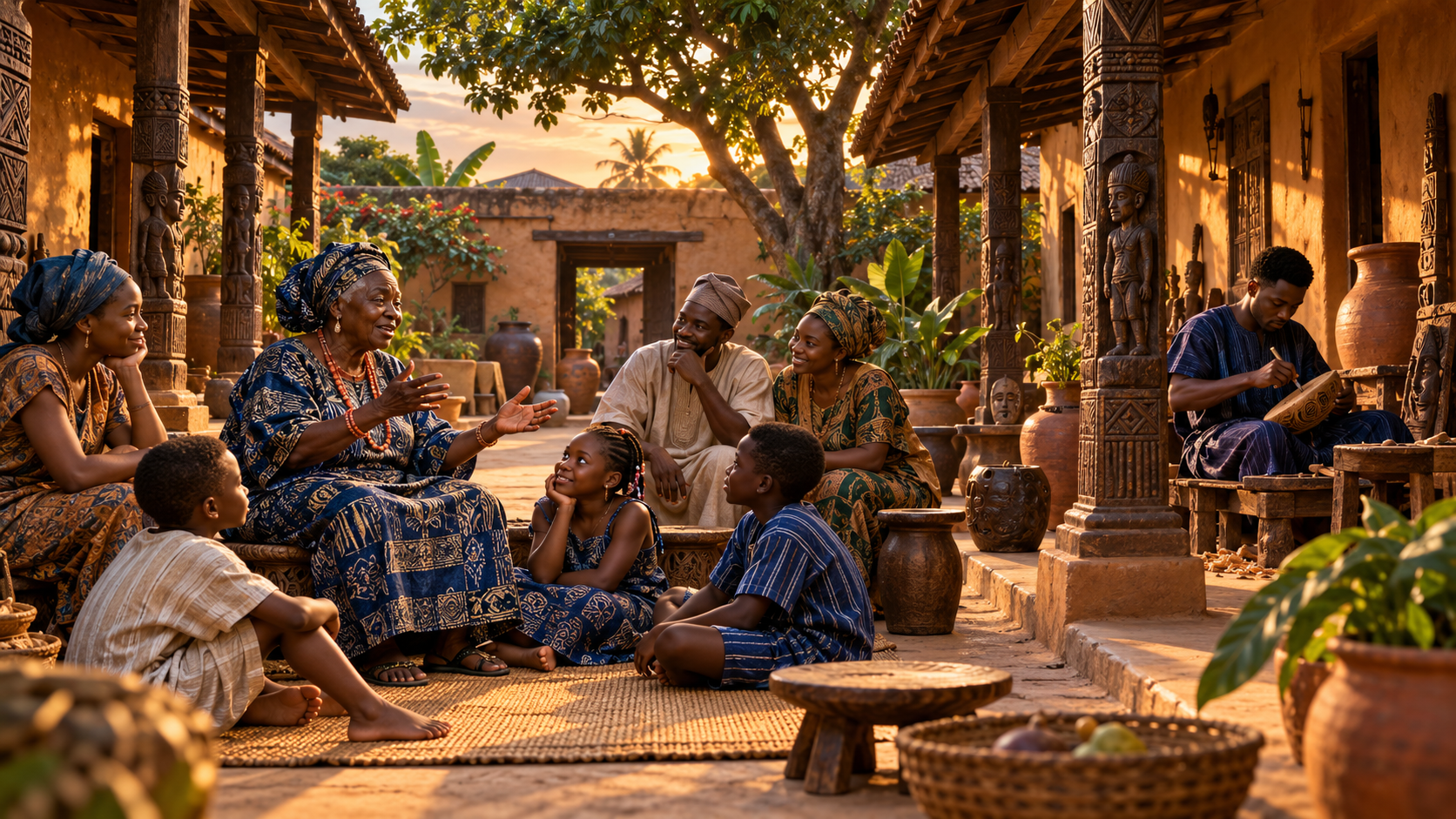
Core reading for the Yorùbá historical and cultural context discussed on this page. Follow the specific sources alongside individual claims, interpretations and language examples.
For the philosophy behind the name Ọ̀làjú Ọmọlúàbí Studio, explore Ọmọlúàbí and its virtues.
YOUR WORDS / YOUR CHOICE OF TONE
Type or paste your text, place the cursor, then choose a letter. Select a letter or word to replace it. You choose the spelling and tones; this desk does not infer meaning or add marks automatically.
0 / 30,000 characters in the Yorùbá box.
Writing stays in this page and is not saved automatically. Copy or download it before leaving. Google Translate opens in a new tab only when requested and receives your selected Yorùbá text, or the whole draft if nothing is selected (up to 5,000 characters). Its English result appears there; paste it back here if useful. Review it for meaning.
EXPLORE / CHANGE / REFLECT
Choose from 1,080 three- to six-syllable tone exercises and 28 guided listening examples, change individual marks and play the contour. High uses an acute accent, low a grave accent; mid is usually unmarked. Synthetic practice sound is a teaching simplification; a credited recorded voice lesson is available below.
Loading the interactive tool…
Audience and value: For introductory listening and tone-mark practice
Method: Five syllable positions with three tones yield 1,080 contours. Seven guided examples set the controls; Web Audio generates an illustrative contour.
Implementation: Browser oscillators and filters produce synthetic sound, not speech synthesis trained on Yorùbá. A separate credited University of Texas recording provides a human-voice lesson.
Limits: Fixed pitches and invented syllable sequences are teaching simplifications, not fluent pronunciation, meaningful words or regional accent models.
Enable JavaScript to choose optional feedback-based suggestions.
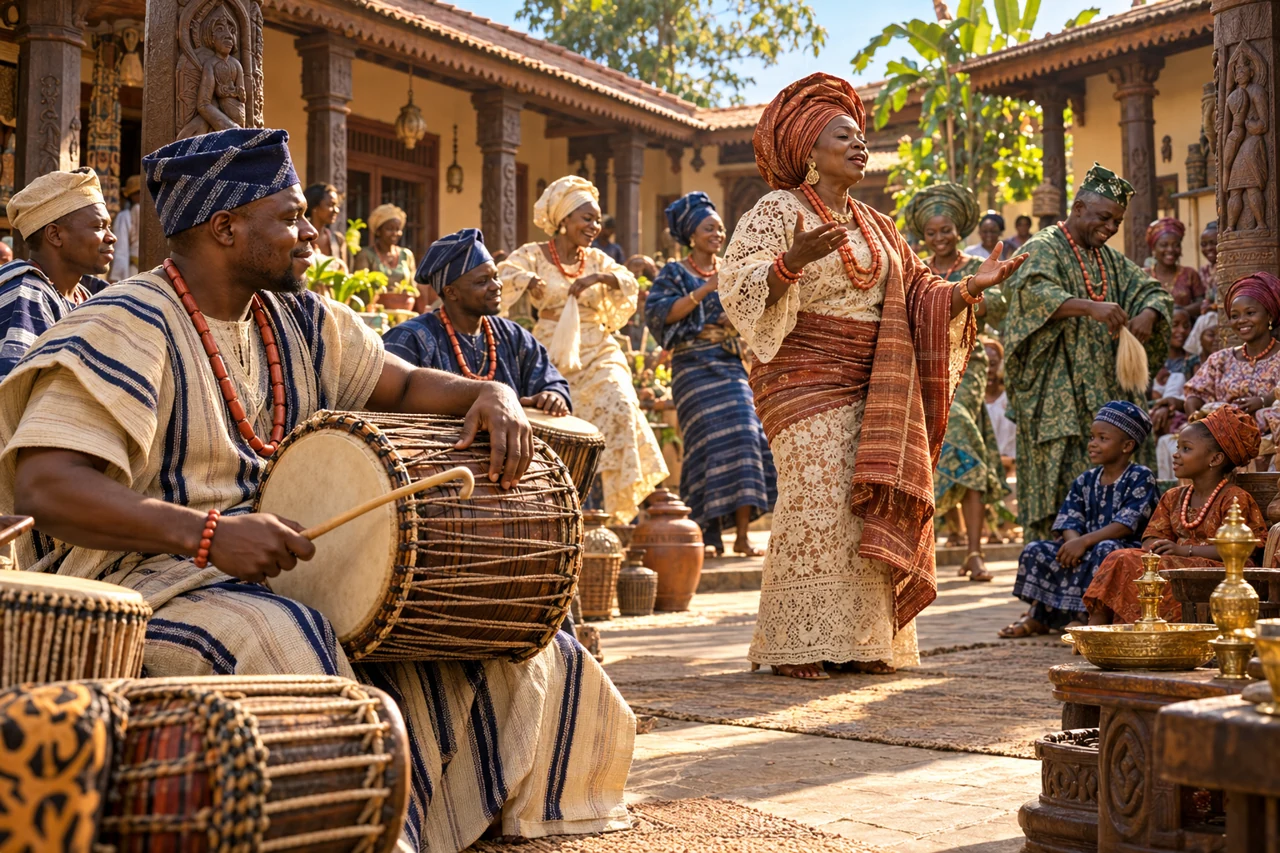
These learning tools expose selected representations and comparisons. They cannot authenticate a tradition, infer ancestry or replace language speakers and cultural custodians.
Number of concepts in this guide, not performance or usage measures.
9 concepts shown
On small screens, scroll the table sideways. “Learning context” explains a related idea; it does not mean that method runs on this page. Deep learning is the standard term for “deep ML”.
| Technical term | Technical description / definition | In plain English | How this page uses it |
|---|---|---|---|
| Unicode normalisationAlgorithm | Transforming equivalent character sequences into a consistent Unicode representation.Primary reference ↗ | Help differently encoded letters match without throwing away meaningful accents. | Method guide Tone and underdot preservation matter when representing Yorùbá text; spelling differences may carry meaning. |
| Natural language processing (NLP)AI Capability | Computational methods for representing, analysing or generating human language.Primary reference ↗ | Help a computer work with words, while remembering that context matters. | Learning context Language technology needs context and evaluation by speakers, especially for underrepresented varieties. |
| Word error rate (WER)Evaluation & XAI | Substitutions, deletions and insertions divided by the reference word count.Primary reference ↗ | Compare a transcript against a checked reference; the number alone cannot judge cultural meaning. | Learning context Where transcription comparisons appear, word-level errors are only one quality signal; tone and meaning need review. |
| Rule-based logicAlgorithm | Explicit authored conditions map inputs to outputs without fitting parameters from training examples.Primary reference ↗ | A transparent set of if-this-then-that instructions. | Running here The retained learning activities use authored examples and deterministic choices, not divination, identity prediction or generated historical evidence. |
| Visual encodingVisualisation | Mapping values or categories to marks, position, length, colour and labels.Primary reference ↗ | Make the comparison visible, with a scale and a clear label. | Published analysis Diagrams encode the stated categories or relationships; visual resemblance does not establish historical or scientific equivalence. |
| Coverage, bias and representationResponsible AI | Assess how sampling, labels, missing groups and design choices affect error and applicability.Primary reference ↗ | Ask whose experience the data includes—and whose it misses. | Responsible use Missing language varieties and permissions can make a seemingly polished dataset unrepresentative. |
| Data minimisationResponsible AI | Limit collected, disclosed and retained information to what is needed for the stated purpose.Primary reference ↗ | Use the smallest appropriate amount of information. | Responsible use Cultural access, family privacy and agreed uses matter alongside technical quality. |
| Human oversight and consentResponsible AI | People retain appropriate review authority, permission controls and correction routes for data use and outputs.Primary reference ↗ | Keep someone able to question, correct or stop the result. | Responsible use Sources and knowledgeable people retain interpretive authority; corrections are welcome. |
| Deep learningAI Capability | Machine learning using neural networks with multiple representation-learning layers.Primary reference ↗ | A layered model learns useful representations; more layers do not guarantee a better answer. | Learning context A proposed image or language capability is distinct from an implemented, evaluated model on this page. |
No matching concepts. Choose another category or clear the search.

Olukotun Studios Ltd · Registered in England and Wales · No. 17537910
Registered office: 5 Brayford Square, London, E1 0SG, England.