Follow the spaces, voices and practices through which people learn, remember and shape a shared life.
SPACE / LANGUAGE / PERFORMANCE
Knowledge lives in more than books.
A courtyard organizes relationships. A folktale invites judgment. A song can honour a community and address power. These studies help Tapestries connect ideas with the places, voices and practices that carry them.
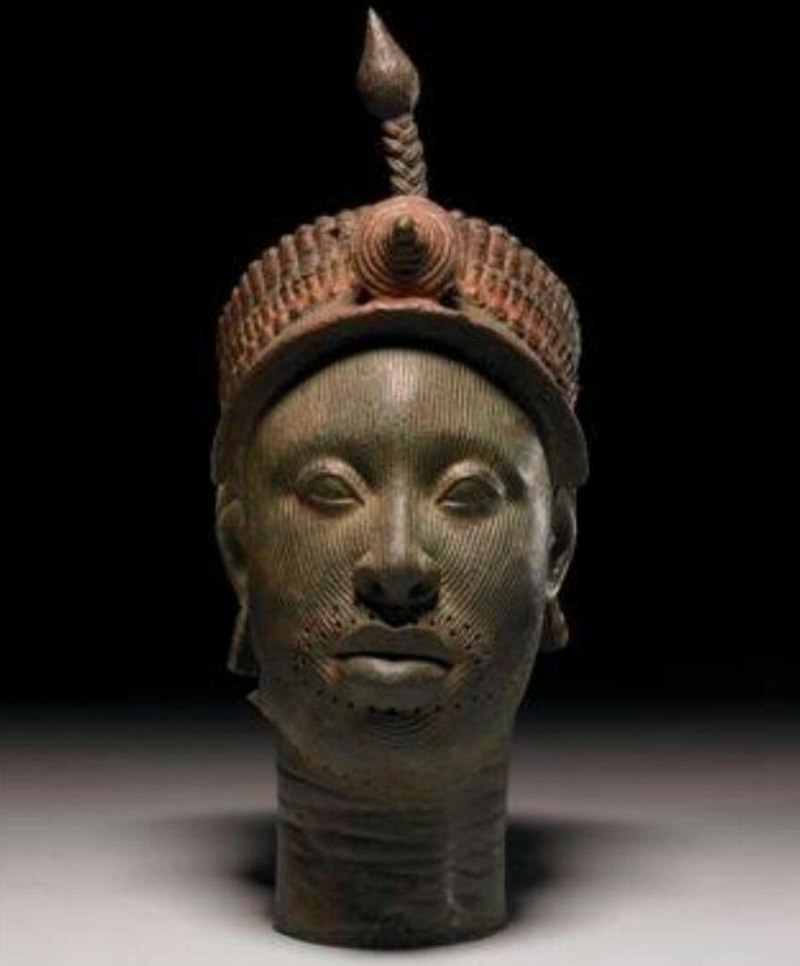
A face of authority.Brass · 14th–early 15th century
The composed mouth, steady gaze and elaborate crown invite a reading of authority held with assurance. The museum identifies a probable ruler; a particular monarch’s name is not established. This is the Ifẹ̀ head—not a verified portrait of Odùduwà.
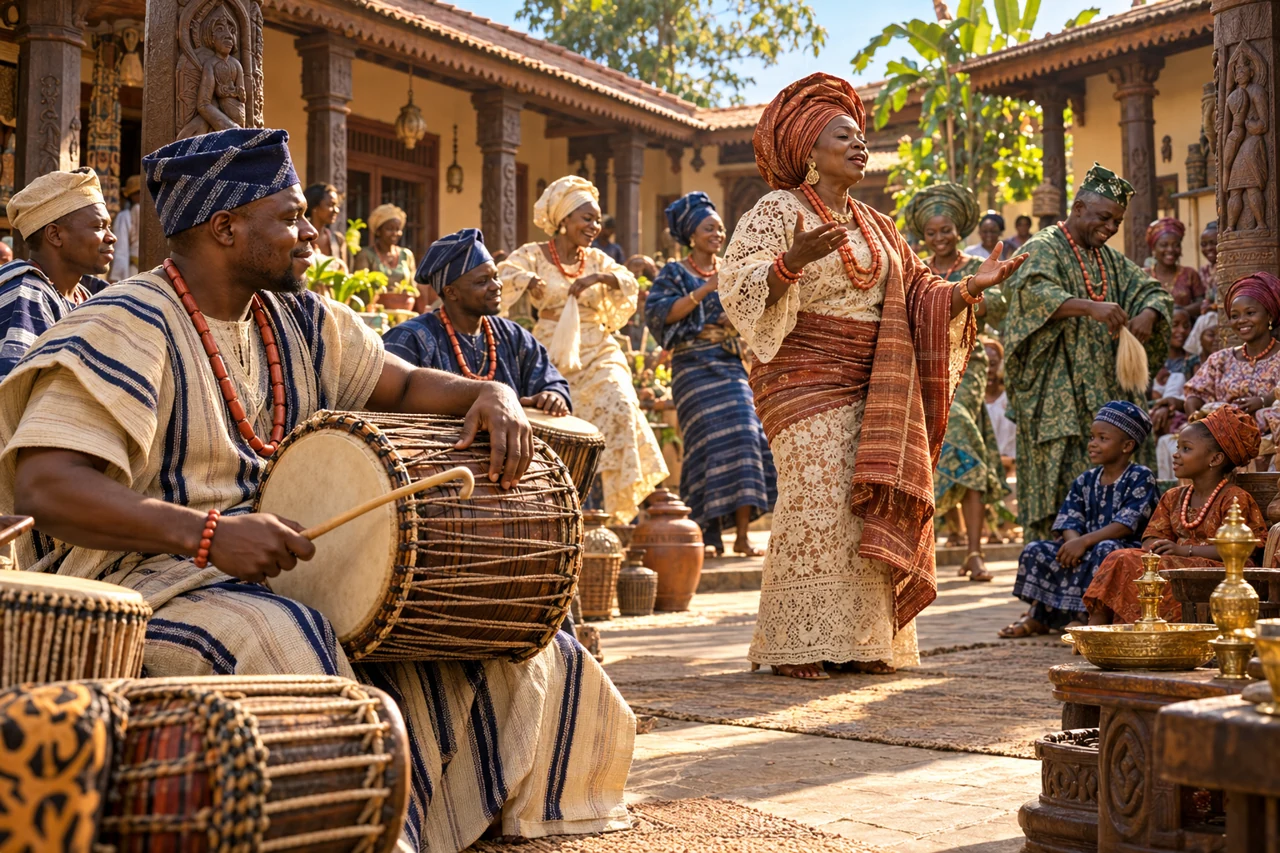
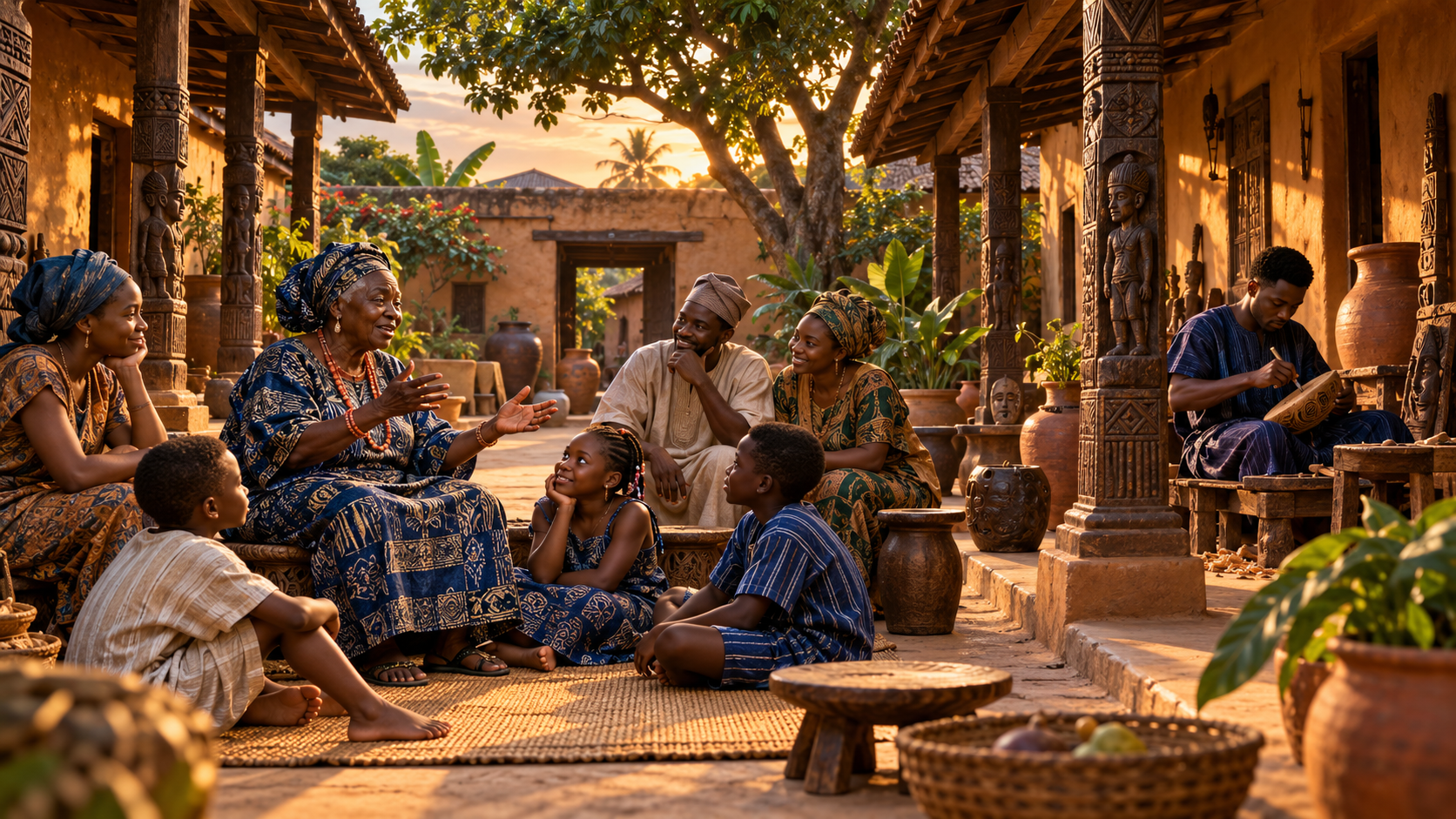
A voice. A drum. A gathering.AI-generated cinematic interpretation · View artwork & context →A courtyard as a place of dwelling, craft and learning. AI-generated interpretive illustration, not a reconstruction of a particular house or historical period.
Ilé: space shaped by relationships.
John Michael Vlach argues that Yorùbá architecture deserves attention as a cultural and artistic ordering of space, beyond the materials used to build a shelter. The arrangement of a house can express shared expectations about belonging and social life. His essay challenges the assumption that only monumental buildings in durable materials count as significant architecture.
Franklin Pelumi Akinmolayan’s 2023 undergraduate dissertation examines art in selected traditional and modern buildings in Ilé-Ifẹ̀. It explores carvings, ornament and the changing visibility of Yorùbá artistic expression. Read together, the works invite a design question: how can a contemporary building support communal life and cultural expression while meeting present needs?
Read more: from inherited forms to future cities
A courtyard is a social arrangement as well as a visual form. We can ask who meets there, where work happens, how privacy is negotiated and which routes connect the household. Akinmolayan’s selected-building study offers a situated perspective; its findings should not be treated as a survey of every Yorùbá town.
For future design, these readings suggest possibilities to investigate: locally commissioned artwork, spaces for craft and shared learning, and buildings that reflect their users’ relationships. Climate performance, accessibility, construction safety and affordability each need their own design evidence. Cultural continuity can guide invention without requiring a replica of the past.
Akíntúndé Akínyemí studies the educational roles of children’s oral literature: tongue twisters, lullabies, riddles, songs, game poetry and folktales. The variety matters. Children learn through voice, repetition, play and participation, not only through a formal lesson.
M. I. Ogumefu’s Yoruba Legends (1929) offers a historical collection of tales, including animal stories and narratives associated with remembered places and figures. It is one mediated English-language collection, not an exhaustive or uniform record of Yorùbá storytelling.
Read more: a tale is an invitation to think
A story session can ask: whose decision changed the outcome, what alternatives were available, and which person was not heard? A riddle can reward careful listening; a song can support participation and memory. These are present-day learning prompts inspired by Akínyemí’s discussion, not claims that every genre serves one fixed purpose.
Ogumefu’s preface also contains a Christian hierarchy of cultural value characteristic of its framing. We read that critically rather than adopting it. The collection’s narrative variation is instructive: its opening creation story gives Oranyan a role that differs from familiar Odùduwà accounts. Variation belongs in the evidence, rather than being silently flattened into one “official” story.
Bode Omojola examines the festival through music, song texts and performance. His 2011 article shows how ancestral and religious identities meet contemporary social agendas and relations of power. Performance can celebrate belonging while also articulating how authority is understood and negotiated.
Actual photograph: River Osun, Osogbo, by 4toscenethesis. Source · CC BY-SA 4.0. Wikimedia thumbnail; no creative edits.Read more: listen for who is speaking
Omojola’s ethnography invites attention to performers’ agency and the circumstances in which songs are heard. A festival is not simply a display detached from history. Its relationships with institutions and public life can change, and a study of one period should not be substituted for an account of today’s festival.
Timothy A. Awoniyi traces Yorùbá in the colonial formal school system between 1882 and 1952. His historical study treats language policy as part of changing religious, political, social and educational conditions. It provides a way to examine both the development of written educational materials and the pressures affecting the language’s status.
Read more: education and cultural confidence
The question reaches beyond translating an English lesson. Which language is used to explain an idea, assess understanding, record knowledge or open professional opportunities? A historical language-policy study helps us ask how those choices became established; it does not require us to assume that every actor had the same aim or that every period followed the same policy.
Our present ambition is to let Yorùbá carry analysis, imagination and technical learning alongside other languages. The site’s automatic translation is a reading aid; developing dependable educational resources also requires fluent writers, teachers and reviewers. Explore language, meaning and cultural AI.
J. D. Y. Peel distinguishes three connected fields: Òrìṣà traditions in the Yorùbá homeland; Christianity and Islam as practised by Yorùbá people; and religions of Yorùbá origin practised beyond Africa, often by people who do not identify ethnically as Yorùbá. These are overlapping historical relationships, not three sealed populations.
A Yorùbá wedding can bring several arts into one room: the spoken word, music, movement, textile skill and the generous work of welcoming people. Its beauty is in the gathering as much as the clothing. Families and friends make a couple’s new chapter a shared occasion.
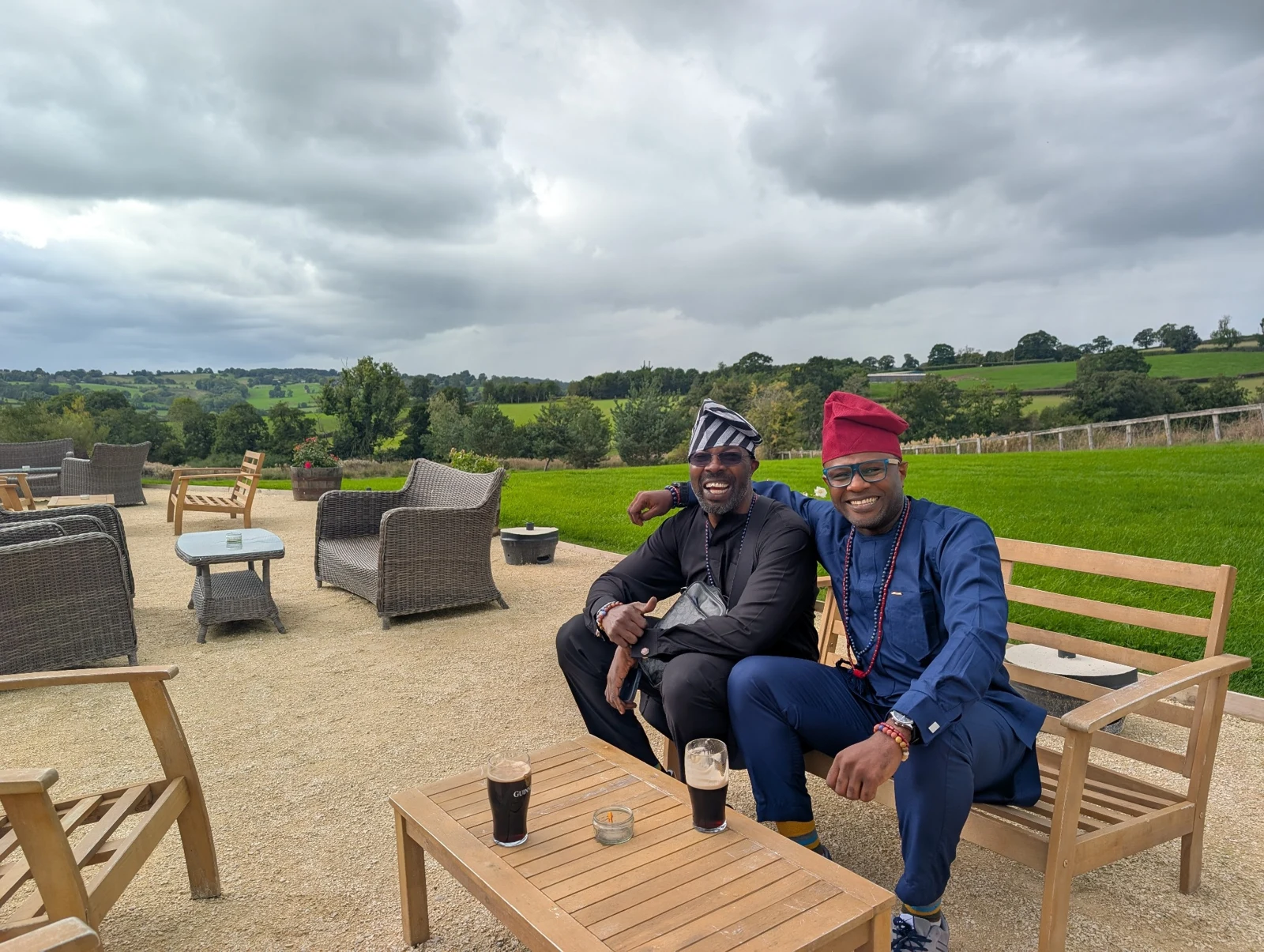
I have had the pleasure of attending weddings in the diaspora, including the celebrations pictured here in Northamptonshire, Derbyshire and Essex. These are personal memories of friendship and belonging: familiar dress and cultural pride finding a home in different English settings.
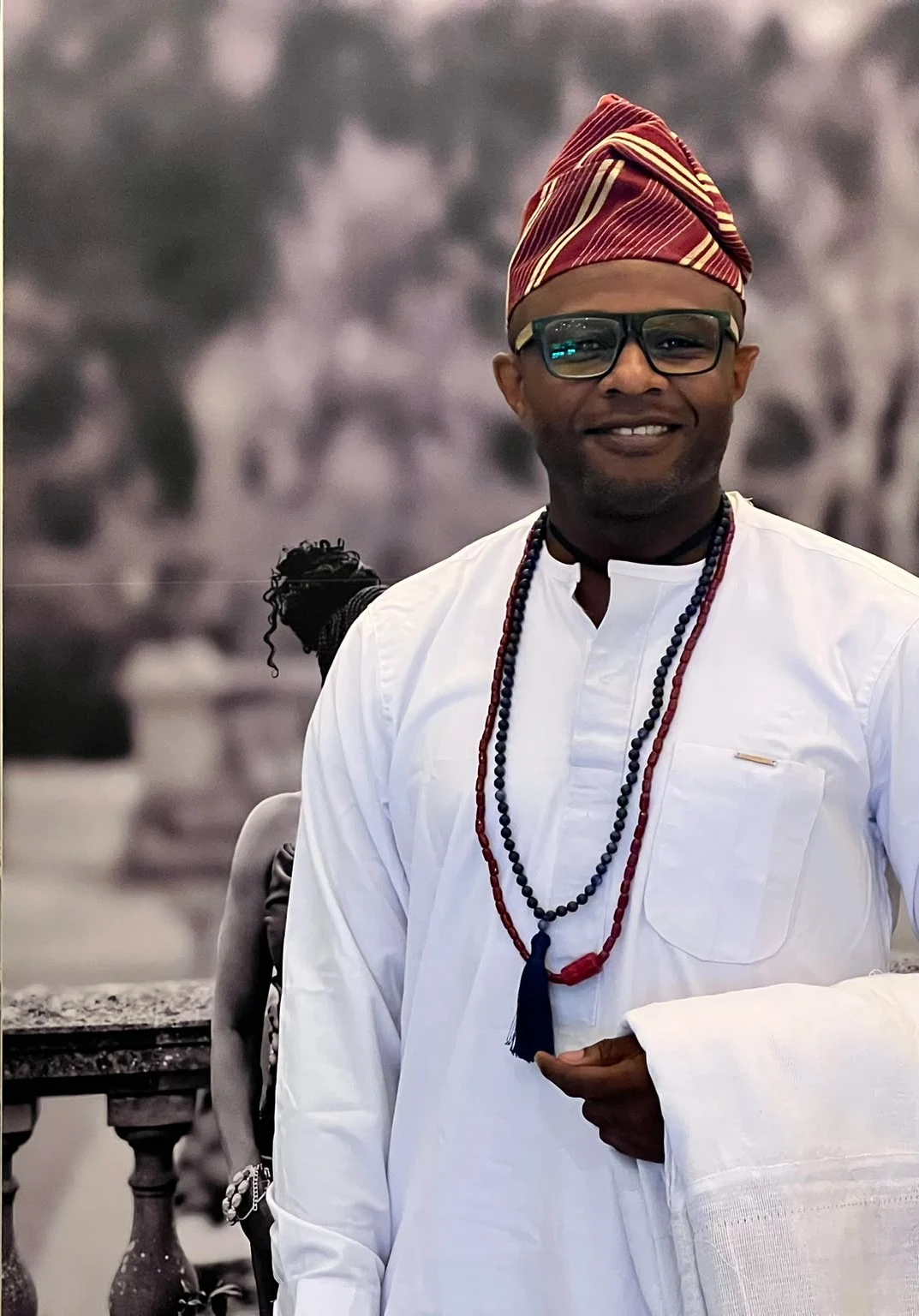
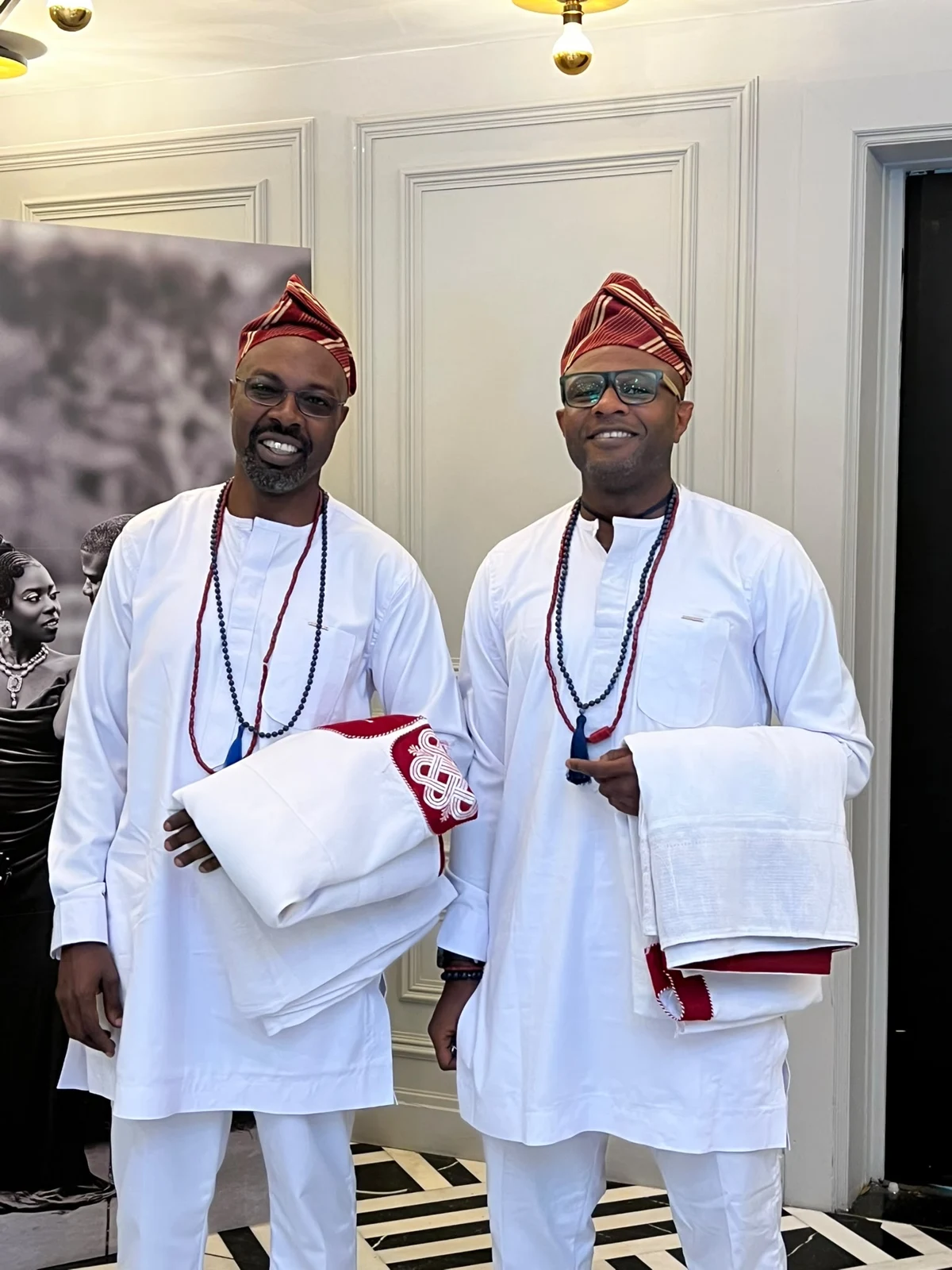
In the Essex photographs, I am carefully holding my neatly folded agbádá—a precious export from Yorùbáland. Even when it is resting on my arm, it carries something of home. For me, caring for it is a small, everyday expression of pride in the people and craftsmanship behind our clothing.
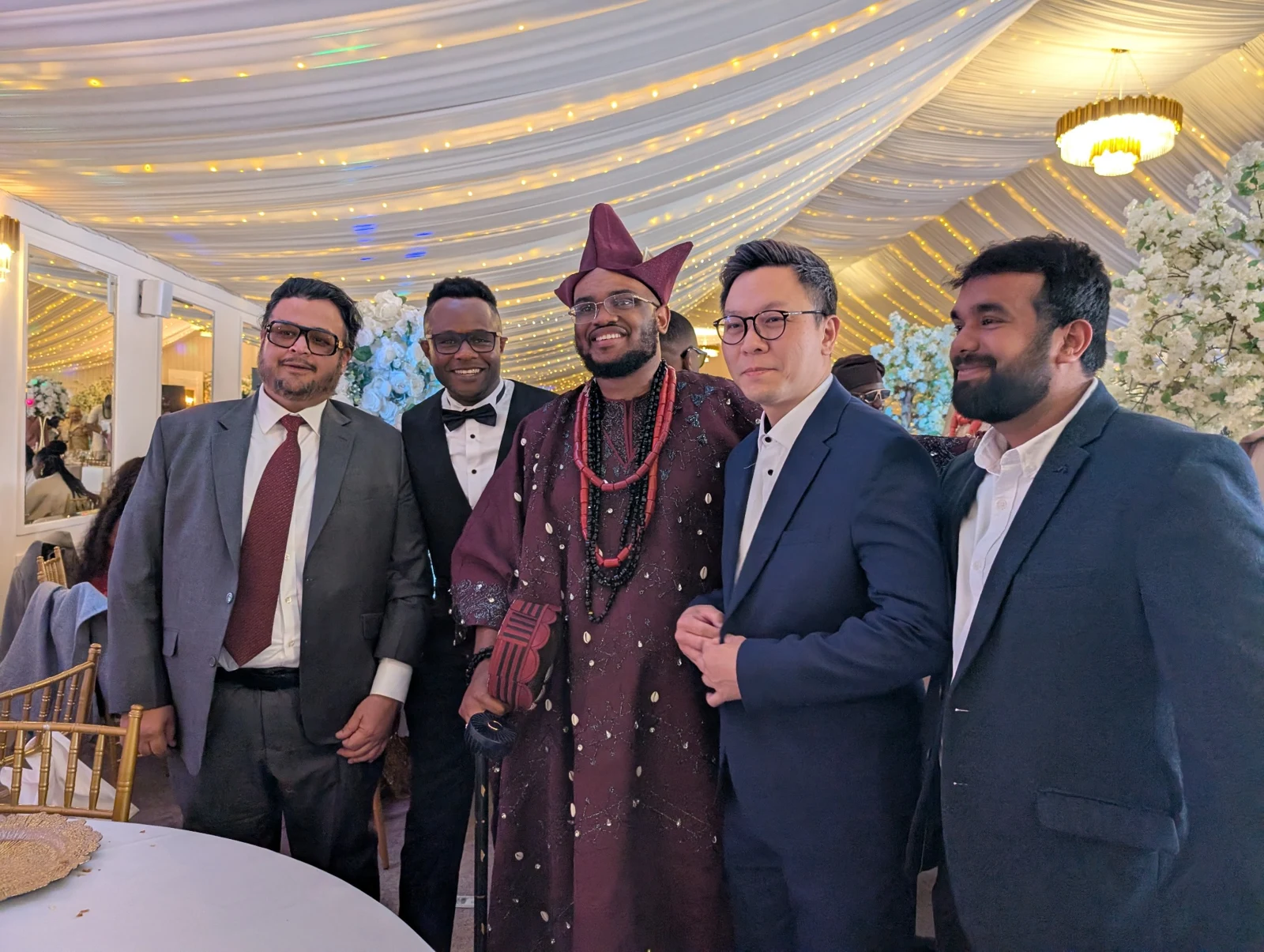
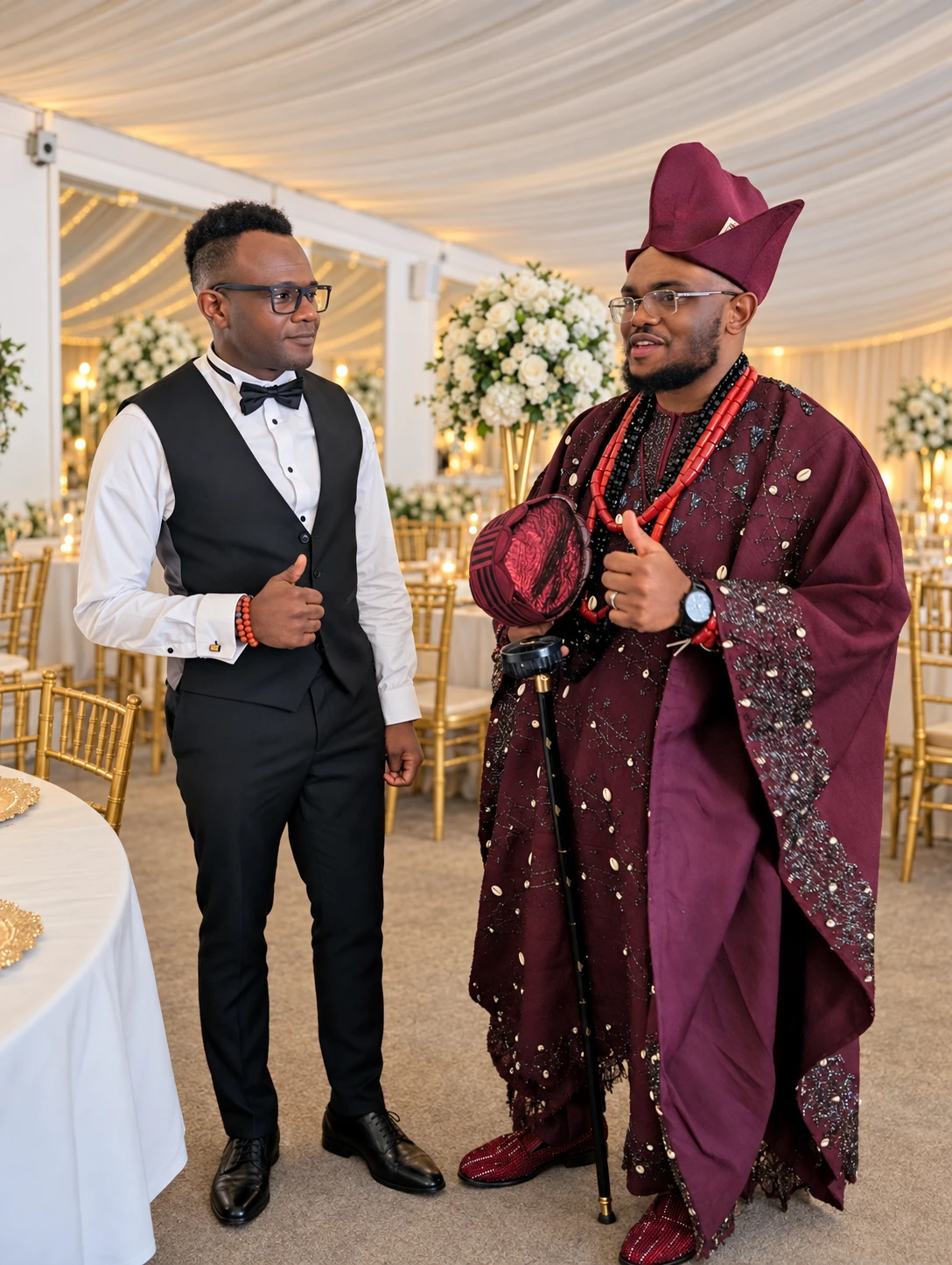
Northamptonshire. From right to left: Raghav D., Kwok Fung C., Paul (the groom), me, and another former colleague. Raghav and Kwok remain members of the team I formerly led at QMUL; I have since moved on to new opportunities.Derbyshire. A moment outdoors: fìlà, conversation and companionship against an English countryside backdrop.Essex. White cloth, a patterned fìlà and a carefully folded agbádá: a little of Yorùbáland carried with care.Essex. With Jonathan A, former colleague and person of mixed Benin–Yorùbá heritage. Shared colours and individual style; our folded agbádá reveal the layers beneath.
NORTHAMPTONSHIRE / FRIENDSHIP & AN ÌJẸ̀ṢÀ INHERITANCE
With Paul. A living connection to Ògèdèngbé.
Northamptonshire. With Oyèkànmí Paul Ògèdèngbé at his wedding, which I had the pleasure of attending at his invitation.
Beside me is Oyèkànmí Paul Ògèdèngbé, once a high-performing member of the team I led at QMUL. His work ethic, professionalism and quality of delivery earned appreciation within our team and among the wider stakeholders we worked with. Paul has since moved on to bigger opportunities and greener pastures, and I am delighted to see him flourish. It was a pleasure to celebrate this new chapter with him.
As I understand his family history, Paul is a direct male-line descendant of Ògèdèngbé, the renowned Èkìtì Parapọ̀ commander, and the son of the late Ọbánlá of Ìjẹ̀ṣà. I know him as an ọmọ ọba—a son of a royal house—with a distinguished inheritance. This family connection is recorded here from my personal account, rather than presented as an independently verified genealogy.
For me, there is a beautiful continuity between that heritage and the sense of responsibility I saw in Paul. His achievements are his own: the respect he earned came through the care, integrity and skill he brought to his work. That is an inheritance made meaningful through character.
Read more · Ògèdèngbé, Èkìtì Parapọ̀ and the Ọbánlá title
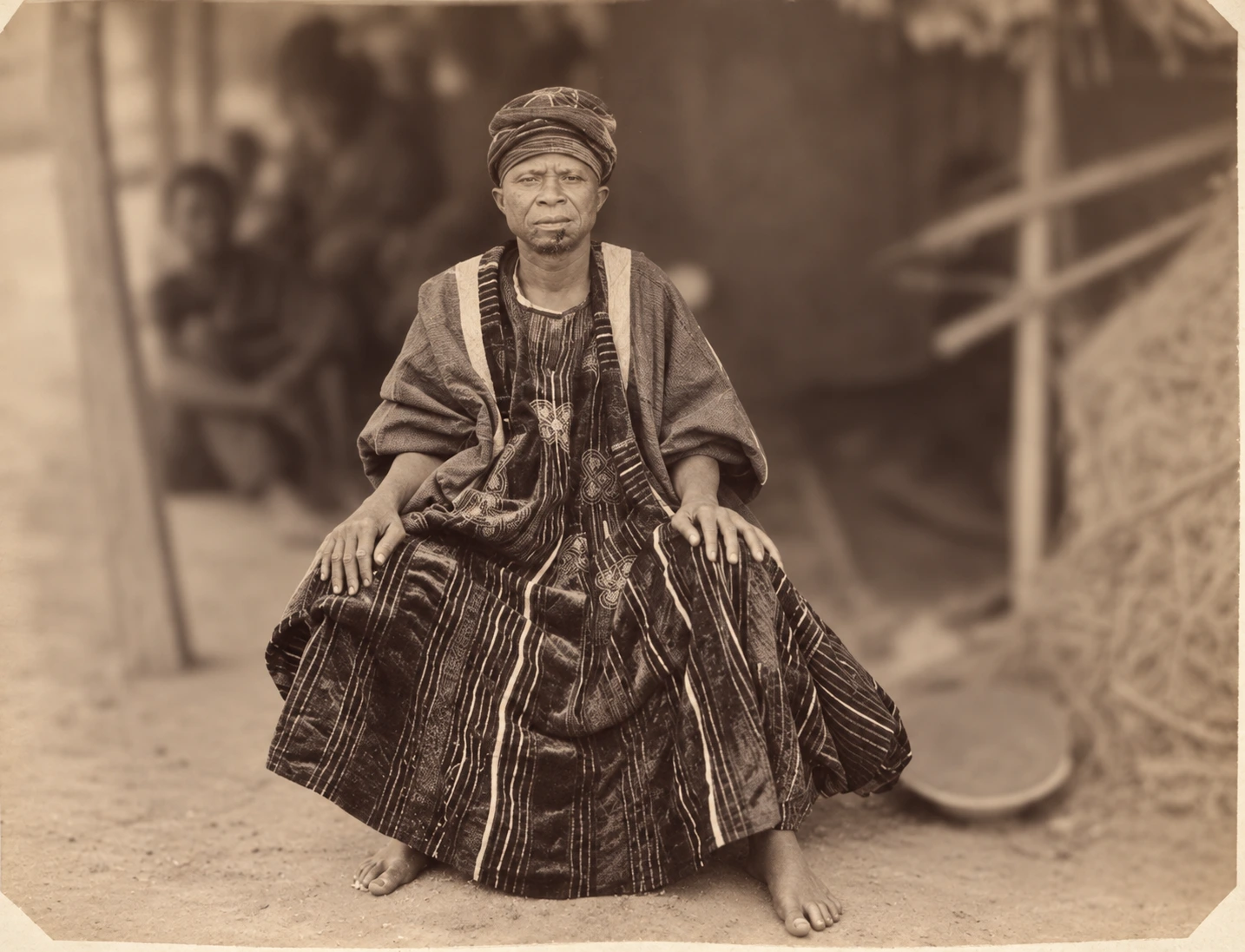
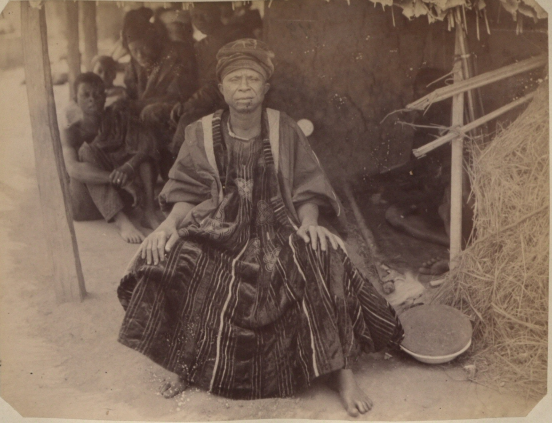
Ògèdèngbé of Iléṣà. The Yorùbá warlord was born Òrìṣàráyíbí Ògúndàmọ́lá. Read his biography ↗About this portrait
Refined from the historical photograph, with improved contrast and a softened background. Fine detail should be checked against the original photograph.
A commander remembered across Yorùbáland.
Ògèdèngbé Agbógungbọ́rọ̀, generally dated 1822–1910, was an Ìjẹ̀ṣà military leader celebrated for his command of the Èkìtì Parapọ̀ alliance in the nineteenth-century Kíríjì conflict. The coalition resisted Ìbàdàn’s domination of eastern Yorùbá communities. His fame rests on military leadership, the defence of local autonomy and the powerful place he occupies in Ìjẹ̀ṣà historical memory. Remembering that courage also means acknowledging the suffering and division of the civil wars. Biographical overview and bibliography ↗ · Akin Adejuwon’s study of nineteenth-century Yorùbá warfare ↗
A title deserves its own context. Ọbánlá is associated with Ògèdèngbé and his successors in Iléṣà. Although often rendered “great” or “mighty king”, historical descriptions also identify it as a senior chiefly dignity; it is distinct from the Ọwá Obòkun’s kingship. The family account connects Paul to this honoured house. Title and historical references ↗
Military dress, weapons and the evidence trail.
These material histories deserve careful documentation. Adejuwon’s study examines weapons and military dress and includes an image of Ògèdèngbé photographed at the Ọbánlá Palace in Iléṣà (figure 21). That is not a British Museum accession record. The reported presence of his personal attire and weaponry at the British Museum remains unconfirmed here; an identifiable object record or provenance document would be needed before naming that institution as their custodian.
For wider context, continue with the Akintoye and Ogundiran books linked below, and the Ọ̀yọ́ chapter for the earlier imperial world and its subsequent fragmentation.
Read more · What happens at a Yorùbá wedding?
A meeting of families, carried by words and music.
In many contemporary traditional engagement ceremonies, the alága ìdúró and alága ìjókòó guide the proceedings on behalf of the two families. Their work combines coordination with verbal artistry: songs, playful exchanges and dramatic presentation give the gathering its rhythm. Research on these performances explores how entertainment also communicates relationships and cultural knowledge. Read the study in the Awka Journal of Research in Music and the Arts ↗
Introductions, greetings to elders, family requests and responses, gifts and blessings may form part of the occasion. Prostrating or kneeling can express respect in some families; customs and expectations differ. Religious commitments, mixed-heritage relationships, personal preferences and diaspora circumstances shape what a couple chooses. No single programme represents every Yorùbá wedding, and these photographs do not document every ritual described here.
Beauty with room for everyone.
The invitation is to celebrate commitment and community. In my view, cultural confidence need not become a competition in spending or an obligation to dress beyond one’s means. Warmth, welcome and consideration matter too. That is a natural connection with Ọmọlúàbí: the character we carry.
Read more · Agbádá, fìlà, gèlè and the language of cloth
These names describe different things: garments, ways of dressing together and textile traditions.
Agbádá
A flowing outer gown worn over other garments. Its volume can recall the grandeur of a Roman toga or other ceremonial robes to an unfamiliar viewer; that is a visual comparison, not an origin story. Here it is distinctly Yorùbá dress within a wider West African robe tradition.
Bùbá & ṣòkòtò
The tunic and trousers beneath the outer gown. The layers make sense of the Essex photographs: carrying the agbádá leaves the outfit beneath visible.
Fìlà
A cap whose shape, fabric and arrangement contribute to the wearer’s style.
Gèlè, ìró & ìpèlé
A headwrap, a wrapper and a shoulder cloth respectively: elements that can form a woman’s ceremonial ensemble, alongside a blouse.
Aṣọ-ẹbí & aṣọ-òkè
Aṣọ-ẹbí expresses group belonging through coordinated dress. Aṣọ-òkè is strip-woven cloth; it can be used for ceremonial outfits. One describes a social practice, the other a textile.
Àdìrẹ
A Yorùbá resist-dyeing tradition, strongly associated with indigo. Tying, stitching or applying a resist can prevent selected areas taking the dye, creating patterns. Àdìrẹ is not a generic name for every patterned African fabric.
See the cloth. Notice the craft.
Photographic examples from the wider Yorùbá clothing tradition. Select a photograph to view its original and source record.
Òjúdé Ọba · dressed for the gathering.
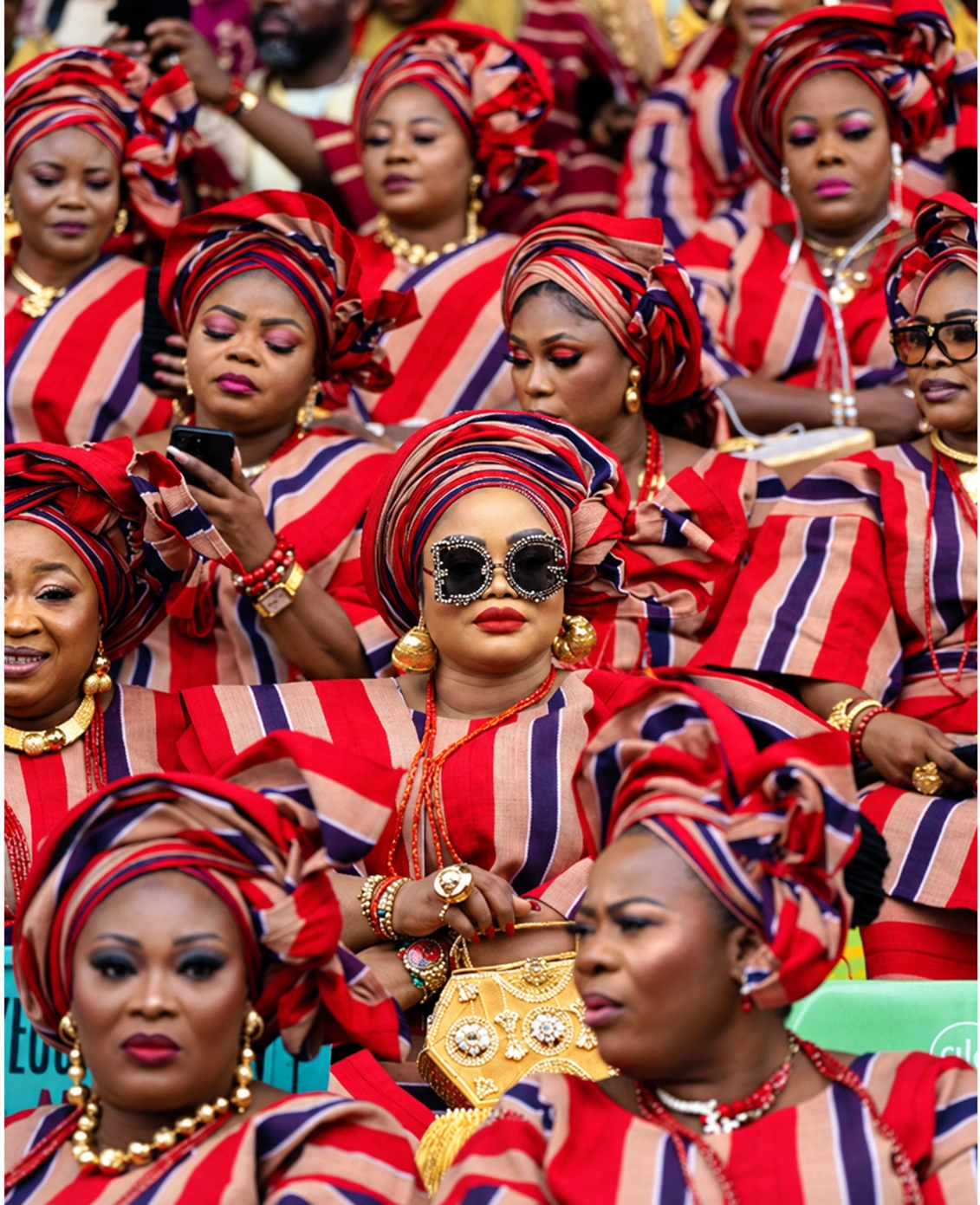
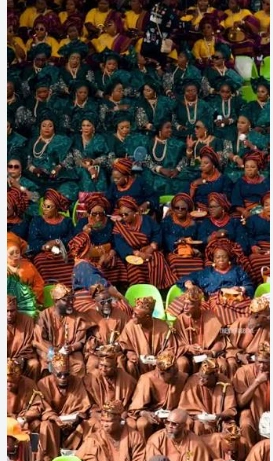
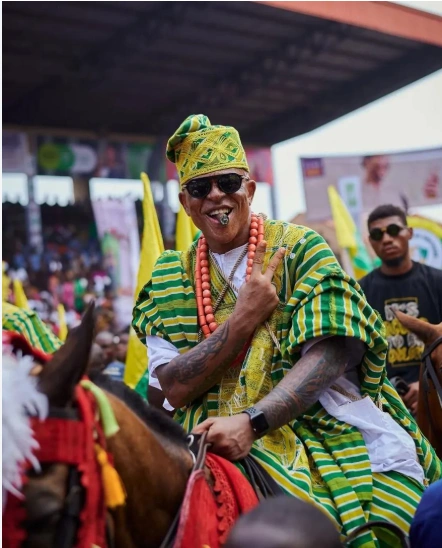
These festival photographs extend the clothing story beyond weddings. At the annual Òjúdé Ọba celebration in Ìjẹ̀bú-Òde, regberegbe age groups and equestrian families gather to honour the Awujale. Coordinated outfits, gèlè, fìlà and horse displays turn craftsmanship and community identity into a public celebration. Festival context and photographic reporting ↗
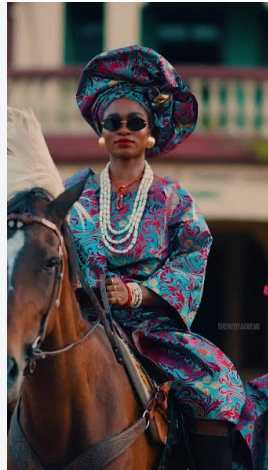
Gèlè · cloth given sculptural form. Coordinated red, cream and navy stripes become sculpted headwraps. Shared cloth creates a sense of belonging while each wearer brings her own presence.Aṣọ-ẹbí · a gathering in colour. Rows of coordinated dress reveal the collective beauty of a festival: colour, headwear and group identity seen together.Agbádá & fìlà · presence on horseback. Green-and-yellow stripes, a matching cap and beads bring ceremonial dress into movement. Horse displays are part of Òjúdé Ọba’s public spectacle.Photo: Fasanmi Afolabi / FolaStag · Photographer’s accountGèlè & the equestrian tradition. A broad headwrap and flowing patterned outfit make a striking silhouette on horseback: composure, colour and ceremonial presence.Photo: Niyi Fagbemi · visible @theniyifagbemi credit retained · PhotographerÀdìrẹ · pattern and rhythm. A patterned Yorùbá textile catalogued as àdìrẹ, with a repeated mat-like design. Look closely at how repetition gives the surface its rhythm.Photo: Olaniyan Olushola · Original and source · CC BY-SA 4.0Aṣọ-òkè · the making matters. Weaving connects the finished ceremonial outfit to skilled hands, threads and patient work at the loom.Photo: Ayodele Adeniji · Original and source · CC BY-SA 4.0
Robes, beads, crowns, staffs and thrones make craftsmanship and inherited office visible. These photographs introduce living monarchs within Yorùbáland and the distinct neighbouring royal traditions of Benin and Warri. Shared connections do not erase their different identities. The portraits come from different occasions; source and refinement notes accompany each. Select a photograph to view it at full size.
Oòni of Ilé-Ifẹ̀
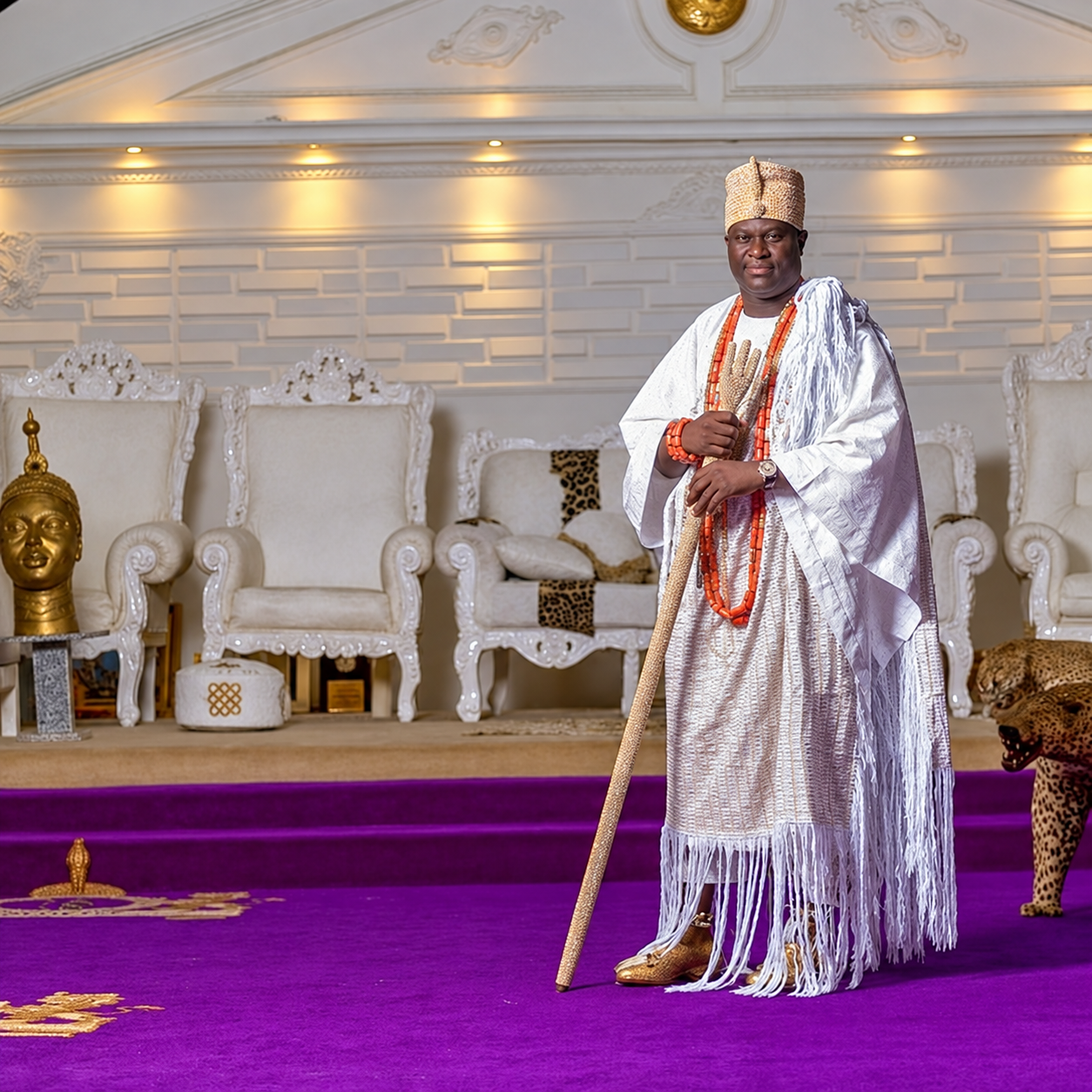
Ọba Adeyeye Enitan Ogunwusi, Ojaja II
Reign began: 2015. Coronation: 7 December 2015. Date source ↗
The Oòni stands with a ceremonial staff, dressed in white regalia against the palace’s white interior and purple carpet.
White robes, coral beads and a staff frame this portrait of the Oòni and the living institution explored in this chapter. Read further.
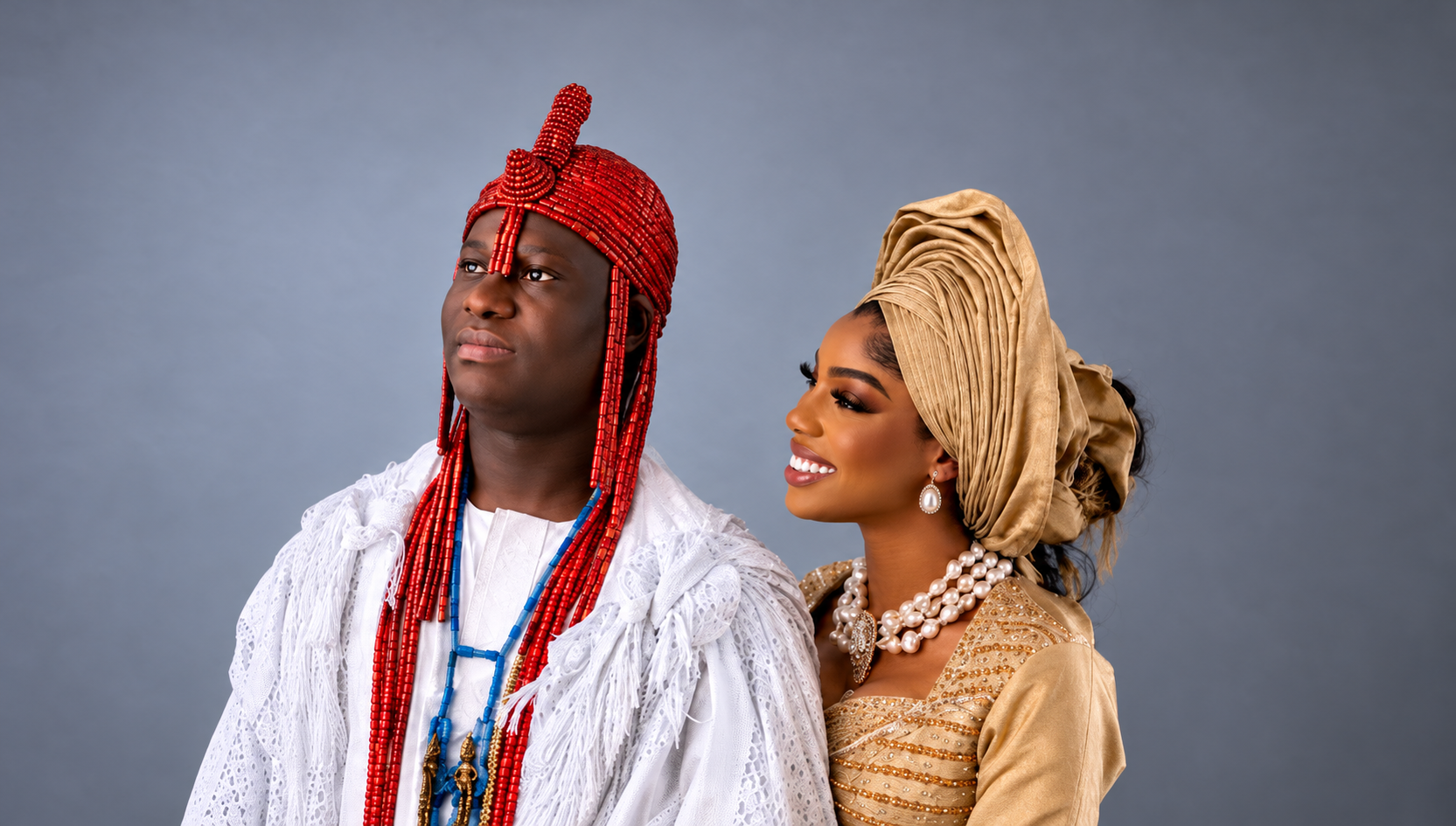
View another portrait · the Oòni and his wifeThe Oòni in white regalia and a coral-beaded crown, beside his wife in gold clothing and an elaborate gèlè.
Aláàfin of Ọ̀yọ́
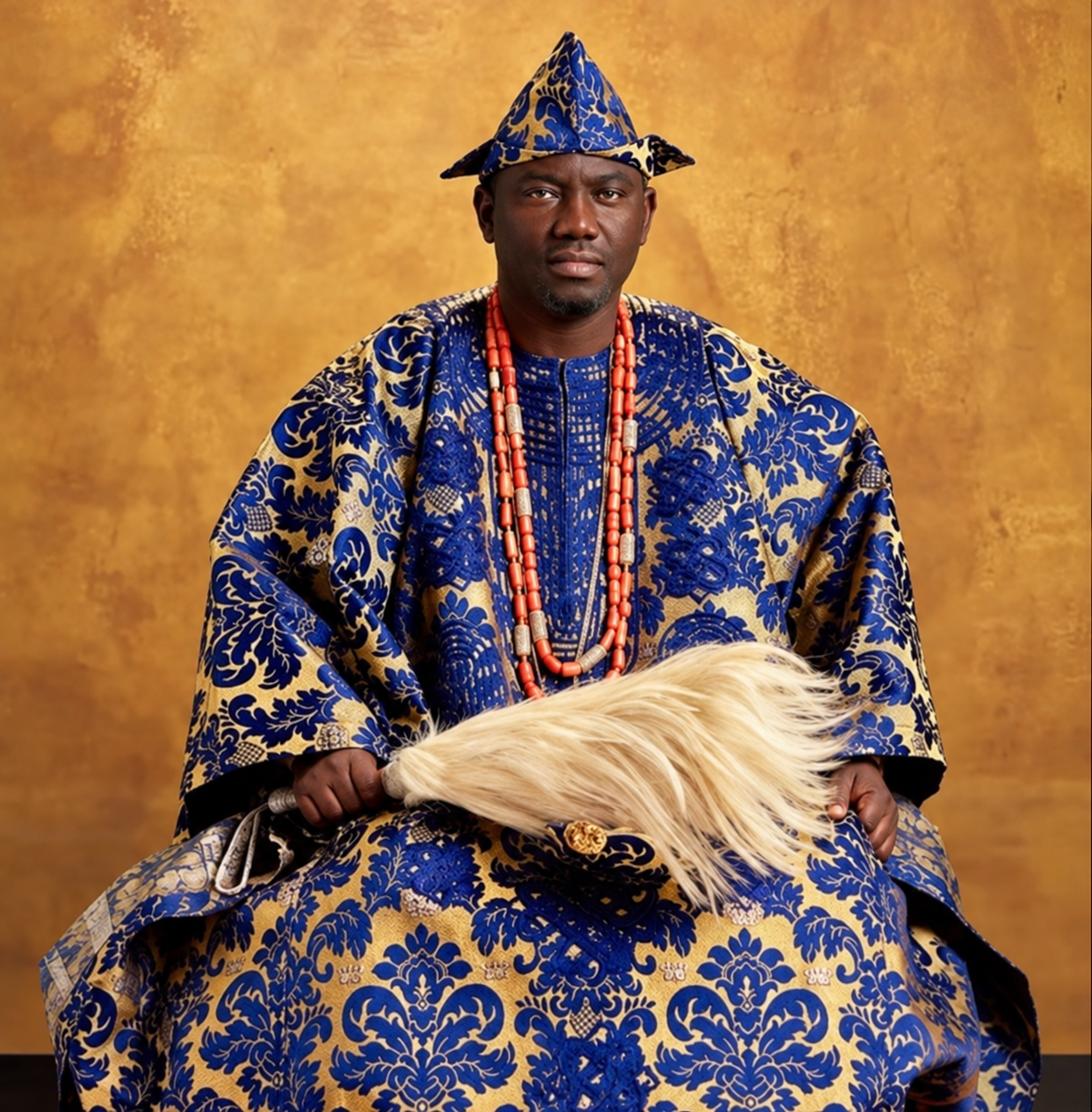
Ọba Abimbola Akeem Owoade I
Reign began: 2025. Staff of office: 13 January 2025; coronation: 5 April 2025. Date source ↗
The Aláàfin in blue-and-gold woven regalia, coral beads and a matching cap, holding a ceremonial fly whisk.
The Aláàfin in woven regalia and coral beads. The office carries Ọ̀yọ́’s inheritance into a different political age. Read further.
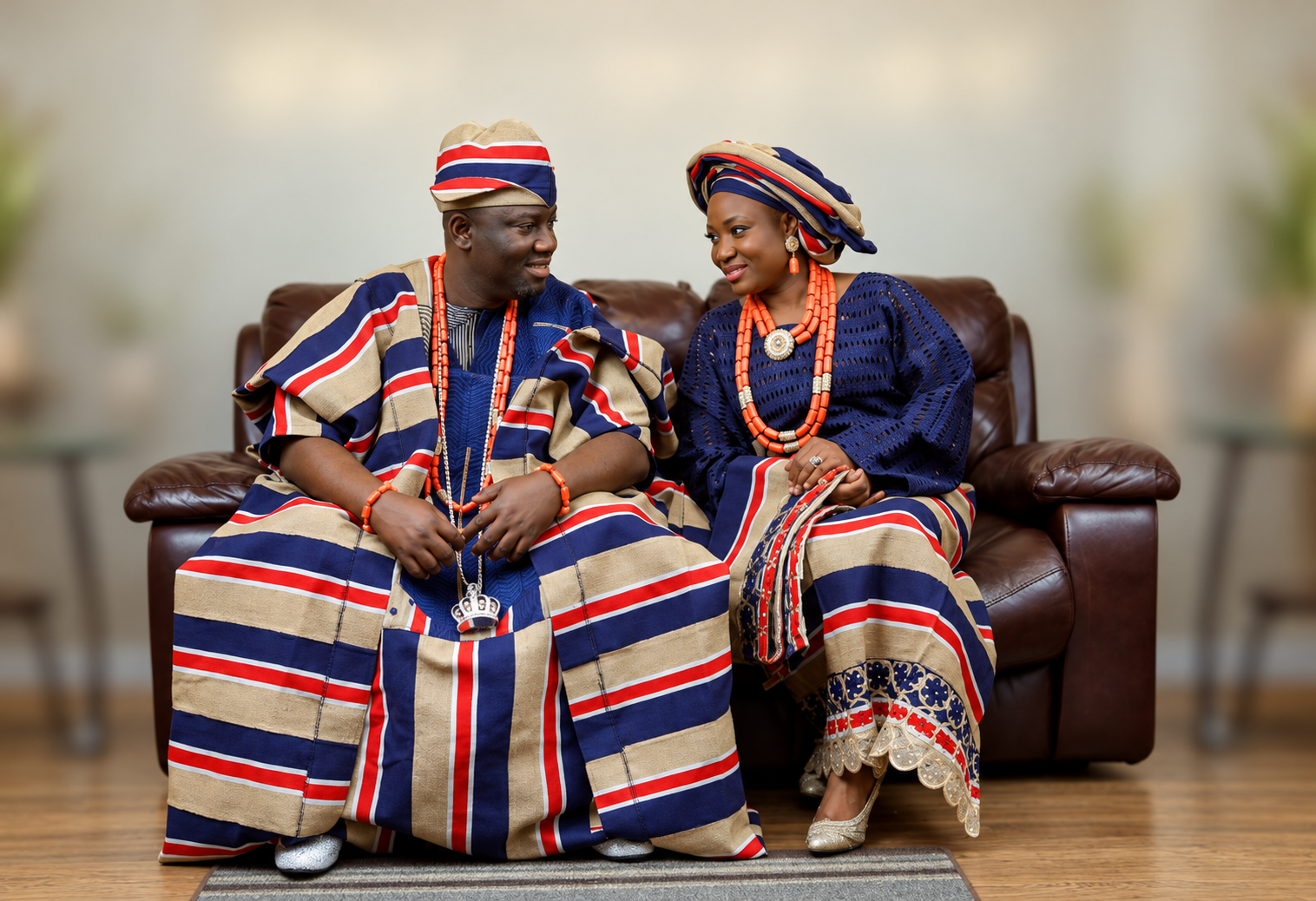
View another portrait · the Aláàfin and his wifeThe Aláàfin and his wife share a seated moment in coordinated blue, cream and red woven clothing.
Read more · Ọ̀bà, Ẹ̀gbá, Benin and Warri
Ilé-Ifẹ̀ / Ọ̀yọ́
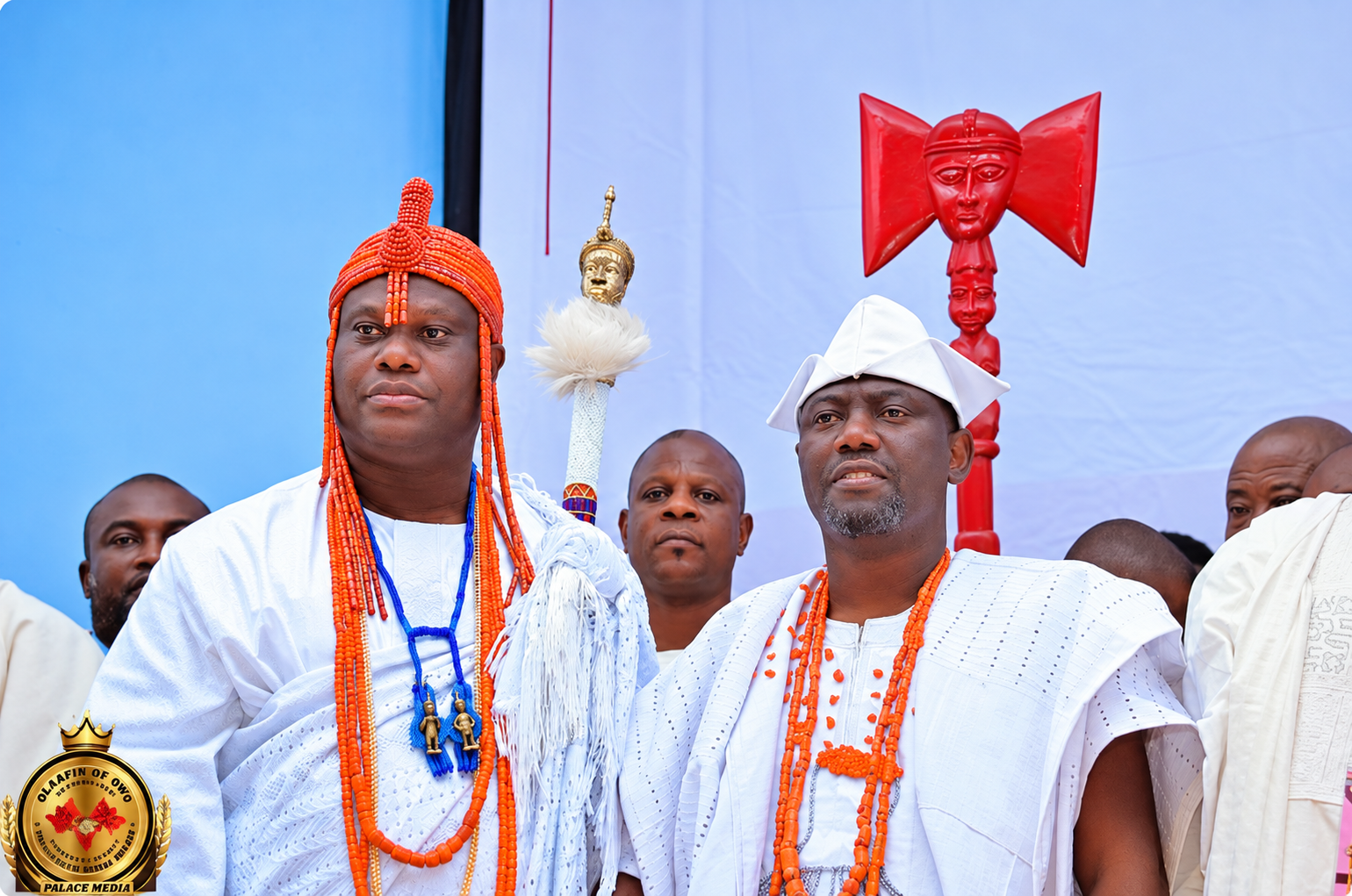
The Oòni and the Aláàfin together.
The Oòni and the Aláàfin together in white ceremonial regalia, with coral beads and royal insignia. Palace Media emblem retained.
Olóba of Ọ̀bà-Isin
Ọba (Dr) Timothy Titilayo Oyebanji
Reign began: 1995. Enthroned: 15 April 1995. Date source ↗
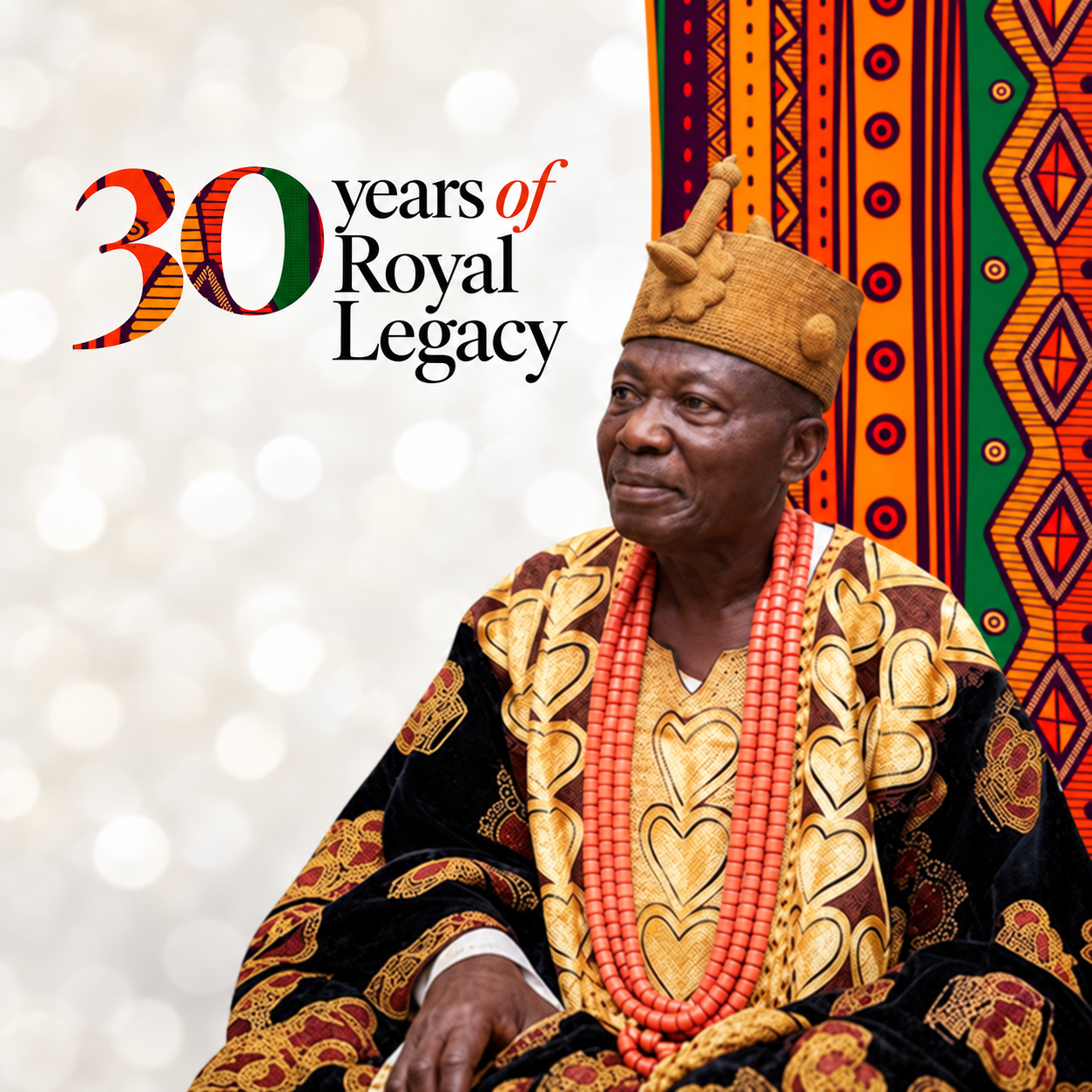
Thirty years of royal legacy: Ọba (Dr) Timothy Titilayo Oyebanji, Olufemiloye I, in gold-and-black regalia and coral beads.
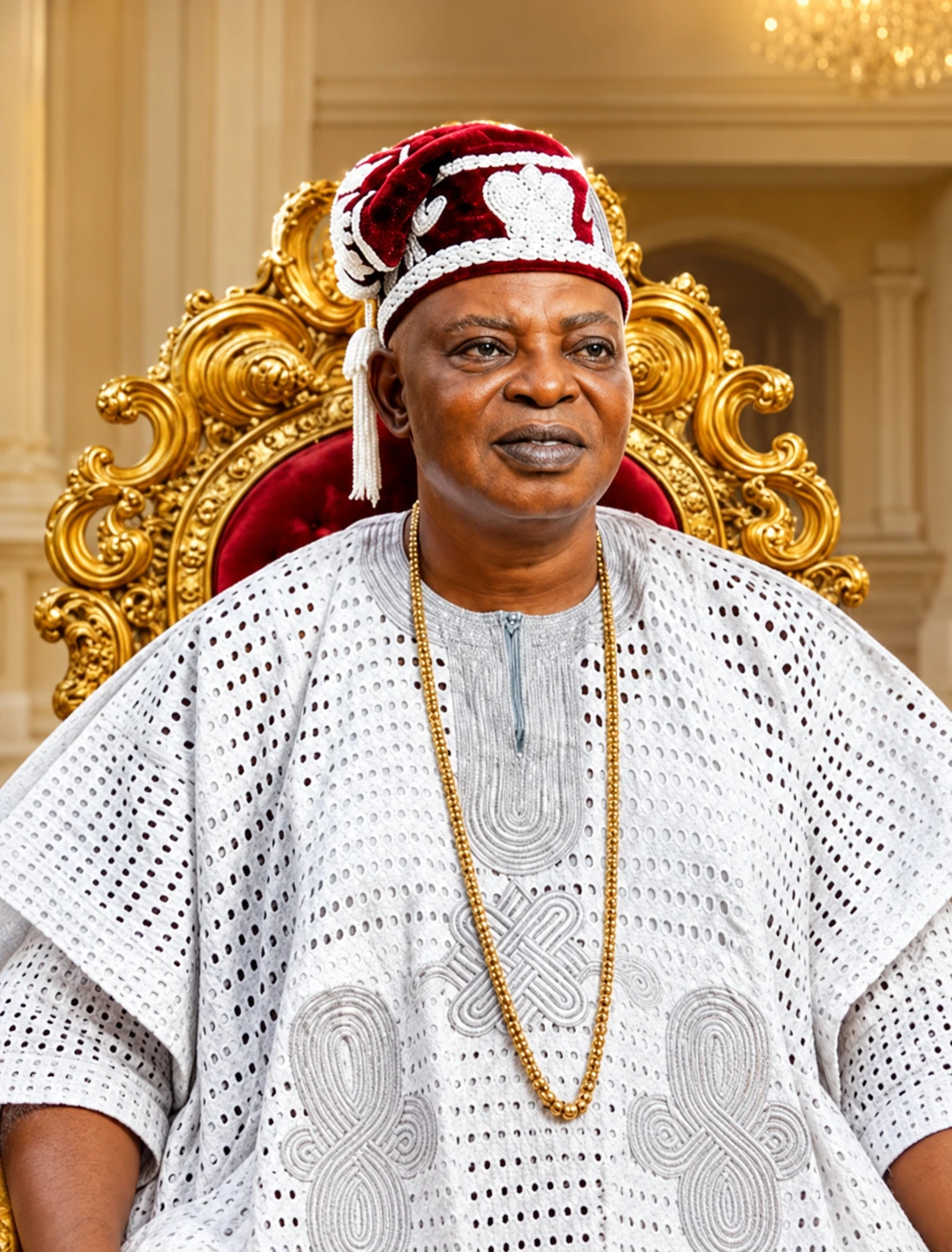
Oba Olukayode Oyedotun (Bibire I). White patterned regalia, a red-and-white crown and a gold-coloured throne frame the Òràngún’s portrait.
Reign began: 2003. Accession: 24 May 2003. Date source ↗
Ìlá Òràngún holds a foremost place among the ancient kingdoms of Ìgbómìnàland. Its royal traditions, links with Ilé-Ifẹ̀ and long history of settlement give it a significance that reaches well beyond the present-day town. The Òràngún’s office carries that inheritance into contemporary community life.
Read more · An ancient kingdom and the Odùduwà tradition
In his 2021 interview, the present Òràngún recounts the founding tradition of Fagbamila Ajagun-Nla as a son of Odùduwà. This refers to the ancestral founder and royal lineage, not to the present monarch as Odùduwà’s literal son. Other accounts describe the relationship through later generations; these are related dynastic traditions rather than a single independently established genealogy.
Bisi Akande’s local historical account places Ìlá among the earliest kingdoms associated with Ilé-Ifẹ̀ and traces movements of the royal capital over time. Its antiquity belongs to a continuing kingdom and its communities, not necessarily to one unchanged settlement site. Ìgbómìnàland also contains other ancient kingdoms with their own histories and institutions.
Reign began: 2024. Staff of office: 27 October 2024. Date source ↗
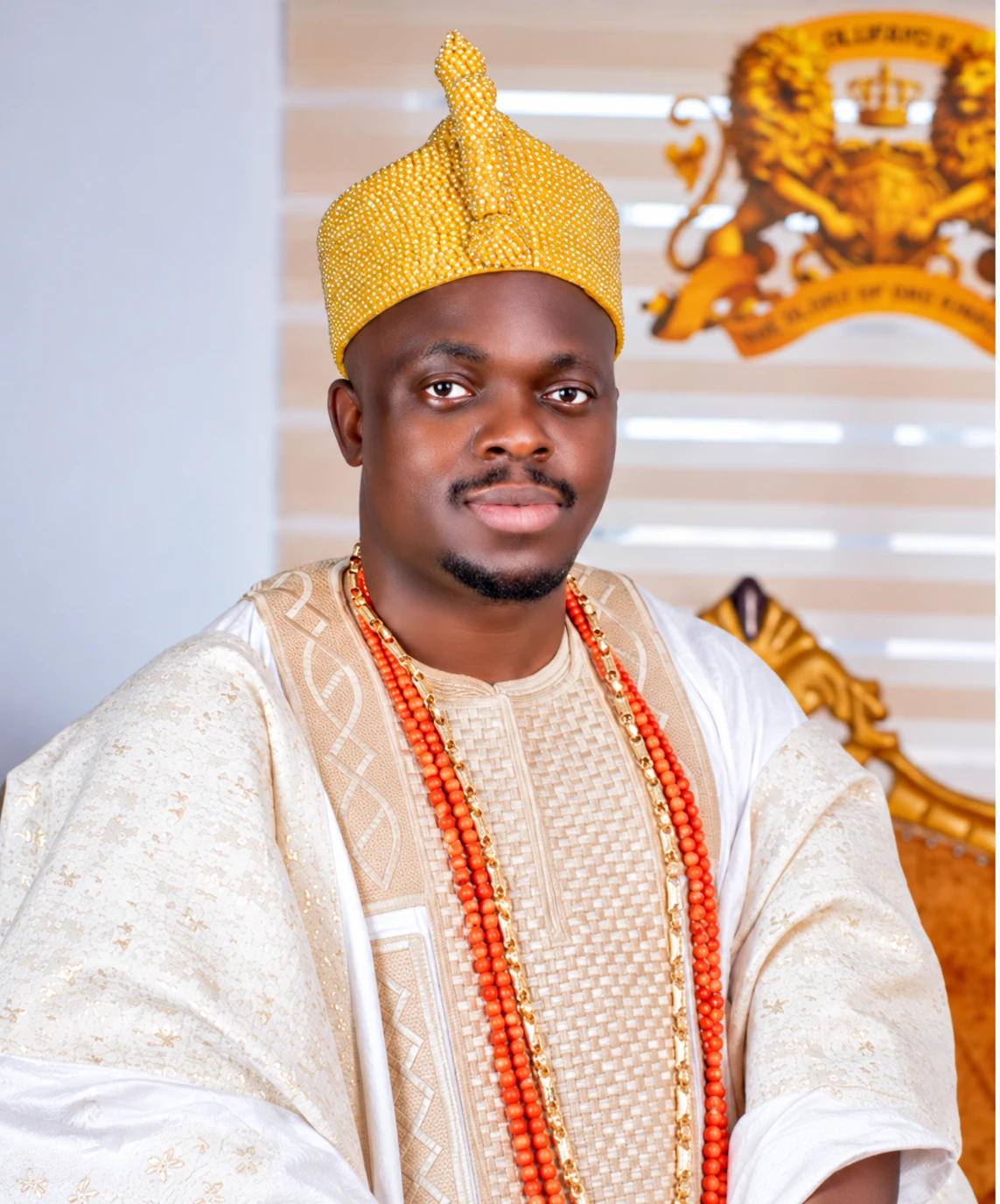
Cream embroidery, coral beads and a beaded crown frame the Olórò’s portrait.
Oró’s royal institution belongs to a living landscape of towns, family houses and community relationships. The Olórò’s office connects cultural stewardship with the work of bringing people together. At his staff-of-office presentation, he spoke of forgiveness, unity and progress.
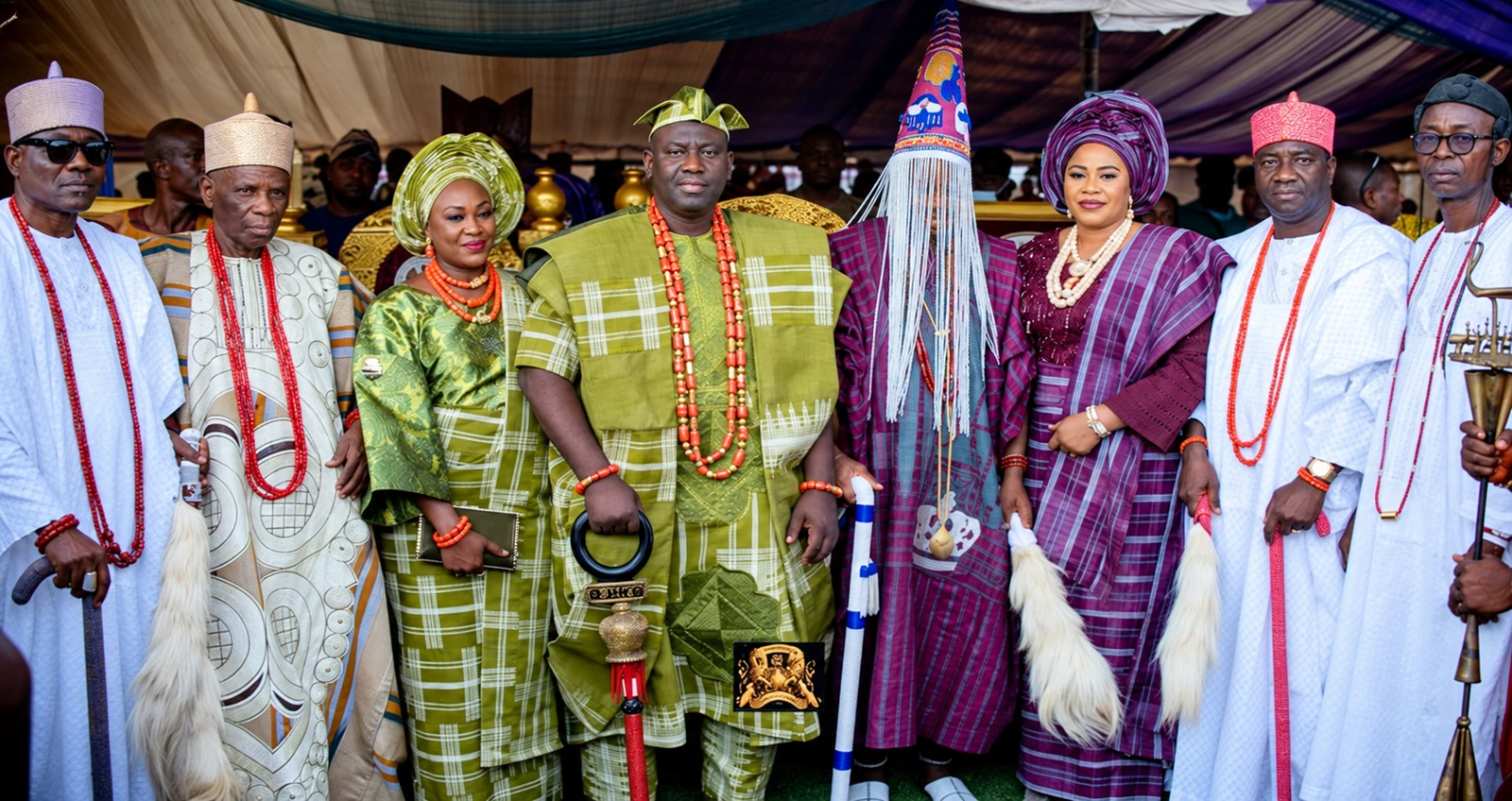
Read more · Oró celebrates togetherThe Olórò and the Aláàfin of Ọ̀yọ́, with their wives and other guests, at Oró’s first reign-anniversary celebration. Photograph published by Radio Kwara; report by Olayinka Alaya, 27 December 2025.
Coordinated woven cloth, coral beads, fly whisks and the Aláàfin’s veiled crown give this gathering its visual richness. Radio Kwara’s anniversary report places culture, unity and development at the centre of the occasion.
ÌGBÓMÌNÀ / MANY TOWNS, LIVING INSTITUTIONS
Royal houses. Community responsibilities.
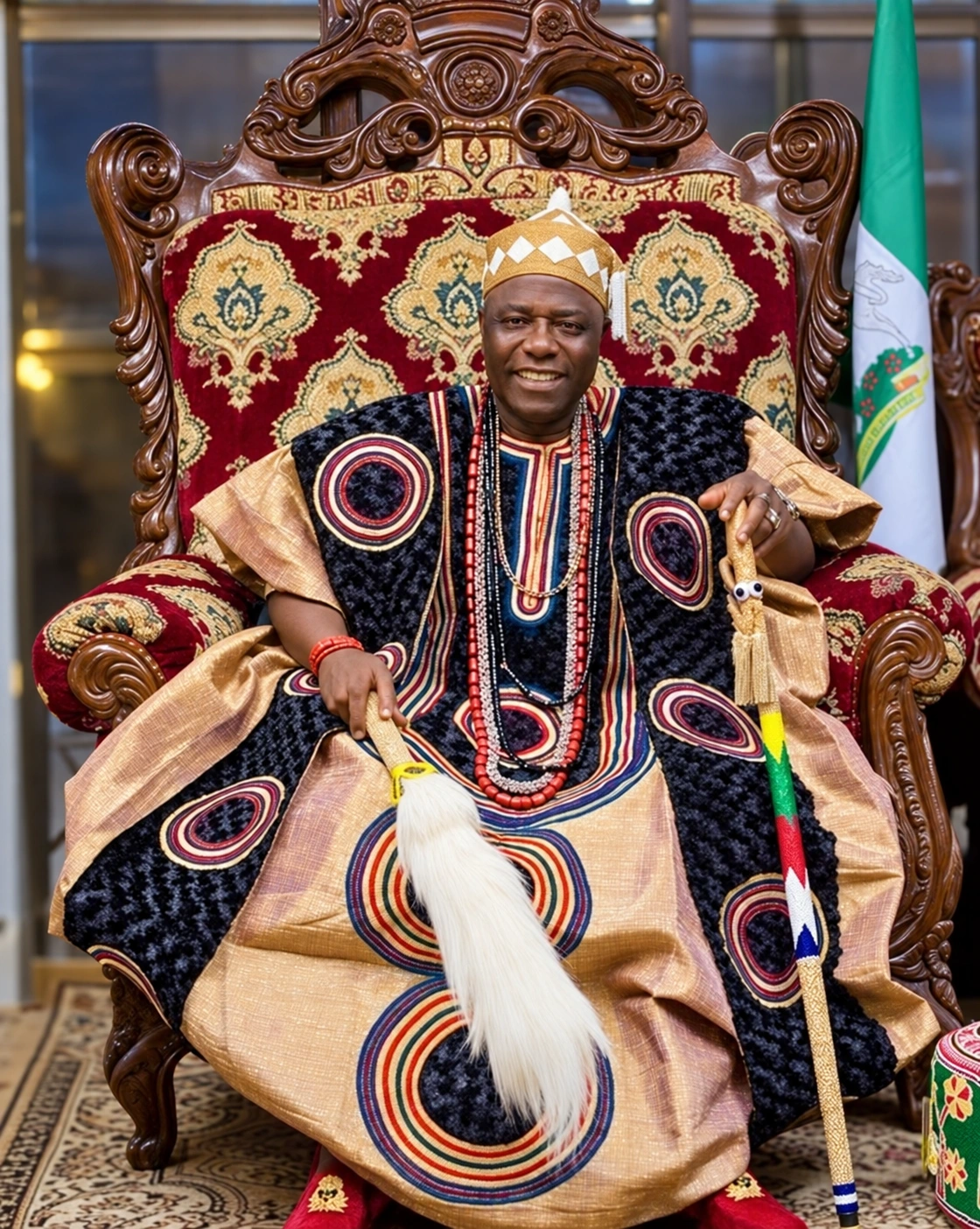
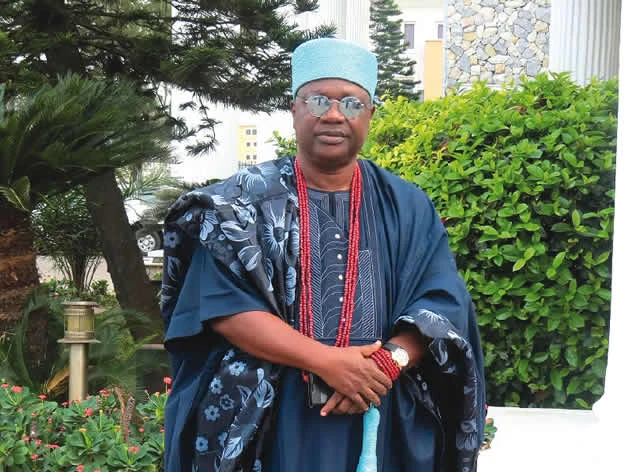
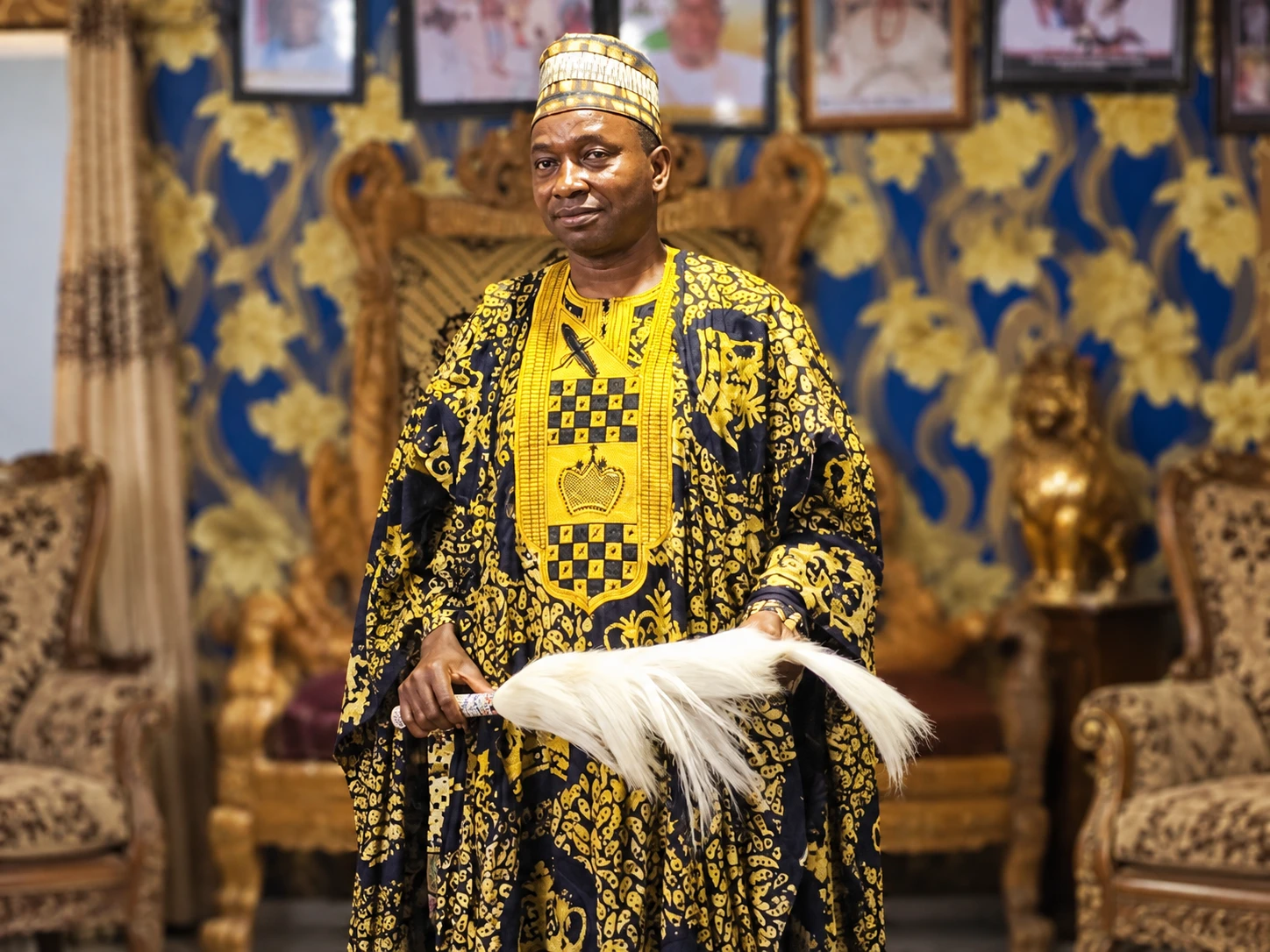
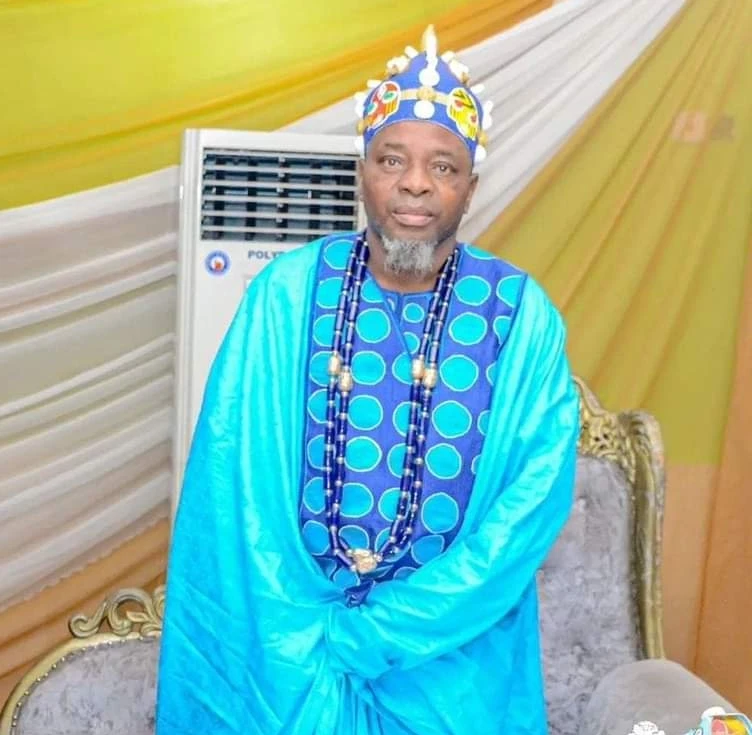
From Àjàṣẹ́-Ìpo and Omupo to the towns of Ìsìn and Òkè-Ìlá, each office belongs to a particular community. Shared Ìgbómìnà identity does not make these kingdoms interchangeable. Open the gallery for portraits, reign dates and further reading.
Read more · Six royal portraits across Ìgbómìnàland
Olómù of Omupo
Ọba Yakubu Adebayo Buari, Ilufemiloye II
Reign began: 2010. Enthroned: 12 June 2010. Date source ↗
The Olómù in brown-and-gold patterned regalia and a matching cap, framed by long strands of coral and white beads.
Omupo has its own royal institution and community traditions. The Olómù’s tenth-anniversary plans included a community empowerment programme, an example of royal office expressed through contemporary service.
Olúsìn of Ìjàrà-Ìsìn
Ọba Julius Ademola Ajibola
Reign began: 2020. Installed: 15 November 2020; coronation reported on 26 December 2020. Date source ↗
White robes and coral beads against an elaborately carved, gold-coloured throne. Photograph published by Factual Times.
Ìjàrà-Ìsìn is a distinct royal town within Ìsìn. Its Olúsìn is a pharmacist and industrialist whose installation in 2020 brought professional experience into a continuing traditional office.
Olúsìn of Ìsánlú-Ìsìn
Ọba Solomon Olugbenga Oloyede
Reign began: 2009. The 2023 report marks the fourteenth anniversary of his reign. Date source ↗
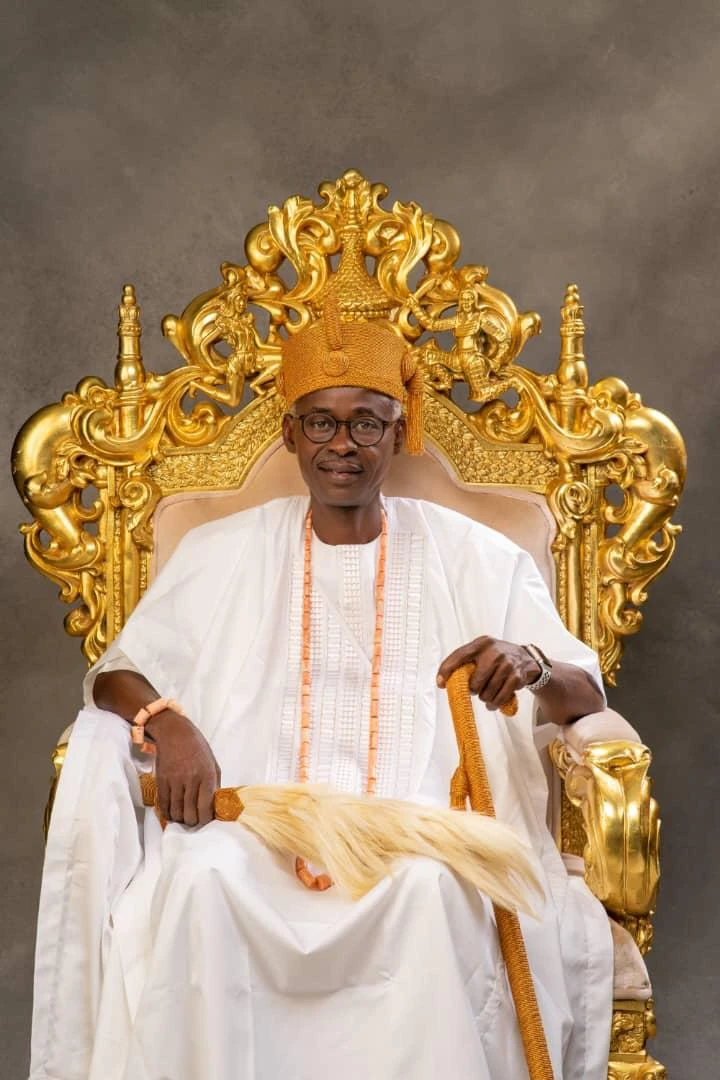
The Olúsìn in gold-and-navy regalia with circular embroidery, seated on a carved throne with a white fly whisk and ceremonial staff.
Ìsánlú-Ìsìn and Ìjàrà-Ìsìn have separate monarchies. Ìsìn is a wider regional identity, not the name of one throne. In his Nigerian Tribune interview, the Olúsìn discusses the place of traditional rulers in contemporary public life.
Òràngún of Òkè-Ìlá
Ọba Adedokun Omoniyi Abolarin, Aroyinkeye I
Reign began: 2006. Installed: 8 December 2006. Date source ↗
The Òràngún in blue embroidered agbádá and coral beads, holding a staff. Photograph published by Punch.
Òkè-Ìlá and Ìlá Òràngún are distinct kingdoms with connected royal traditions. Ọba Abolarin’s educational work offers a practical expression of stewardship: Abolarin College provides a route into learning for disadvantaged young people.
Onígbìn of Òkè-Onígbìn
Ọba Kamaldeen Salaudeen
Documented in office by 2023. The accession year is not yet verified.
A palace visit about agriculture places royal office alongside livelihoods and local development. The source identifies the Onígbìn as a community partner in the state’s agricultural work.
Read more · Agbonda, Jimba-Oja and monarchs remembered
Alápà of Agbonda / documented history
Ọba Johnson Tejumola Iranloye
The Sun’s 2018 report identifies Ọba Tejumola Iranloye as Alápà of Agbonda and distinguishes him from the Alápà of neighbouring Omido. The staff-of-office presentation was a recognition event, not evidence that his reign began that year: earlier reporting already names him in office.
A current palace-confirmed portrait and succession update are still needed for this entry.
The state announcement records his commitment to service and community development. Subsequent reporting records a challenge to the selection; this entry records the appointment without adjudicating that dispute. An individually verified portrait is still needed.
Died: 18 May 2025. This portrait honours a past holder of Ìgbónlá’s royal office. It is not presented as a photograph of the current ruler; a successor has not been verified for this gallery.
A reliably identified portrait and verified successor are still needed. His name remains here as part of the town’s recent royal history.
Names follow the linked records where personal tone marks have not been confirmed. Reign dates distinguish installation from later recognition or celebration. Have a palace-confirmed correction or a credited photograph? Get in touch. Explore the towns in the atlas →
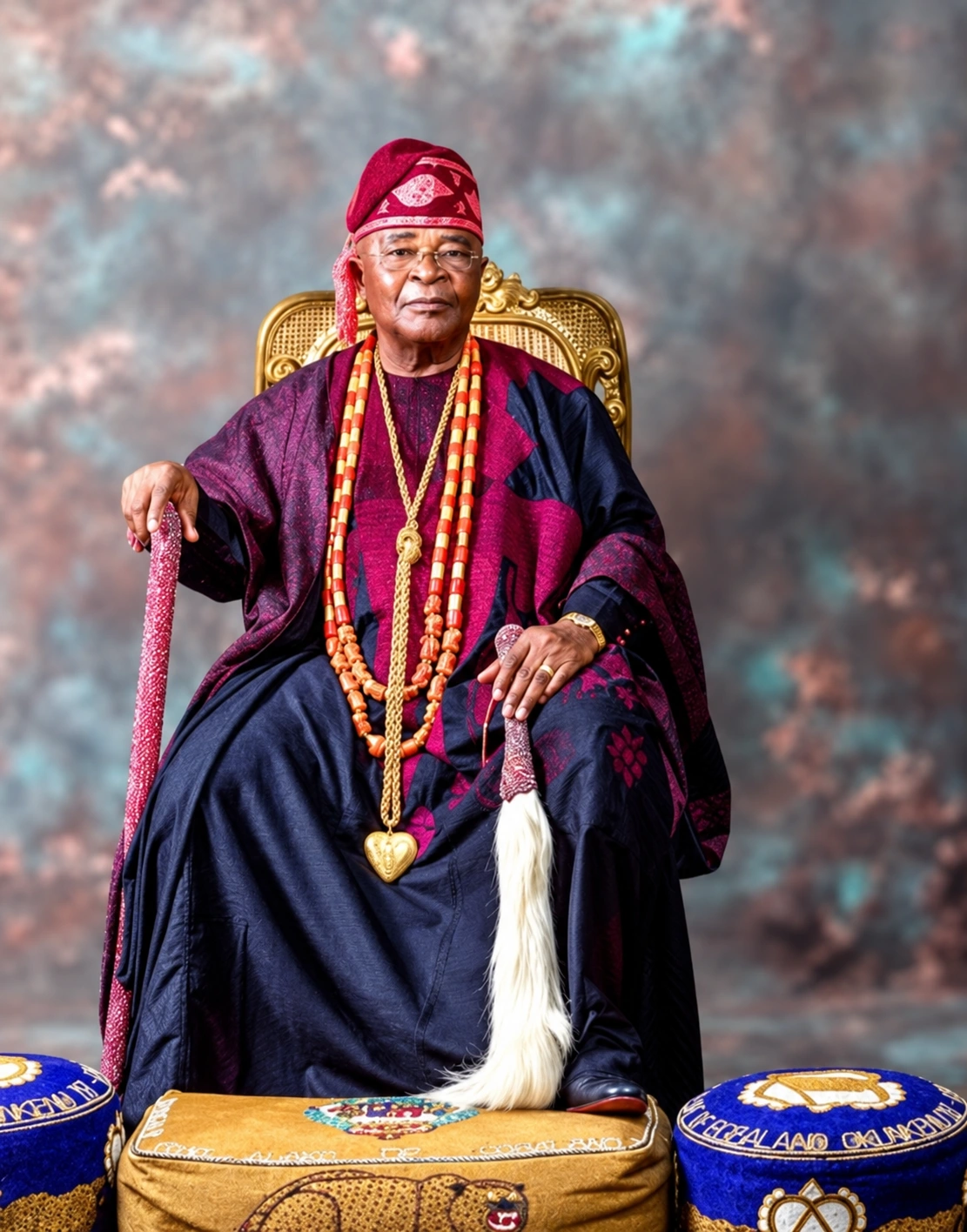
Aláké of Ẹ̀gbáland
Ọba Adedotun Aremu Gbadebo III
Reign began: 2005. Coronation: 19 November 2005. Date source ↗
The Aláké in burgundy-and-navy regalia, with long beaded necklaces, a ceremonial staff and a white fly whisk.
A seated portrait of another living royal institution within Yorùbáland’s many-centred political and cultural history. Read further.
Ọba of Benin
Ọba Ewuare II
Reign began: 2016. Coronation: 20 October 2016. Date source ↗
Photographed during the Igue festival in 2023, wearing white and red robes with coral beads. Benin’s Edo royal tradition has its own institutions, history and forms of authority. Read further.
Olu of Warri
Ogiame Atuwatse III
Reign began: 2021. Coronation: 21 August 2021. Date source ↗
Seated in purple robes and a coral-beaded crown. The Itsekiri monarchy of Warri has its own identity and dynastic history within this connected coastal world. Read further.
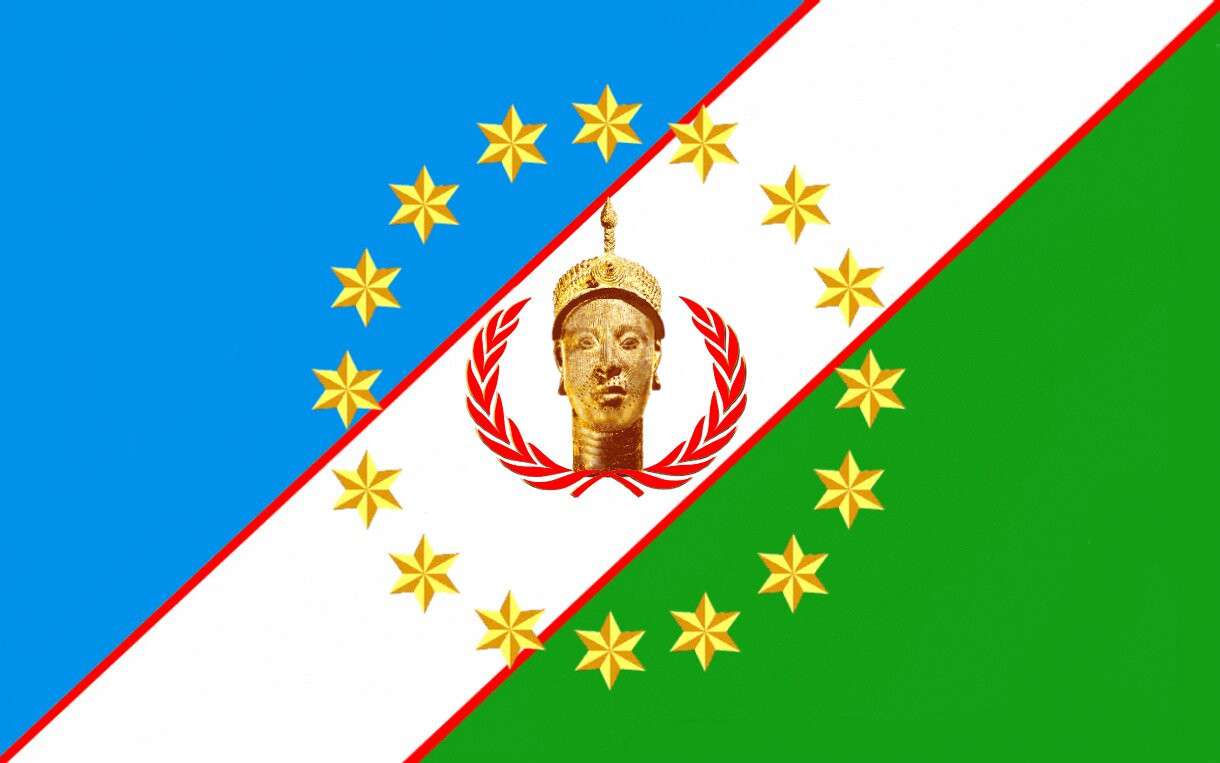
The Odùduwà flag carries a contemporary expression of Yorùbá identity across borders. Explore its colours, sixteen stars and central head, then listen to the Yorùbá nation anthem and the Ilé-Ifẹ̀ anthem.