← Home

TAPESTRIES / ÌDÍLÉ / ORÍSUN

Orísun: from Ọ̀bà-Ilé to Oró

The place I call home in my family story is Oró. To understand one strand of its beginnings, I look back to Ọ̀bà-Ilé in Ìsìn, Yorùbáland: a remembered source, a living community and an invitation to keep asking questions.

Words in context: Orísun — source or originÌdílé — family or lineageOlóyè — chief or titleholder More Yorùbá terms ↗

The Ọ̀bà I mean

For my Ilé Olúkòtún strand, the family identifies Ọ̀bà-Ilé, also called Ọ̀bà-Ìsìn, as an ancestral home before the settlement in Oró. “Original Ọ̀bà” is a way of naming that point of return in our account. Other communities also bear the name Ọ̀bà, and each connection deserves its own evidence and local voices.

The praise line ỌMỌ ORÓ L’ÓBÁ speaks of wealth in Ọ̀bà in our family interpretation. The ORÓ in this line refers to wealth, not the town of Oró; their similar written forms should not be used to infer a geographical link from the verse. A family notebook transcription dated 9 November 2018 bears the heading Oríkì Mìnjá Ọ̀bà and opens with this line; the later framed rendering is on the Ilé Olúkòtún oríkì page. I read both beside the Yorùbáland map and historical inquiry. The notebook dates a recorded version of the praise, not the migration itself or every genealogical link. The Olúkòtún name note offers another way into the family’s language of place and title.

“Knowing an origin gives us a place to listen, return and work with others.”

My aim is to honour the people in both places and make their relationship legible to younger family members across the diaspora. The living family and community matter as much as the inherited names.

Olóba of Ọ̀bà-Isin

Ọba (Dr) Timothy Titilayo Oyebanji

Reign began: 1995. Enthroned: 15 April 1995. Date source ↗

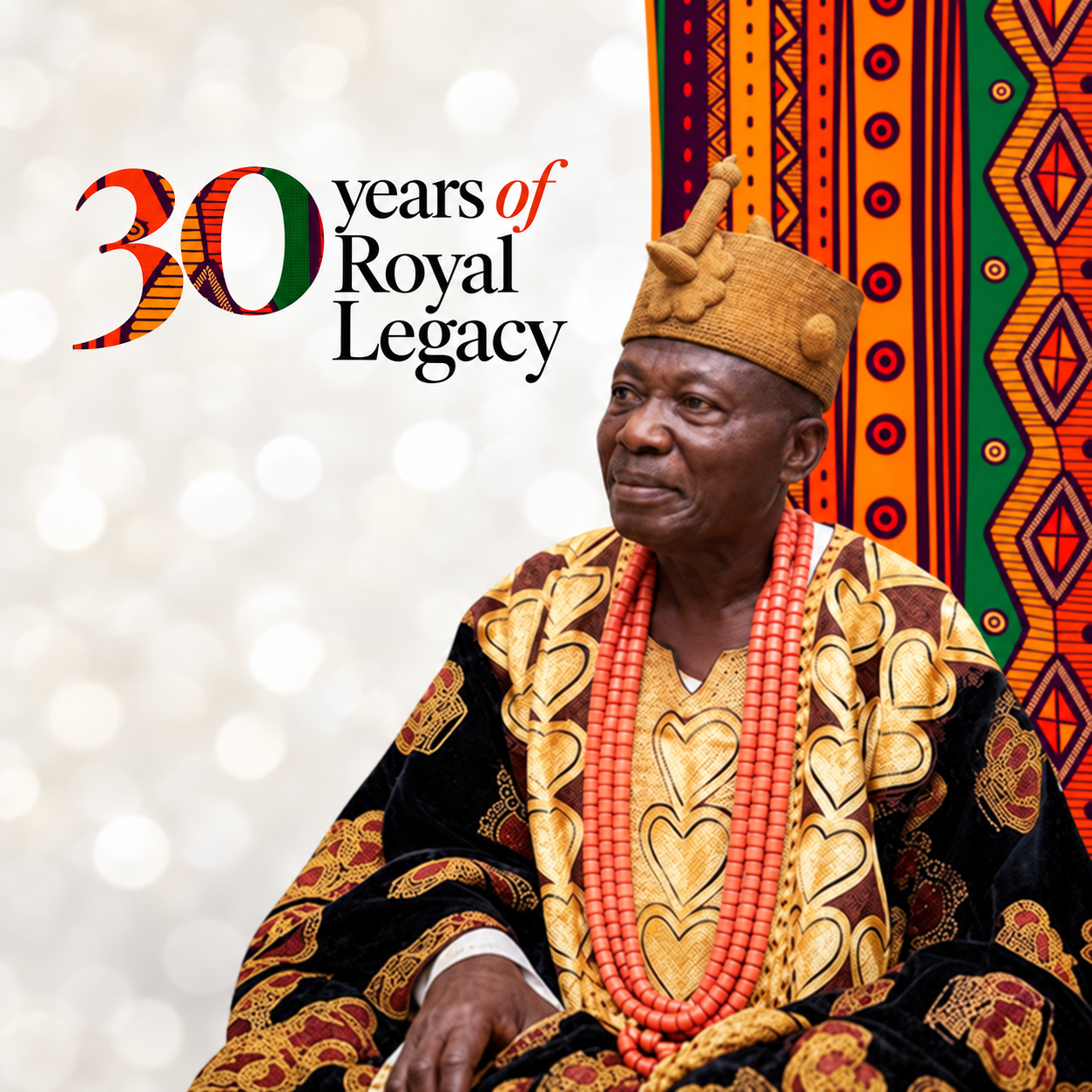
Ọba (Dr) Timothy Titilayo Oyebanji, Olufemiloye I, Olóba of Ọ̀bà: 30 years of Royal Legacy
Thirty years of royal legacy: Ọba (Dr) Timothy Titilayo Oyebanji, Olufemiloye I, in gold-and-black regalia and coral beads.

The Olóba’s commemorative portrait connects royal office with the family’s living relationship with Ọ̀bà. Read the separate anniversary report.

Explore the royal portrait gallery

A LIVING LINK / 27 SEPTEMBER 2024

One name, two homes.

After I shared the first Òbẹ̀nbẹ̀ film chapter, Sunday S. Oladiji, then president of the Ọ̀bà Development Association, wrote that its executives and trustees had seen it. He conveyed appreciation from the Ọ̀lọ̀bà, Oba (Dr) T. T. Oyebanji, and the council of chiefs for the Olúkòtún family in Oró. He identified his Oke Oba compound as the current custodian of the Olúkòtún title in Ọ̀bà and recognised a shared family source. Chief Babatunde Sanni (Takiti II), Olúkòtún of Oró, had also visited Ọ̀bà to discuss the connection.

For me, the family of Òbẹ̀nbẹ̀ Ìmìnjá in Oró is a branch of the wider Olúkòtún lineage whose home remains in Ọ̀bà. It is heartening to see people in both places renew that relationship through a creative work, a visit and a direct exchange.

A REMEMBERED JOURNEY

Òbẹ̀nbẹ̀ Ìmìnjá and the forest settlement.

In the family research supplied for this site, Òbẹ̀nbẹ̀ Ìmìnjá Ọ̀bà leaves Ọ̀bà-Ilé after consulting Ifá about descendants. An Agbìgbò bird's call guides him to a forest place; he marks trees, returns for confirmation and later brings others to settle there. This is the family's account of a journey toward what became Oró.

MORE THAN ONE THREAD

How a community remembers its making.

A family research paper cites a 2022 Oró community keynote attributed to Professor Olayemi Tinuoye that named three strands. The framing helps the series ask who came, who was already there and how people worked together.

01 / Ọ̀BÀ

Ìmìnjá Ọ̀bà

The Òbẹ̀nbẹ̀ account carries the Ilé Olúkòtún connection from Ọ̀bà-Ilé to Oró. The family's working list associates Areka, Balógun, Ekotun, Ilé Nlá, Òdòfá, Oníkòyí and Onísàn with the wider settlement history. It is a lead for comparison, not a complete register of households. A separate family-supplied palace-record summary remembers Òdòfá, son of Arógbo, as a nobleman whose descendants supported access to customary finance and credit in Oró’s trading life; its dates and mechanisms need further research.

02 / ÌRẸ̀

Ìmògùn Ìrẹ̀

Metalworking and tools appear in the family account of the forest meeting. The blacksmith is a participant with his own origin and craft, rather than a supporting detail in another family's story.

03 / Ọ̀YỌ́

Mọ́kìn Oró

A separate strand remembers Ọmọọba Òlákànmí and a party from Ọ̀yọ́, associated with governance and the later political formation of Oró. The palace genealogy estimates their arrival in the 1460s CE and traces every Bàálè line, including mine through my grandmother, to him. The Bàálè, Àsànlú and Àrò are described as three founding Mọ́kìn-Oró landholding houses. My father’s palace account distinguishes them from the four offices historically installed at Ọ̀kérímì, which also included Olúkòtún. It places Mìnjá-Ọ̀bà families in Oró before the Mọ́kìn arrival; the Ọ̀yọ́-Ilé essay and family chronicle follow how the relationships and titles developed. The second film chapter explores the meeting of these traditions without making one household the whole town.

A connection renewed in person

A family report says an earlier Olúkòtún, Oyatayo, visited Ọ̀bà-Ilé in the 1950s. In 2023, Chief Babatunde Sanni (Takiti II) and a delegation returned. The report describes their reception by the Ọ̀lọ̀bà and chiefs, a meeting with local Ilé Olúkòtún relatives, and a visit to an ancestral compound. The warmth of that encounter is part of the record; the historical claims exchanged during it still merit comparison with documents and other community accounts.

A later family update refers to visits in 2023 and 2024. It says the Ọ̀lọ̀bà of Ọ̀bà, named there as Oba Timothy Titilayo Oyebanji (Ilufemiloye I), subsequently visited Chief Olúkòtún in Èkó (Lagos) and invited the Oró compound to a 30th throne anniversary celebration. The same update says an honorary title, Otunba Odo Oba, was reserved for the compound and that a family member would be chosen. The supplied material records an invitation and intention; it does not document a conferment or its eventual holder.

For me, the value of these exchanges lies in continuing relationships between people at Ọ̀bà-Ilé and Oró. They give the diaspora a way to ask elders about place, kinship, language and shared responsibility, and give Tapestries a reason to research beyond a single written account.
How I hold the record

This page draws on a family migration research paper attributed to Chief Babatunde Sanni and edited by Gboyega Adekanye, a family report of the Ọ̀bà-Ilé return, and a later compound update signed by spokesperson Gboyega Adekanye. They are valuable accounts of how the family explains its origins and renewed relationships. The date of the anniversary invitation and any later decision on the title were not supplied.

A separately published community essay, Oba Community: The Story of a Bartered Ancient Town, offers other explanations of the name and dispersal of Ọ̀bà. It is linked as a perspective, including mythic material, rather than treated as independent proof of ancient dates, archaeology or a single origin for every Ọ̀bà community. Further academic, archival and locally held evidence can sharpen this account over time.

Editorial note: Competing settlement sequences, genealogies, title rankings and specific early dates remain open to review. This page does not publish private family contacts or assert that the proposed honorary title was installed. The spelling Oró follows the family's preferred rendering on this site.

A CLOSER LOOK

Place within a wider cultural world

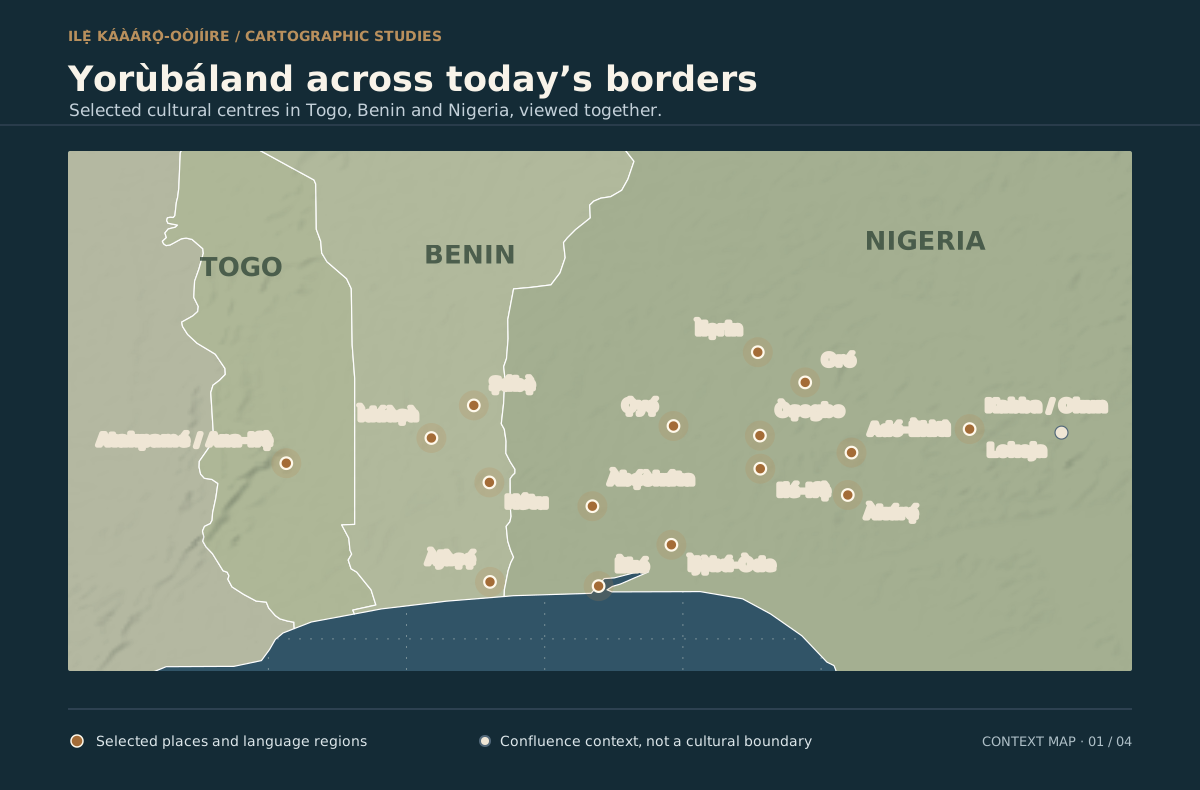
Place within a wider cultural world. Existing portfolio map of cultural centres across present-day Togo, Benin and Nigeria. A locator, not a claim about historic borders or migration routes. See the linked maps page for sources and limits.
Existing portfolio map of cultural centres across present-day Togo, Benin and Nigeria. A locator, not a claim about historic borders or migration routes. See the linked maps page for sources and limits. Map sources and context.

Ọ̀BÀ-ILÉ TODAY / OUR LOCATION RECORD

A living town. An ancestral point of departure.

Before a journey becomes a chapter, it belongs to a place. Our team filmed these views of Ọ̀bà-Ilé during the Episode 1 production, following the migration story of Òbẹ̀nbẹ̀ Iminja. The aerial views bring the town into a wider landscape; the palace film brings us closer to the Olóba’s living institution.

This is the present-day home behind an ancestral account: a community with its own daily life, responsibilities and continuing history.

Ọ̀bà-Ilé · a town seen from above · Olukotun Studios. Watch on YouTube ↗
Watch more · The Olóba’s palace and another aerial view
The Olóba’s palace · Ọ̀bà-Ilé · Olukotun Studios. Watch on YouTube ↗
Ọ̀bà-Ilé · a second aerial view · Olukotun Studios. Watch on YouTube ↗
Read more · Landscape, memory and the next chapter

These are present-day places, filmed by our team during the Episode 1 work on Òbẹ̀nbẹ̀ Iminja’s migration. In my account of that filming, the surrounding hills, wooded areas and more open savannah are part of the landscape we want viewers to notice. The films invite a closer look; they are not an ecological survey or a reconstruction of the vegetation and buildings of an earlier century.

For Episode 2, location footage will sit alongside narrated maps, illustrated historical passages, dates and family relationships. Present-day views establish place; historical scenes require their own sources and clearly identified interpretation. Explore the atlas and return to Episode 1.

Continue to present-day Oró →

Historical reading · Akintoye & Ogundiran

For the wider Yorùbá historical setting. The family accounts and episode traditions on this page retain their own named sources.

YORÙBÁLAND / DEVELOPMENT

Place, knowledge and the next chapter.

Follow landscape and resource evidence into community research, skills and possible value chains. The catalogue keeps locality claims distinct from verified reserves or ownership.

Explore the development hub → · Open both interactive maps → · Sources and review

OSL · Olukotun Studios Ltd

Olukotun Studios Ltd · Registered in England and Wales · No. 17537910

LinkedIn ↗