TAPESTRIES / EPISODE 01
Ìjìrà Pátákì ti Òbẹ̀nbẹ̀ Ìmìnjá
An early film chapter exploring migration, ancestry and the stories through which a community remembers its beginnings.
Words in context: Oríkì — praise poetryIlé — home or family house More Yorùbá terms ↗
Where the series began
Developed as an early film chapter around 2024, this story gives visual form to an older family account. Òbẹ̀nbẹ̀ Ìmìnjá is remembered as leaving Ọ̀bà-Ilé in Ìsìn and travelling toward the forest settlement associated with Oró. The film's production period is documented more readily than the journey's historical date.
People and places, beyond one protagonist
The wider account also names Ìmògùn, a blacksmith from Ìrẹ̀ whose tools and craft enter the settlement story. Other households, including people brought there under coercion, cannot be made invisible by a single founding narrative. The Orísun page sets out the remembered route and the family sources behind it.
Why it matters
Migration stories speak to more than a route between places. They carry questions of belonging, continuity and whose account is heard. This chapter treats a living memory with respect while keeping its exact chronology and points of disagreement open to research.
What comes next
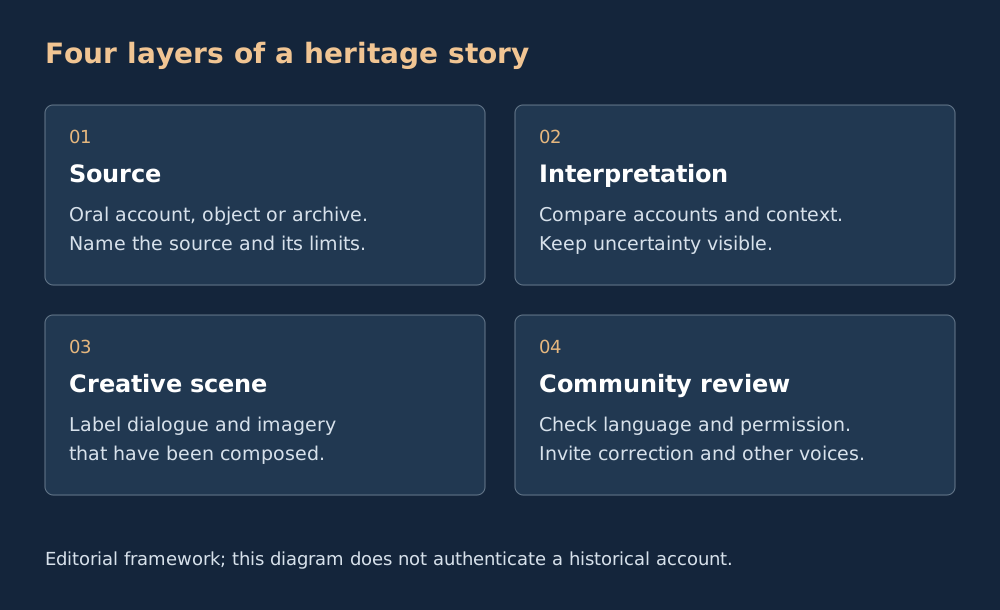
The creative method is being developed further for the Òlákànmí chapter, with stronger source notes, tone-marked dialogue, consistent character design and a clearer distinction between historical claim and dramatic reconstruction.
See the channel ↗A CLOSER LOOK
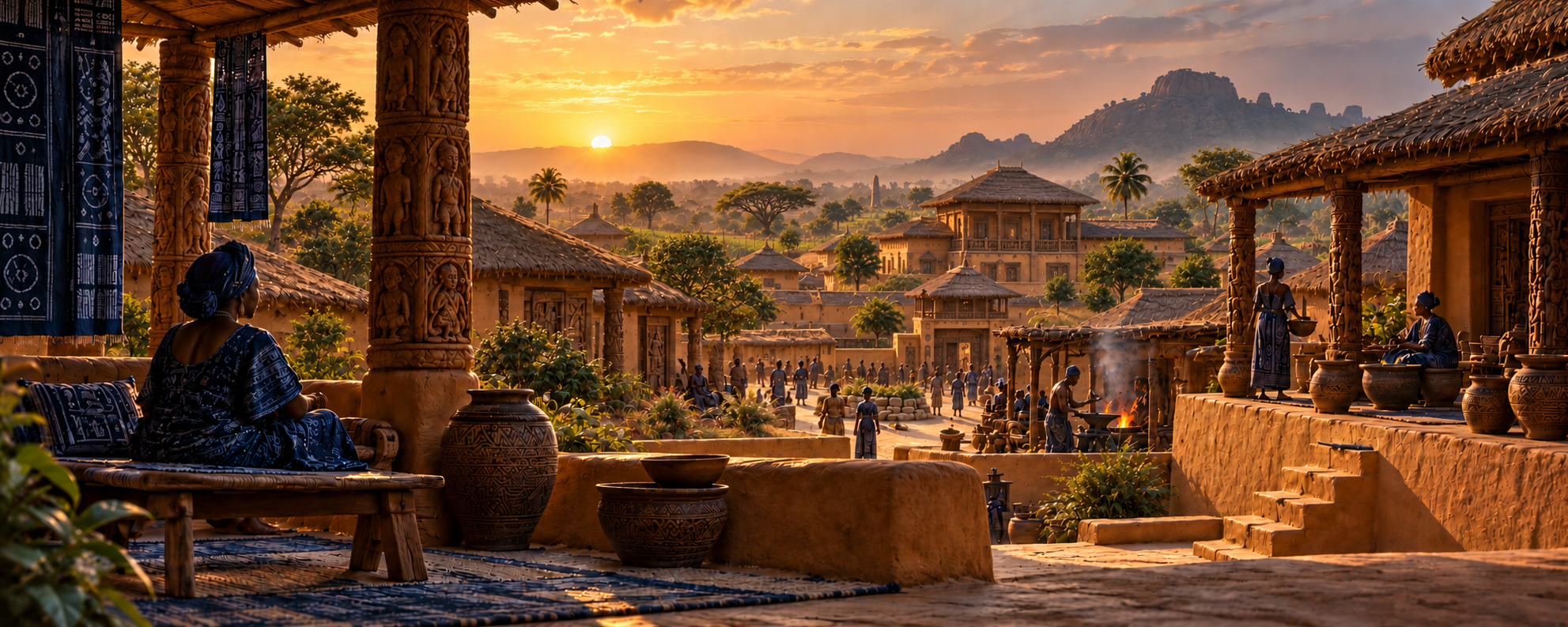
A visual direction for the story world
Keep the layers distinct
Historical reading · Akintoye & Ogundiran
For the wider Yorùbá historical setting. The family accounts and episode traditions on this page retain their own named sources.
- S. Adebanji Akintoye · A History of the Yoruba PeopleAmalion, 2010 · A broad historical account of Yorùbá societies and kingdoms.
- Akinwumi Ogundiran · The Yorùbá: A New HistoryIndiana University Press, 2020 · Archaeology, oral traditions and historical change.