TAPESTRIES / EPISODE 02
Prince Òlákànmí of Ọ̀yọ́: Rise of Unified Oró
An origin story of departure, divination and alliance — and a thoughtful conversation about political foundation and evolving institutions.
Words in context: Ọmọọba — princeAyaba — queen or royal consortBàálè — local ruler More Yorùbá terms ↗
The story arc
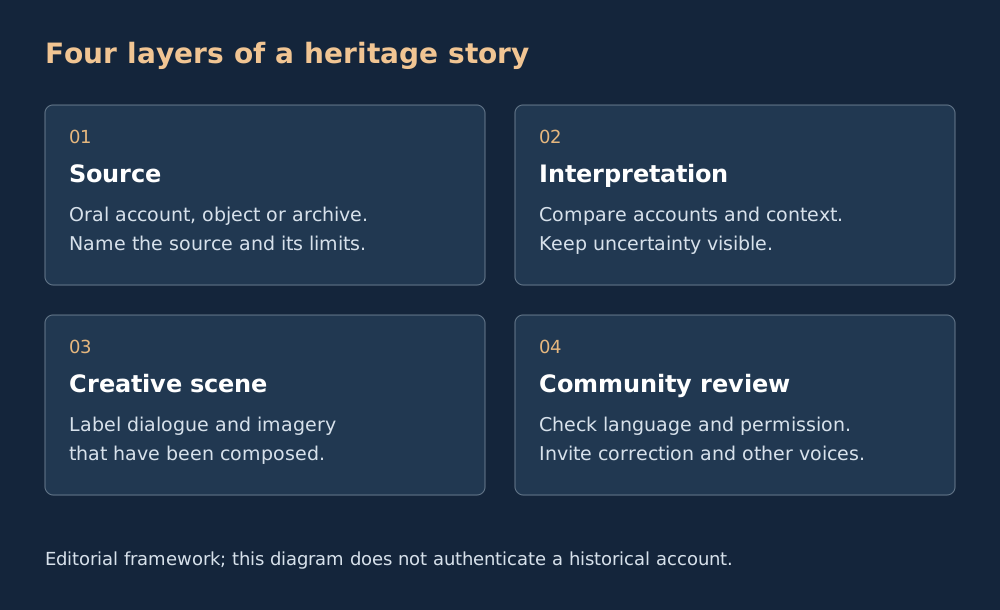
After a dispute at the court of Aláàfin Àgànjú, Prince Òlákànmí leaves Ọ̀yọ́. Ìfákọ̀rẹ̀dé's divination and the omen of the Agbìgbò guide a journey toward alliance with the Onírẹ̀ of Ìmògùn Ìrẹ̀ and Olúkòtun of Ìmìnjá-Òbà. Their pact leads toward a unified Oró. This is the series' interpretation of a remembered origin, not a scene-by-scene transcript of a dated event.
The people in the story
The core cast includes Òlákànmí, Ọlámídé and Àsọ̀jú, Ìfákọ̀rẹ̀dé, Onírẹ̀, Olúkòtun, Aláàfin Àgànjú and Ayaba Aríké. Their relationships give the political story a human scale: counsel, responsibility, kinship and the cost of leadership. The route from Ọ̀yọ́ meets accounts of people already associated with Ìrẹ̀, Ọ̀bà-Ilé and Oró.
Read less
A CLOSER LOOK
A visual direction for the story world
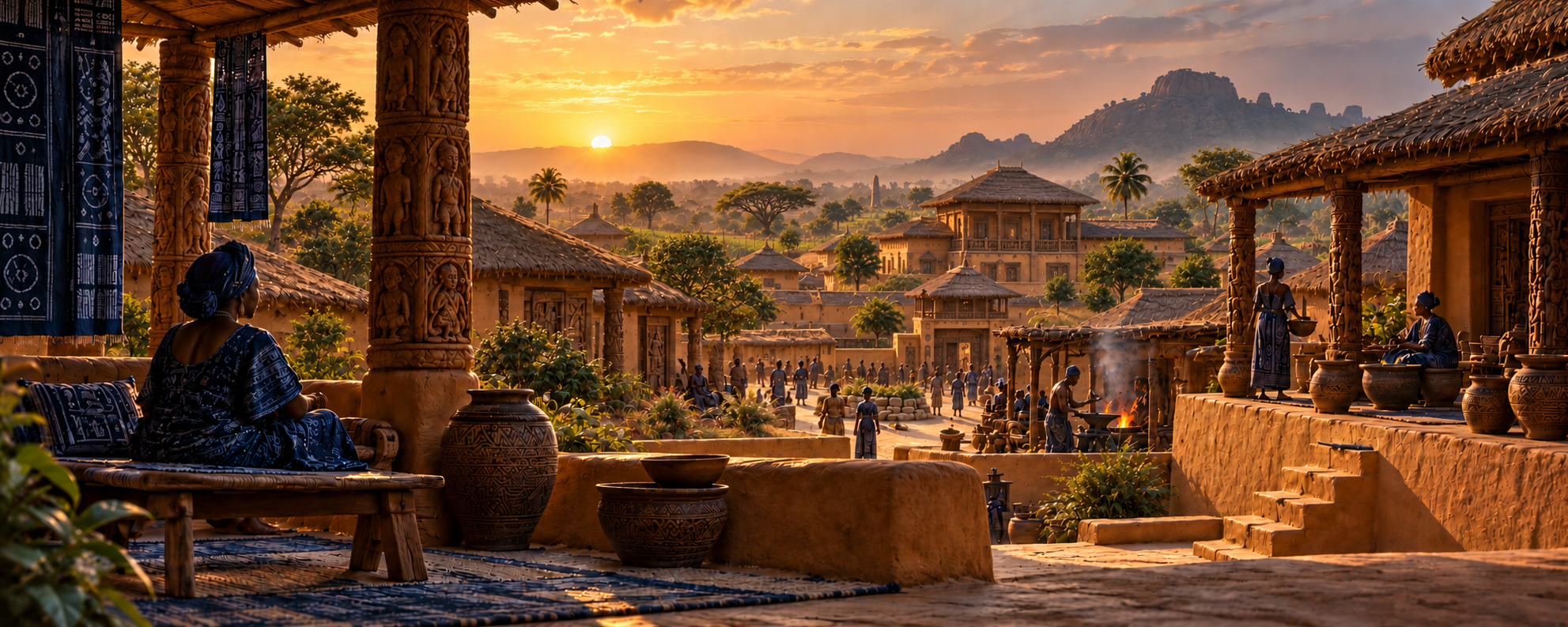
Keep the layers distinct
ORÓ TODAY / FROM ABOVE AND WITHIN
The place beyond the founding story.
Oró is more than the destination in a family narrative. It is a living town, encountered from above in the Asanlu lands film and from within at Lakele Square. These recordings from our team’s Episode 1 work connect the settlement stories with places that people still inhabit, cross and recognise.
As we develop Prince Òlákànmí’s chapter, these views will help ground maps and illustrated passages in a sense of real location—while keeping today’s town distinct from the historical world we interpret.
Watch more · Inside Oró at Lakele Square
Read more · Landscape, memory and the next chapter
These are present-day places, filmed by our team during the Episode 1 work on Òbẹ̀nbẹ̀ Iminja’s migration. In my account of that filming, the surrounding hills, wooded areas and more open savannah are part of the landscape we want viewers to notice. The films invite a closer look; they are not an ecological survey or a reconstruction of the vegetation and buildings of an earlier century.
For Episode 2, location footage will sit alongside narrated maps, illustrated historical passages, dates and family relationships. Present-day views establish place; historical scenes require their own sources and clearly identified interpretation. Explore the atlas and return to Episode 1.
Historical reading · Akintoye & Ogundiran
For the wider Yorùbá historical setting. The family accounts and episode traditions on this page retain their own named sources.
- S. Adebanji Akintoye · A History of the Yoruba PeopleAmalion, 2010 · A broad historical account of Yorùbá societies and kingdoms.
- Akinwumi Ogundiran · The Yorùbá: A New HistoryIndiana University Press, 2020 · Archaeology, oral traditions and historical change.
Leadership and belonging invite questions of character. Read how Ọmọlúàbí guides the series.