TAPESTRIES / ÌDÍLÉ / Ọ̀YỌ́-ILÉ
Ọ̀yọ́-Ilé, Ọmọọba Moróláké Agnes and the Èjì thread
A grandmother’s insistence that a small part of our oríkì should keep a larger story within reach.
Explore the Bàálẹ̀ lineage and royal succession ↓
Words in context: Ọmọọba — prince or princessoríkì — praise poetryBàálè — local ruler More Yorùbá terms ↗
A journey remembered across sources
Oró accounts remember Òlákànmí as a prince who left Ọ̀yọ́ with kin and companions and became associated with the town’s political formation. The Oró town account, a 2013 interview with an Olóró, and a family-supplied historical compilation each tell versions of that connection. Their shared outline matters; their differences, and the lives of other early settlers, matter too. The palace genealogy places Ọmọọba Òlákànmí’s migration in the 1460s CE. This is an estimate for the tradition, not a contemporaneous date; the town account also suggests a fifteenth-century foundation.
Baálẹ̀: an ancient title, a royal responsibility.
In our family’s Oró palace tradition, Baálẹ̀ denotes the king or traditional monarch. Abioye, Atóyèbí and Afolayan belong to that royal house and are remembered as its royal titleholders. Their standing is part of Yorùbá dynastic history, carried through lineage, palace life and service to the community. Oró’s Baálẹ̀ house has retained the older title; its dignity does not depend on adopting another name.
Read more · Royal titles and the Ìbàdàn comparison
My paternal grandmother Ọmọọba Moróláké Agnes—my father’s mother—was the firstborn child of Bàálè Atóyèbí of Oró, whose tenure the family places in the early to mid twentieth century. My father’s account draws on palace traditions and research identified by the family. The palace account traces all Bàálè lines to Ọmọọba Òlákànmí of Ọ̀yọ́. Through Ọmọọba Moróláké Agnes, this is also my descent. Precise reign years and archival references can be added here when available for public citation.
Read less
THE BÀÁLẸ̀ HOUSE / A FAMILY RECORD
A royal line. A family still telling its story.
Behind the title are generations of people: ancestors remembered by name, households joined by marriage, and children who carried the story onward. Through my paternal grandmother, Ọmọọba Moróláké Agnes, this Bàálẹ̀ lineage is part of my own inheritance.
01 / THE ANCESTRAL LINE
Ten names leading to Atóyèbí.
The wider family tradition traces the house towards Ọmọọba Òlákànmí of Ọ̀yọ́. These extracts begin later, with Olúbimpé A. They give the remembered line a sequence of names; they do not supply every generation back to Òlákànmí.
The palace account, confirmed to me through my father, places Òlákànmí’s death before the settlement was completed: his younger brother became the first Bàálẹ̀. It links the founding lineage to Ọ̀yọ́, the odò-idẹ emblem and Ifá-guided settlement. A further family tradition connects Ààfin with a younger brother establishing a separate royal settlement.
Birth dates for the other Bàálẹ̀s await further research. Atóyèbí’s birth year remains approximate. “c.” means circa, or around. These are life dates, not dates of accession or reign.
The earlier generations
- Olúbimpé ABàálẹ̀ of Òrò
- AlufoaBàálẹ̀ of Òrò
- OlalèyèBàálẹ̀ of Òrò
- OselokeBàálẹ̀ of Òrò
From Okombo to Atóyèbí
- OkomboBàálẹ̀ of Òrò
- OgojíBàálẹ̀ of Òrò
- AdéyéyèBàálẹ̀ of Òrò
- OládèhìndèBàálẹ̀ of Òrò
- AbíòyèBàálẹ̀ of Òrò
- Atóyèbí Joseph · Akandè-ÈjìBàálẹ̀ of ÒròBorn c. 1861 Died 1959
The line is shown in two runs because the connection between Oseloke and Okombo falls between the supplied extracts. The family record places both within this ancestral account; the missing connector is left open here.
02 / THE ROYAL SUCCESSION
One house, more than one route to the title.
The family remembers the later succession as Atóyèbí, then his younger brother Aboyeji, followed by Atóyèbí’s sons Afolayan and Téjúmòlá. This is an order of officeholders: it differs from a parent-to-child line.
Atóyèbí: remembered with affection.
My father’s account remembers Bàálẹ̀ Atóyèbí as a much-loved ruler who reigned twice. Unpopular colonial taxation led the people of Òrò to exile him, yet they later asked him to return. His special oríkì celebrates that restoration and his character, repeatedly calling him “Baba Moróláké”—father of his beloved firstborn daughter. He died in 1959.
The eulogy also names his wife Adétóhùn, whom the family identifies as Moróláké’s mother. Its images of return, repair and a community’s affection give the royal history a deeply personal voice.
Read Atóyèbí’s special oríkì
Family-transmitted text; the quoted spellings are retained. The interpretation above follows my father’s account.
(ATOYEBI) AKANDE-EJI,
OMO AMUAGBONIYI
OMO OLUBIMPE, OMO APE BI OLOJA
OMO ILU PETE WELE, OMO ILU FEMILOYE
ARA LO MU MI JE, BABA MOROLAKE, OMO AKOLE TUN SIN
OMO TO TUN PADA WAYE, OKO ADETOUN, AYIKU EKURO
BABA MOROLAKE ATUN IYI TI KO SUN WON SE
OMO ONILU TI KOFE KO TO, OMO AYAN BI OLORO YAN TAN
AKANDE ASE EYI TI O SE KU SINU BABA MOROLAKE
Akerefinusogbon- Atóyèbí Joseph · Akandè-ÈjìFather of Afolayan and Téjúmòlá
- AboyejiAtóyèbí’s younger brother
- Afolayan Raphael AtóyèbíAtóyèbí’s son
- Téjúmòlá MartinAtóyèbí’s younger son
Abíòyè, Atóyèbí’s father in the tree, and Aboyeji, his younger brother in the succession account, are different people. Reign dates are not supplied for this sequence.
03 / ATÓYÈBÍ’S HOUSEHOLD
A royal household becomes many family branches.
The tree names Abíòyè and a woman labelled “Ìyá A” as Atóyèbí’s parents. It records four partners: Madame Adétóhùn, Awele, Olanihun and Moradeye. My father’s account identifies Adétóhùn as Moróláké’s mother; the other maternal relationships remain unassigned here.
The children shown in the record
- Atoyebi Michael A
- Morolayo Atoyebi
- Oyeniyi E Atoyebi
- Téjúmòlá MartinLater Bàálẹ̀; birth year not shown
- Moróláké Agnes Atóyèbí · Abiké-Èjìc. 1903–1968 · my paternal grandmother
- Afolayan Raphael AtóyèbíLater Bàálẹ̀
Marriages and the wider family
Oyeniyi E Atoyebi is shown with Teresa, born around 1920 and deceased in 2025. Moróláké Agnes is shown with Ìbíwoyè Jacob Kánímọ́lé, my paternal grandfather, born around 1887 and deceased in 1977. The positions of the cards do not establish the children’s birth order.
Our existing family account remembers Moróláké Agnes as Atóyèbí’s firstborn and Téjúmòlá as a younger son. The tree’s grandchildren branches continue beyond these extracts.
04 / HOW THE LINE REACHES ME
Through Moróláké, the palace becomes personal.
My grandmother connects the royal line to a household I can name as my own. Her marriage to Kánímọ́lé joined the Atóyèbí and Olótá family stories. My father grew up at Atóyèbí’s palace; his written account sits beside the memories of courtly life he has shared with me.
- Atóyèbí Joseph · Akandè-ÈjìMy great-grandfather
- Moróláké Agnes Atóyèbí · Abiké-ÈjìMy paternal grandmother
- Chief Olatunji Raphael Ibiwoye · Ayanda-ÈjìMy father
- Ọlálékan Olúkọtún · Àkànbí-ÈjìThe next generation carrying the account
For me, this inheritance lives in names, relationships and responsibility. Moróláké’s wish that we carry Èjì in our oríkì gives the written lineage a spoken life: something to remember, ask about and pass on.
Èjì: the lineage carried in our names.
My father explains that Èjì belongs to Mokin Òrò: the Bàálẹ̀, Àṣànlú and Àró families. Ilé Olúkòtún belongs to Ìmìnjá-Òbà; our Èjì inheritance comes through his mother, Ọmọọba Moróláké Agnes Abiké-Èjì Atóyèbí. He carries it as Ayanda-Èjì and passes that praise-name tradition to his children.
- Ọlálékan OlúkọtúnÀkànbí-ÈjìMe
- Chief Olatunji Raphael IbiwoyeAyanda-ÈjìMy father
- Bàálẹ̀ Atóyèbí JosephAkandè-ÈjìMy great-grandfather
- Ọmọọba Moróláké Agnes AtóyèbíAbiké-ÈjìMy paternal grandmother
In the palace account he has passed to me, these three Mokin Òrò houses are the ancestral landowners of Òrò. This is the context of Ọmọ onílẹ̀—descendant of landowners—in our praise poetry. It describes an inherited relationship to place and family responsibility.
My father illustrates that history through land acquired for my grandfather Kánímọ́lé’s home, the Kwara College of Education at Òrò, and an 80-bed federal mother-and-child hospital. These examples are presented as his account of the landholding tradition, rather than independently examined land-title records.
These four oríkì names are recorded here as confirmed by my family. Further names and verses will be added as they are shared.
My father’s family-tree entry ↗
The record, its dates and its scope
This presentation brings together the five family-tree extracts, my father’s written testimony as conveyed to me, and the succession already preserved in our family archive. My understanding of agreement with palace accounts is attributed to that family testimony; this page does not reproduce an independently inspected palace register.
Birth years are approximate throughout. A missing death year remains blank rather than implying that someone is living. Names and initials follow the family record where legible; the abbreviated “Ìyá A” is not expanded into an invented identity. The earlier titleholders are shown as ancestors, not numbered as a complete list of every Bàálẹ̀.
Téjúmòlá’s installation photograph and succession account ↗ · Family life dates ↗ · My father’s account and the family chronicle ↗
Meet the people in the photograph archive ↓ · Read the Bàálẹ̀ oríkì ↗ · My maternal Igbo ancestry ↗
FAMILY ARCHIVE / FACES & OCCASIONS
The people behind the praise names.
Family identifications accompany these portraits. Select a picture to see the restored image; originals are available beneath each caption.
These portraits put faces to Ọmọọba Moróláké Agnes’s line and to Ìbíwoyè Jacob Kánímọ́lé, my paternal grandfather. The dates of the individual portraits are not recorded in the material supplied for this page.
Across generations
Family dates · the lives behind the photographs
Birth dates are approximate, following the family’s record. Where an entry supplies a day and month, these are retained below without implying independent verification. Life dates do not date the photographs, reigns, journeys or marriage arrangements.
| Person | Birth · approximate | Death · family record | Source |
|---|---|---|---|
| Ọmọọba Moróláké Agnes Abiké-Èjì Atóyèbí | c. 1903; family entry gives 24 August, Oró | 1968 | Family-tree entry ↗ |
| Bàálè Atóyèbí Joseph, Akandè-Èjì | c. 1861 | 1959 | Family-tree entry ↗ |
| Bàálè Afolayan Raphael Atóyèbí | Awaiting research | Not supplied | Family clarification |
| Bàálè Abíòyè of Oró | Awaiting research | Oró; year not supplied | Family-tree entry ↗ |
| Sisebola Itiolaye Olótá | c. 1780 | Not supplied | Family-tree entry ↗ |
| Ìbíwoyè Jacob Kánímọ́lé, Popoola, Ajide Oyèlúhúnnú | c. 1887; family entry gives 3 October, Oró | 1 October 1977, Èkó (Lagos) | Family-tree entry ↗ |
| Òyelóhúnnú Ọlóta | c. 1830 | Not supplied | Family-tree entry ↗ |
Names follow the supplied family entries; spellings also vary in the older accounts. Linked Ancestry entries may require sign-in. Abíòyè’s entry is kept distinct from the separately named Aboyeji in the succession account.
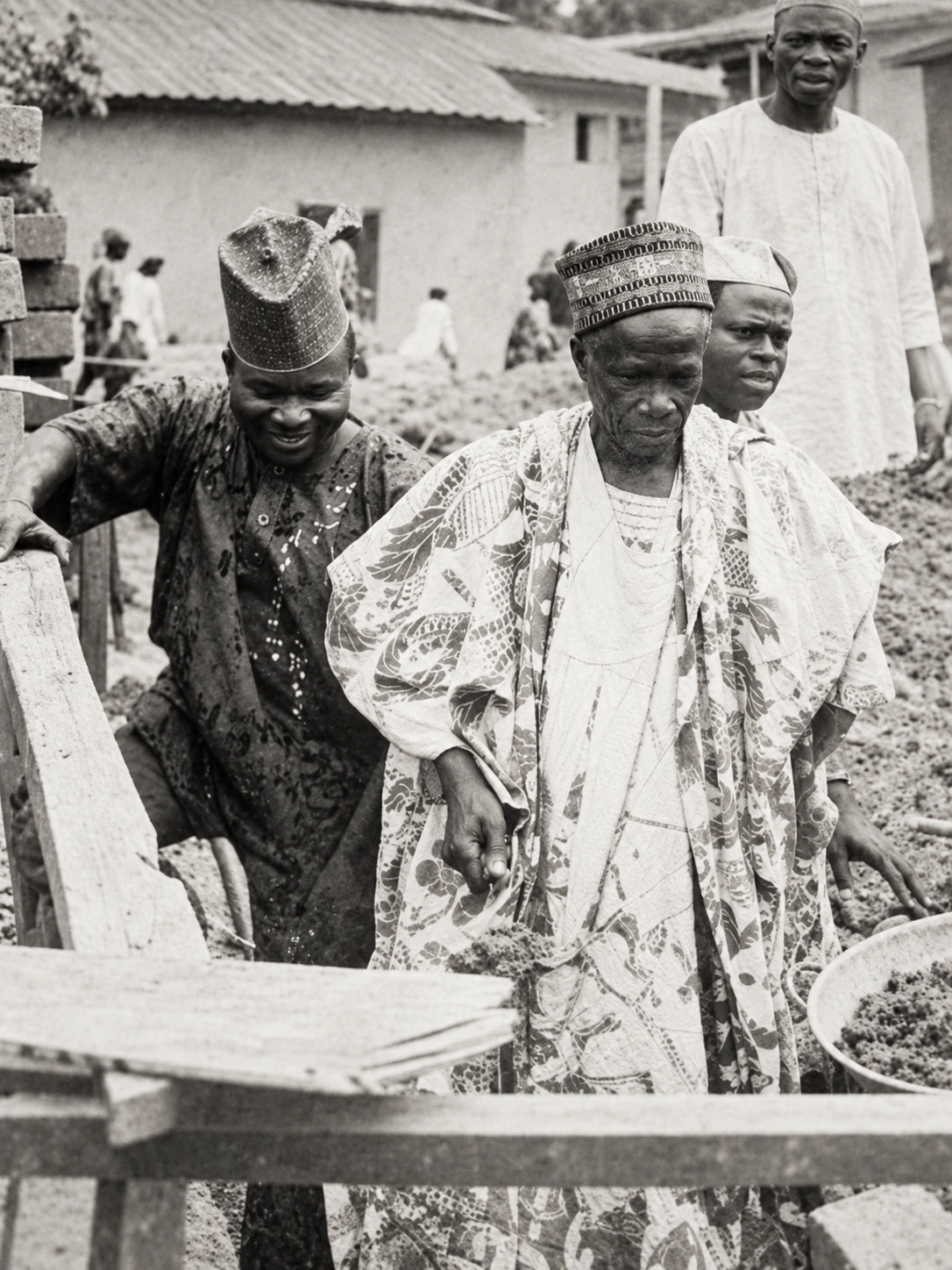
Our family identifies the man near the centre in flowing agbádá as Olota Thomas, youngest son of Sisebola Itiolaye Olótá and my father’s grand-uncle. My father and others surround him at an occasion remembered as marking out and laying a building’s first foundations, around 1987–1988. Read the family story and historical context →
Restoration & original photograph
AI-assisted restoration for viewing; fine detail may be reconstructed. The source image is available for comparison.
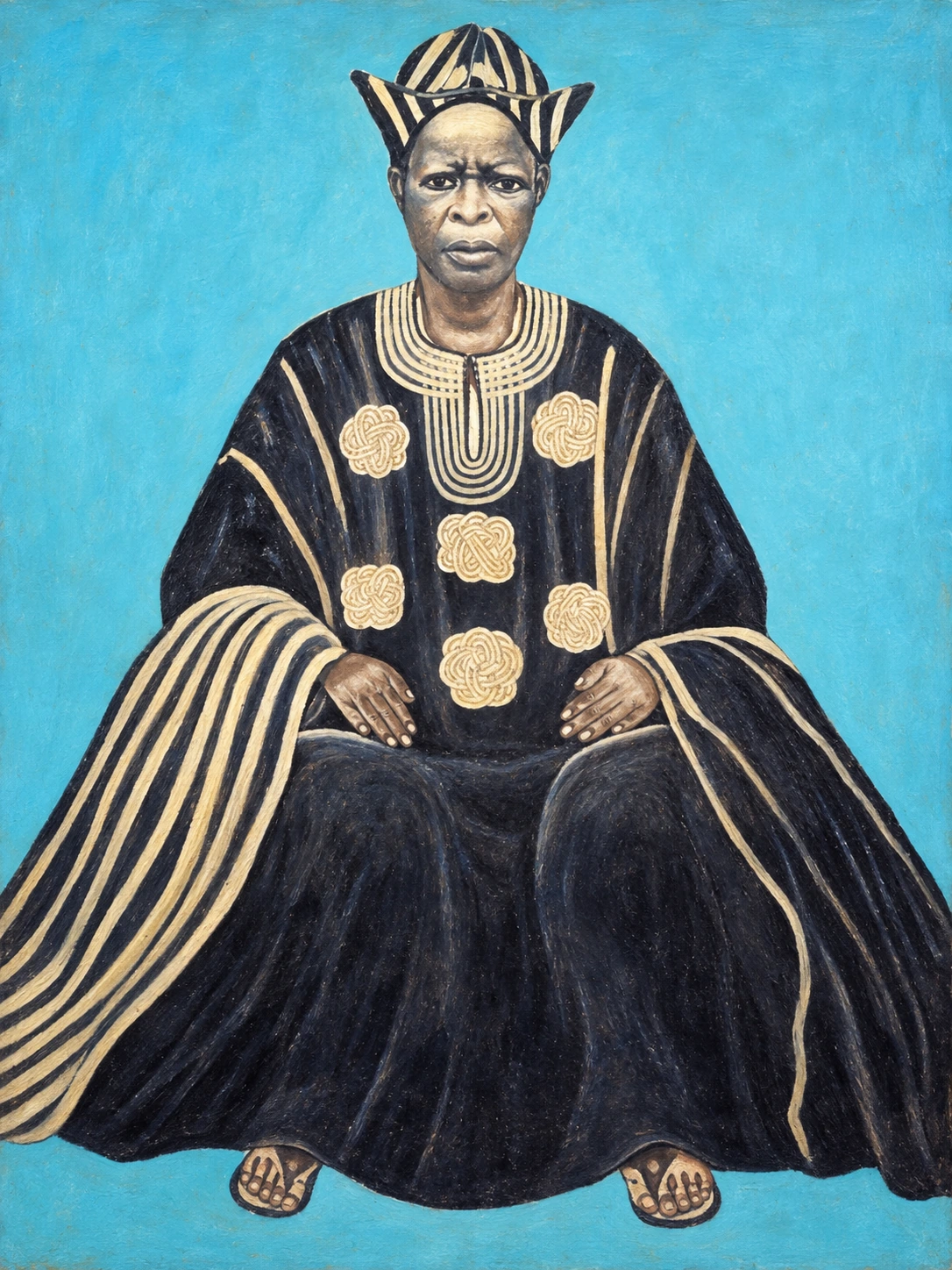
My paternal great-grandfather, Baálẹ̀ Atóyèbí, remembered in our family archive as a king of Oró. Portrait date unrecorded.
Restoration & original photograph
AI-assisted restoration for viewing; fine detail may be reconstructed. The untouched photograph remains the historical reference.
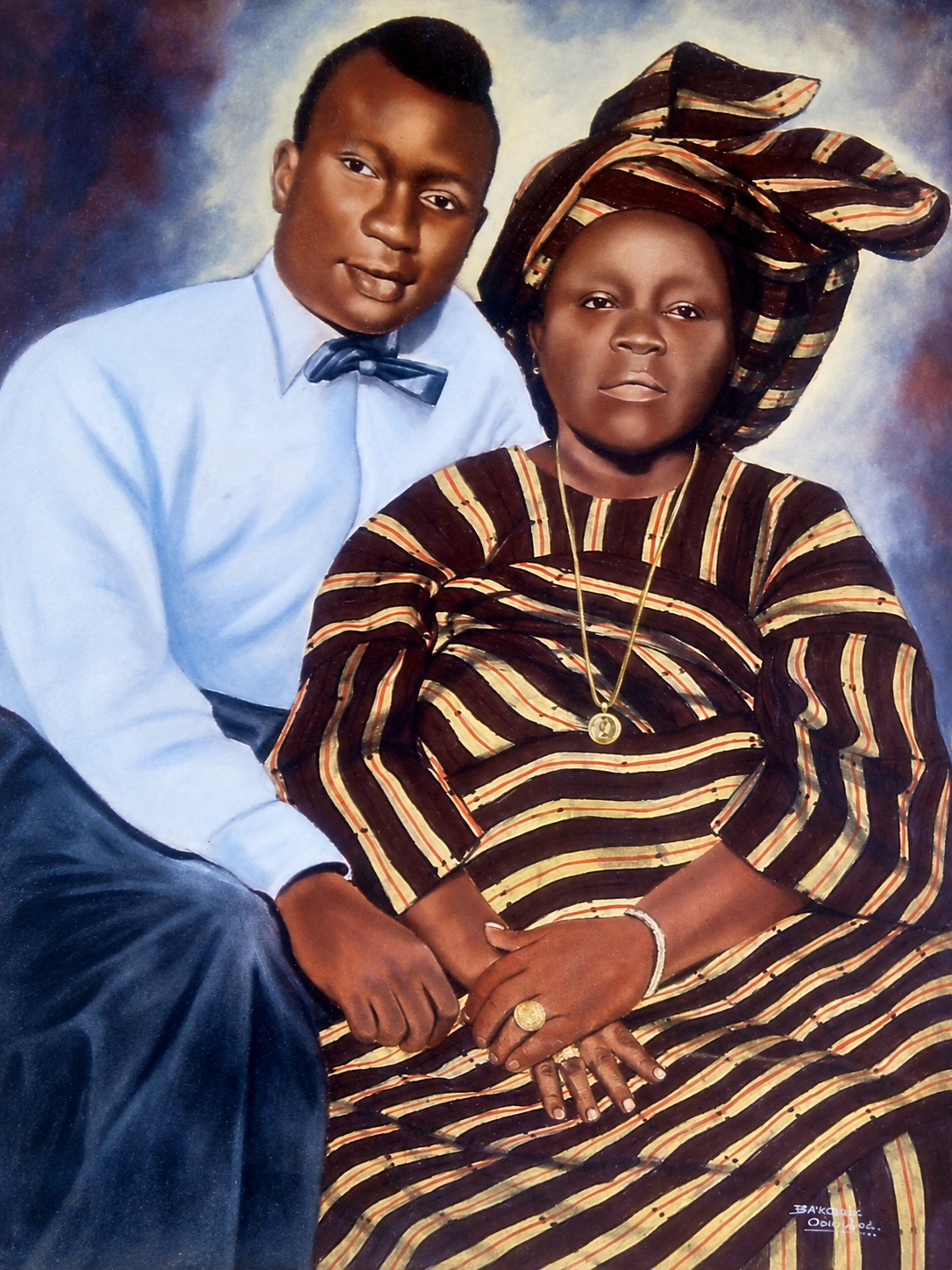
My paternal grandmother, the daughter of Bàálè Atóyèbí and mother of Chief Olatunji Raphael Ibiwoye. She appears at right in this family portrait; date unrecorded.
The family entry records her birth at Oró on 24 August 1903; the birth date is treated as approximate.
Restoration & original photograph
AI-assisted restoration for viewing; fine detail may be reconstructed. The untouched photograph remains the historical reference.
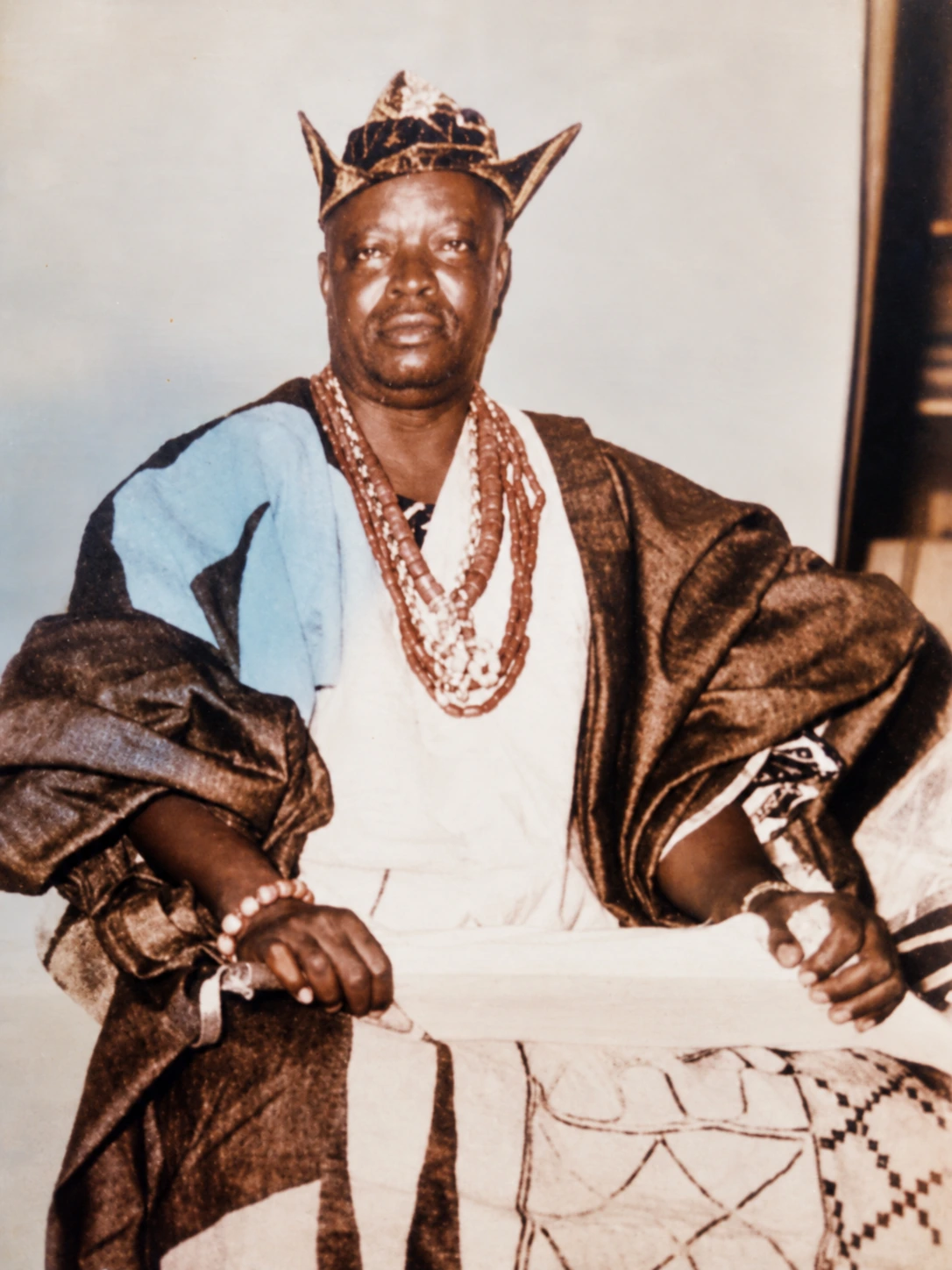
Baálẹ̀ Afolayan, identified by the family as a son of Atóyèbí and a royal titleholder in the Oró Baálẹ̀ line. Portrait date unrecorded.
Held in affection · the story told to me
Bàálè Afolayan Raphael Atóyèbí, I am told, often held me in his arms and was fond of my mother, too. My family recalls that an Ifá consultation associated with him revealed she was expecting a boy—before either parent knew. Apparently, my arrival had been announced before my parents received the memo.
I was too young to remember his affection, but hearing of it has given me a lasting fondness for him. This is Ifá as lived family experience: a story of knowledge, mystery and welcome. Before I could know him, he had already made room for me.
Restoration & original photograph
AI-assisted restoration for viewing; fine detail may be reconstructed. The untouched photograph remains the historical reference.
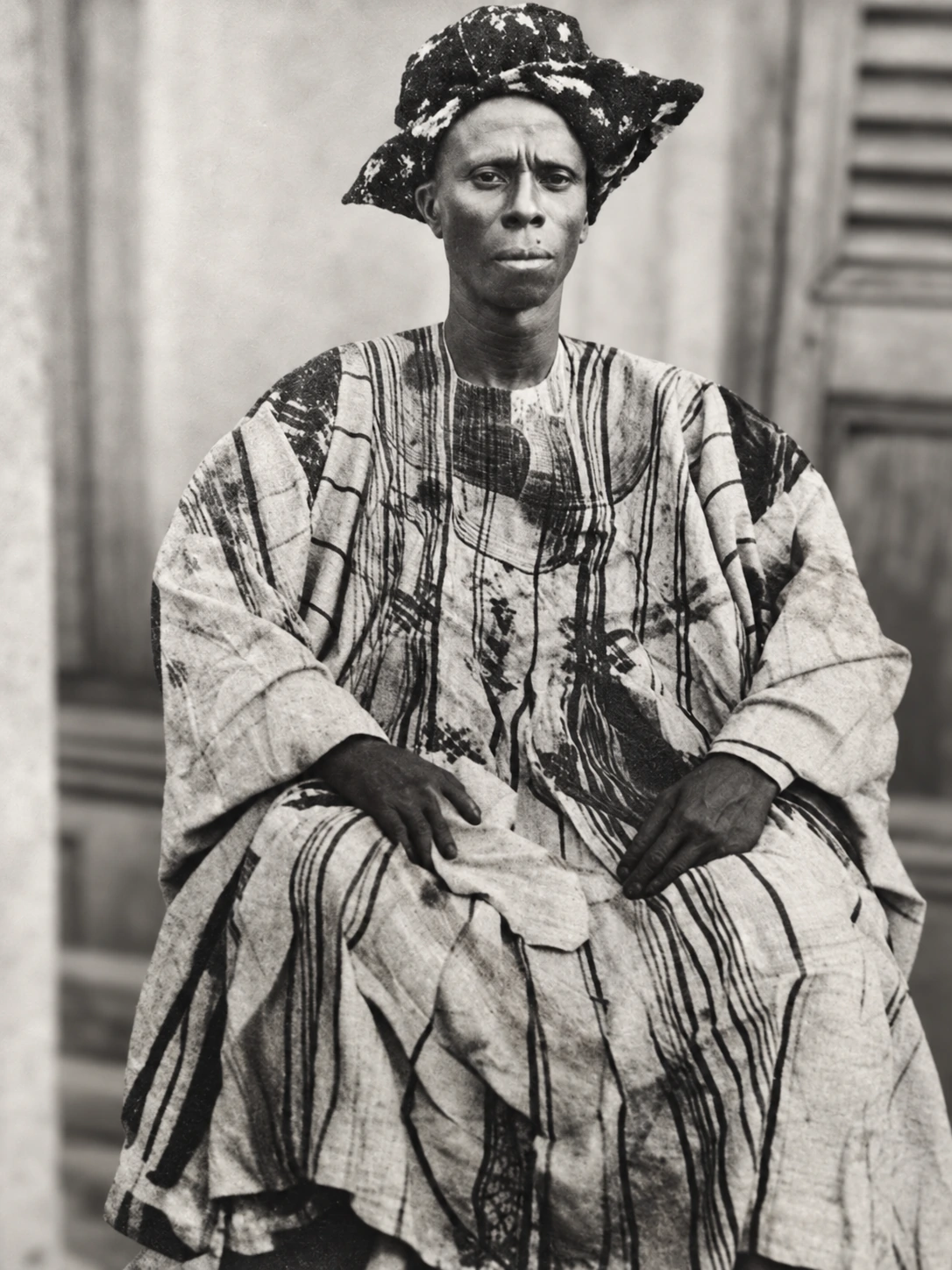
My paternal grandfather in an earlier family portrait; exact year unrecorded.
The family entry records birth at Oró on 3 October 1887 (approximate) and death in Èkó (Lagos) on 1 October 1977.
Restoration & original photograph
AI-assisted restoration for viewing; fine detail may be reconstructed. The untouched photograph remains the historical reference.
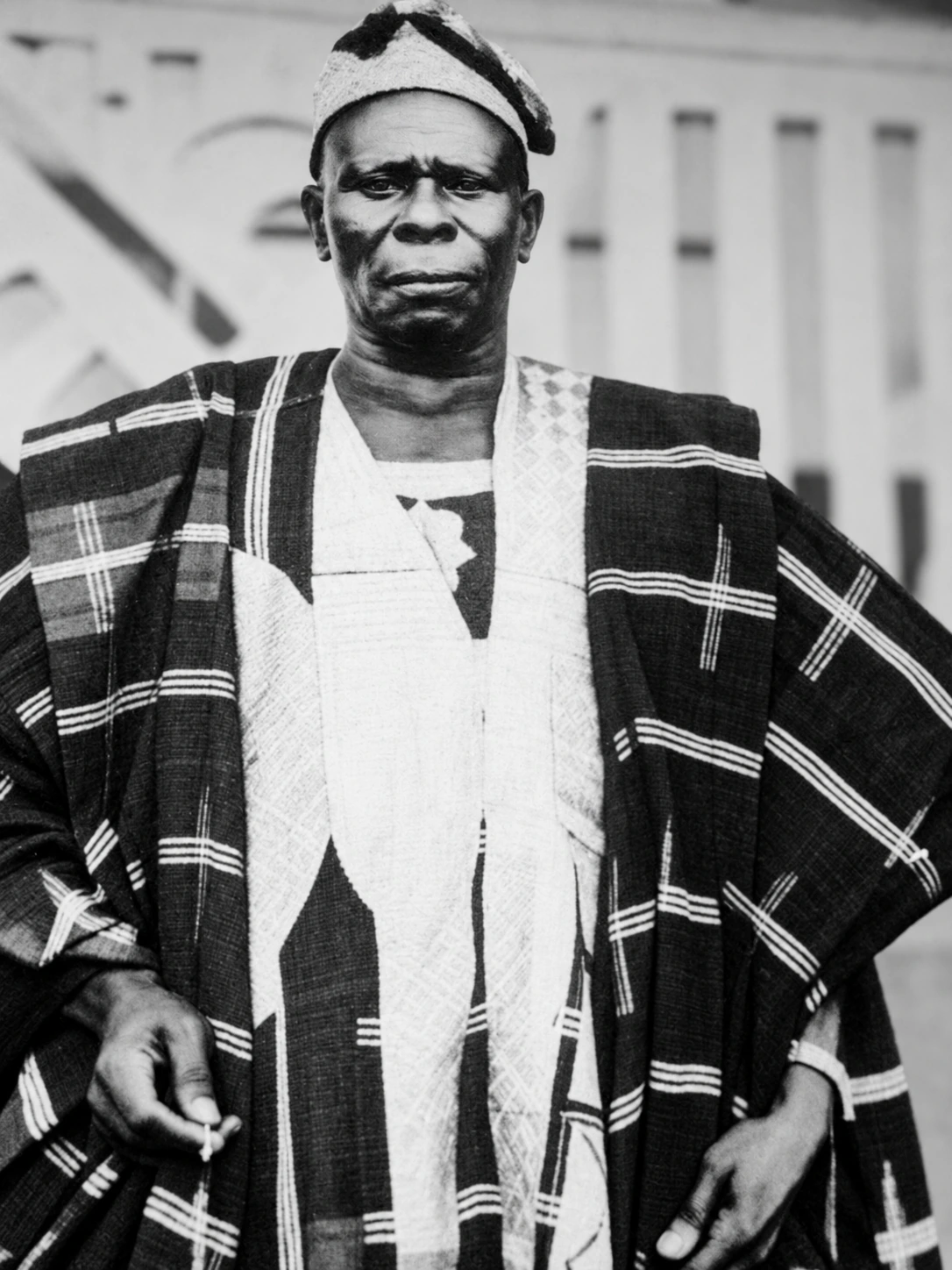
A later portrait of my paternal grandfather; exact year unrecorded.
The family entry records birth at Oró on 3 October 1887 (approximate) and death in Èkó (Lagos) on 1 October 1977.
Restoration & original photograph
AI-assisted restoration for viewing; fine detail may be reconstructed. The untouched photograph remains the historical reference.
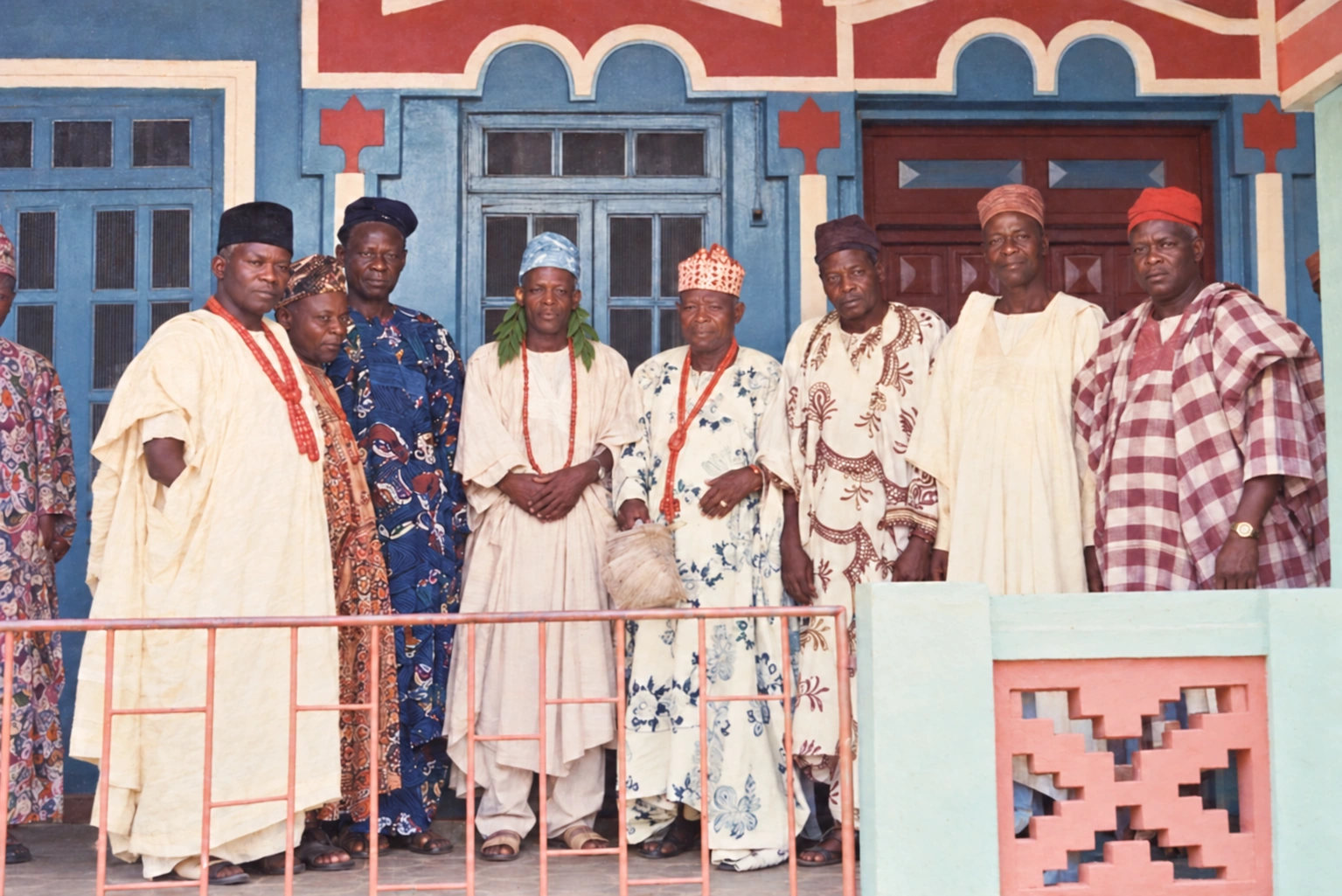
ORÓ / A ROYAL FAMILY MEMORY
Bàálè Téjúmòlá Martin · a place in the succession.
Our family identifies the man just left of centre, wearing a pale-blue cap and cream robe with his hands clasped, as Téjúmòlá Martin, a younger son of Bàálè Atóyèbí and brother of Bàálè Afolayan and Ọmọọba Moróláké Agnes. Green ewé Akoko leaves (Newbouldia laevis) hang beside both ears, as our family recalls the adornment of his installation. The photograph’s date is unrecorded.
The man immediately to the viewer’s right, in a red-and-cream cap and patterned robe, holds a ceremonial horse tail. He may be the then Olóró of Oró; that identification remains unconfirmed.
The succession remembered by the familyAtóyèbí → his younger brother Aboyeji → Afolayan → Téjúmòlá.
Téjúmòlá was therefore the third successor after Atóyèbí, and the fourth ruler in this sequence. Identification, kinship and this order follow our family account. His English name, Martin, is recorded in our family-tree entry ↗.
Ewé Akoko · authority, continuity & care
A living leaf can carry a public responsibility. The IITA Forest Center identifies Akoko as Newbouldia laevis, a tree of the Bignoniaceae family that can grow from cuttings.
Installation and authority. Borokini’s 2016 study of sacred natural sites records its leaves in the inauguration of Yorùbá kings and chiefs. Their ceremonial use expresses recognition of office and its spiritual responsibilities; particular practices vary between communities.
Peace, longevity and good governance. Kadiri and colleagues’ 2014 ethnobotanical survey associates Akoko leaves at coronations with peaceful governance and long life. Prosperity also appears in a contemporary community interpretation. These are symbolic hopes and obligations, rather than guarantees conferred by the plant.
Sacred space at Ilé-Ifẹ̀. An extract from Suzanne Preston Blier’s research, published in The Guardian in 2015, describes two Akoko trees beside an enthronement structure and relates their capacity to regrow to long life. In that account, the wider rites establish the Ọ̀ọ̀ni’s sacred status, understood through the language of òrìṣà. This describes a particular Ilé-Ifẹ̀ tradition; it does not establish the rites performed for Téjúmòlá at Oró.
Explore Òrìṣà and living traditions → · Names and meanings →
Restoration & original photograph
AI-assisted restoration improves visibility and removes the photographed tabletop, glare and print damage. The severely damaged lower-left area, some facial detail and faded colours are reconstructed interpretations, not recovered historical evidence. The green leaves beside Téjúmòlá’s ears have been reconstructed following the family’s clarification of his identity and installation adornment; their exact shape and arrangement are interpretive.
A LIFE IN CONVERSATION
At home in the courtly world.
My father recalls that he and the late Aláàfin Lamidi Adeyemi III (reigned 1970–2022) were schoolmates at St Gregory’s College. Their friendship carried into adult life. Our family photographs place the Aláàfin at the opening of our Oró home in 1987, and my father at his old friend’s Ọ̀yọ́ palace in 2020. They also record a 1987 meeting with Oba Babatunde Akran of Badagry and the late Prince Ayilara of Ójó, and my father’s own Ajiroba chieftaincy ceremony. In an April 2023 note, he also recalled being introduced to Emir Ado Bayero of Kano by Chief Aboderin in 1980; I include that encounter as part of his lived network, not as genealogical evidence. I share these moments for the relationships and cultural learning they hold, alongside the stories my father tells of growing up at Bàálè Atóyèbí’s court. His presentation of the Oró palace account carries the wider connections among Oró, Èdídí, Ìlótá and Ìlọrin, including our Ọ̀yọ́ royal strand. Olótá’s story shows how marriage joined those houses.
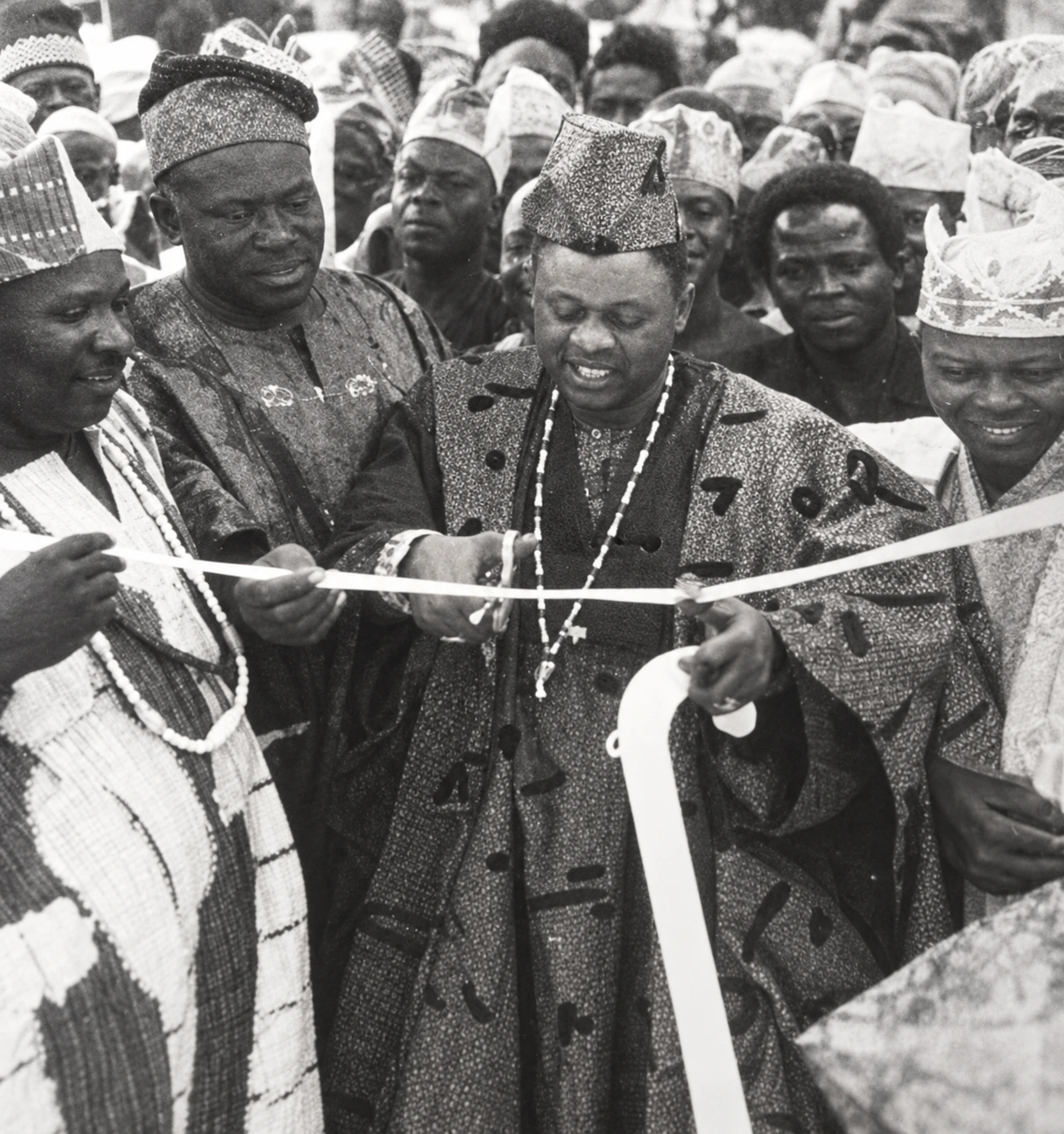
The family identifies the late Aláàfin Lamidi Adeyemi III (reigned 1970–2022), my father and guests in this sequence. This is an AI-assisted visual restoration of the supplied ribbon-cutting photograph for clarity; it is not a source for details absent from the original. View the unaltered source photograph ↗
Gatherings and visits
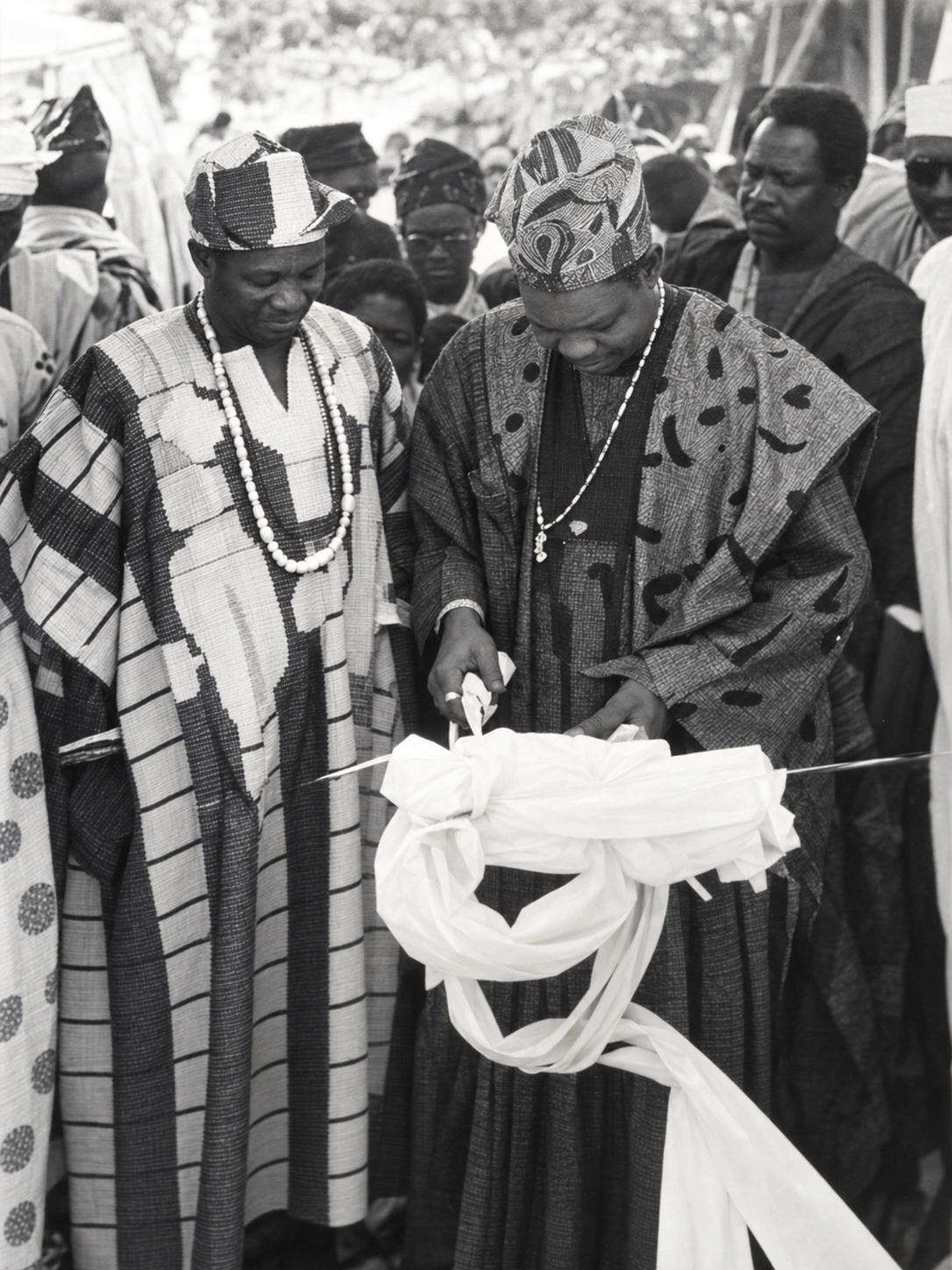
A second view of the opening of our family house in Oró, showing the ribbon-cutting.
Restoration & original photograph
AI-assisted restoration for viewing; fine detail may be reconstructed. The untouched photograph remains the historical reference.
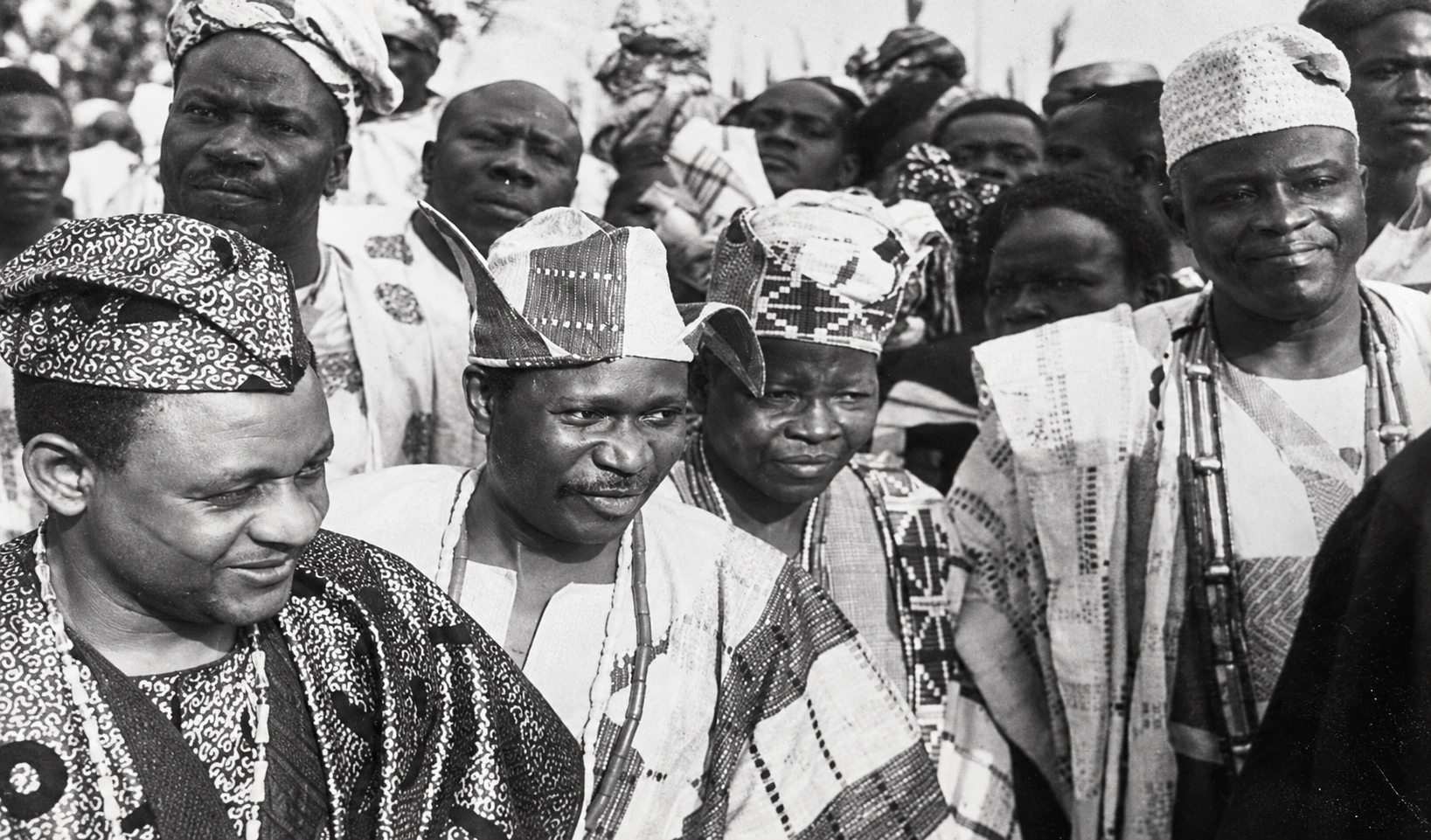
Family and guests gathered for the opening. Names of everyone pictured are not supplied.
Restoration & original photograph
AI-assisted restoration for viewing; fine detail may be reconstructed. The untouched photograph remains the historical reference.
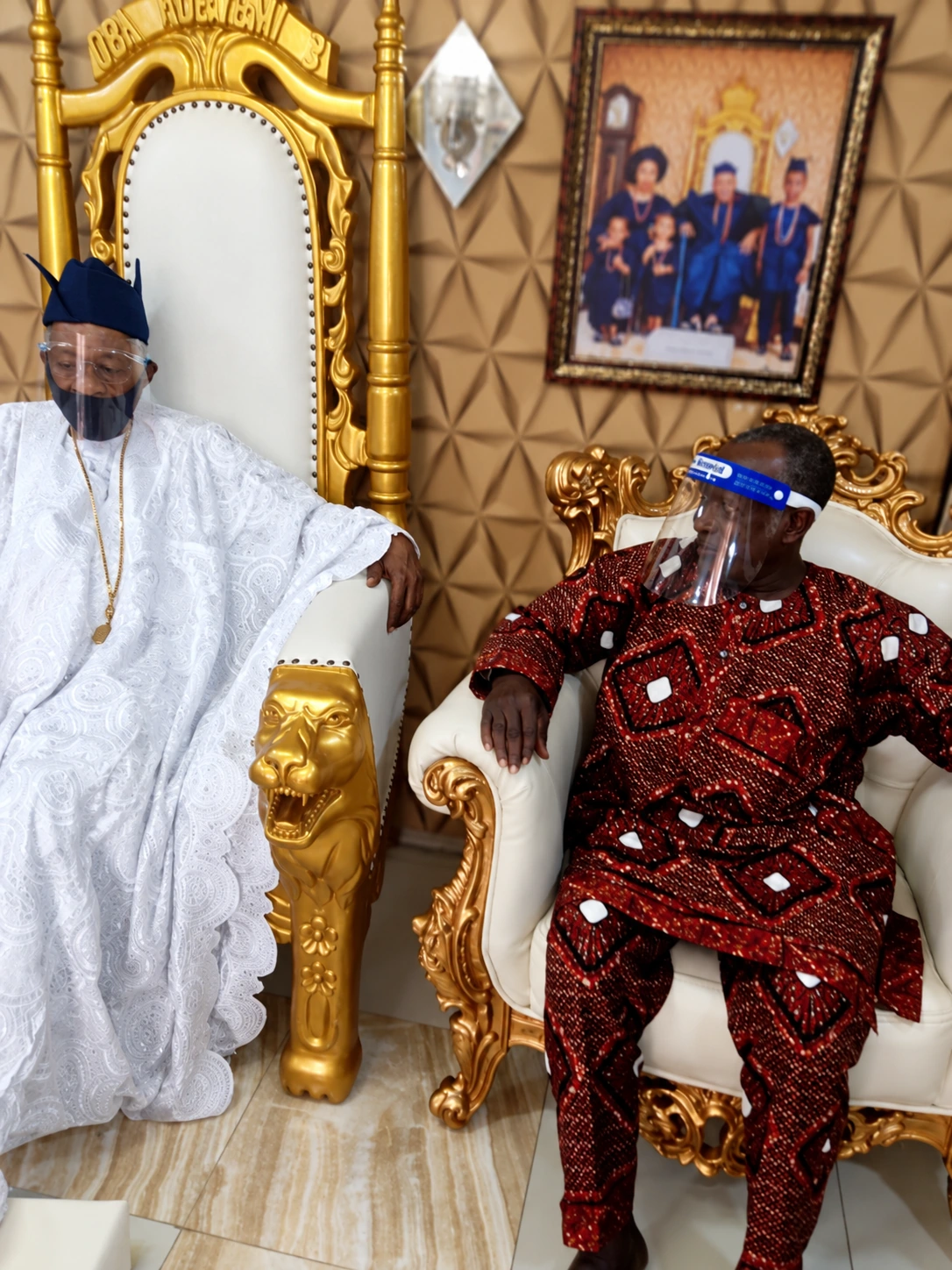
My father visiting the late Aláàfin Lamidi Adeyemi III (reigned 1970–2022) at his palace. Masks and a face shield mark the pandemic period.
Restoration & original photograph
AI-assisted restoration for viewing; fine detail may be reconstructed. The untouched photograph remains the historical reference.
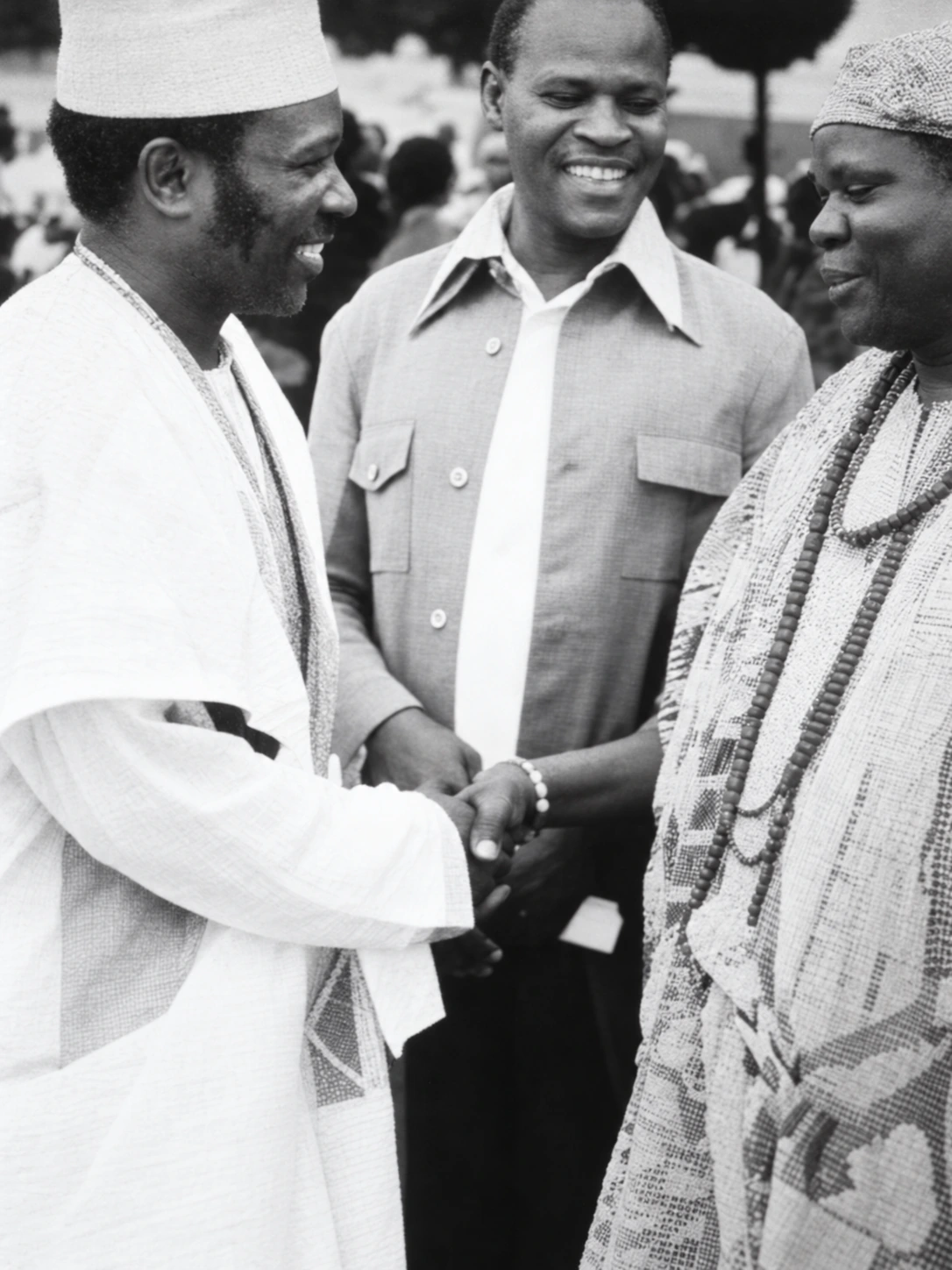
In a note dated 21 April 2023, my father identified this 1987 photograph as showing him with Oba Babatunde Akran of Badagry and the late Prince Ayilara of Ójó.
Restoration & original photograph
AI-assisted restoration for viewing; fine detail may be reconstructed. The untouched photograph remains the historical reference.
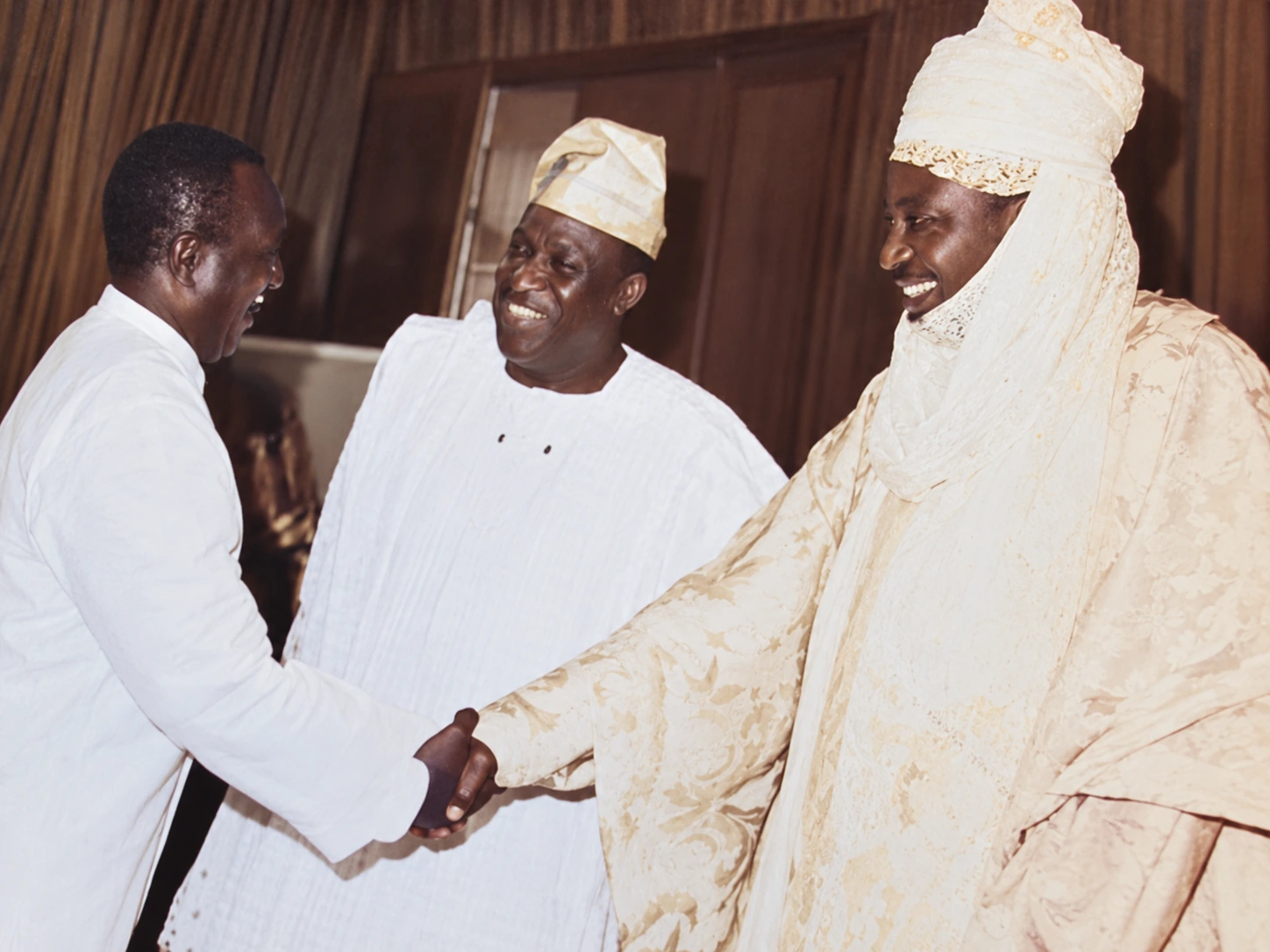
My father, Chief Olatunji Raphael Ibiwoye, with the turbaned Emir of Kano, identified in the family archive as Bayero. The date and occasion are unrecorded.
Restoration & original photograph
AI-assisted restoration for viewing; fine detail may be reconstructed. The source image is available for comparison.
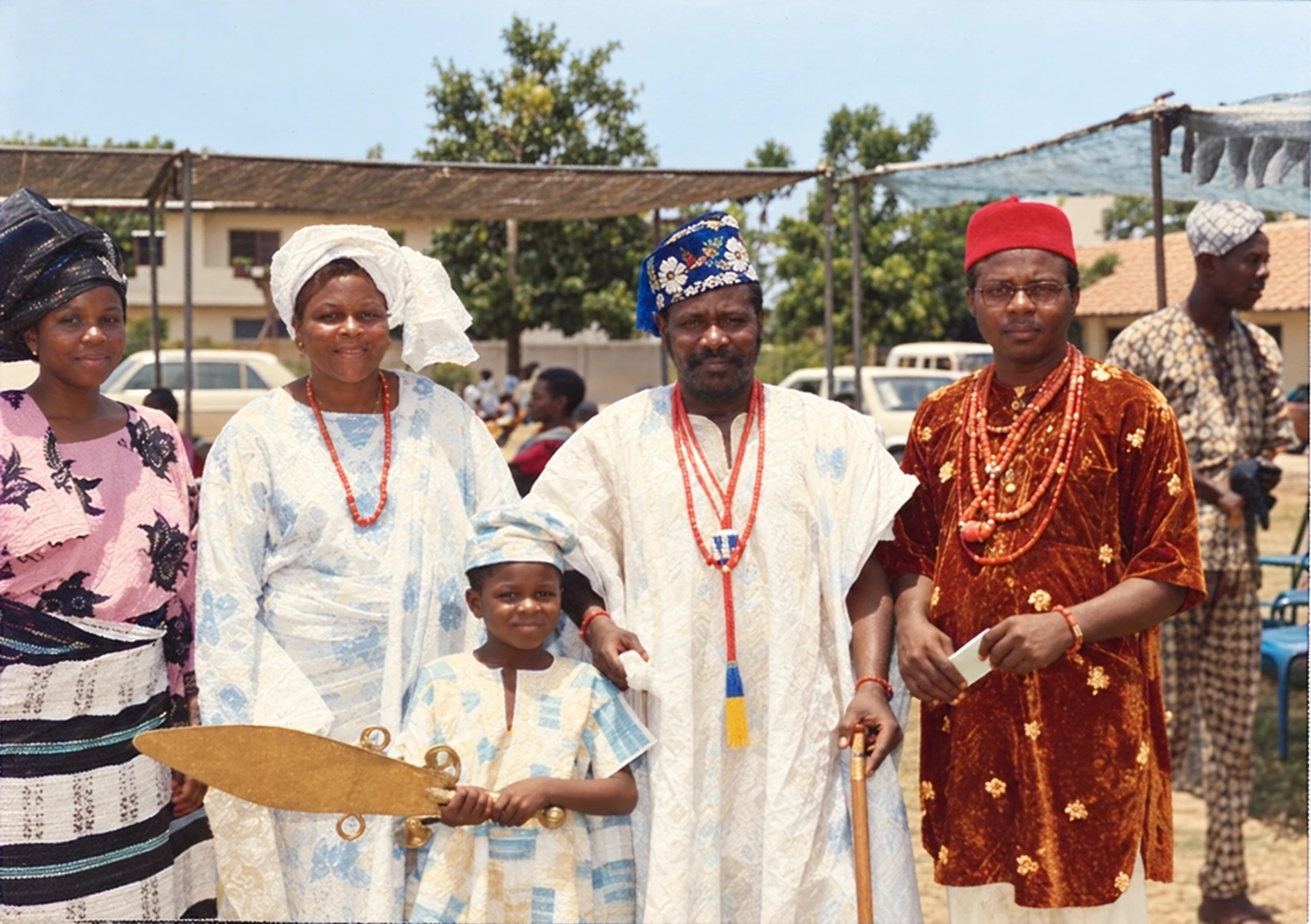
That’s me with my mum and her siblings, Uncle Cyril and Aunty Geraldine, at my father’s Ajiroba installation in Ójó, around 1987. My job was to hold his gold-plated ceremonial sword—a rather grand assignment for a small pair of hands. I remember the bright sunshine, the weight of the sword, and being very pleased to have a part to play.
Restoration & original photograph
AI-assisted restoration for viewing; fine detail may be reconstructed. The untouched photograph remains the historical reference.
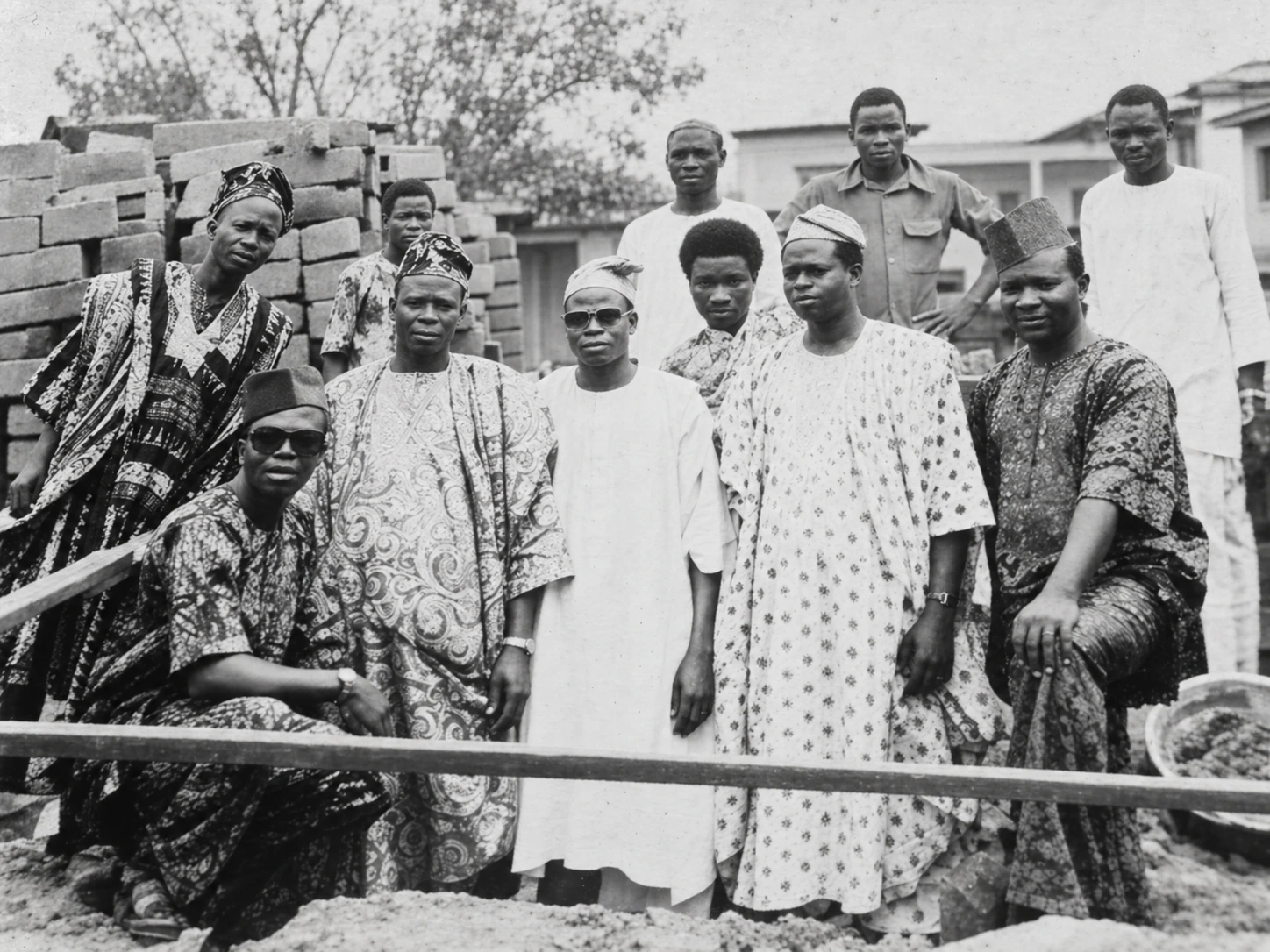
An additional group photograph from the supplied archive; names and occasion have not yet been confirmed.
Restoration & original photograph
AI-assisted restoration for viewing; fine detail may be reconstructed. The untouched photograph remains the historical reference.
How to read the evidence
The family-supplied History of Oró (undated compilation) describes Òlákànmí, a younger brother, the Bàálè, Àṣánlú and Aró lines, and other settlement strands. The Olóró interview (30 June 2013) and the Oró town history (accessed 2026) independently record the community’s Òlákànmí tradition. Adesina Yusuf Raji’s 1997 archaeological discussion is a reminder that northern Yorùbá histories reach beyond any single migration account. Ọmọọba Moróláké Agnes’s relationship to Bàálè Atóyèbí and the Bàálè genealogy are drawn from the Oró palace records conveyed by my father and academic research identified by the family. His first-hand memories of growing up at the court are presented separately. The precise archival and bibliographic references for those materials are not reproduced on this page; the linked public works provide a wider historical setting. A family-supplied newspaper clipping by Demola Akinyemi documents the later Ọmọ Oró l’Ọba gathering and my father’s award, but does not itself establish earlier genealogy. Its cropped copy has no visible publication date; the article’s own chronology points to around 2022.
THE WIDER HISTORY
Ọ̀yọ́ · The empire and the inheritance.
Follow the foundations, Aláàfins, cavalry, imperial connections and the future of Ọ̀yọ́-Ilé.
Explore the Ọ̀yọ́ Empire chapter ↗Historical reading · Akintoye & Ogundiran
For the wider Yorùbá historical setting. The family accounts and episode traditions on this page retain their own named sources.
- S. Adebanji Akintoye · A History of the Yoruba PeopleAmalion, 2010 · A broad historical account of Yorùbá societies and kingdoms.
- Akinwumi Ogundiran · The Yorùbá: A New HistoryIndiana University Press, 2020 · Archaeology, oral traditions and historical change.