← Tapestries

YORÙBÁ THOUGHT / STORIES / LIVING TRADITIONS

Òrìṣà.
Many stories. Living traditions.

Meet the names, places and ideas carried through Yorùbá sacred traditions. Follow curiosity from a river or a thunderstorm into art, wisdom, character and belonging.

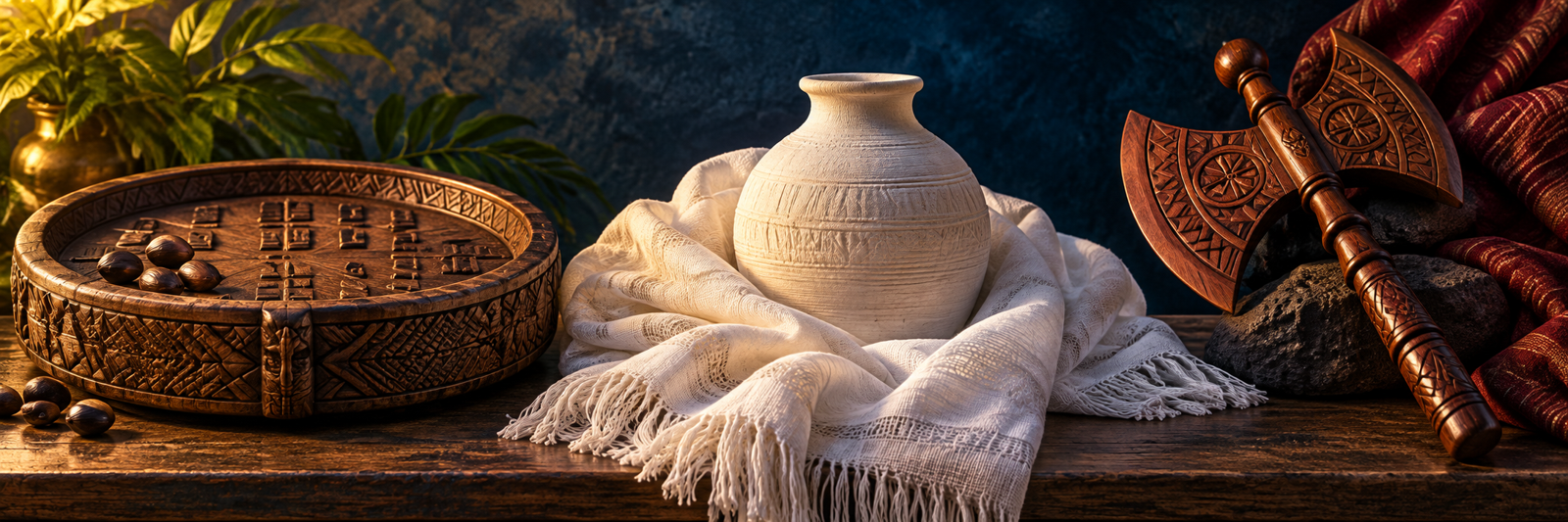
Interpretive still life of an Ifá tray and palm nuts, white cloth and a clay vessel, and a double-axe staff
AI-generated symbolic illustration, not a photograph of sacred objects or an authoritative depiction of the Òrìṣà. The objects introduce three readings below.

Begin with respect. Keep asking questions.

Òrìṣà traditions belong to the ancient, precolonial inheritance of Yorùbá civilization. They were carried through sacred places, oral narratives, artistic practice and institutions long before modern Nigeria. Their antiquity is visible in the deep history of Ilé-Ifẹ̀: archaeological research into its early sacred landscape places material remains and shrine contexts within a history extending back many centuries. This does not supply one founding date for all Òrìṣà, nor prove that every present-day story existed unchanged at that time. Ancient roots and living adaptation belong together.

Òrìṣà are divine beings within living religious traditions, also encountered through Yorùbá language, sculpture, music, festivals and literature. For worshippers these are sacred relationships; for other readers they offer a way into cultural history. Yorùbá people hold many religious and non-religious perspectives.

In many accounts, Olódùmarè is the supreme source of existence, distinguished from the Òrìṣà. Orí, personal destiny and the inner head, and ancestral traditions also matter; they should not all be flattened into one list of “gods”. Harvard’s Pluralism Project introduces the distinctions and diaspora settings.

The scholarly overview of Yorùbá religion offers further context for local traditions, origins and interpretation.

My own starting point is spiritual and philosophical. I am particularly drawn to Ọ̀rúnmìlà, Ifá and the questions they open about wisdom, memory, choice and character. That focus shapes my learning and creative work while respecting the religious lives and differing interpretations of practitioners. Read my reflection: we are its continuation →

Read more · Why no list can honestly be final

Different towns, lineages and Atlantic traditions preserve different names, relationships and emphases. Traditional enumerations do not supply one agreed modern register. An alternate spelling, praise-name or local manifestation does not automatically identify a separate deity. This is a broad, sourced starting directory, not every name ever recorded, a ranking, or a replacement for custodians’ knowledge.

Brazilian Candomblé, Cuban Lucumí and other traditions have their own histories and authorities. Their orixás and orichas are connected to Yorùbá inheritance through forced Atlantic migration and later exchange; they are not interchangeable copies. The category “pantheon” is useful for comparison but cannot capture every relationship.

Related ideas · Orí and ancestral remembrance

Orí concerns the head, personhood and destiny. An ilé-orí in The Met collection opens a route into its material expression. Egúngún belongs to ancestral remembrance and masquerade traditions; it should not be treated as simply another personal name in a list of deities.

These distinctions help us ask better questions: is this account about a divinity, an ancestor, a ritual institution, a personal destiny or a particular artwork?

NOTICE / CONNECT / REFLECT

A doorway for every reader.

Choose a reading path, then a theme or name. Open a card for its context and source. Each profile combines a short description, a practical learning activity and its source, following the family site’s approach. Activities are our own educational prompts, not traditional rites. Reading bands are suggestions, not restrictions; no age or personal information is collected.

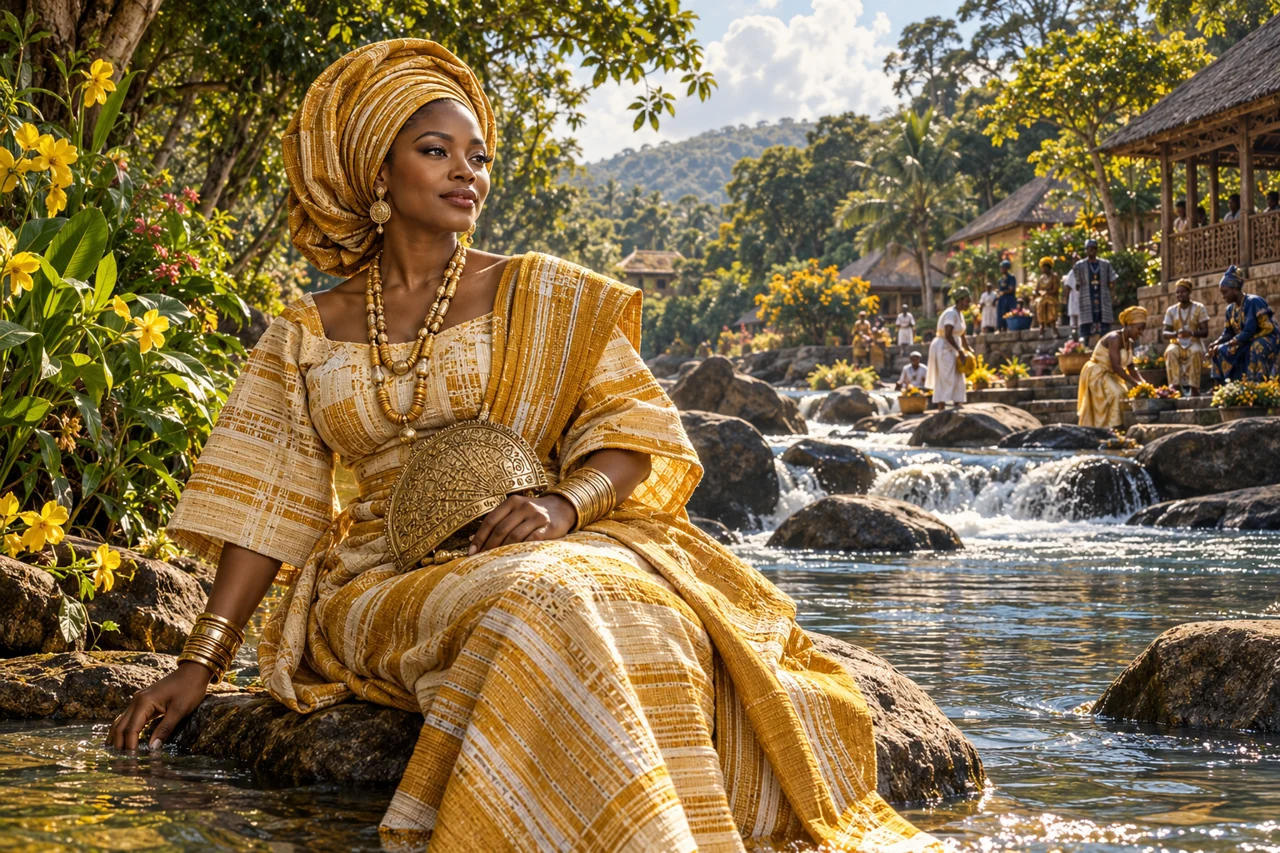
A gold-clad symbolic Ọ̀ṣun figure stands beside a forest river holding a fan.
Beauty beside the living river.AI-generated cinematic interpretation · View artwork & context →
Shared traditions

Ọ̀rúnmìlà

Knowledge and interpretation

Associated with wisdom and Ifá: a tradition of signs, verses and trained interpretation.

Names, context & source

Names encountered: Orunmila, Orunla, Orula.

The deeper reading below connects literary knowledge, pattern and responsible judgment.

UNESCO · Ifá divination system ↗

Shared traditions

Ọbàtálá

Origins, care and identity

The divine sculptor, associated with the shaping of human beings and with coolness and white.

Names, context & source

Names encountered: Obatala, Òrìṣà-nlá, Orishanla, Oxalá.

Names and creation narratives differ between communities. See the extended reading below.

Museum or scholarly account ↗

Shared traditions

Ṣàngó

Authority and responsibility

Thunder, royal memory and the responsibilities of power are central to this Ọ̀yọ́ tradition.

Names, context & source

Names encountered: Sango, Shango, Changó, Xangô.

The double-axe staff is a familiar emblem. The extended reading explores performance and kingship.

Museum or scholarly account ↗

Shared traditions

Èṣù

Knowledge and interpretation

A mediator in communication between human and divine worlds. Stories draw attention to uncertainty and interpretation.

Names, context & source

Names encountered: Esu, Eshu, Ẹlẹ́gbára, Elegba, Exu.

The labels “trickster” or “messenger” capture only part of this figure; Èṣù should not be reduced to the Christian Devil.

Museum or scholarly account ↗

Shared traditions

Ògún

Skill and sustaining life

Iron, tools and the demanding work of making are associated with Ògún, alongside hunting and warfare.

Names, context & source

Names encountered: Ogun, Ogum, Ogún.

Tools can sustain communities and cause harm: this is a useful contemporary reflection on responsibility.

Museum or scholarly account ↗

Shared traditions

Ọ̀ṣun

Water, place and belonging

River divinity whose sacred grove at Òṣogbo remains a living cultural landscape.

Names, context & source

Names encountered: Osun, Oshun, Ochún, Oxum.

UNESCO documents the grove and its community significance. A river is also a place with custodians and histories.

UNESCO · Osun-Osogbo Sacred Grove ↗

Shared traditions

Ọya

Authority and responsibility

Associated with the Niger River, wind and dynamic power.

Names, context & source

Names encountered: Oya, Oyá, Iansã.

The Smithsonian interpretation of Jeff Donaldson’s artwork emphasizes feminine leadership and justice.

Museum or scholarly account ↗

Shared traditions

Ọbà

Water, place and belonging

River divinity named for the Ọbà River and represented in traditions connected with Ṣàngó.

Names, context & source

Names encountered: Oba, Obá.

Read the Smithsonian artwork as one modern artistic interpretation, not a universal portrait.

Museum or scholarly account ↗

Shared traditions

Yemọja

Water, place and belonging

Water, nurture and motherhood are important associations in West African and Atlantic traditions.

Names, context & source

Names encountered: Yemoja, Yemaya, Yemayá, Iemanjá.

River and ocean emphases differ by place; the names carry histories of migration and change.

Thyssen-Bornemisza · Yemoja installation ↗

Shared traditions

Olókun

Water, place and belonging

Sea divinity associated with wealth and the art of beads.

Names, context & source

Names encountered: Olokun.

The Met connects Olókun with bead artists. Do not assume that every tradition describes divine gender identically.

Museum or scholarly account ↗

Shared traditions

Òsanyìn

Skill and sustaining life

Associated with plants and sacred traditions of healing knowledge.

Names, context & source

Names encountered: Osanyin, Osain, Ossain.

The linked museum object concerns a herbalist’s practice. This is cultural history, not a recommendation to use remedies.

Museum or scholarly account ↗

Shared traditions

Erinlẹ̀

Water, place and belonging

A deity with a prominent shrine tradition at Ilobu; river and hunter associations connect landscape and community.

Names, context & source

Names encountered: Erinle, Eyinle, Inle.

An equestrian shrine figure represents a follower rather than necessarily the deity.

Museum or scholarly account ↗

Shared traditions

Òrìṣà Oko

Skill and sustaining life

Associated with cultivation and fertility: the work of sustaining life through the land.

Names, context & source

Names encountered: Orisha Oko, Orisa Oko.

An agricultural focus joins sacred practice to everyday livelihoods.

Oberlin · Òrìṣà Oko staff ↗

Shared traditions

Ìbejì

Care and shared memory

Sacred twin traditions connect family care, spiritual relationships and remembrance.

Names, context & source

Names encountered: Ibeji, sacred twins.

Ère ìbejì are carved memorial figures; they should not be confused with portraits of every living twin.

Museum or scholarly account ↗

Shared traditions

Ọbalúayé / Ṣọ̀pọ̀nná

Care and shared memory

Associated with illness and healing; Ṣọ̀pọ̀nná traditions have a particular historical relationship with smallpox.

Names, context & source

Names encountered: Obaluaye, Sopona, Shapona, Babalu Aye, Omolu.

Names and emphases vary. Religious meanings should not be substituted for healthcare or biomedical explanations.

Science Museum Group · Ṣọ̀pọ̀nná staff ↗

Shared traditions

Ajé

Skill and sustaining life

A divinity associated with wealth and the marketplace, explored in research on women’s power.

Names, context & source

Names encountered: Aje, wealth.

Tone marks matter: Ajé and Àjẹ́ are different terms and must not be casually conflated.

Sarah Mathews · Ajé and female power (UCLA thesis) ↗

Atlantic connections

Ọ̀ṣọ́ọ̀sì

Skill and sustaining life

Hunting and forest knowledge are prominent associations, especially visible in Atlantic traditions.

Names, context & source

Names encountered: Oshoosi, Oshosi, Ochosi, Oxóssi.

The linked exhibition offers a Brazilian artistic setting; it should not stand for every local account.

MASP · Abdias Nascimento ↗

Regional traditions

Agẹmọ

Care and shared memory

A religious and festival tradition deeply associated with Ìjẹ̀bú communities.

Names, context & source

Names encountered: Agemo.

Local institutions and custodians matter more than fitting every tradition into a single divine family tree.

Smithsonian · John Pemberton III Agemo collection ↗

Music & transmission

Àyàn Àgalú

Care and shared memory

Patron of drumming, linking musical skill with inherited knowledge and community life.

Names, context & source

Names encountered: Ayan Agalu, Ayanagalu.

The festival’s account is a practitioner-facing source. A drum can carry speech, praise and context.

Àyàn Àgalú festival ↗

Shared traditions

Onílé

Origins, care and identity

Earth and the bonds of community are central to Onílé in Ògbóni / Òṣùgbó contexts.

Names, context & source

Names encountered: Onile, earth.

Museum interpretation also discusses founding couples: related forms do not all have one meaning.

University of Michigan · Pair of staffs ↗

Regional & Atlantic connections

Ọ̀ṣùmàrè

Water, place and belonging

A rainbow-associated divinity, with differing Yorùbá, Fon and Atlantic interpretations.

Names, context & source

Names encountered: Osumare, Oshumare, Oxumaré.

The linked comparative reference distinguishes related regional religious worlds.

Reference essay · Yorùbá and Fon deities ↗

Ifẹ̀ & ancestral authority

Odùduwà

Origins, care and identity

Founding and ancestral authority at Ilé-Ifẹ̀, with enduring connections to kingship.

Names, context & source

Names encountered: Oduduwa, Oodua.

Sacred narrative and dynastic descent are distinct from independently dated historical events.

Museum or scholarly account ↗

Ifẹ̀ · local sacred memory

Ọbalùfọ̀n

Origins, care and identity

A deified ruler in Ifẹ̀ memory, associated with metal casting and reconciliation.

Names, context & source

Names encountered: Obalufon.

Blier records a local account; this is not a universal chronology.

Suzanne Preston Blier · Art in Ancient Ife ↗

Ifẹ̀ · local sacred memory

Ọ̀rànmíyàn

Authority and responsibility

A warrior and ruler remembered in Ifẹ̀’s sacred dynastic narratives.

Names, context & source

Names encountered: Oranmiyan, Oranyan.

Blier records a local account; this is not a universal chronology.

Suzanne Preston Blier · Art in Ancient Ife ↗

Ifẹ̀ · local sacred memory

Ọramfẹ

Authority and responsibility

Thunder divinity within Ifẹ̀’s sacred historical landscape.

Names, context & source

Names encountered: Oramfe, Oranfe.

Blier records a local account; this is not a universal chronology.

Suzanne Preston Blier · Art in Ancient Ife ↗

Ifẹ̀ · local sacred memory

Olúorogbo

Knowledge and interpretation

A messenger figure remembered among Ifẹ̀’s deified figures.

Names, context & source

Names encountered: Oluorogbo.

Blier records a local account; this is not a universal chronology.

Suzanne Preston Blier · Art in Ancient Ife ↗

Ifẹ̀ · local sacred memory

Ọbámẹ̀rì

Authority and responsibility

A warrior associated with different dynastic traditions in Ifẹ̀.

Names, context & source

Names encountered: Obameri.

Blier records a local account; this is not a universal chronology.

Suzanne Preston Blier · Art in Ancient Ife ↗

Ifẹ̀ · local sacred memory

Ọ̀rẹ

Skill and sustaining life

A hunter linked to Ifẹ̀’s earlier inhabitants in local sacred memory.

Names, context & source

Names encountered: Ore.

Blier records a local account; this is not a universal chronology.

Suzanne Preston Blier · Art in Ancient Ife ↗

Regional & Atlantic traditions

Aganjú

Sacred kingship across traditions

A deified warrior king in Yorùbá traditions, also honoured as Agayú or Aggayú in Cuba.

Names, context & source

Names encountered: Aganju, Agayu, Aggayu.

Getty records different accounts of Aganjú’s relationship with Ṣàngó and an association with Saint Christopher in Cuban Santería. These are related histories, not one fixed divine family tree.

Getty · Aganju iconographic record ↗

Regional & Atlantic traditions

Ìrókò

A tree with a sacred presence

A tree-associated divinity in Yorùbá sacred landscapes. A Berkeley museum teaching example also connects Ìrókò with making peace.

Names, context & source

Names encountered: Iroko, sacred tree.

Trees have ecological lives as well as cultural meanings. The museum describes a particular artwork and story, not every tradition.

Hearst Museum · Yoruba Art and Culture, p. 21 ↗

Regional & Atlantic traditions

Yewá

A river with its own identity

A river-associated divinity whose name appears in Yorùbá and Atlantic traditions.

Names, context & source

Names encountered: Yewa, Ewa, Euá.

The linked practitioner glossary identifies the river connection. Regional interpretations deserve separate attribution.

Atlanta University Center · practitioner glossary ↗

Regional & Atlantic traditions

Lógunẹ̀dẹ

Learning from water and forest

In the Brazilian account linked here, Logun Edé brings together the freshwater associations of Oxum and the hunting skills of Oxóssi.

Names, context & source

Names encountered: Logun Ede, Logunede, Logunedé.

Djamila Ribeiro presents a Candomblé perspective. This is an attributed Atlantic reading, not a universal genealogy.

Djamila Ribeiro · Logun Edé ↗

How to use this with a family or class

Ages 6–10: read a short description together, notice a symbol, and ask a caring question. Ages 11–15: trace a place or compare two ideas, noticing a difference as well as a similarity. Ages 16+: examine sources, local variation and what historical evidence can establish. No graphic retellings are included. External sources may have different audiences.

This is an editorial learning guide, not divination, religious instruction, a personality test or an AI prediction. Filters use tagged descriptions; comparison notes and prompts are written in advance. Nothing typed here is sent or saved.

THREE EXTENDED READINGS

Wisdom. Creation. The responsibility of power.

These are introductions to living traditions, not a single definitive scripture. The reflection questions are our educational interpretation.

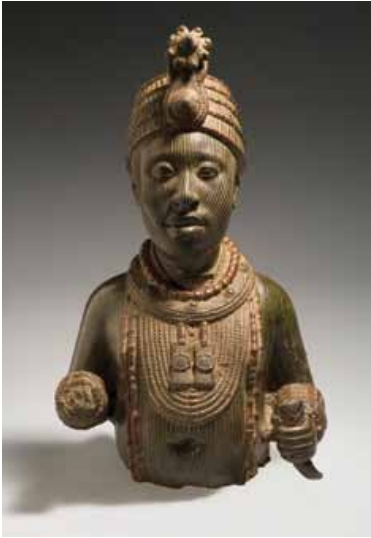
Royal torso · Wunmonije. Copper alloy
Royal torso · Wunmonije.Copper alloy · c. early 14th century · Blier’s attribution

Layered beads, a rosette-topped crown and poised hands give this surviving upper body its ceremonial presence. It is catalogued as a king; neither the photograph nor the record securely identifies a particular ruler.

Object record & photograph credit

National Museums, Èkó (Lagos) · 38.1.1, as catalogued in 2012

Blier (2012), figure 10 · catalogue photography: Karin Willis / NCMM and Museum for African Art.

Source & context ↗
Explore the full collection →
01 / Ọ̀RÚNMÌLÀ

Wisdom is a practice of attention.

Ọ̀rúnmìlà is associated with wisdom and Ifá divination. The Ifá corpus brings signs, memorized verses, narrative and interpretation into conversation. It is learned through sustained training, not reduced to a quick prediction or a single meaning attached to a sign.

UNESCO’s account describes 256 Odù and a living body of verses. Read with younger children: “Before deciding, listen carefully and learn.” With older readers: who interprets a story, and what makes an interpretation responsible?

Read more · Knowledge, interpretation and the limits of analogy

An ọpọ́n Ifá is a worked surface for divination. Museum examples show how skilled carving makes an instrument of knowledge an artwork too. The face on a tray is frequently identified with Èṣù: communication and interpretation are part of the setting in which Ọ̀rúnmìlà’s wisdom is sought. Cornell’s tray record discusses these identifications rather than assuming every face is a portrait of Ọ̀rúnmìlà.

The 16 principal patterns and their pairings invite mathematical exploration. Their combinatorial structure does not establish that Ifá is a modern computer, or that religious interpretation has the predictive validity of an experimentally tested scientific model. Literature, philosophy, formal pattern and sacred practice can be studied together while keeping their methods distinct.

Character question: What would intellectual humility look like when two people interpret the same evidence differently? This links with Ọmọlúàbí’s attention to good judgment and truthful speech; it is a contemporary reflection rather than a quotation from an Odù.

Continue into the sixteen principal Odù and the pattern explorer →

02 / ỌBÀTÁLÁ

The care involved in making a world.

Ọbàtálá, also encountered as Òrìṣà-nlá, is associated with creation and the shaping of human beings. White cloth and ideas of coolness help express composure and sacred dignity. The Met’s crown interpretation identifies Ọbàtálá as the divine sculptor and relates white to coolness.

Read with younger children: “Creating something asks us to take care.” For older readers: what responsibility does a maker have towards what—and whom—they shape?

Read more · Ilé-Ifẹ̀, differing narratives and human dignity

Creation narratives concerning Ọbàtálá and Odùduwà differ across tellings and communities. Their relationships in sacred narrative cannot simply be converted into a securely dated political event. The histories of Ilé-Ifẹ̀, its institutions and its sacred landscape require archaeological, oral and textual evidence to be considered on their own terms.

A practitioner’s account presented by UCLA’s Fowler Museum connects an Ọbàtálá narrative with a prohibition on alcohol. That is an attributed religious explanation, not a universal rule for every reader. Where stories discuss bodily difference, a respectful contemporary reading must never turn disability into a moral defect or a reason for exclusion.

Character question: Does calmness mean doing nothing, or can it mean acting carefully while others rush? An educational connection with patience and ìnú rere—goodwill—invites us to judge care through conduct.

Explore Ilé-Ifẹ̀, tradition and historical evidence →

03 / ṢÀNGÓ

Power is also a question of restraint.

Ṣàngó is associated with thunder and with the royal memory of Ọ̀yọ́. The double-axe motif of the ọ̀ṣé Ṣàngó is a recognizable artistic emblem. A tradition of divine kingship, public performance and communal remembrance gives these objects their setting.

Read with younger children: “Being strong also means being fair.” For older readers: how should a community hold powerful people responsible?

Read more · Kingship, performance and living memory

UNESCO’s Ṣàngó Festival, Ọ̀yọ́ entry presents the festival as a living expression of community identity and connection with an ancestor. Sacred accounts of Ṣàngó’s royal life and transformation are not identical to a chronology independently established by historians. This page does not invent a precise reign date.

Onakunle Aribikona’s Ṣàngó staff at The Met shows how artists reinterpret a shared emblem. Museum commentary contrasts praise-poetry’s forceful imagery with devotees represented in composed poses. An artwork can hold several ideas together: energy, dignity, devotion and control.

Ṣàngó’s Atlantic histories include forms such as Changó and Xangô, within distinct communities. Similar names and symbols do not erase the changes created by enslavement, resistance, migration and local practice.

Character question: If you have the loudest voice in the room, what would fairness require you to do? Strength becomes worthy of trust when it leaves room for accountability.

Continue to Ọ̀yọ́: empire and inheritance →

COMPARE CAREFULLY

A shared question. A different world.

Greek and Roman traditions provide useful points of comparison, not a master key to Yorùbá thought. Roman reception of Greek gods has its own history; an Òrìṣà is not simply an “African version” of one of them.

Comparison notes are editorial synthesis. Classical names and attributes: British Museum guide; the separate Yorùbá sources are linked in the directory and readings.

View the full comparison matrix · 32 profiles

A compact reference to every profile. “Not assigned” means this page does not propose a classical pairing; it does not mean that no comparison is possible. Select an Òrìṣà’s name to read its description and source. These are thematic comparisons, not equivalents or claims of historical borrowing.

On a smaller screen, scroll the table sideways. Greek and Roman names follow the British Museum guide.

Òrìṣà, Greek and Roman points of comparison
Òrìṣà · profile & sourceGreek referenceRoman referenceTheme or possible connectionWhere the comparison stops
Ọ̀rúnmìlàApolloApolloDivination and interpreted guidance.Ifá’s Odù corpus, training and sacred histories differ from Apollo’s oracular traditions.
ỌbàtáláNo tidy counterpartNo tidy counterpartCreation, making and human dignity are questions for discussion.Neither Zeus nor Hephaestus simply reproduces Ọbàtálá’s creative role.
ṢàngóZeusJupiterThunder imagery and authority.Ṣàngó’s Ọ̀yọ́ royal memory differs; he is not simply a supreme creator.
ÈṣùHermesMercuryCommunication and crossing boundaries.Different cosmologies and ritual roles; a shared motif does not establish identity.
ÒgúnHephaestusVulcanMetalworking and skilled making.Ògún also connects tools, hunting, paths and warfare; the smith comparison is partial.
Ọ̀ṣunNot assignedNot assignedWater, place and belonging.No direct classical pairing is proposed here. UNESCO documents the grove and its community significance. A river is also a place with custodians and histories.
ỌyaNot assignedNot assignedAuthority and responsibility.No direct classical pairing is proposed here. The Smithsonian interpretation of Jeff Donaldson’s artwork emphasizes feminine leadership and justice.
ỌbàNot assignedNot assignedWater, place and belonging.No direct classical pairing is proposed here. Read the Smithsonian artwork as one modern artistic interpretation, not a universal portrait.
YemọjaNot assignedNot assignedWater, place and belonging.No direct classical pairing is proposed here. River and ocean emphases differ by place; the names carry histories of migration and change.
OlókunPoseidonNeptuneThe power of the sea.Olókun’s bead and wealth associations, and variations in divine gender, resist a simple match.
ÒsanyìnNot assignedNot assignedSkill and sustaining life.No direct classical pairing is proposed here. The linked museum object concerns a herbalist’s practice. This is cultural history, not a recommendation to use remedies.
Erinlẹ̀Not assignedNot assignedWater, place and belonging.No direct classical pairing is proposed here. An equestrian shrine figure represents a follower rather than necessarily the deity.
Òrìṣà OkoNot assignedNot assignedSkill and sustaining life.No direct classical pairing is proposed here. An agricultural focus joins sacred practice to everyday livelihoods.
ÌbejìNot assignedNot assignedCare and shared memory.No direct classical pairing is proposed here. Ère ìbejì are carved memorial figures; they should not be confused with portraits of every living twin.
Ọbalúayé / Ṣọ̀pọ̀nnáNot assignedNot assignedCare and shared memory.No direct classical pairing is proposed here. Names and emphases vary. Religious meanings should not be substituted for healthcare or biomedical explanations.
AjéNot assignedNot assignedSkill and sustaining life.No direct classical pairing is proposed here. Tone marks matter: Ajé and Àjẹ́ are different terms and must not be casually conflated.
Ọ̀ṣọ́ọ̀sìArtemisDianaHunting and the living landscape.Different stories, gendered representations and ritual settings remain important.
AgẹmọNot assignedNot assignedCare and shared memory.No direct classical pairing is proposed here. Local institutions and custodians matter more than fitting every tradition into a single divine family tree.
Àyàn ÀgalúNot assignedNot assignedCare and shared memory.No direct classical pairing is proposed here. The festival’s account is a practitioner-facing source. A drum can carry speech, praise and context.
OníléNot assignedNot assignedOrigins, care and identity.No direct classical pairing is proposed here. Museum interpretation also discusses founding couples: related forms do not all have one meaning.
Ọ̀ṣùmàrèNot assignedNot assignedWater, place and belonging.No direct classical pairing is proposed here. The linked comparative reference distinguishes related regional religious worlds.
OdùduwàNot assignedNot assignedOrigins, care and identity.No direct classical pairing is proposed here. Sacred narrative and dynastic descent are distinct from independently dated historical events.
Ọbalùfọ̀nNot assignedNot assignedOrigins, care and identity.No direct classical pairing is proposed here. Blier records a local account; this is not a universal chronology.
Ọ̀rànmíyànNot assignedNot assignedAuthority and responsibility.No direct classical pairing is proposed here. Blier records a local account; this is not a universal chronology.
ỌramfẹNot assignedNot assignedAuthority and responsibility.No direct classical pairing is proposed here. Blier records a local account; this is not a universal chronology.
OlúorogboNot assignedNot assignedKnowledge and interpretation.No direct classical pairing is proposed here. Blier records a local account; this is not a universal chronology.
Ọbámẹ̀rìNot assignedNot assignedAuthority and responsibility.No direct classical pairing is proposed here. Blier records a local account; this is not a universal chronology.
Ọ̀rẹNot assignedNot assignedSkill and sustaining life.No direct classical pairing is proposed here. Blier records a local account; this is not a universal chronology.
AganjúNot assignedNot assignedSacred kingship across traditions.No direct classical pairing is proposed here. Getty records different accounts of Aganjú’s relationship with Ṣàngó and an association with Saint Christopher in Cuban Santería. These are related histories, not one fixed divine family tree.
ÌrókòNot assignedNot assignedA tree with a sacred presence.No direct classical pairing is proposed here. Trees have ecological lives as well as cultural meanings. The museum describes a particular artwork and story, not every tradition.
YewáNot assignedNot assignedA river with its own identity.No direct classical pairing is proposed here. The linked practitioner glossary identifies the river connection. Regional interpretations deserve separate attribution.
Lógunẹ̀dẹNot assignedNot assignedLearning from water and forest.No direct classical pairing is proposed here. Djamila Ribeiro presents a Candomblé perspective. This is an attributed Atlantic reading, not a universal genealogy.
Read more · Where the comparison stops

“God of X” labels are a first step, not a complete theology. Òrìṣà are related to particular places, communities and practices. Greek and Roman divine identities also vary by place and period. A comparison based on thunder, craft or water can reveal a common human concern without establishing a shared origin or a one-to-one equivalence.

Contemporary Òrìṣà worship must not be consigned to a vanished past. Ancient Greek and Roman religion also should not be treated as nothing but entertainment; modern revival communities exist. Compare respectfully across both belief and non-belief.

A SMALL DISCOVERY TRAIL

Notice something. Ask something.

Pick a prompt, think aloud with someone, then reveal a starting thought. These are open conversations, not a test of faith.

READ FURTHER / LISTEN TO CUSTODIANS

Keep the conversation open.

Sources attached to entries support those introductions. Museum labels reflect particular objects and curatorial interpretations; living practitioners and local scholars may offer additional perspectives. Names and associations can vary, and external pages may use different spelling.

For wider historical reading: S. Adebanji Akintoye, A History of the Yoruba People (2010) and Akinwumi Ogundiran, The Yorùbá: A New History (2020). These contextualize Yorùbá societies and historical change; they are not cited as verification of every sacred narrative on this page.

Inside Tapestries: sacred stories, historical evidence and cinematic interpretation deserve distinct treatment. The aim is informed curiosity, cultural confidence and room for voices from the communities who carry these traditions.

Personal tool suggestions

Enable JavaScript to choose optional feedback-based suggestions.

OSL · Olukotun Studios Ltd

Olukotun Studios Ltd · Registered in England and Wales · No. 17537910

LinkedIn ↗