← Home

TAPESTRIES / PUBLISHED CONVERSATIONS

In conversation

Two public conversations ask what it means to know where we come from, and how that knowledge travels across generations and continents.

Words in context: Ìdílé — family or lineageoríkì — praise poetry and praise names More Yorùbá terms ↗

Why the conversations belong here

Tapestries of Yorùbá Civilization is grounded in research and storytelling, but its purpose is personal as well: to make ancestral memory available to young people and families in Yorùbáland and across the diaspora. These two conversations with Discover Yoruba explain the impulse behind the work in my own voice.

The interview moves from Oró and family history to Yorùbá cultural continuities across the Atlantic, including a visit to Cuba. It considers scholarship, animation and AI-assisted production as ways to carry a complex story to a global audience. The short video begins with a simpler question: what does being Yorùbá mean?

READ & WATCH AT SOURCE

Two ways into the story

These links open the original publisher's pages. The material is presented here in summary; the full interview and video remain with their creators.

01 / LONG-FORM INTERVIEW

Lineage, animation and cultural memory

Published by Discover Yoruba on 14 February 2026, the interview explores lineage, identity, the series' aims, diaspora connections and the balance between scholarship, sensitivity and accessible film. Its Cuba photograph is hosted by the publisher.

02 / SHORT VIDEO

What being Yorùbá means

Discover Yoruba asked @ile_olukotun that question in a collaborative Instagram reel. The publisher's caption introduces the response; watch the original video for the answer in its full spoken context. A relative social-media timestamp in the supplied capture is not a reliable calendar date, so none is assigned to this reel.

A conversation that continues

For the series, global reach begins with specificity. Oró's stories are told with attention to sources and living custodians; diaspora histories have their own voices and forms of continuity. Together they invite audiences to ask how language, creativity and knowledge can help a community see itself clearly and shape what comes next.

The February interview reflects a particular stage of the project. The current production direction is mature cinematic stylised realism, with human review of Yorùbá language and historical interpretation. These conversations express a perspective and purpose; contested historical claims still require careful source work in the films.

Source note: The summaries above paraphrase the public interview and the reel caption. Images, video and full text remain on the publisher's platforms. Social-media comments are not reproduced.
A CLOSER LOOK

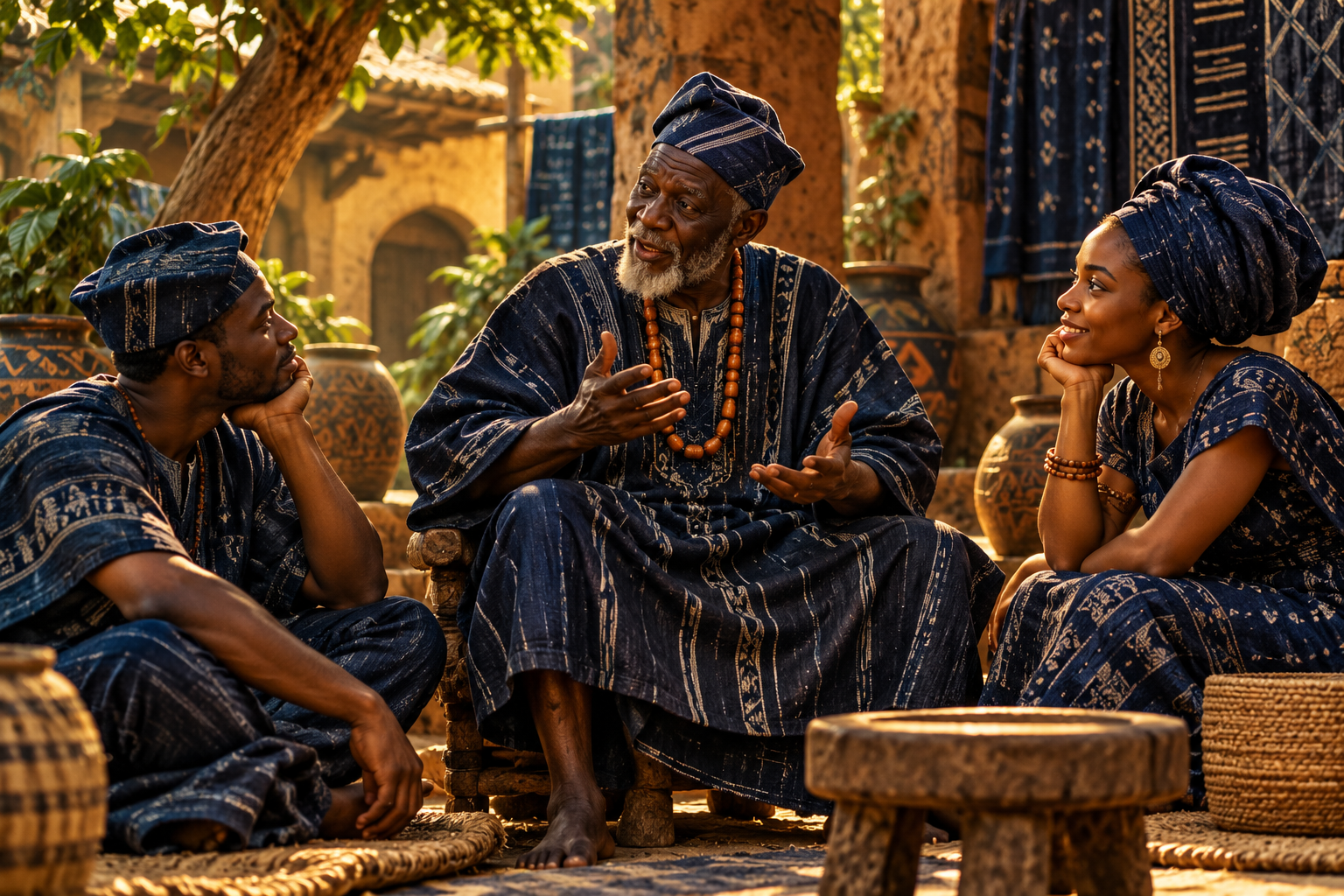
Listening across generations

Listening across generations. AI-generated interpretive concept art already used in the series overview. Imagined people and setting; not a photograph of an interview or a historical event.
AI-generated interpretive concept art already used in the series overview. Imagined people and setting; not a photograph of an interview or a historical event.
Historical reading · Akintoye & Ogundiran

Core reading for the Yorùbá historical and cultural context discussed on this page. Follow the specific sources alongside individual claims, interpretations and language examples.

OSL · Olukotun Studios Ltd

Olukotun Studios Ltd · Registered in England and Wales · No. 17537910

LinkedIn ↗